
This page was translated from Hebrew and has not been reviewed yet. The Hebrew page is the reference. עברית
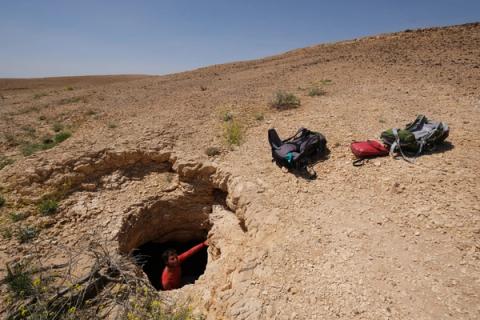
Nahal Hadud "Water Cistern" Cave
Central Negev
The Nahal Hadud "Water Cistern" Cave is a small natural cave that was converted into a water cistern. The conversion included clearing stones, arranging channels for collecting runoff, and deepening the cavity, an operation whose remains are visible in the spoil heap lying beside the entrance. Despite the signs of use as a water cistern, the general structure suggests that the cavity formed under phreatic conditions, acting in Eocene limestone.
Read more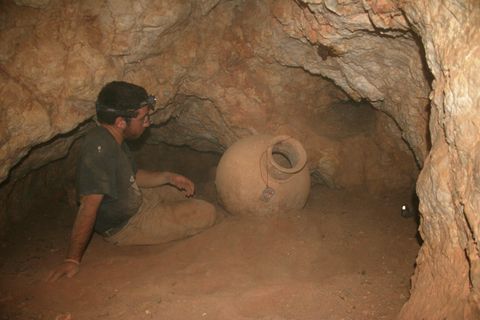
Jar Cave - Shen Ramon
Makhtesh Ramon
A medium-sized cave (total length about 50 m) that developed in Turonian limestone (Shivta Formation). The cave developed on the southern slope of Makhtesh Ramon, so all its chambers dip steeply in accordance with the regional dip. When the cave was discovered (2008), an intact, large jar with decoration on its neck was found in its inner part. The jar was dated by the Israel Antiquities Authority to the Late Bronze Age.
Read more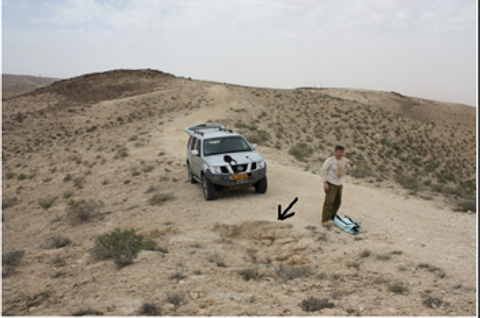
Tlalim Cave
Northern Negev
A small cave that developed by hypogenic dissolution processes in Turonian limestone, and was exposed at the crest of a watershed line, on the northern bank of Nahal Heiman. The total length of the cave reaches 27 m and its total depth 10.5 m.
Read more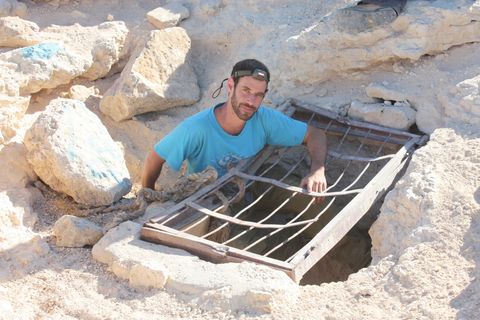
Mitzpe Ramon Cave
Har HaNegev
Mitzpe Ramon Cave is a medium-sized cave (total length 75 m) consisting of an elongated corridor and several side chambers. The cave formed in Cenomanian limestone and dolomite, with its opening at the base of the Avnon Formation and most of the cavity formed in the Zafit Formation. Dry cave deposits, scattered throughout the cave, represent a late vadose stage after the cave was drained.
Read more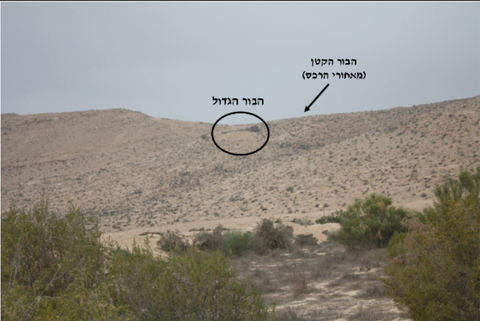
Besor Pits
Har HaNegev
A pair of small karst pits that developed in Turonian limestone and were exposed near the crest of a moderate ridge that forms the watershed between the channel of Nahal Besor and that of Nahal Boker. Judging by the shape and location of the pits, they appear to be natural pits that developed by phreatic dissolution processes. After their exposure, at some stage, the pits were adapted as water-collection cisterns.
Read more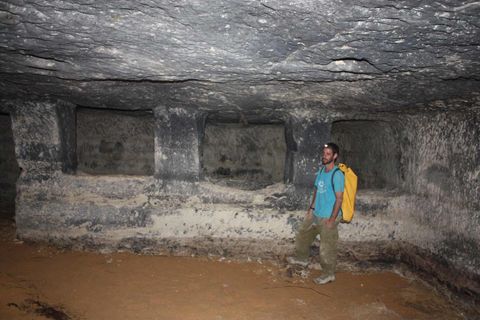
Retamim Cave
Retamim, Western Negev
The cave was discovered in spring 2012 by Shlomi Aharon and the youth of Kfar Retamim. The discovery took place after a Nabataean water cistern was accidentally uncovered while laying the foundations of a mikveh building. After its discovery, the cistern was blocked with earth. The spot suspected to be the location of the cistern was dug by the youth of Kfar Retamim using water pressure, and after digging deeper than a meter the ground suddenly collapsed.
Read more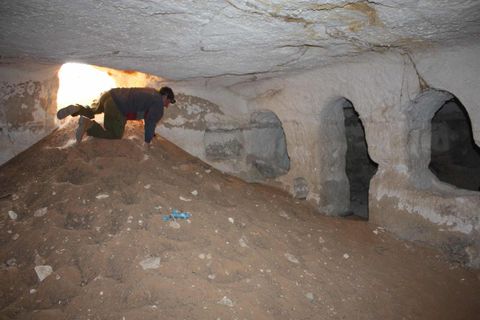
Stable Cave
Retamim, Western Negev
The cave was published in the Ramat Negev survey by Amnon Botzi Livne of Kibbutz Revivim. The existence of the cave became known after the Gulf War, when the cave was prepared by local Bedouin residents to serve as a shelter against the Iraqi bombardments. Information about the site was given to the ICRC by Shlomi Aharon, a resident of Kfar Retamim.
Read more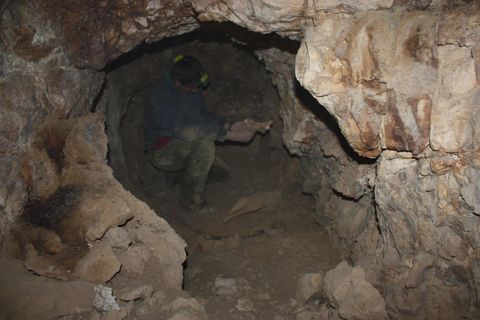
Makhtesh Har Arif Cave
Makhtesh Har Arif
A small cave formed by phreatic dissolution processes in Lower Cenomanian limestone and exposed in the eastern wall of the southern (large) makhtesh of Har Arif. The cave has an inner chamber containing ancient cave deposits, including stalactites and elephant ears.
Read more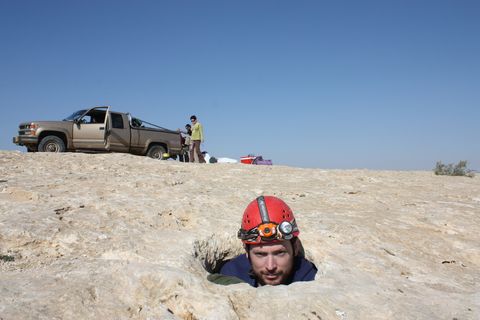
Johnny Cave
Dimona Mountains
A medium-sized cave (total length 46 m and depth 7 m) that developed in Turonian limestone (Shivta Formation). The cave cavity consists of several rooms, in which rounded dissolution domes stand out, indicating that the cave formed as a hypogenic cave in the phreatic zone.
Read more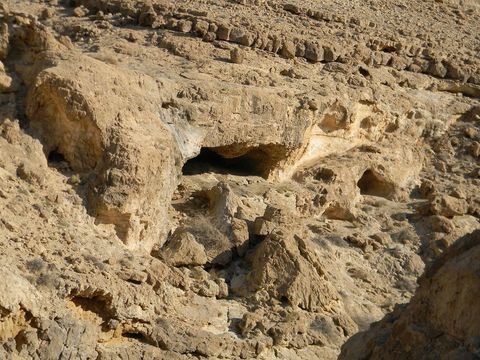
Nahal Daruch Cave
Nahal Daruch
A small cave that developed in limestone of the Shivta Formation. The cave entrance opens in the northern bank of Nahal Daruch about 10 m above the stream channel, and its dimensions are 8X2.5 m.
Read more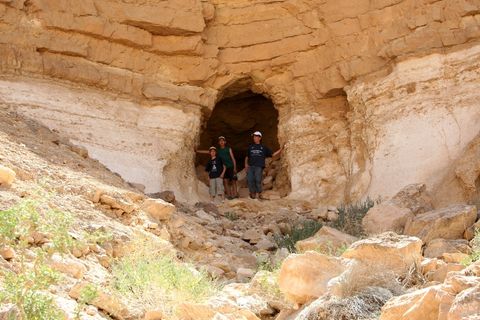
Nahal Hatira Cave
Confluence of Nahal Yamin and Nahal Hatira
A phreatic cave that developed on the southern bank of Nahal Hatira at the foot of a cliff of the Shivta Formation and at the top of a long scree slope, about 80 m above the stream channel.
Read more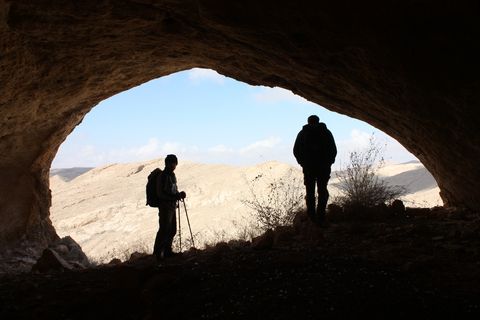
Nahal Lutz Cave
Nahal Lutz
A small cave consisting mainly of a large chamber that developed by phreatic dissolution processes in Lower Eocene limestone (Nizzana Formation, according to the Geological Survey map). The cave has a huge entrance, exposed at the foot of a cliff, on the eastern bank of a deep channel that drains into Nahal Lutz from the north.
Read more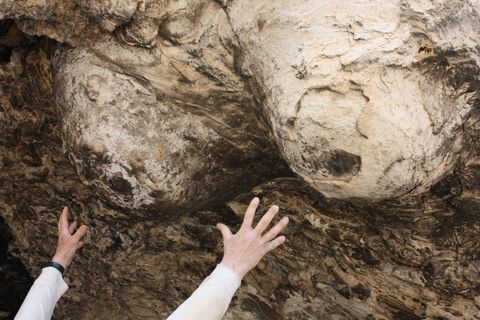
Tzra'ot Cave
Nahal Paran
A small cave with a single cavity that developed in chert and chalk of Senonian age (Mishash Formation). The cave entrance opens at the foot of a cliff on the western bank of a wide channel draining into Nahal Paran from the north. The entrance measures 2.5X4.5 m, is arch-shaped and is conspicuous from afar.
Read more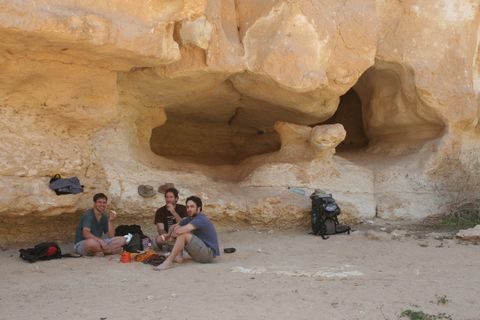
Ein Yorke'am Cave
Ein Yorke'am
Ein Yorke'am Cave is a small cave made up of a single room that opens in the southern bank of Nahal Hatira at the level of the stream channel. The cave has a wide, prominent entrance, through which light penetrates into all its parts.
Read more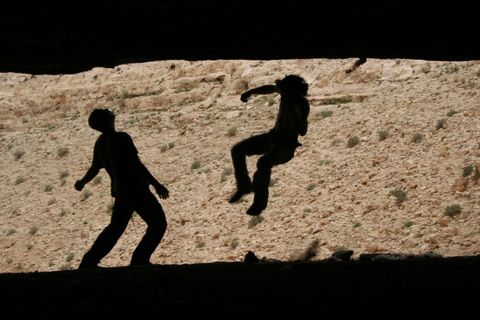
Katar Pa'i
Central Afe'a Ridge
A dripping spring issuing from the ceiling of a wide tafone at the bottom of a waterfall in a channel descending west of Har Sharaf southward and draining into Nahal Afe'a. The tafone cavity developed at the base of the Shivta Formation and its location appears on regional maps.
Read more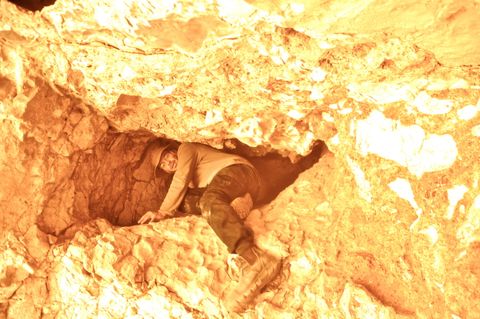
Barbur Cave
Nahal Dimona
A small cave that developed by phreatic dissolution processes in Turonian limestone (Shivta Fm.). The most important cave in terms of natural sedimentary sequence in the Judean Desert.
Read more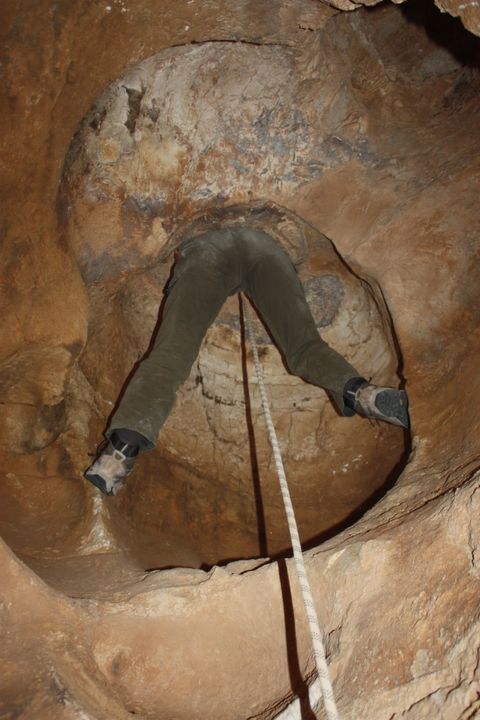
Nahal Dimona Cave
The deepest of the Negev caves
Nahal Dimona Cave is a large cave (total length 144 m) that developed by phreatic-hypogenic dissolution processes in Turonian limestone (Shivta Formation). The cave consists mainly of a network of passages, vertical or inclined, that branch into two main branches: an upper branch extends to the northwest and reaches a depth of 18 m. A lower branch extends to the southeast and reaches a depth of 39 m, the deepest point in the Negev caves!
Read more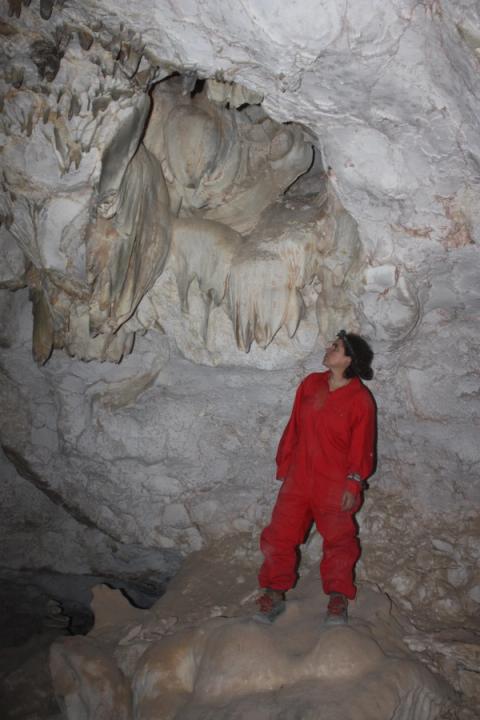
Ashalim Cave
Near Kibbutz Ashalim
Ashalim Cave is a giant cave consisting mainly of a network of elongated, branching passages and several large chambers that developed by phreatic-hypogenic dissolution processes in Turonian limestone (Shivta Fm.). The total length of the cave reaches 540 m and its depth 31 m.
Read more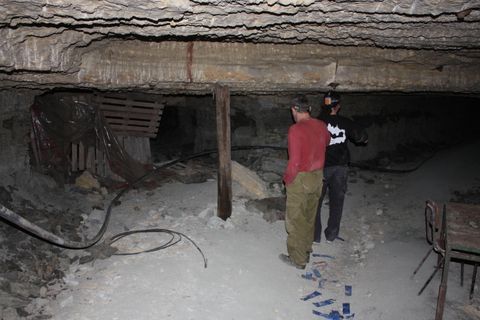
Bentonite Mine
Mitzpe Ramon
The length of the passages we measured stands at 2139 m. We estimate that a considerable additional distance was not measured because of problems of passability and breathing. The elevation difference between all the measured parts stands at 8 m, which illustrates the horizontality of the mine, which follows the bentonite horizon.
Read more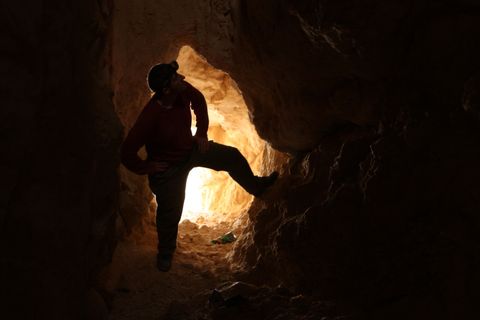
Har Saharonim Cave
Har Saharonim Cave is a medium-sized cave (cumulative length 42.5 m and total height 17.8 m) consisting mainly of an elongated passage. The rounded outline of the cave passage, as well as the many dissolution domes opening in it, indicate that the cave formed by phreatic-hypogenic dissolution processes that acted in Turonian limestone (Shivta Formation).
Read more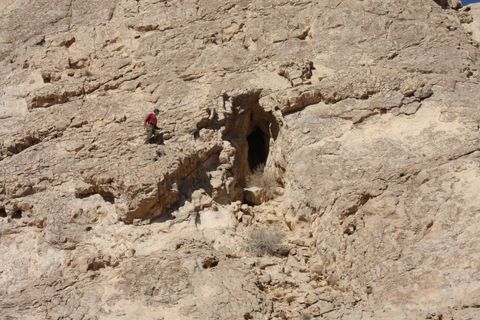
Saharon Cave
Makhtesh Ramon
A small cave (cumulative length 16 m and total height 11.8 m) consisting mainly of an elongated passage. The rounded outline of the cave passage, as well as the many dissolution domes opening in it, indicate that the cave formed by phreatic-hypogenic dissolution processes that acted in Turonian limestone (Shivta Formation).
Read more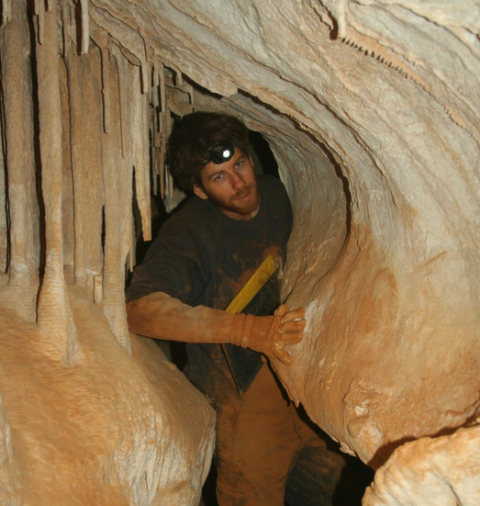
Tzavo'a Cave
Kidod Ridge
Tzavo'a Cave is a giant cave that developed in Turonian limestone (Shivta Fm.). The cave entrance is exposed at the foot of a cliff on its northern bank, in the upper part of a small channel that descends from the Kidod Ridge plateau and drains eastward to the base of the ridge, to the head of the channel of Nahal Gorer
Read more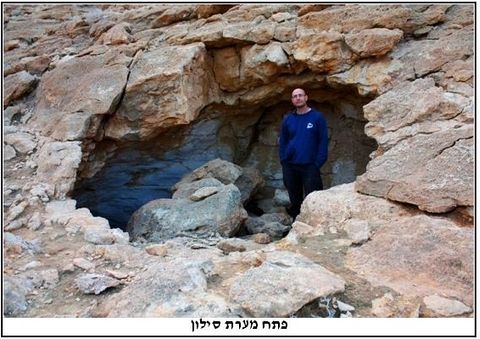
Silon Cave
Nahal Dimona
Silon Cave is a medium-sized cave (length 57 m and total height 20.5 m) consisting mainly of an elongated chamber that developed by phreatic dissolution processes in Turonian limestone (Shivta Formation). Today the cave is made up of many cavities that formed between collapse boulders that detached from the ceiling of the original chamber.
Read more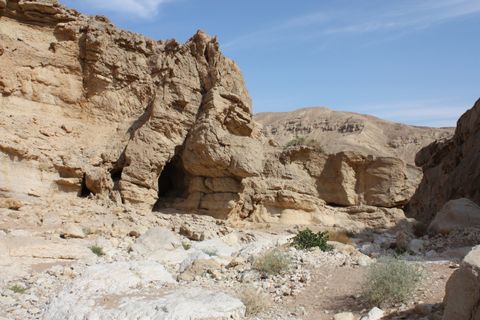
Nahal Netafim Cave
Eilat Mountains
Nahal Netafim Cave is a small cave that developed in Lower Cenomanian limestone (Hazera Fm., Zafit Member) and was exposed in the northern bank of Nahal Netafim.
The cave contains a few dry cave deposits, indicating that in the past much wetter climatic conditions prevailed in the region.
Read more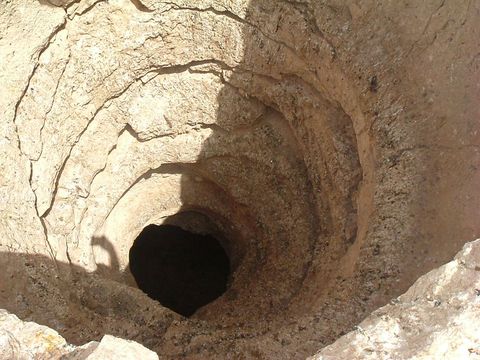
Tlalim Cave
Next to the dirt road leading from the Tlalim-Nitzana road to Ashalim Cave there is a deep karst shaft in which rock doves nest. Next to the shaft the army placed a concrete cube, so that no one would fall into the shaft.
The total length of the cave reaches 27 m and its total depth 10.5 m.
Read more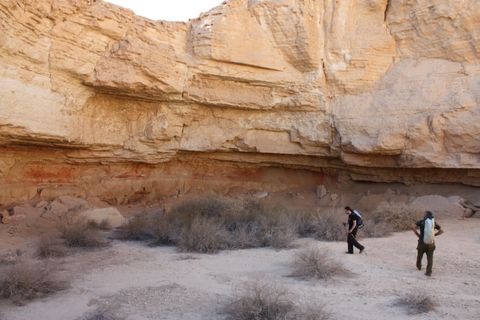
Har Taref Doline
A large collapse doline that formed in Turonian limestone and was exposed on the southern slopes of Har Taref, about 900 m northwest of Bik'at Abu Tarifa. The doline measures about 30X33 m and its depth varies
Read more