This page was translated from Hebrew and has not been reviewed yet. The Hebrew page is the reference. עברית
Three Bears Cave
Nahal Yiron
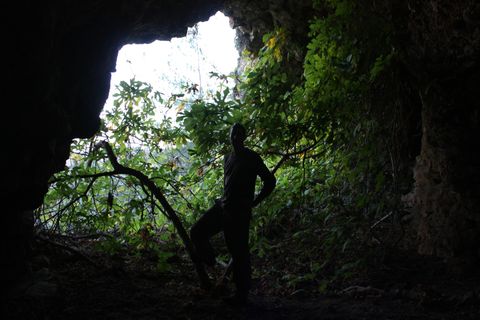
A medium-sized cave (total length 22 m and maximum depth 4.8 m) consisting mainly of a wide room that developed in Eocene limestone (Bar Kokhba Formation). Judging by rounded dissolution features, such as dissolution domes and pockets, it can be determined that the cave developed as a hypogenic cave in the phreatic zone.
Read more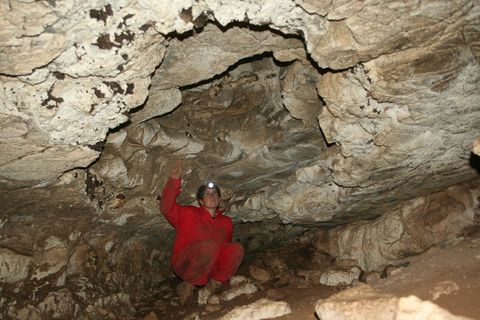
Ein Alva, Balcony Cave
Nahal Gush Halav
A small horizontal cave built of a central passage that developed in a general east-west direction. Another narrow passage joins this passage, developing from the central passage and heading north. The cave has phreatic dissolution features in the form of well-developed dissolution domes and passages with a rounded cross-section.
Read more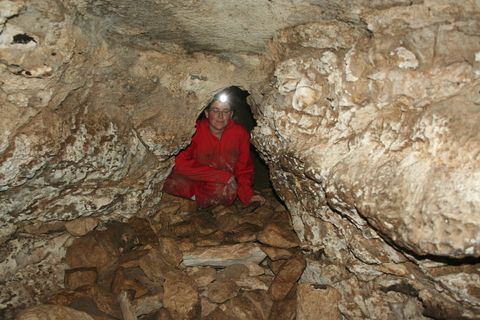
Ein Alva, Hermit Cave
Nahal Gush Halav
The smallest cave in the Ein Alva Complex (its total length reaches 40 m).
The cave is built of a single passage that developed in a general northeast direction; in the passage, phreatic dissolution features can be seen in the form of dissolution domes and rounded passages.
Read more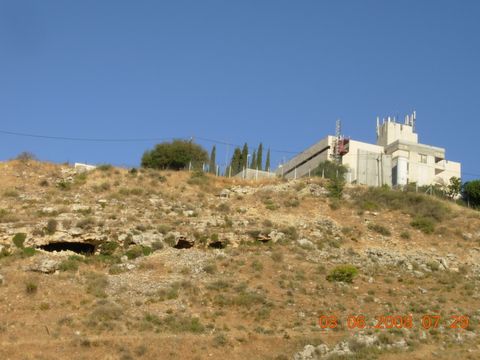
Rivka Ziv Cave 1
A small cave that developed in soft limestone. The cave is built of a central chamber and two small rooms connected to it from the north.
The cave has a central entrance measuring 7X1 m, which opens on the southeast side of the central chamber. The entrance is at the bottom of a low rock step, on the western bank of a small channel that drains into Nahal Akhbara from the north.
Read more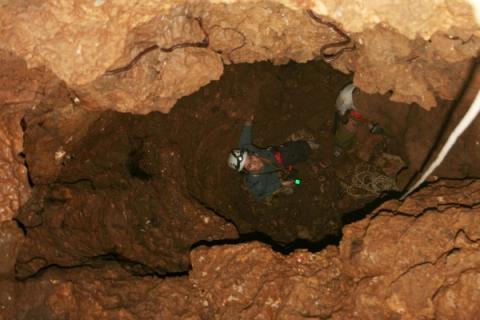
Ballutim Chimney
Peki'in
Ballutim Chimney is a small, stepped chimney (total depth about 25 m) that developed by vadose dissolution processes in Cenomanian limestone (Sakhnin Fm.).
Read more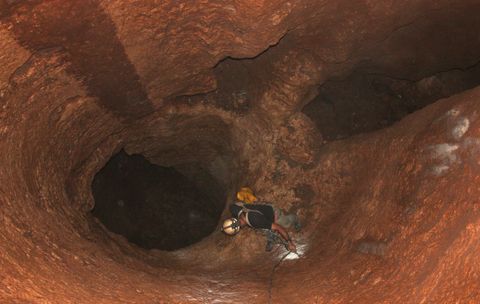
Rahav Cave
The Deepest of Israel's Caves
Rahav Cave is a developed karst pit that was formed in Turonian limestone.
The cave consists of three vertical chimneys plunging to a depth of 188 m below the surface, the deepest point in the caves of Israel.
Read more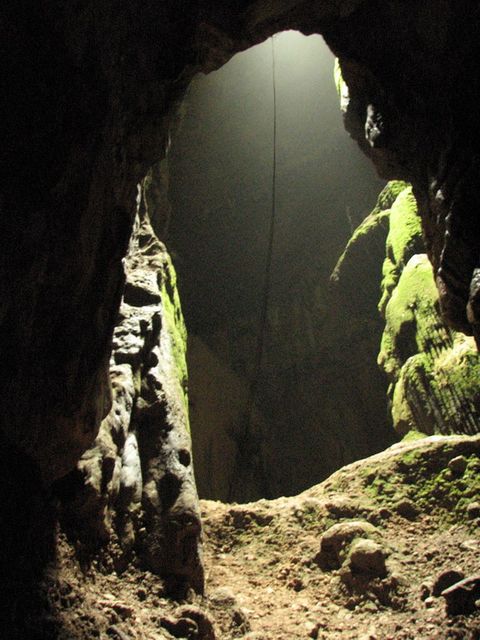
Jermaq Hoteh
Mount Meron
Until recently considered the deepest cave in Israel. It contains an exceptional and vast variety of cave deposits, as well as impressive populations of bats of many species. The hoteh is considered one of the most complex and dangerous caves in Israel.
** The cave is located inside a nature reserve and entering it is prohibited.
Read more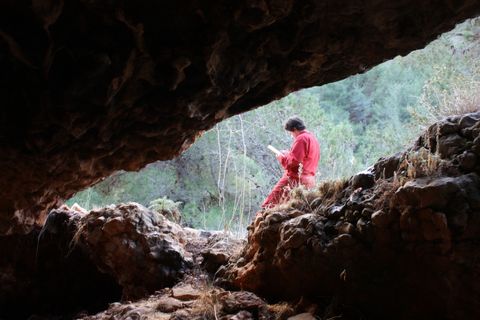
Masha Cave
Nahal Yiron
Masha Cave is a small cave consisting of an open chamber that developed by phreatic dissolution processes in Eocene limestone. The cave was investigated in the 1920s by Francis Turville-Petre, who excavated a large area at the site, in which remains from the Early Bronze Age and Chalcolithic periods were found.
Read more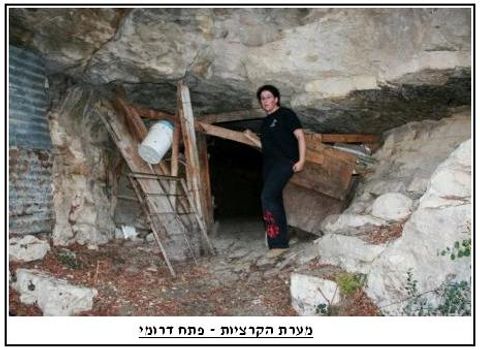
Ticks Cave at Ein Alva
Nahal Gush Halav
Ticks Cave is the largest cave in the Ein Alva cave complex; its cumulative length reaches 170 m and it has the morphology of a horizontal network cave. The cave is built of two main passages that developed along joint planes perpendicular to each other.
** Cave ticks are present in all parts of the cave.
Read more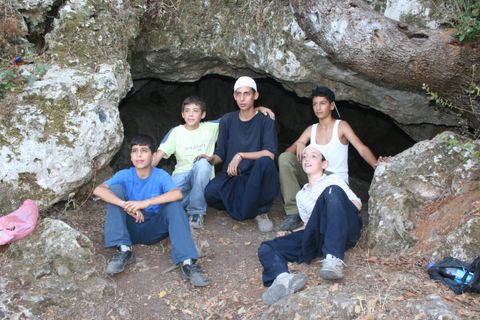
Green Cave
Peki'in
A small cave consisting of a two-level chamber that developed in Upper Cenomanian limestone (Sakhnin Fm.). The cave has a large entrance (measuring 3.5X1.3 m) opening on a steep slope descending northward from Har Shezor. The cave entrance leads to a wide space (A) measuring 7X6 m, with a height of up to 2 m.
Read more