This page was translated from Hebrew and has not been reviewed yet. The Hebrew page is the reference. עברית
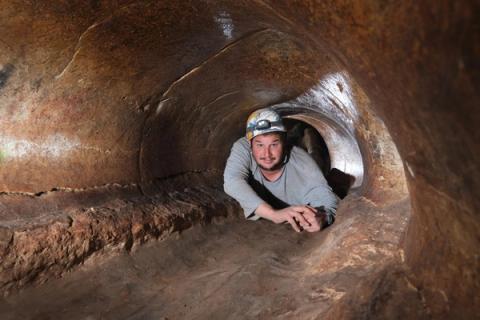
Hareitun Cave, Gush Etzion
Hareitun Cave is a giant karstic cave - the longest of the limestone caves in Israel. The cave consists of a network of branching passages and several dozen rounded chambers. The settling of the hermit monk Hareitun near the cave gave the cave its name. The total length of the cave's passages reaches 4216 m, and they spread out in a maze resembling a network, in whose various parts dozens of chambers and rooms open.
Read more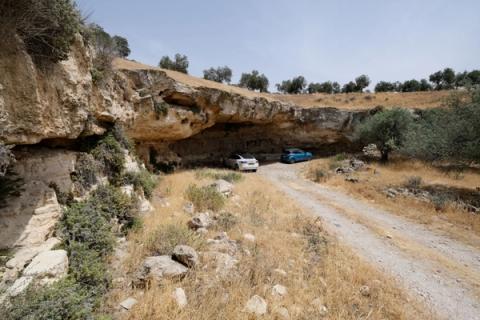
Ein Ziv Spring - Jahar Yaqin, Hebron Hills
Ein Ziv is a spring that issues in a cave hewn in nari rock. The cave is built as a horizontal passage (21 m long, 4.5 m wide, 3.5 m high) with a concrete pool at the entrance. The spring is located at the edge of the settlement of Pene Hever, near Horvat Bani Dar, and is filled with cold water all year round.
Read more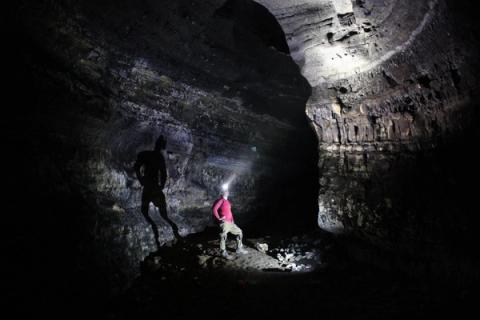
Tur Tzafa Cave
Nahal Netziv
A large cave (total length 441 m) that developed by phreatic hypogenic dissolution processes, in dolomite and calcareous dolomite rock of Cenomanian age (Kesalon Formation) on the northern bank of Nahal Netziv. The cave served as a refuge cave for refugees of the Bar Kokhba Revolt, and finds were discovered in it ranging from the Middle Paleolithic period, through the Chalcolithic period, to the Roman period (Bar Kokhba Revolt)
Read more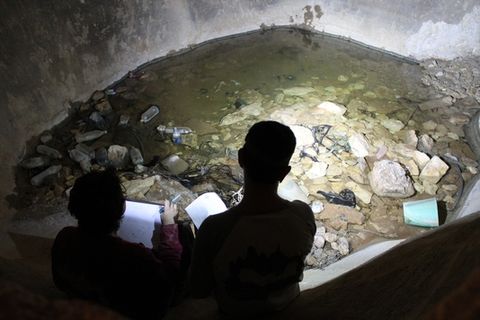
Peleg Cave
Gush Etzion
Peleg Cave is a small cave consisting mainly of an elongated chamber that opened in limestone of Turonian age (Shivta Formation). A report about the cave was provided by Yuval Peleg, who visited the site in 2013. During his visit Yuval located prehistoric finds, including a flint lunate, which makes it possible to date the activity in the cave to the Natufian culture.
Read more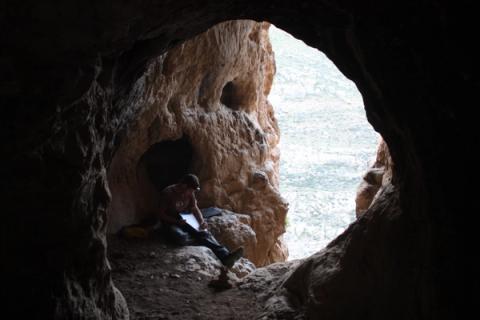
Mushroom Cliff Cave 10
Nahal Tekoa
A medium-sized cave (cumulative length 63 m and cumulative height 10 m) consisting mainly of a branching network of passages. Throughout the cave there are rounded solution marks, blind chimneys and solution domes, indicating that the cave was formed by phreatic-hypogenic dissolution processes that acted in limestone of Turonian age (Shivta Fm.).
Read more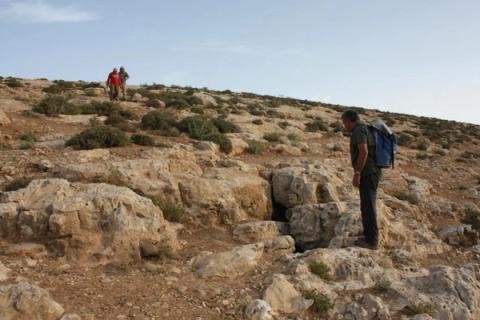
Carmel Cave
Southern Hebron Hills
Carmel Cave is a medium-sized chamber cave. At the southernmost side of the chamber there is a low area in which a few speleothems (stalactites, flowstone surfaces, elephant ears) were deposited, some of them active.
The descent into the cave requires 8 m of aid.
Read more