"Water Cistern" Cave, Nahal Hadud
- Grid ref.
- 148277/975254
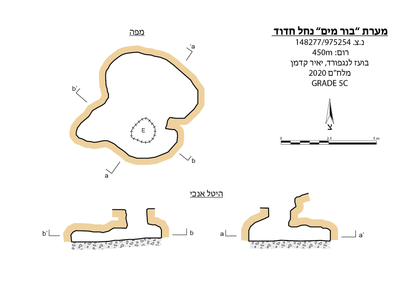 Cave mapView the map (PDF)
General:
The "Water Cistern" Cave of Nahal Hadud is a small natural cave that was converted for use as a water cistern. The conversion of the space for use as a cistern included clearing stones and arranging channels to collect runoff, as well as deepening the space, an operation whose remains can be seen in a dump pile standing beside the entrance. Despite the signs of use of the place as a water cistern, judging by the general structure one can gain the impression that the space was formed under phreatic conditions that acted on limestone of Eocene age. Under these conditions the cave was formed with the general structure of a chamber, similar to other caves in Eocene rocks in the Negev, for example: the nearby Nahal Yaham Cave and also the caves of Mount Arkov and the pits of Nahal Zin. In addition to the general structure and the parallels to other spaces, the absence of any sign of quarrying in the walls; the rounded shape of the walls and ceiling; and the type of rock (hard limestone) - all of these indicate that the space was originally formed by natural processes.
A report about the cave was submitted in winter 2020 by Gideon Regulsky and also by Yoav Negev. Following the reports the site was examined by Boaz Langford and Yair Kadman.
Description of the cave:
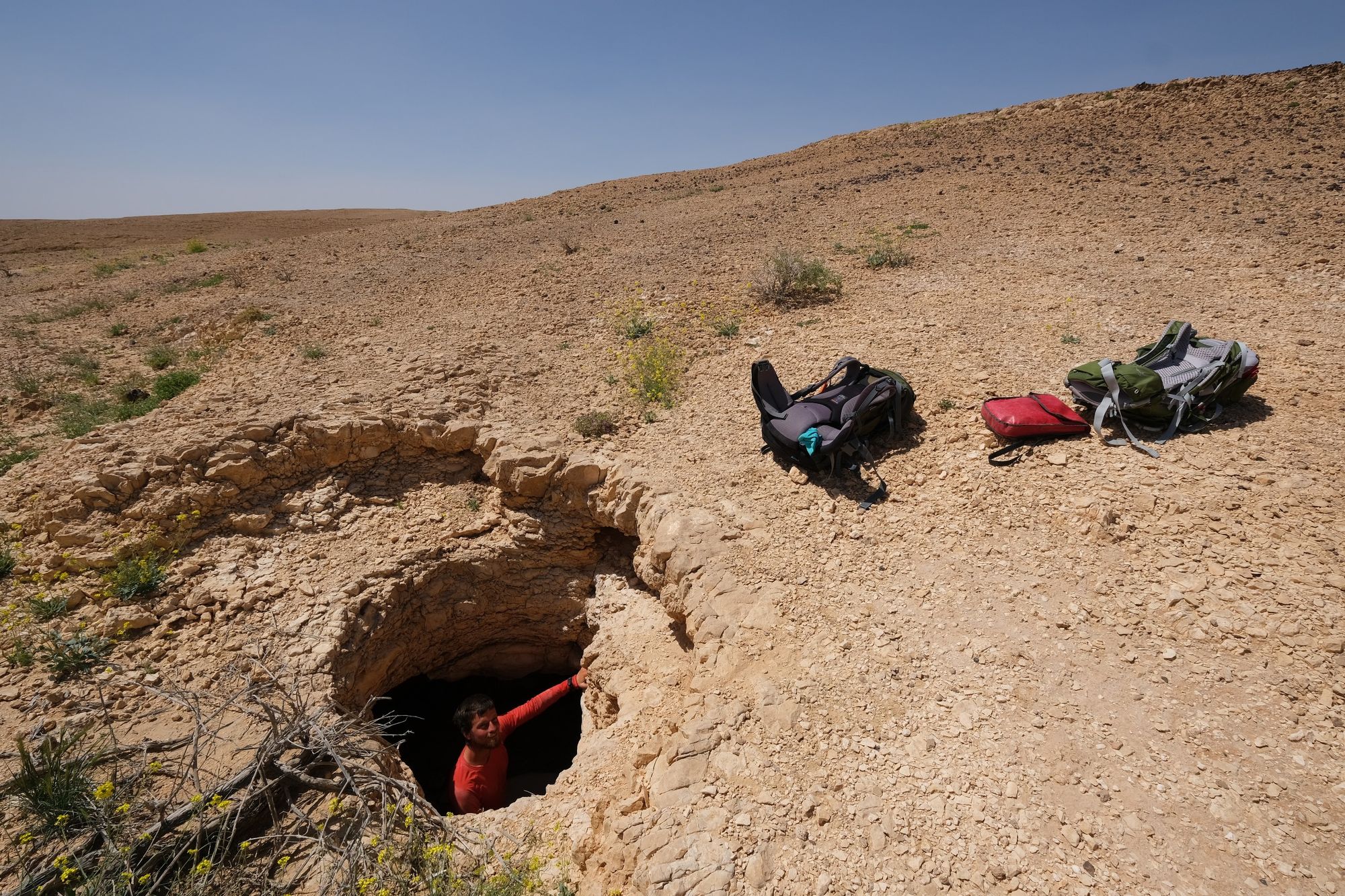
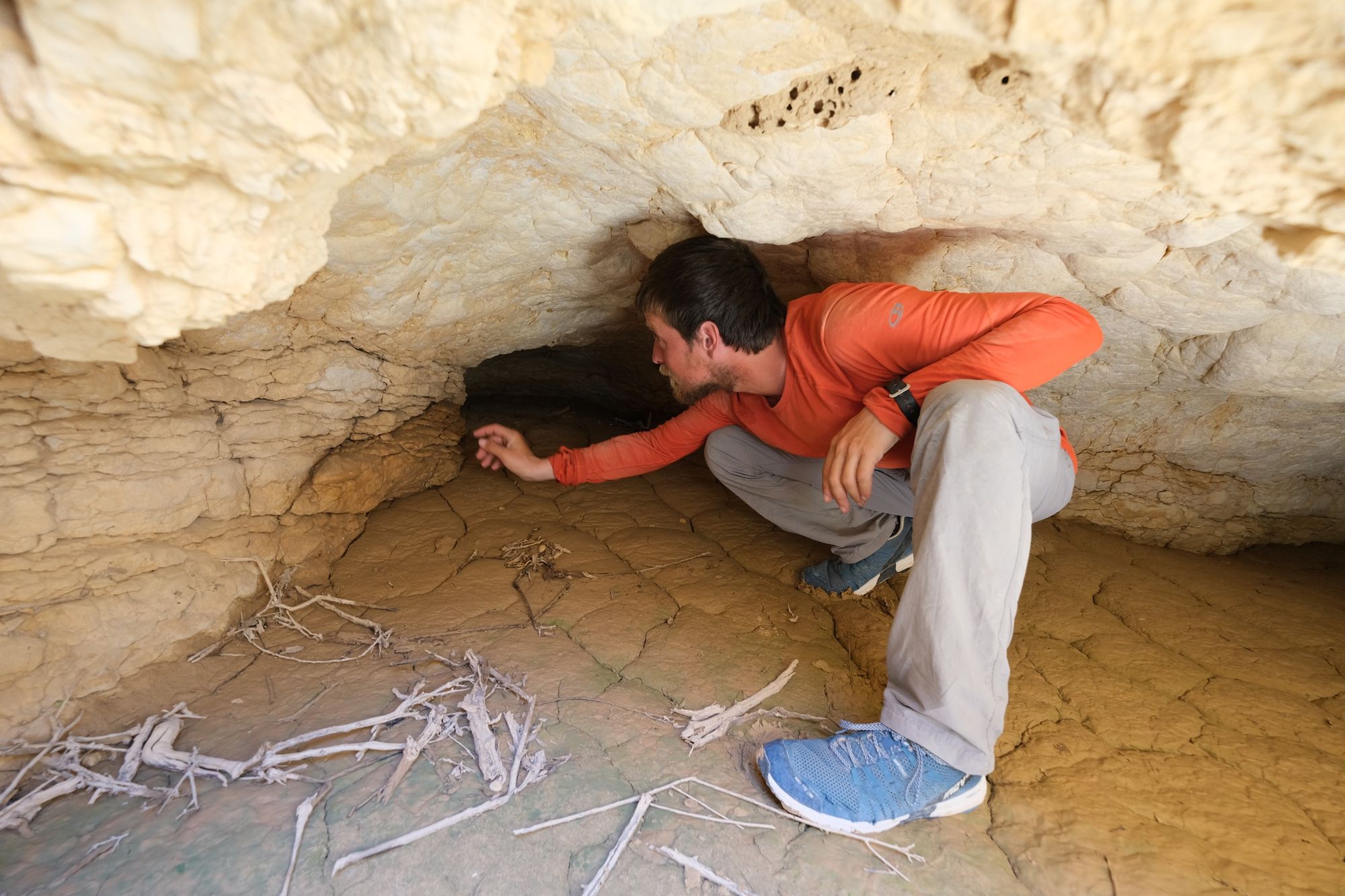
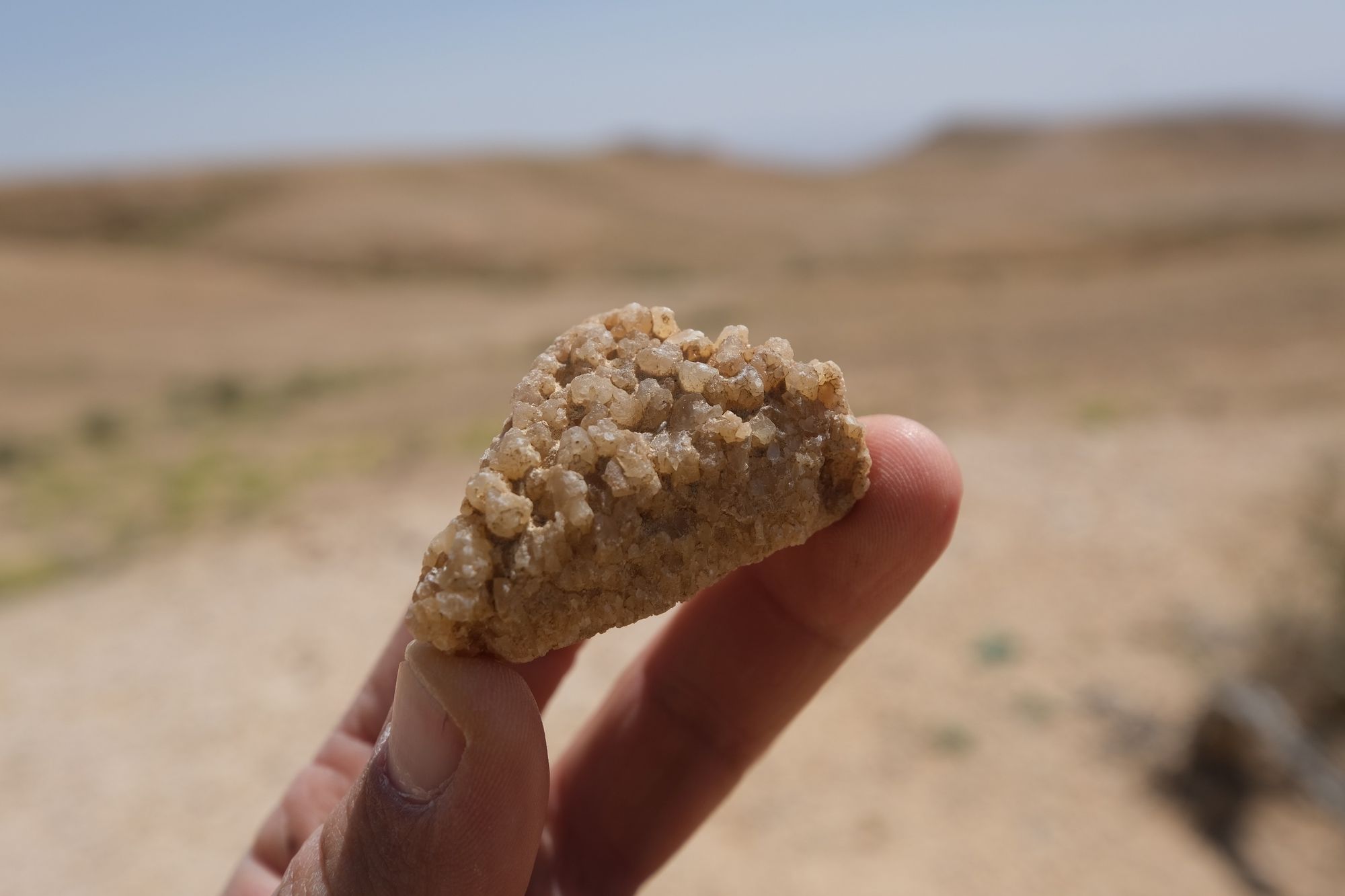
The cave has a vertical entrance, opening in the lower part of a gentle slope, at the head of an open channel in the tributary system of Nahal Hadud. The entrance measures about 1X1 m and its general shape is rounded. A simple descent through the entrance leads to the cave space. The space measures 5X5 m, is about 0.6 m high and its general shape is irregularly rounded. The floor of the space is horizontal and covered with light clay and a little gravel. It appears that the cistern continues to store water even today. The water wets its floor but evaporates or seeps away within a short time. It appears that the dump pile near the entrance originates from material that was removed from the floor. Over time additional material accumulated at the site, so that the space is gradually becoming blocked. Calcite fragments were also found in the dump pile, which can be assumed to have been deposited in the cave in the past and removed during its emptying and arrangement as a water cistern.
Written by: Boaz Langford, after a visit to the site with Yair Kadman.
Region: Central Negev
Elevation: 450+ m