Jar Cave - Ramon Crater
- Grid ref.
- 136209/997754
- Elevation
- 590 m above sea level
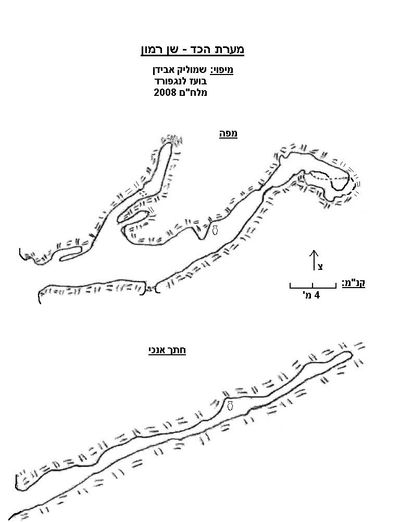 Cave mapView the map (PDF)
General:
Jar Cave is a medium-sized cave (total length about 50 m) that developed in limestone of Turonian age (Shivta Formation). The cave developed on the southern slope of the Ramon Crater, so that all its spaces are sharply inclined in accordance with the regional dip. Throughout the cave there are signs of speleogenesis under phreatic or hypogenic conditions, such as dissolution domes and a rounded profile.
The floor of the cave is covered with fine sandy sediment, perhaps remains of Miocene sands that penetrated the cave and were preserved in it. In addition to the depositional processes in the cave, there is chemical precipitation of a few dry cave deposits, some of which underwent secondary dissolution after their formation.
Cave description:
The cave is built of two parallel passages sloping at an average gradient of 30 degrees toward the northeast.
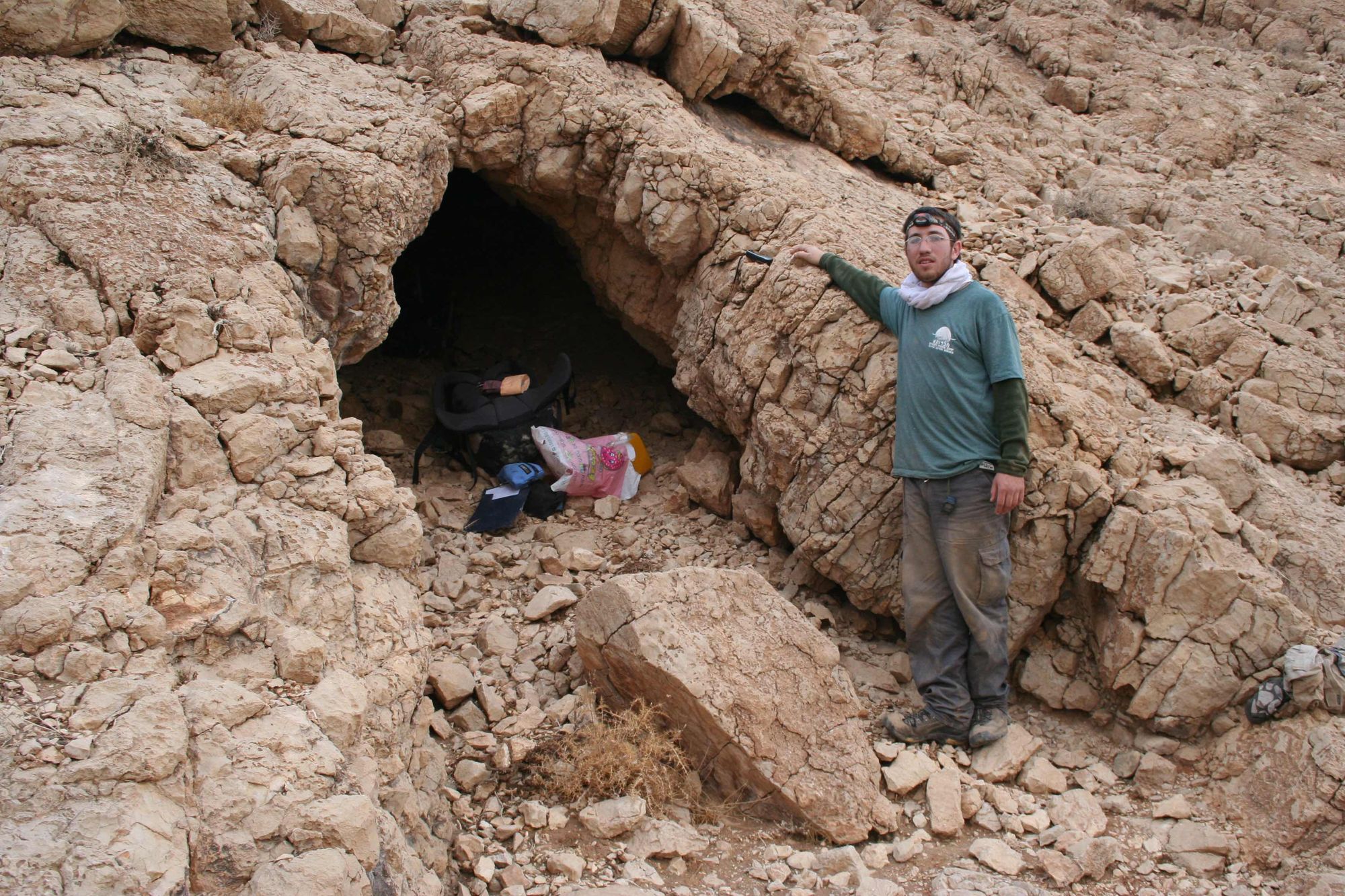
The cave has two entrances. Its lower entrance lies on the ribs of the ridge and measures about 2X2 m. The entrance leads to a wide horizontal passage developing toward the northeast. After about 6 m from the cave entrance there is a split in the passage leading to another passage, narrower and lower, developing north and about 10 m long. In the center of this passage there is a wide opening in the ceiling.
From the split point the main passage continues for another approximately 20 m, during which it alternately narrows and widens and in general becomes lower.
About 4 m before the end of this passage, there is a shaft in the cave ceiling rising to a small niche on an upper level. The length of the shaft is about 4 m and it contains a few tiny cave deposits including elephant's ears and soda straws. Some of the deposits underwent late dissolution and some were found active immediately after a rainstorm. In the area at the bottom of the shaft there is a sandy outcrop displaying cross-bedding.
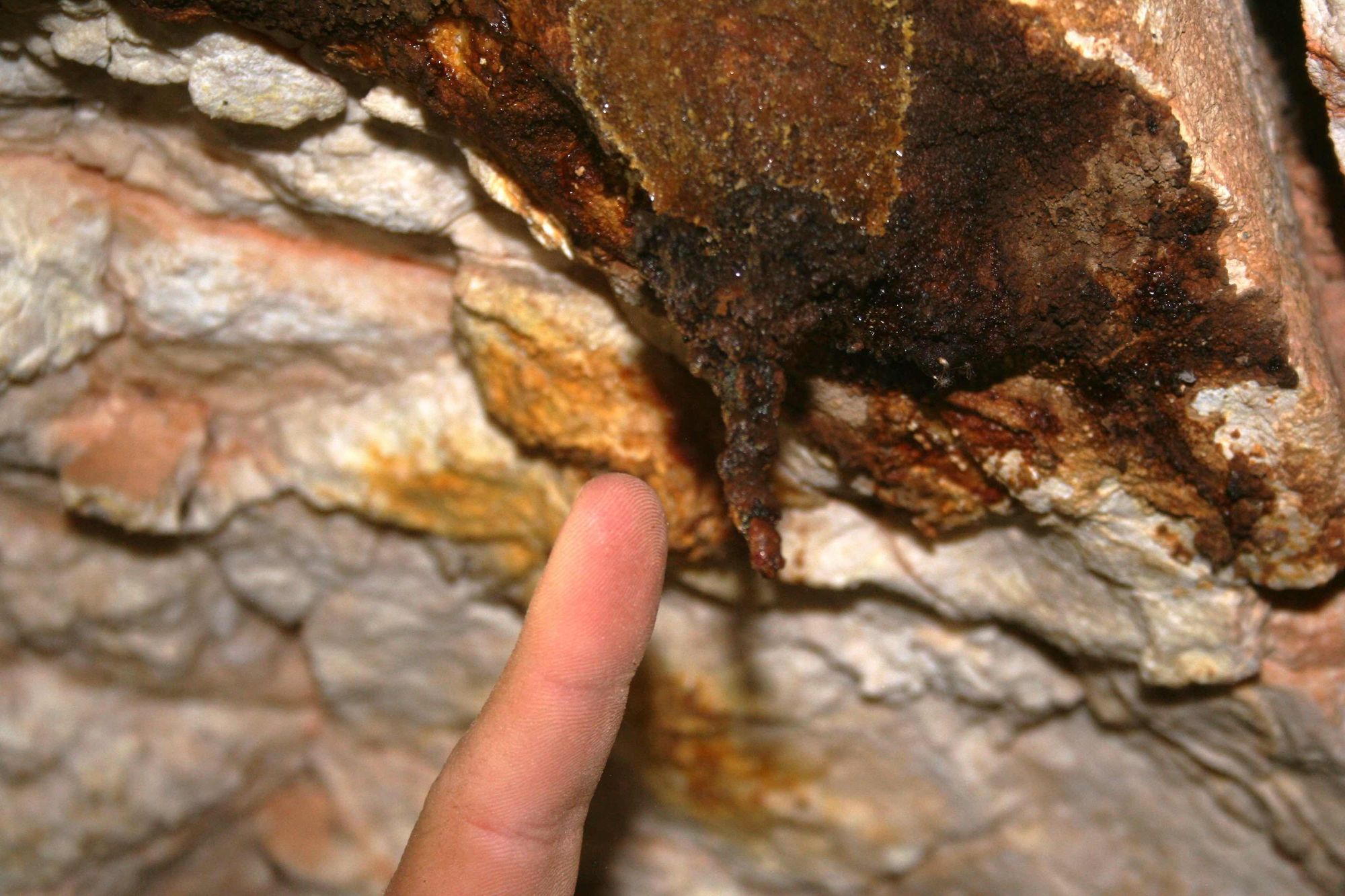
In the passage ceiling at various points there is urea formed from the drying of bat urine.
Human use:
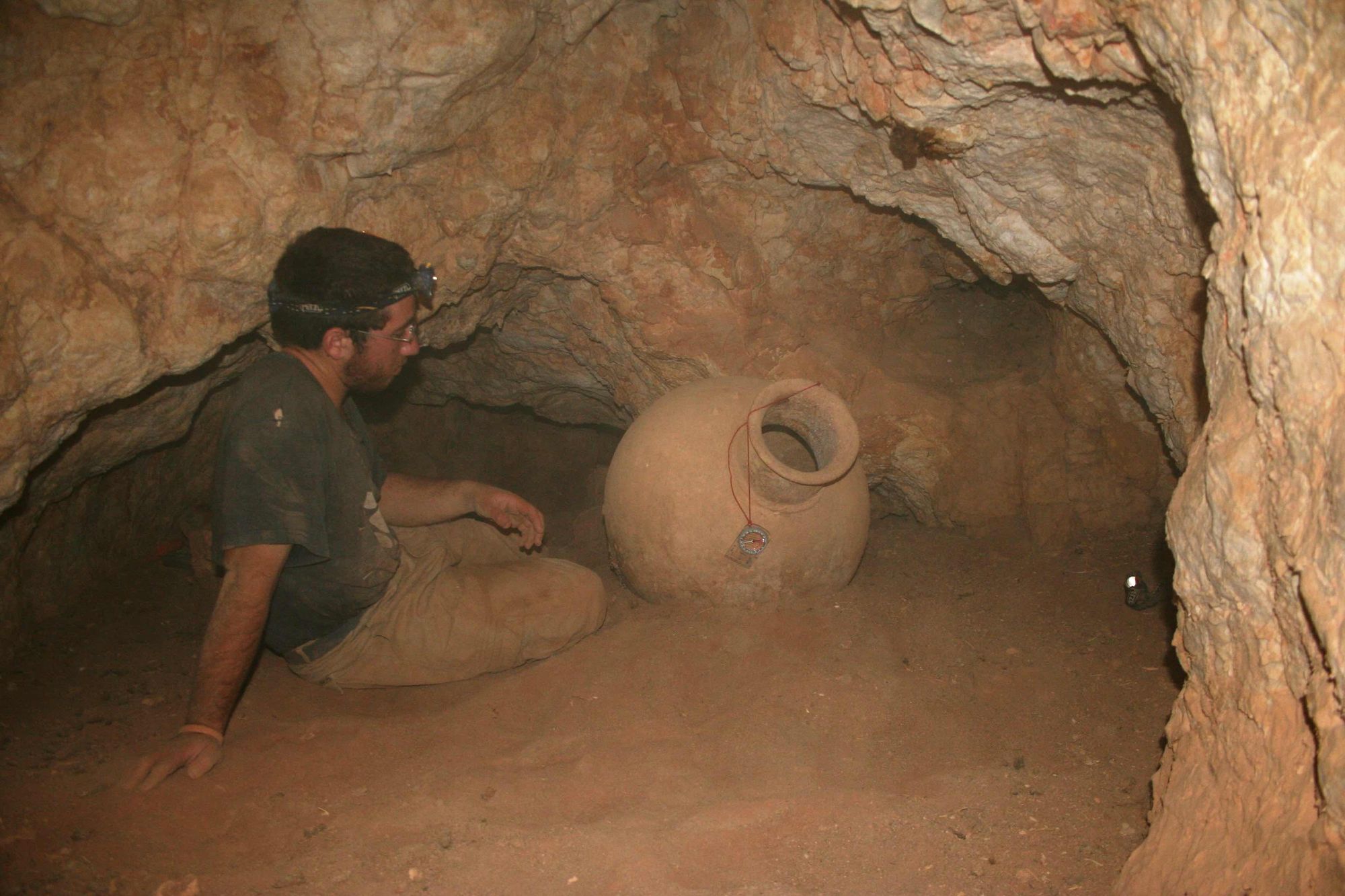
At the time the cave was discovered (2008), an intact jar, large in size, with decoration on its neck, was found in the inner part of the cave. The jar was dated by the Israel Antiquities Authority to the Late Bronze Age.
Biology:
A single insectivorous bat and several bat skeletons were observed in the cave. Guano and porcupine droppings are scattered throughout the cave. Also seen: bones and horns of a female ibex, parts of a lizard, spiders of the genus Ra'adan, a live individual of a stick insect, and mud nesting in the entrance area.
The cave tick is present in the cave.
Notes:
Movement in the cave is by stooped walking, except for a few narrow passages that require crawling.
Written by: Boaz Langford