
This page was translated from Hebrew and has not been reviewed yet. The Hebrew page is the reference. עברית
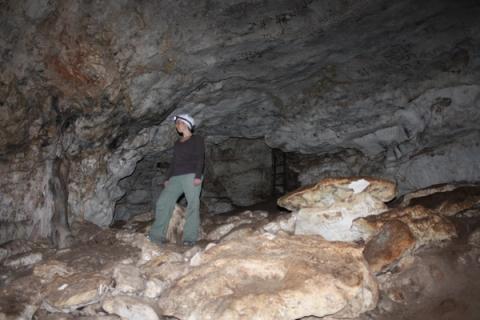
Ladder Cave
Kibbutz Hanita
The cave was discovered in 1940 by a member of Kibbutz Hanita named Itamar, who led his friends by the light of matches to the central chamber. Later Itamar returned to the place leading Moshe and Ruth Dayan behind him. During this visit Itamar fell from the entrance passage to the floor of the central chamber, and Moshe Dayan himself was put in charge of rescuing him from the place. On 16.6.1946 some of the members of the squad that blew up the railway bridge hid in the cave. In memory of their stay in the cave, those who hid there carved their names on a stalagmite.
Read more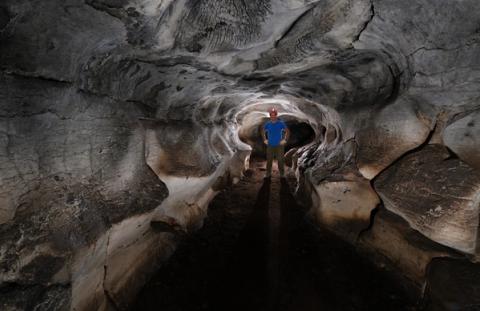
Dorvanim Cave (al-Maniasa)
The village of Yanuh-Jat
Dorvanim Cave is a medium-sized cave consisting of a number of horizontal passages in a structure resembling a two-dimensional network. The total length of the cave is 97 m and its maximum depth reaches 4 m. The cave is known to the residents of the village of Jat, who say that it reaches all the way to Safed. Its name spread far and wide as a cave in which porcupines dwell (hence its name 'al-Maniasa' = the porcupine's burrow).
Read more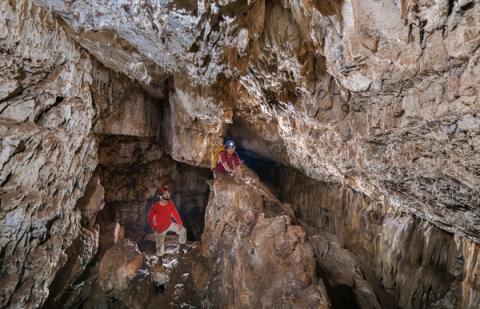
Sherekh Cave
Nahal Sherekh
Sherekh Cave is a large cave that developed mainly below the water table, in dolomite rock of the Sakhnin Formation. The total length of the cave stands at 289 m and its depth reaches 25 m. The cave is built of a two-dimensional network of passages, along an orthogonal fracture system, in north-south and east-west directions.
A marked hikers' trail passes through the cave, and a population of insectivorous bats dwells in it.
Read more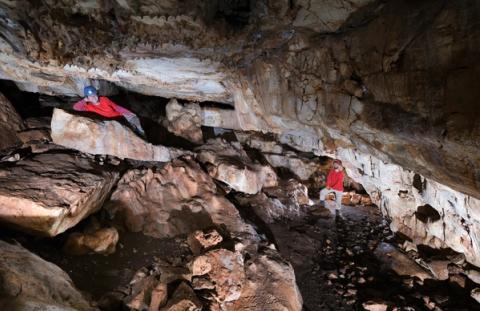
Shekhania Cave
Gush Segev
Shekhania Cave is a chamber cave divided by collapses into several wings. In the inner part of the chamber there are hypogenic chimneys climbing to the height of the ceiling. The bones of Israel Ben Zeev of Ofir, a land guard who was murdered in 1938, were found in the cave. The cave serves as a roosting site for insectivorous bats and entry to it is permitted only in the summer season.
Read more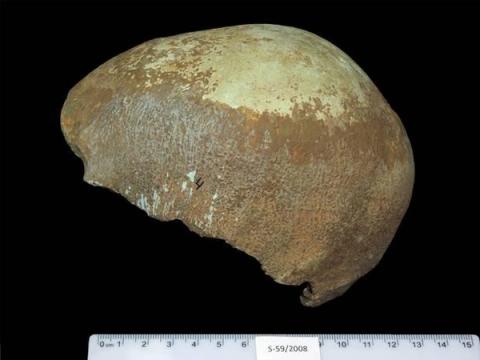
Manot Cave
Moshav Manot
Manot Cave is an active karstic cave, rich in stalactites, that was discovered by chance in 2008 in the western Galilee when a bulldozer performing work at the site hit it.
A skull of a modern human, 55 thousand years old, was found in the cave. This rare skull is the earliest fossil evidence outside Africa that today's human populations originate from a wave of migration out of Africa that began about 25 thousand years ago.
Read more