
This page was translated from Hebrew and has not been reviewed yet. The Hebrew page is the reference. עברית
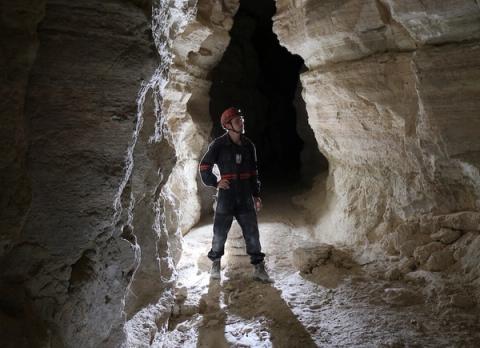
HaKemach Cave
Nahal Peratzim
A large cave that developed by mechanical erosion processes in Pleistocene marl. The cave consists of an elongated passage and a series of wide collapse bells, which create a series of openings at the surface. The total length of the cave spaces is 274 m and its maximum depth reaches 22.5 m.
Read more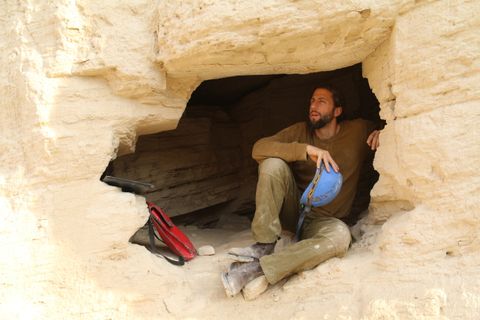
Mitzad Zohar Cave
Mitzad Zohar
A medium-sized cave (total length 33 m) consisting of a single passage in marl of the Lisan Formation. The cave has a pair of entrances that stand out from afar as dark windows in the white cliff. The entrances open in the lower part of the marl cliff south of the Mitzad Zohar site, about 4-5 m above the rocks of the Judea Group. The entrances have a generally rectangular shape and they are the starting point of a channel that once flowed through the cave passage.
Read more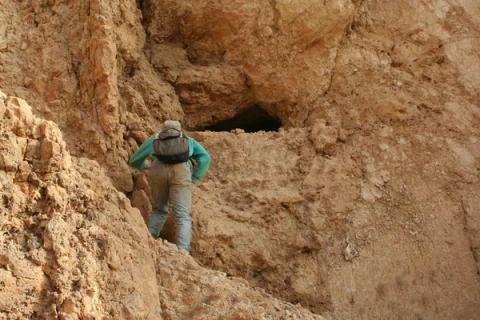
Nahal Bokek Cave
Nahal Bokek
A small cave opening in the cliff on the northern bank of Nahal Bokek, near the mouth of the stream, about 70 m west of the Ammonite Cave. The cave has a single space measuring about 5.5X4 m. The cave can be reached from the stream bed by climbing to the base of the cliff. The cave entrance opens about 2 m above the base of the cliff and climbing up to it is easy.
Read more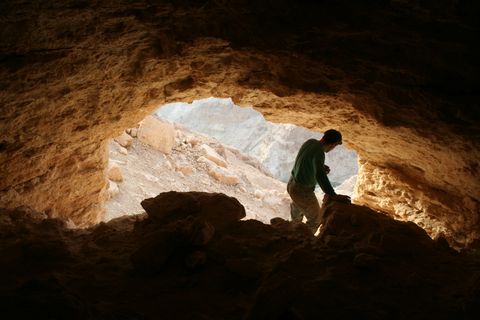
Ammonite Cave
Nahal Bokek
A small cave opening in the cliff on the northern bank of Nahal Bokek, near the mouth of the stream. The cave has a single space measuring about 6X6 m and about 2 m high. The cave entrance stands out from afar and faces southeast; it measures about 3X2.5 m and is arched. The cave can be reached from the stream bed by climbing to the base of the cliff. The cave entrance opens about 2 m above the base of the cliff and climbing up to it is easy.
Read more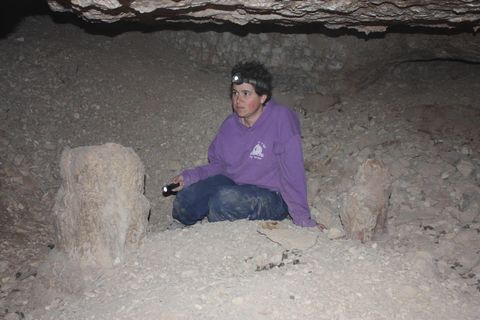
Hever Stalagmites Cave
Nahal Hever above the waterfall
A medium-sized cave (total length 23 m) that was formed under confined aquifer conditions that acted in Turonian limestone (Shivta Formation). The cave was discovered by Gideon Hadas, who published its existence in the Ein Gedi map survey, which reported a "karst cave with stalactites and Roman potsherds". After its discovery the cave was surveyed by the ICRC team, which mapped the space.
Read more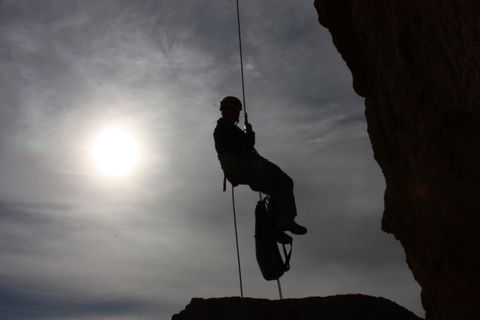
Aharoni Cave
(Nahal Hever)
Aharoni Cave is a large cave (total length 180 m and cumulative height about 5 m) consisting mainly of a network of wide, low passages that developed by dissolution processes. The cave was discovered on 16.3.1961 by the survey expedition of Yohanan Aharoni and was briefly documented in his diaries. In January 2013 the cave was relocated and mapped by an ICRC team.
Read more