Johnny Cave
- Grid ref.
- 161457/061925
- Elevation
- +565 m
 Cave mapView the map (PDF)
General:
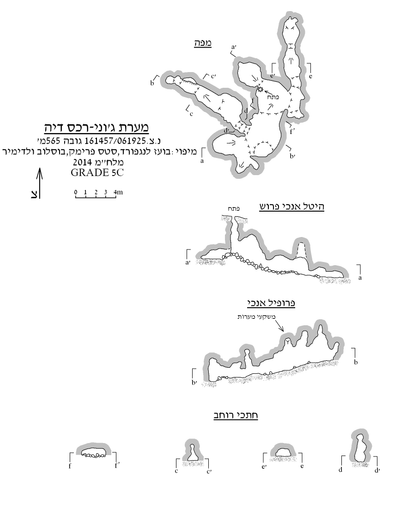
Johnny Cave is a medium-sized cave (total length 46 m and depth 7 m) that developed in limestone of Turonian age (Shivta Formation). The cave space consists of a number of rooms, in which rounded dissolution domes stand out, indicating that the cave was formed as a hypogenic cave in the phreatic zone.
Description of the discovery of the cave:
The cave was discovered in January 2014, during a search for another cave reported by Johnny Sagi of Moshav Ramot. Since the original publication of Ein el-Ma'ara (Oz Golan, 1991), Johnny has been trying to locate the place, but so far without results. During his search attempts Johnny located a cave from which a fig tree sprouts. On a joint trip with the ICRC team the cave with the fig tree was located, but it was found to be a collapsed space of no particular interest. On the way to that cave, near the vehicle parking spot, the opening of a previously unknown cave was suddenly discovered: Johnny Cave.
Description of the cave:
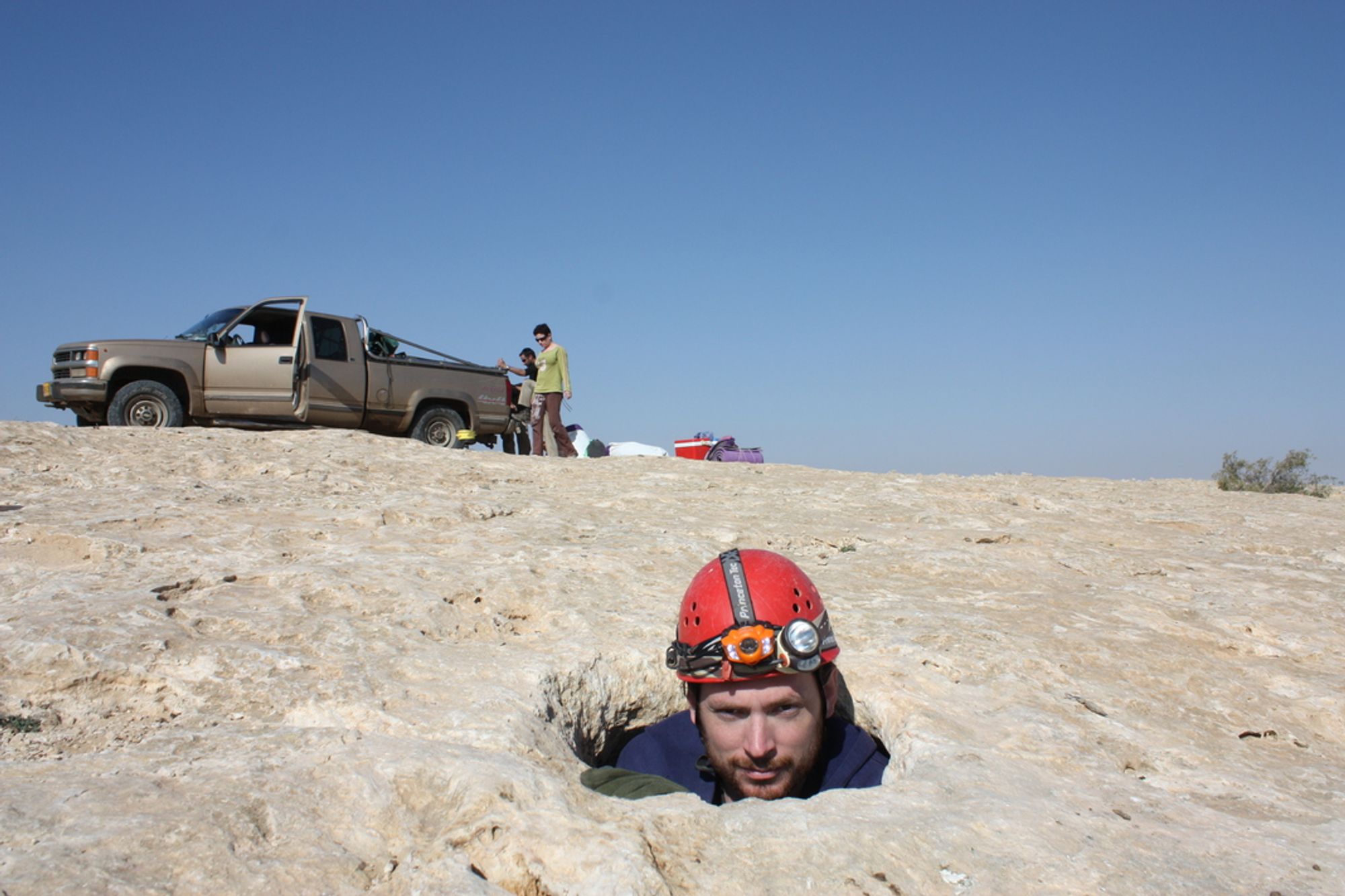
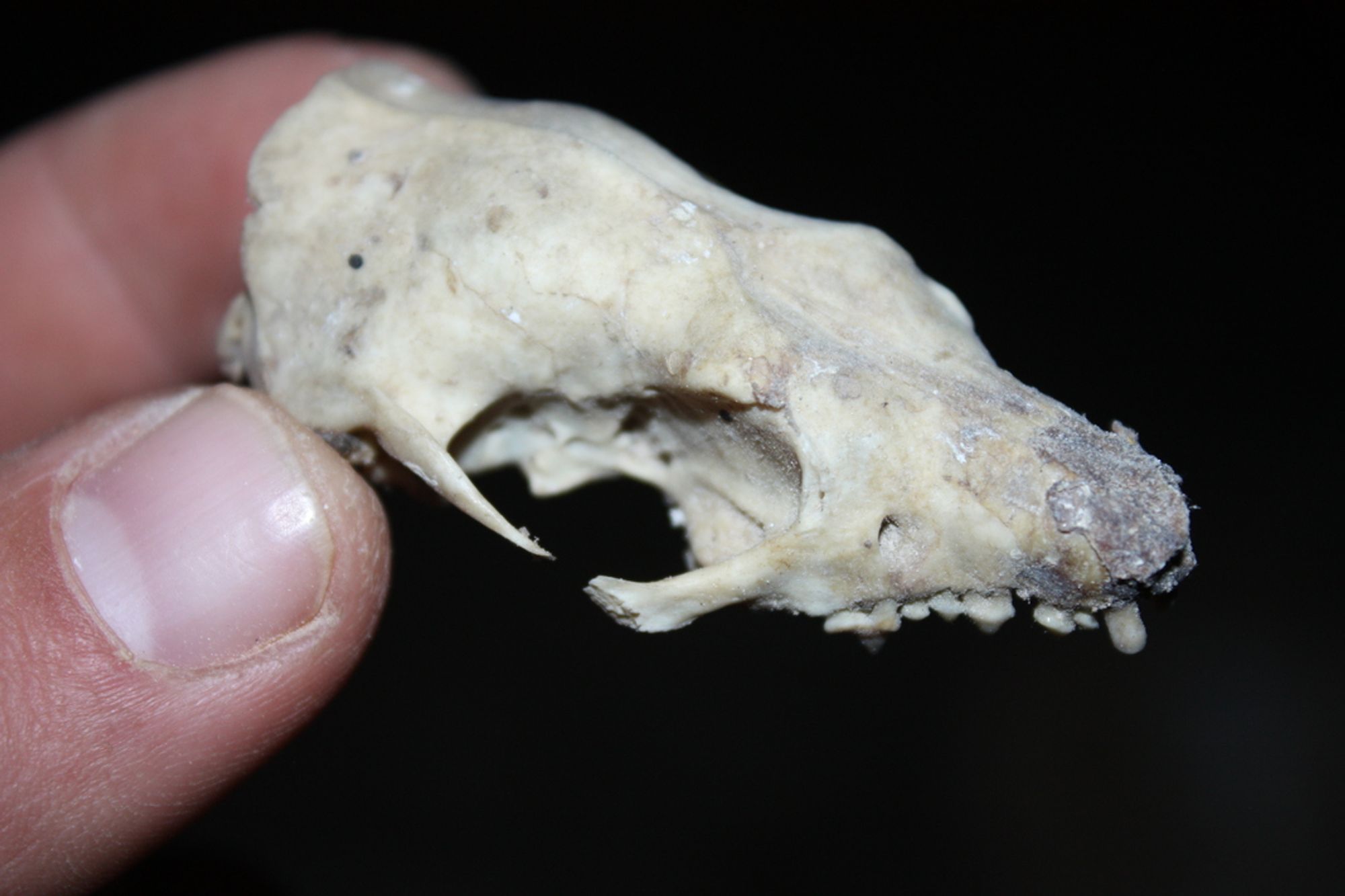
Johnny Cave has a round vertical opening (measuring 0.4X0.4 m) gaping in the middle of a bare rock surface, on the watershed line of the Dimona Mountains, between Har Dayya and Har Kadim. From the opening a narrow vertical passage extends, which after 3 m connects to a small room that serves as a central junction from which one can proceed to various parts of the cave. The floor of the room is covered with many stones and a little debris. Scattered around the room are animal carcasses that apparently fell into the cave and did not find their way back to the surface.
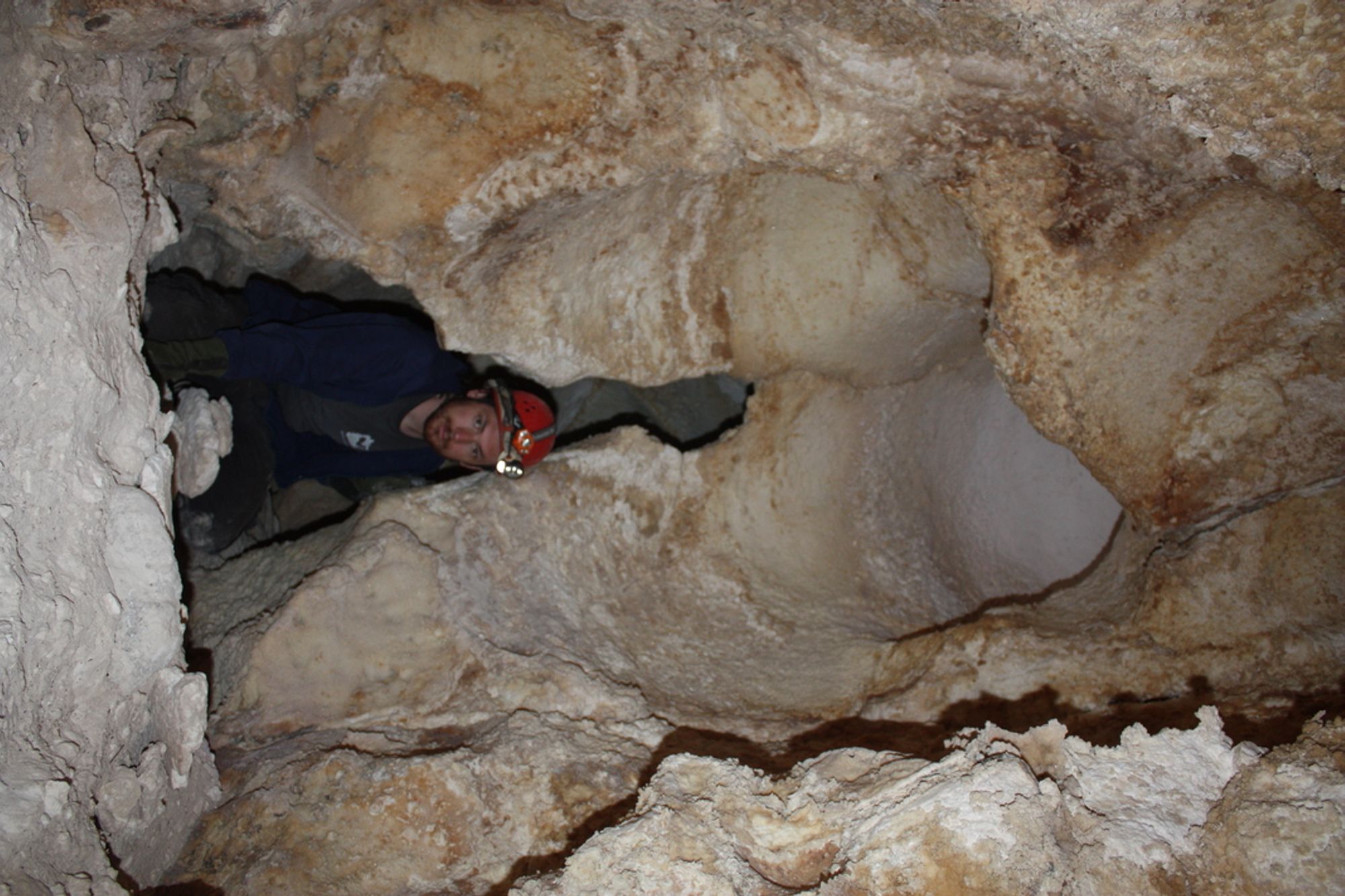
A low passage at the base of the vertical entrance passage leads west to a small, low room, mostly plugged by a spill that fell from the cave opening. Opposite this passage, on the eastern side of the entrance room, there is another low passage, which leads to an elongated horizontal passage extending north. The profile of the passage is rounded and prominent dissolution domes gape in its ceiling.
The main part of the cave extends from the entrance room southward, in the direction of the slope of the floor. In this direction too there is a low passage separating the entrance room from a wide room located south of it. The floor of the southern room is horizontal and covered with light-colored sediment and many stones. In the ceiling of the room a developed dissolution dome gapes, covered with black soot, possibly as a result of a burning tire being thrown into the cave.
The remains of the tire still lie in the area of the low passage between this room and the entrance room. South of the room there is a low space that resembles in character the space beneath the vertical entrance passage.
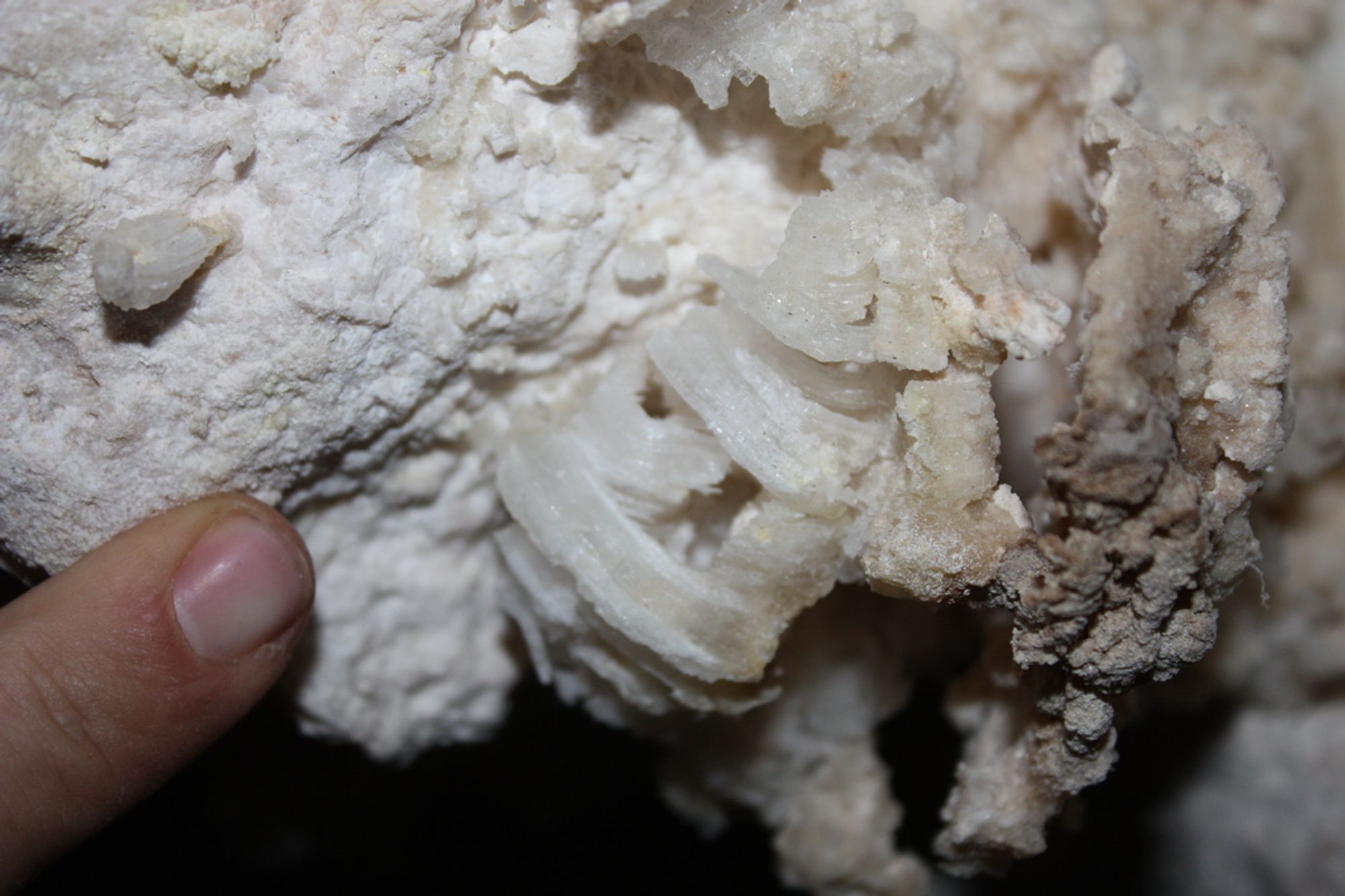
Another space branching off the northern side of the room continues as a short passage in whose ceiling deep dissolution domes gape. In the walls of the passage there are a few cave corals as well as salt flowers and coatings, which are the only cave deposits in the cave.
Notes:
- The cave opening can be reached by off-road vehicle. From the Arara area in the Negev one can connect to the quarries at the top of Nahal Tela, and from them to the dirt road that runs along the watershed line of the Dimona Mountains. This dirt road leads to the cave opening.
- Despite the vertical structure of the cave opening, it can be visited without the need for a rope.
- Various arthropods were observed in the cave: beetles of the genus Blaps, a male Egyptian scarab, various spiders. In addition, several individuals of house centipede were observed.
Written by: Boaz Langford
Region: Dimona Mountains