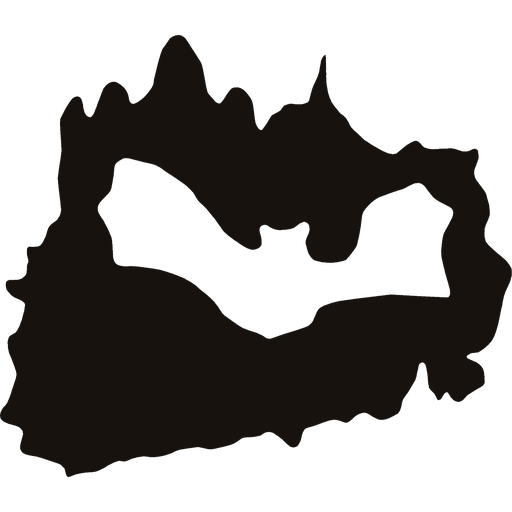
Silon Cave
- Location
- Nahal Dimona - Hemar
- Elevation
- 231 m above sea level
Description of the Cave:
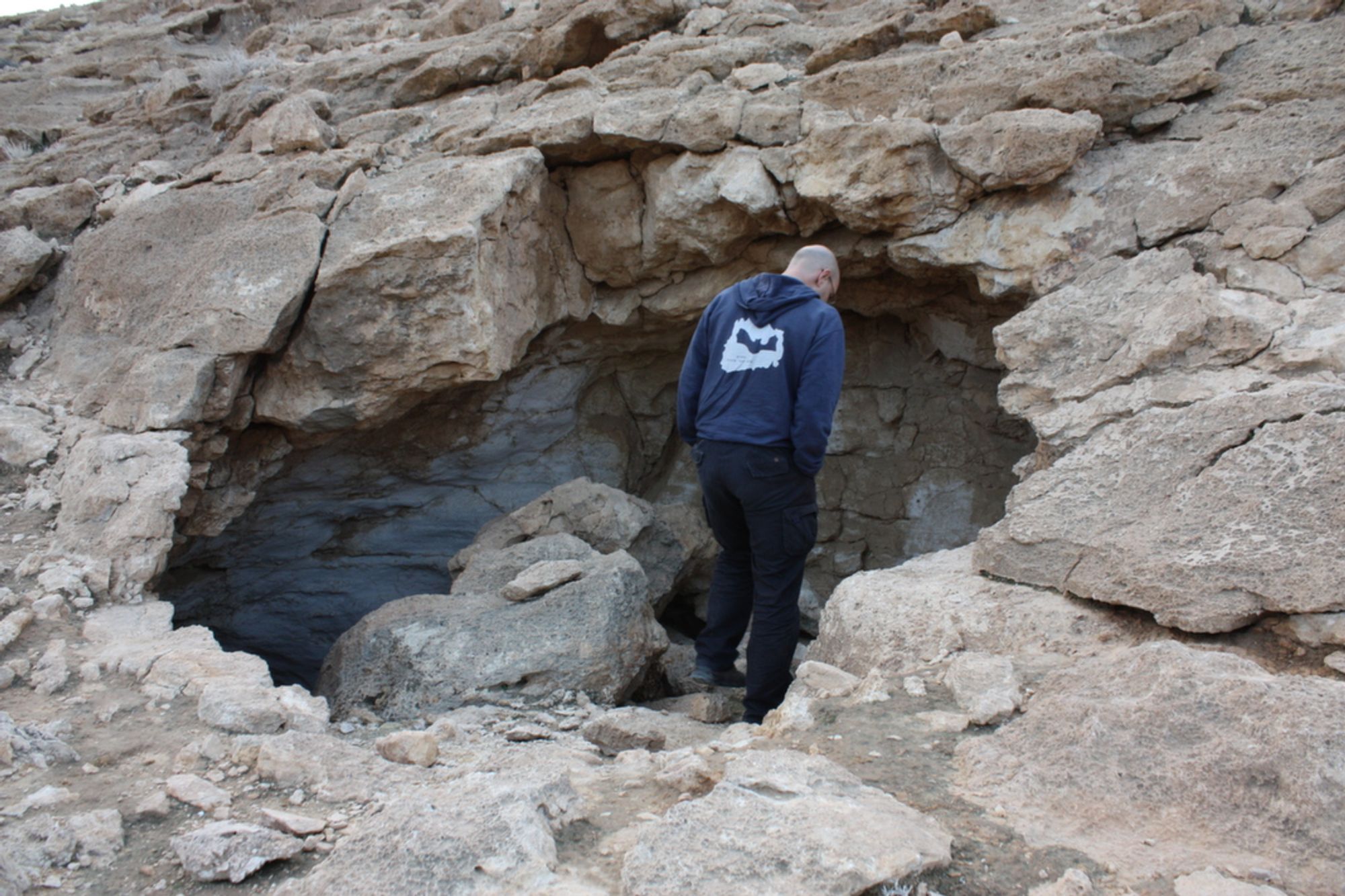
The cave has a rounded opening (diameter about 4 m) in the middle of the slope of the western bank of Nahal Dimona, about 30 m above the stream bed, about 300 m north of its junction with Nahal Hemar. The cave opening opens in the ceiling of the northern part of an elliptical chamber that developed along a northeast-southwest axis.
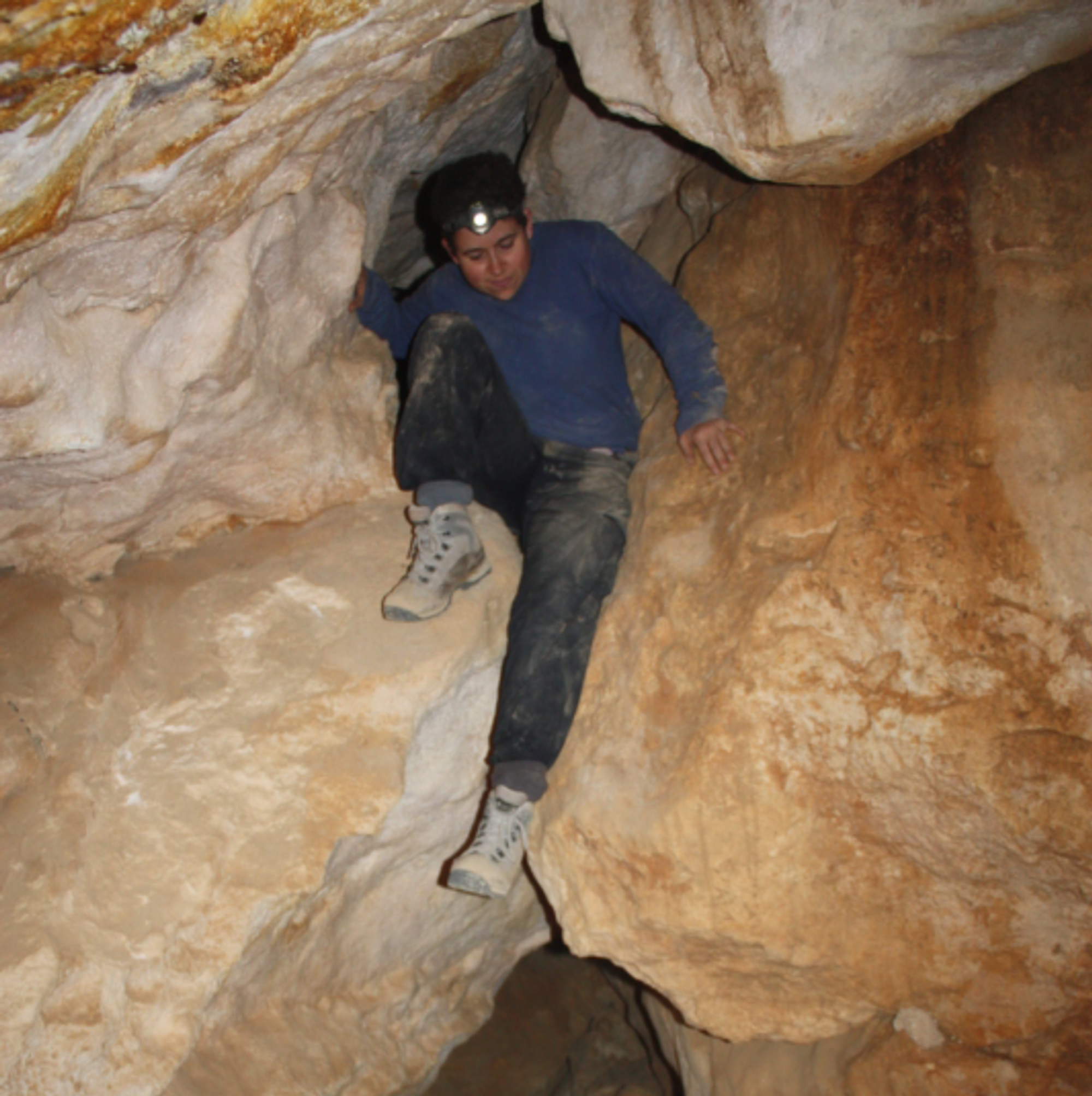
The chamber measures 31X16 m and is 20.5 m deep. Significant collapses that occurred in the chamber space created many voids in it, connected to each other by narrow passages between the collapse rocks. The present cave spaces extend one beside and beneath another, and are mostly roofed by the original ceiling of the chamber, which slopes down toward the southwest. The contact line between the collapse rocks and the chamber ceiling created an isolated space south of the opening area. A very narrow passage extending along the floor of the space, beside the collapse rocks, leads to the southern part of the chamber, where the original outline of the chamber is best preserved. This part consists of a single space sloping steeply to the south.
The floor of the space is composed of many collapse rocks, some of which protrude and touch its ceiling. The ceiling of the space consists of a stepped rock surface extending south at a slope parallel to the floor. On the southern side of the space there is a horizontal area bounded on the south by the original walls of the chamber and on the east and west by collapse rocks that block the space. The floor of this area is completely covered with a thick layer of porcupine droppings and a few large bones.
Notes:
- One can drive a 4X4 vehicle up to about 150 m from the cave opening through the bed of Nahal Hemar. Because the opening does not face the stream bed, it can be identified only with difficulty. The opening is clearly visible only from close up or when viewed from the opposite bank.
- Many porcupine droppings and quills were found throughout the cave, indicating that the cave served/serves as a daytime shelter for porcupines. The cave also seems to serve as a shelter for hyenas; this can be assumed from large bones (some of which show gnawing and bite marks) scattered throughout the cave.
Also observed in the cave:
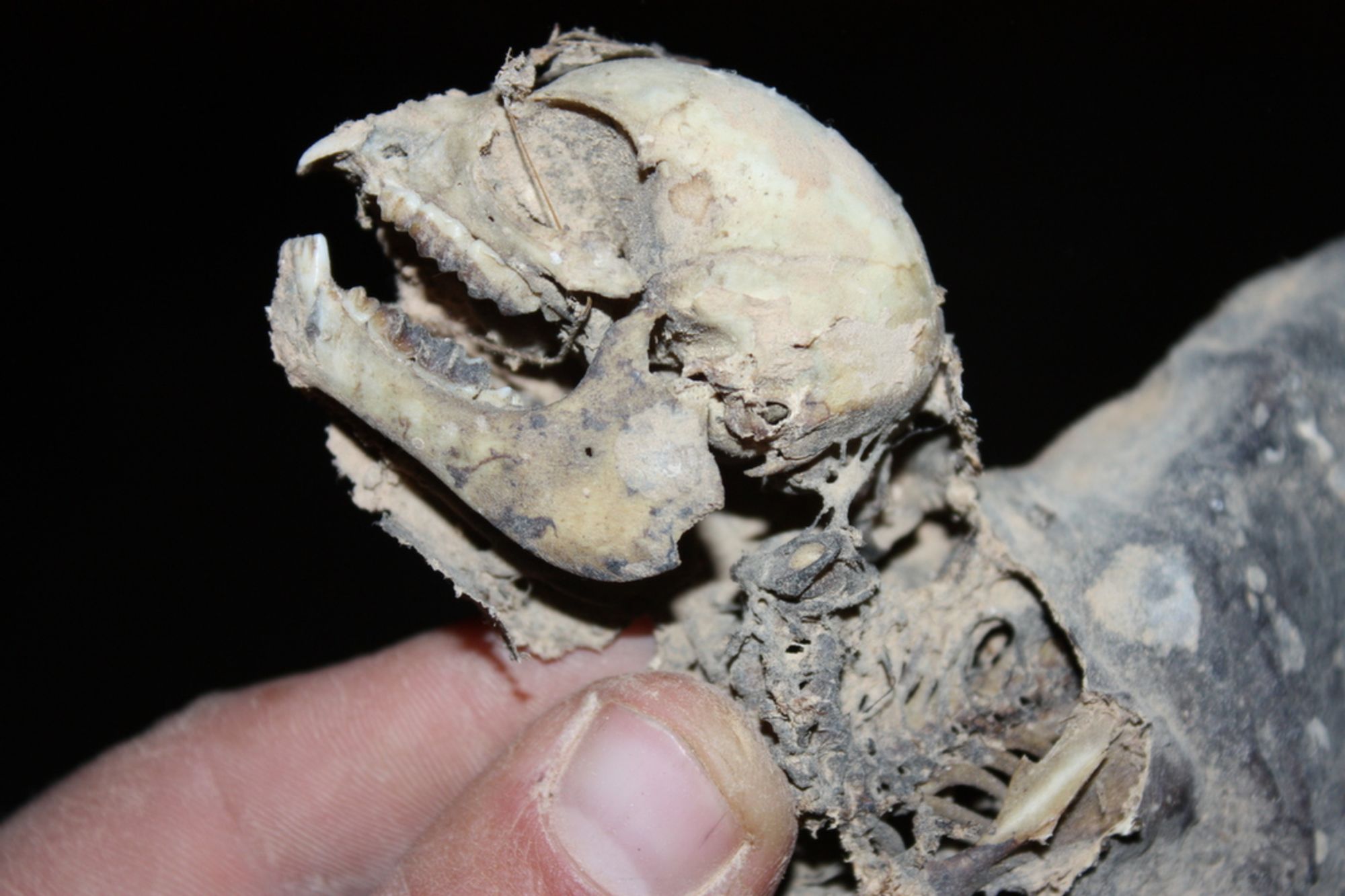
- A bat (type not identified), a rock hyrax carcass, several individuals of the golden spiny mouse, several individuals of the Mediterranean recluse spider, an antlion of the genus Kanafchut, the cave tick, and other arthropods.
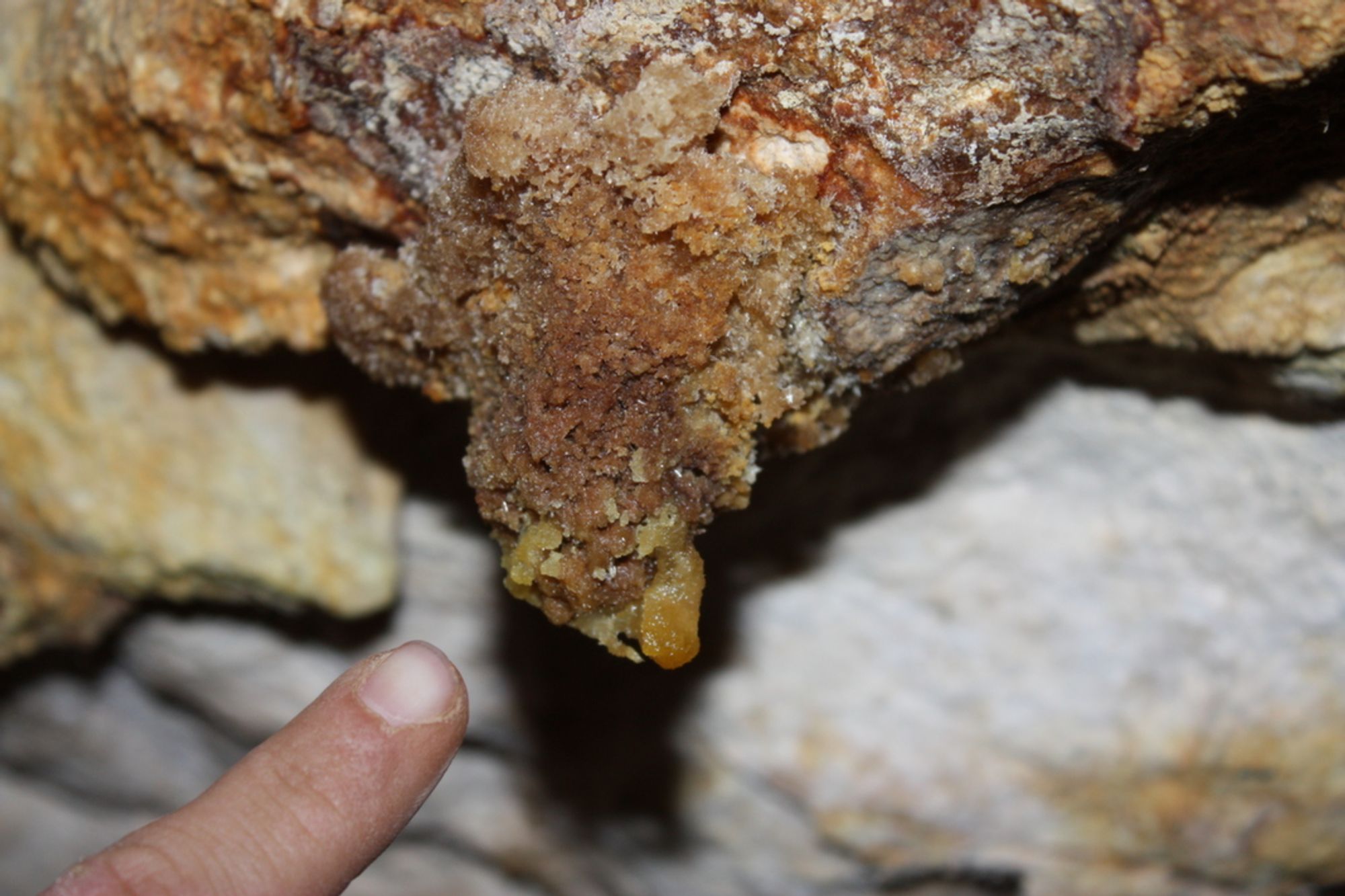
- On the ceiling of the southern part of the cave very little evaporite cave deposit was laid down, appearing as a translucent-white coating. In the other parts of the cave there are a few stalactite-like deposits formed from bat urine.
Written by: Boaz Langford