Hatzuva Cave - Nahal HaBesor
- Grid ref.
- 124113/037199
- Location
- Nahal HaBesor
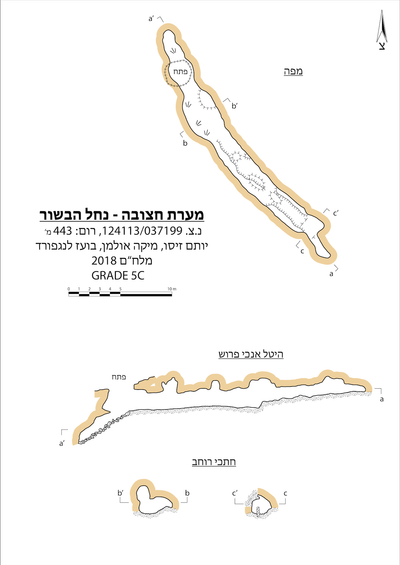 Cave mapView the map (PDF)
General:
Hatzuva Cave is a small cave consisting mainly of a single horizontal passage. The total length of the cave is 30 m and its depth reaches 6.5 m. Unlike the other caves known in the region, this cave was formed in dolomite rock of the Tamar Formation and not in limestone of the Shivta Formation.
Information about the cave was provided by Marik Riber in March 2018. About a month after the report the place was inspected and mapped by an ICRC team (Shemesh Yaran, Mika Ullman, Yuval Sobolev, Yotam Zisu, Boaz Langford).
Cave description:
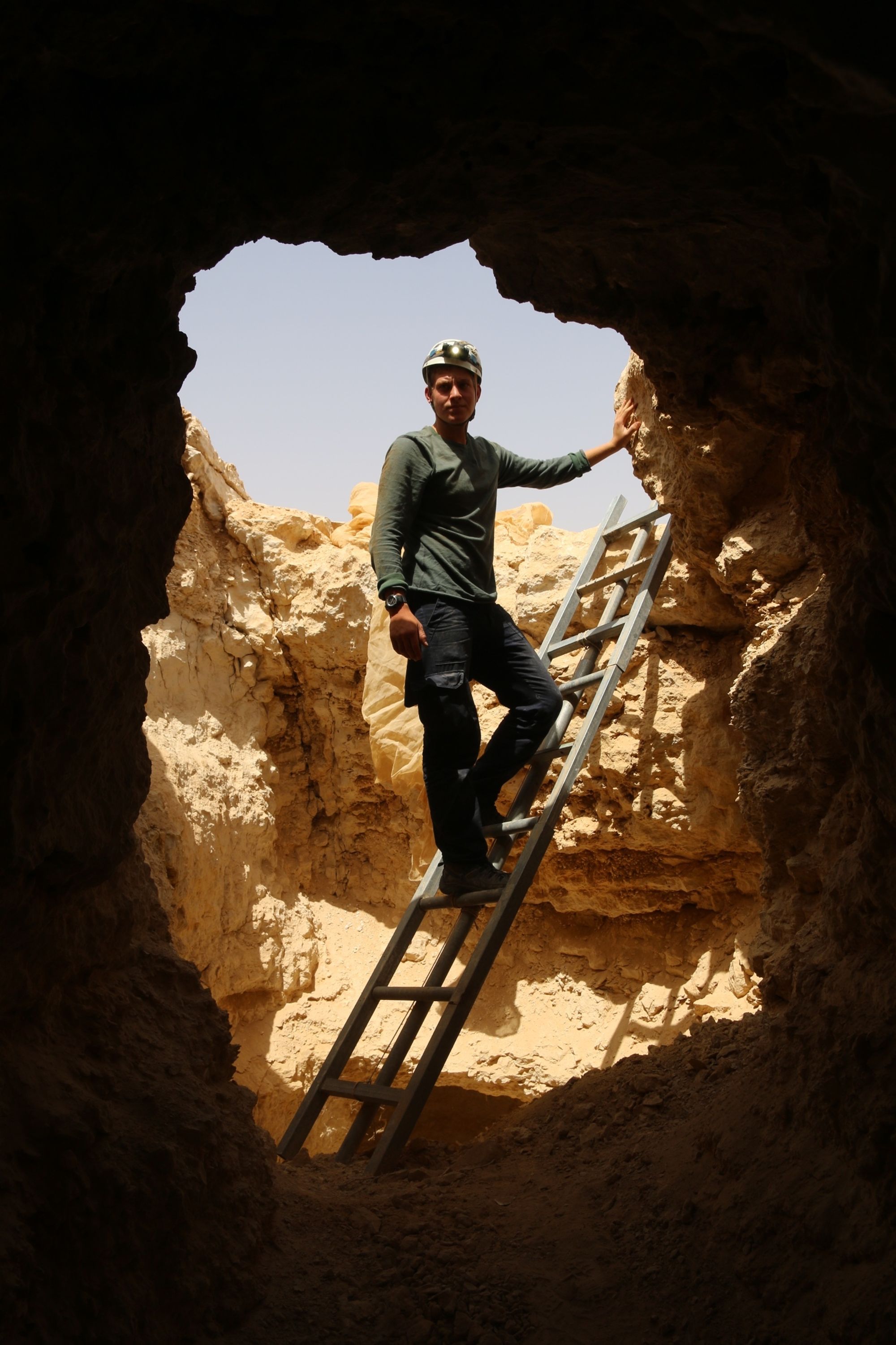
The cave entrance opens at the top of the southern bank of a local channel draining into Nahal HaBesor. The cave entrance consists of a wide elliptical pit descending to a depth of ~2 m and connecting to the northern part of the cave passage. The passage developed on an azimuth axis of 150, with its central part extending from the entrance to the southeast and only a short, steep branch extending north.
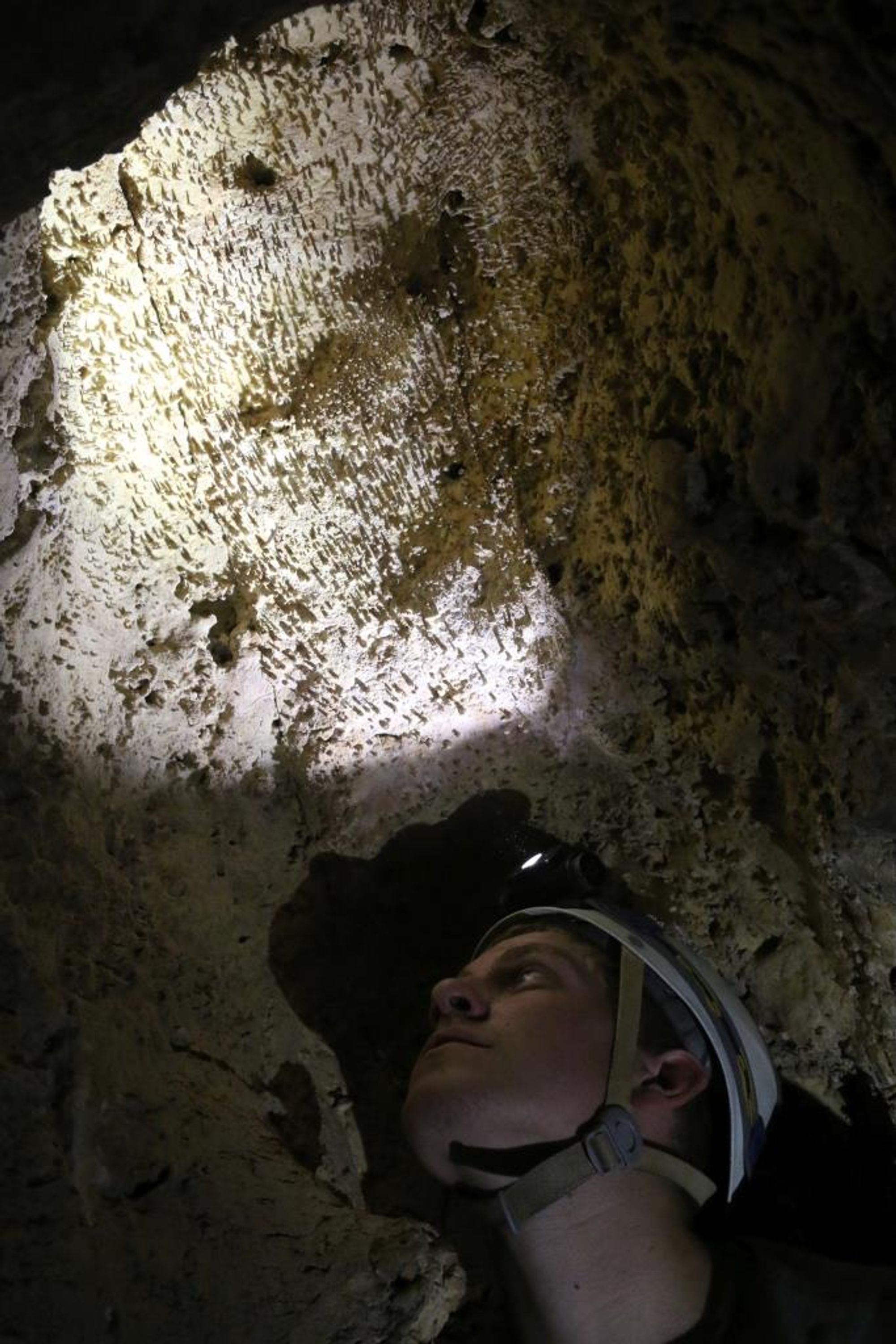
The floor of the passage is horizontal and covered with loose soil and a great deal of gravel. The ceiling and walls are rounded and consist of weathered rock and gravels cut by high dissolution domes. The domes are coated with a thin covering of massive gypsum with some spiny helictites. The end of the passage is blocked by fill consisting of light sediment in which large rocks and many gravels are mixed. On some of the rocks there is a gypsum coating.
The entire passage space was intensively dug, apparently by treasure hunters. At the time of the visit to the cave, many work tools and a great deal of digging equipment were found in it, as well as a ventilator and a heater.
The presence of these perhaps suggests that the cave was dug in order to serve as a hideout for drying marijuana (a marijuana greenhouse was found not far from the cave).
One can get an impression of the character of the original sediment deposited in the cave before it was dug from a limited remnant left near the entrance. It appears that the passage was originally filled up to two-thirds of its present height. The cave fill consists of light sediment with a high gravel content as well as many snails appearing in its upper part.
Written by: Boaz Langford
Elevation: 443+