This page was translated from Hebrew and has not been reviewed yet. The Hebrew page is the reference. עברית
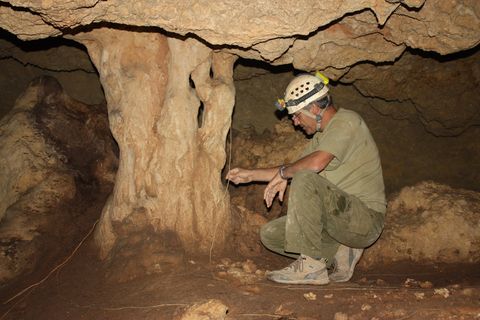
Leopards Cave
Ein Samiya
The cave was discovered by an Arab shepherd from the Ein Samiya area after several goats from his flock were killed by a predator. The shepherd followed the tracks of the animal that had killed one of the goats. The tracks led to a cave on the northern bank of Wadi Samiya. After the cave was discovered, the shepherd came to the site together with 2 workers from the Ein Samiya well, who crawled deep into the cave until they suddenly met a leopard!
Read more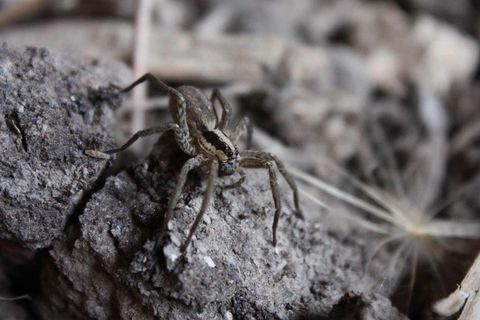
Nof Dolev Cave
Wadi Dilev
Nof Dolev Cave is a medium-sized cave consisting of a single chamber that developed in marly chalk of the Qatana Formation.
The cave appears in the karst survey conducted in the early 1990s by Itai Fishhendler in the stream basin.
Read more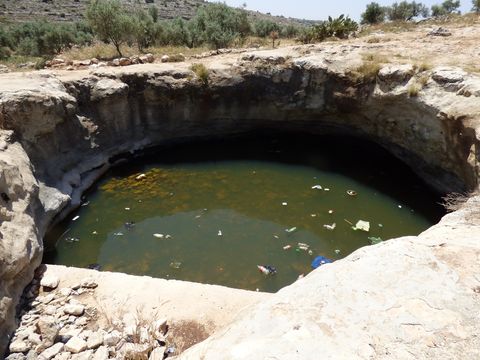
Kabia Pit
Western Binyamin
A small karstic void formed in dolomitic limestone of Cenomanian age (Vradim Formation). The pit appears on the topographic maps marked as a water cistern. The pit looks like a vertical collapse doline that developed on a rounded void measuring 11X11 m and 6 m deep. The rounded shape of the pit, as well as familiarity with the chamber caves of western Samaria, make it possible to determine that the void of the pit was formed in the phreatic zone.
Read more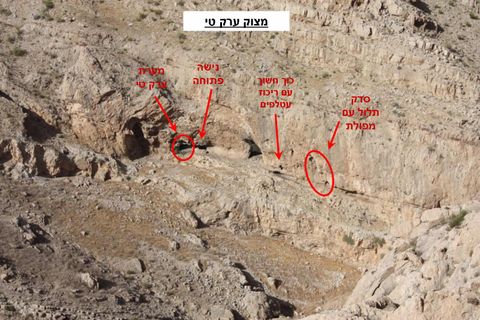
Araq Ti Cave
Lower Wadi Abu Mahmud, Jordan Valley
A medium-sized cave (total length 49 m) consisting mainly of an elongated passage that developed in massive limestone of Turonian age (Shivta Formation). The rounded dissolution marks and the openings in the walls and ceiling of the passage indicate that it was formed under hypogenic conditions. In the center of the cave there are layered cave deposits that look like thick calcite rafts, filling a tiny void.
Read more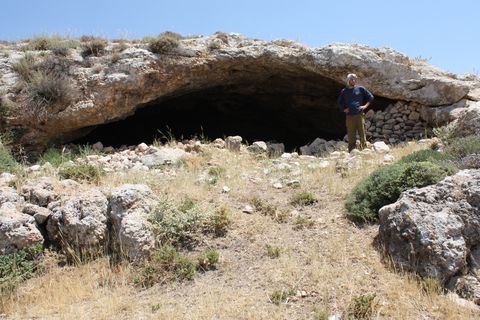
Al Qala'at Cave
Wadi Shiban
A small cave consisting of a single void that developed in marly chalk of Cenomanian age (Kfar Shaul Formation).
Read more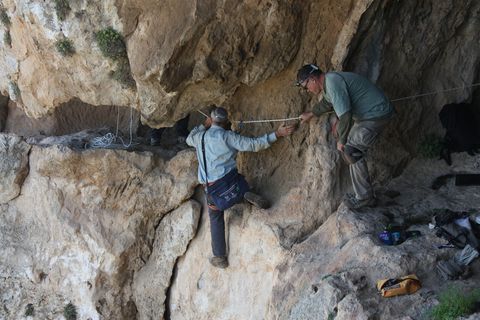
Kokhav Yaakov Cave
Wadi Shiban
Kokhav Yaakov Cave is a large cave formed by karstic (phreatic) dissolution processes and by rock-cutting activity in limestone of Cenomanian age (Amminadav Fm.). Its total length is about 140 m and it has 9 different openings, most of which served as windows for the cave's inhabitants. The main opening of the cave is in the middle of the cliff of the southern bank of Wadi Shiban
Read more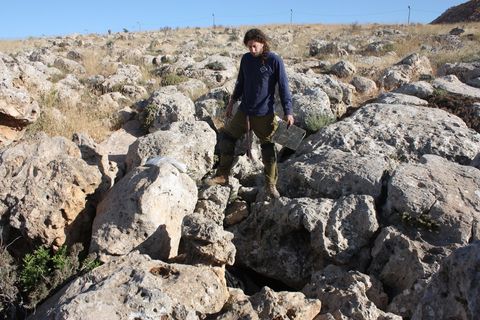
Ahavat Emet Cave
Tel Zion
A small cave (total length 28 m and accumulated depth 5 m) formed by phreatic dissolution processes in limestone of Cenomanian age (Amminadav Formation). The cave opening is exposed at the edge of a well-developed karren field that "survived" as an open area at the northern end of Ahavat Emet Street in the community of Tel Zion.
Read more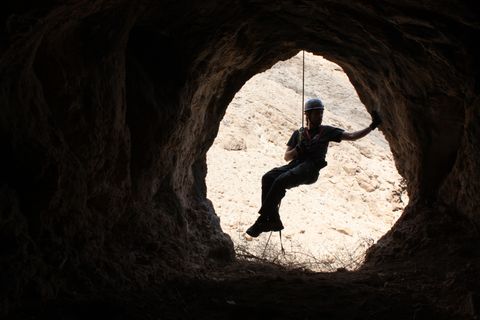
Wadi a-Nubiris Cave
Eastern Binyamin
A small cave (total length 25 m) that developed by phreatic dissolution processes in limestone of Turonian age (Shivta Fm.). The cave consists mainly of a short, two-level passage. The cave has a rounded opening (measuring 2X2.2 m) about 5 m below the top of a low cliff that forms the base of the southern bank of the Wadi a-Nubiris canyon.
Read more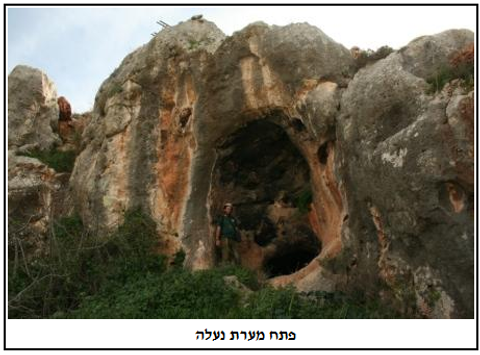
Na'ale Cave
Within the boundaries of the community of Na'ale
A horizontal cave, medium in size (total length 55 m), that developed in limestone of Upper Cenomanian age (Vradim Fm.). The cave is located in the middle of a low cliff, at the top of the northern bank of Wadi Khader (a short channel descending in an east-west direction and ultimately draining into Nahal Netuf).
Read more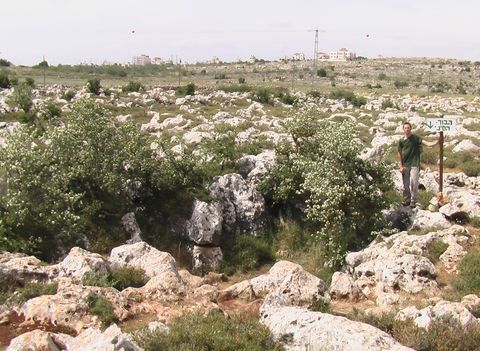
The Chinese Pit
Ofra
A large pit 59 m deep that developed in the "doline field" east of the community of Ofra. The pit was discovered in the early 1980s by the Ofra Field School and has since served as a site that attracts visitors. Visiting the pit is possible thanks to an iron ladder installed along its length.
Read more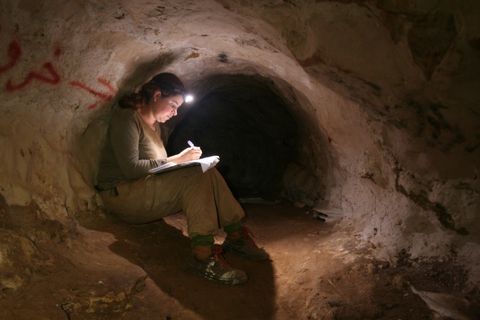
Araq a-Nasna
Wadi Dalia
Araq a-Nasna Cave is a giant cave that developed by phreatic hypogenic dissolution processes in limestone of Turonian age (Shivta Fm.). The total length of the cave is 1150 m and its maximum depth from the opening is 52 m.
Read more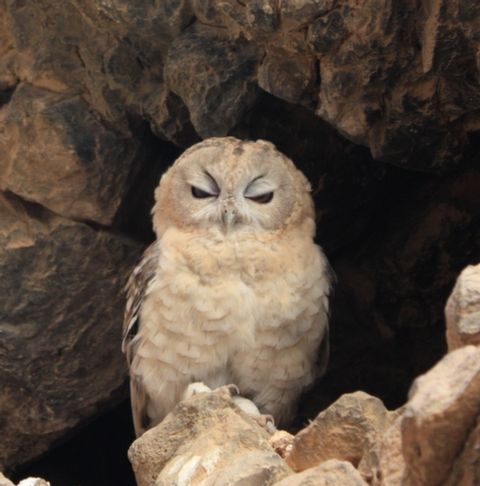
Hon al-Watwat Cave
Eastern Binyamin
A medium-sized cave (total length 40 m) that developed by phreatic dissolution processes in limestone of Turonian age (Shivta Fm.). The cave consists mainly of several small voids (a wide room and several short passages)
Read more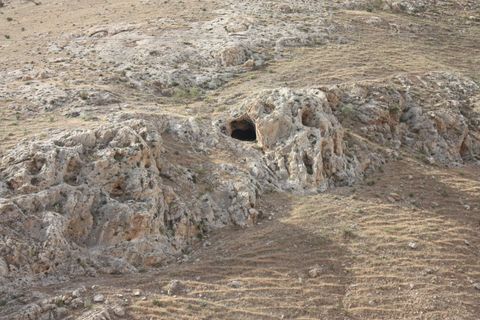
Wadi al-Batm Cave
Southern Jordan Valley
The cave has a large opening, conspicuous from afar, measuring 2.9X3.3 and rounded in shape. The cave opening is exposed at the top of a sloping cliff standing about 50 m above the channel of Wadi al-Batm, in the middle of the southern bank of the stream canyon.
Read more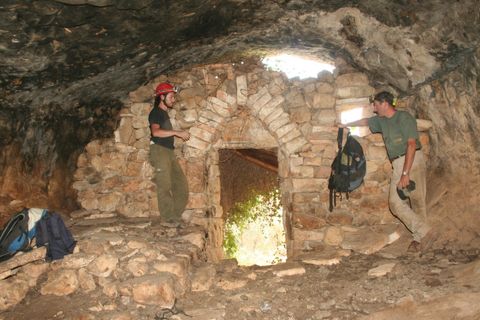
Umm Sus Cave
North of the community of Nahliel
Umm Sus Cave is a medium-sized cave consisting mainly of a wide room and several passages that developed in limestone of Albian age (Givat Yearim Fm.).
Read more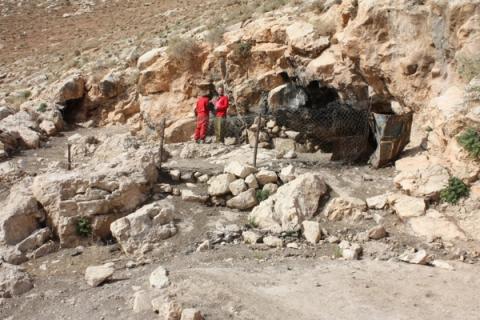
A-Dalia Cave
Wadi a-Dalia
A-Dalia Cave is a small cave (total length 30 m) formed by phreatic dissolution processes in limestone of Cenomanian age (Avnon Formation). The cave consists mainly of an elongated chamber exposed in the upper part of the Wadi Dalia basin.
Read more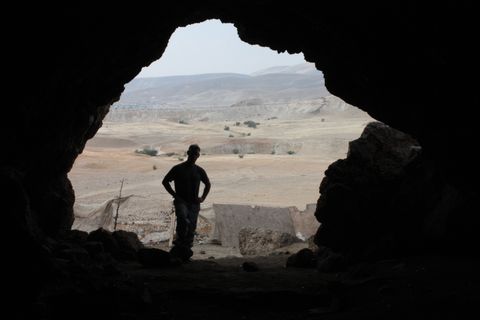
Arqan a-Rab Cave Complex
Southern Jordan Valley
The openings of the complex's caves are exposed, one east of the other, in the face of a low cliff standing at the top of a low hill on the eastern side of the al-Ahmar valley. In front of the openings there is a large terrace that is used today as a goat pen. Large rockfall boulders that broke away from the ceiling of the cave openings and from the cliff line are scattered over all parts of the terrace.
Read more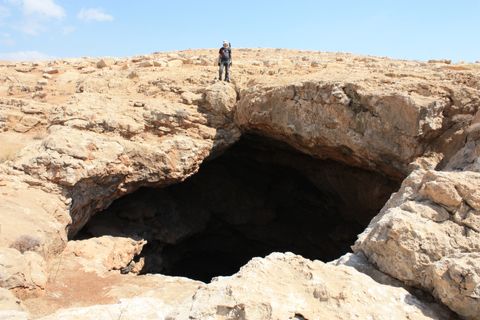
The Pit, Wadi Makhukh
The Pit-Wadi Makhukh Cave is a medium-sized cave consisting of a single elliptical chamber measuring 22X32 m and reaching a height of 17 m
Read more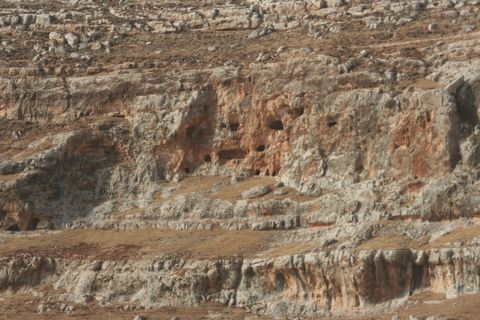
The Stairs, Wadi Makhukh
A complex of small caves that developed and were cut in limestone of Turonian age (Shivta Fm.). The cave openings are in an intermediate cliff that forms the southern bank of upper Wadi Makhukh.
Read more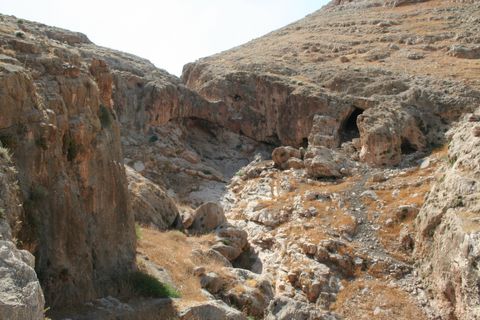
Waterfall Cave, Wadi Dalia, Jordan Valley
Waterfall Cave is a small cave (total length 39 m) formed by phreatic dissolution processes in limestone of Turonian age (Shivta Formation). The cave consists mainly of a wide void and a vertical chimney exposed in the middle of the lower canyon of Wadi Dalia. Add Description here
Read more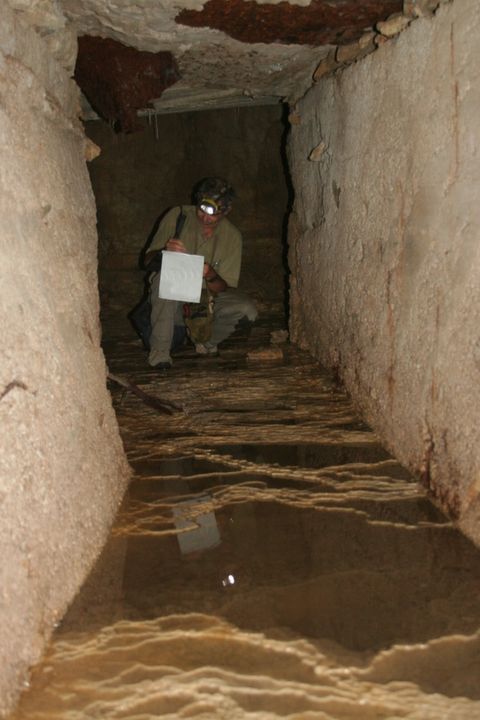
Bitin Tunnel
A long water tunnel divided into two systems with no connection between them, descending in a general northwest to southeast direction. Access to the cave opening is not problematic technically, but is problematic from a security standpoint
Read more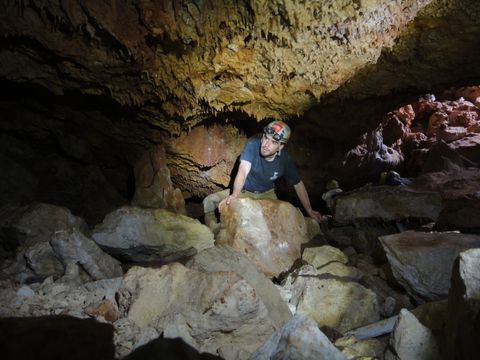
Tel Zion Cave
A small chamber cave divided into two wings. The cave contains cave deposits such as stalactites, stalagmites, cave coral and boxwork.
Read more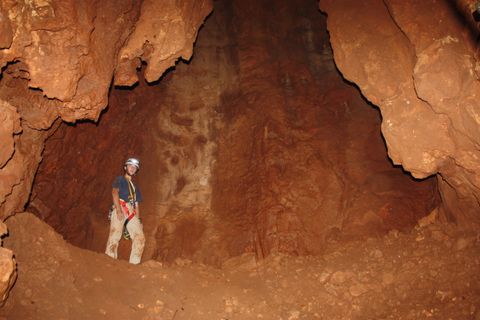
Al Ein Cave
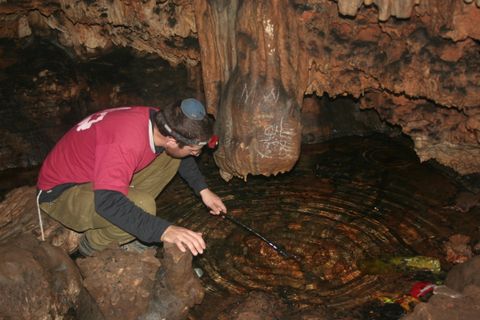
Cave 28 was found as part of a cave survey in Wadi al-Ein. The cave is one of the largest found in the survey and one of the most beautiful in the region.
Read more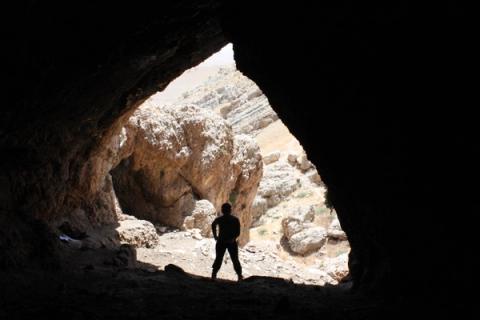
Abu Qati Cave
Abu Qati Cave is a medium-sized cave. The cave has 4 openings along the northern bank of the Wadi Dalia canyon. Several dozen/hundreds of individual fruit bats were observed in the cave
Read more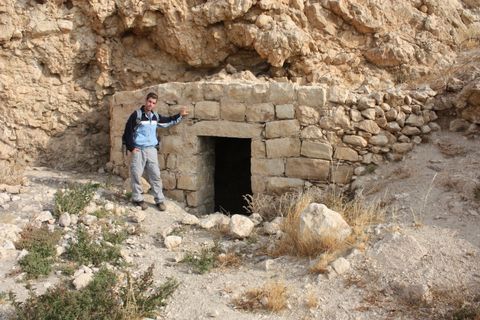
Jordan Valley Memorial Cave
A small cave consisting of a pair of rooms formed by phreatic dissolution processes. The accumulated length of the cave is 23.5 m and its total height reaches 7.6 m
Read more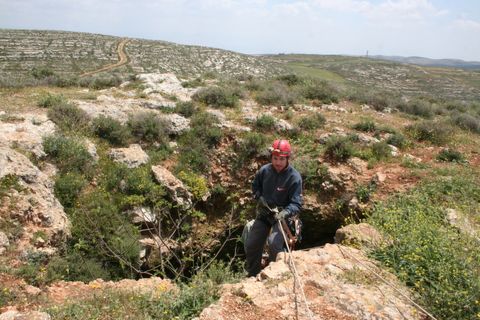
Bir al-Hasaf
Bir al-Hasaf is a wide karstic pit consisting of a vertical chimney leading to a wide void. The cave void developed by phreatic-hypogenic dissolution processes in limestone of Upper Cenomanian age.
The cave opening is exposed at the top of a topographic dome east of the community of Shilo
Read more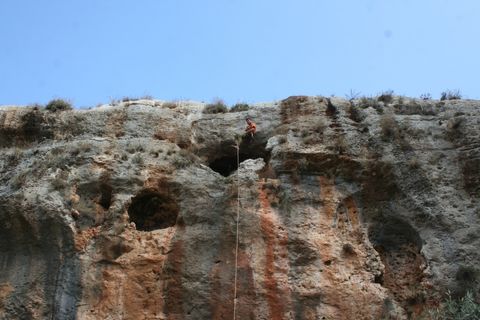
Al Quliya Cave
A small cave built of a void with a rectangular structure measuring 3.5X6.5 m and a typical height of 1.6 m.
The cave opening hangs in the upper part of a cliff, at a height of about 12 m from its base
Read more