Barbur Cave, Dimona Ridge
- Grid ref.
- 161510/059366
- Location
- Nahal Dimona
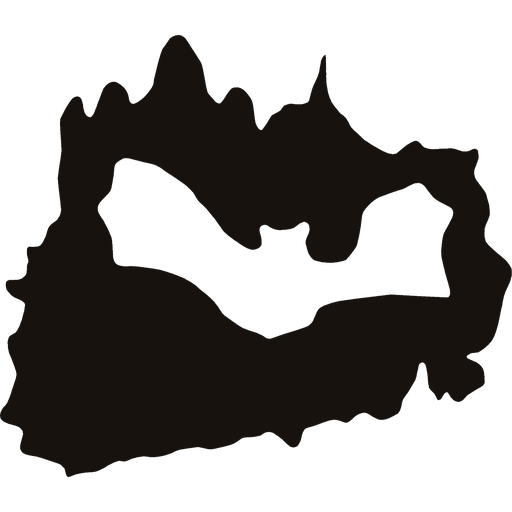
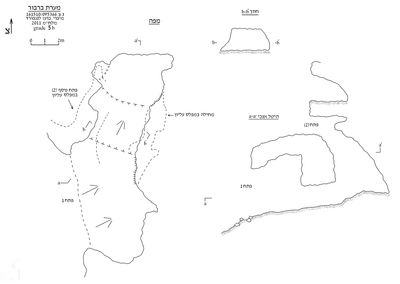 Cave mapView the map (PDF)
Description of the cave:
General:
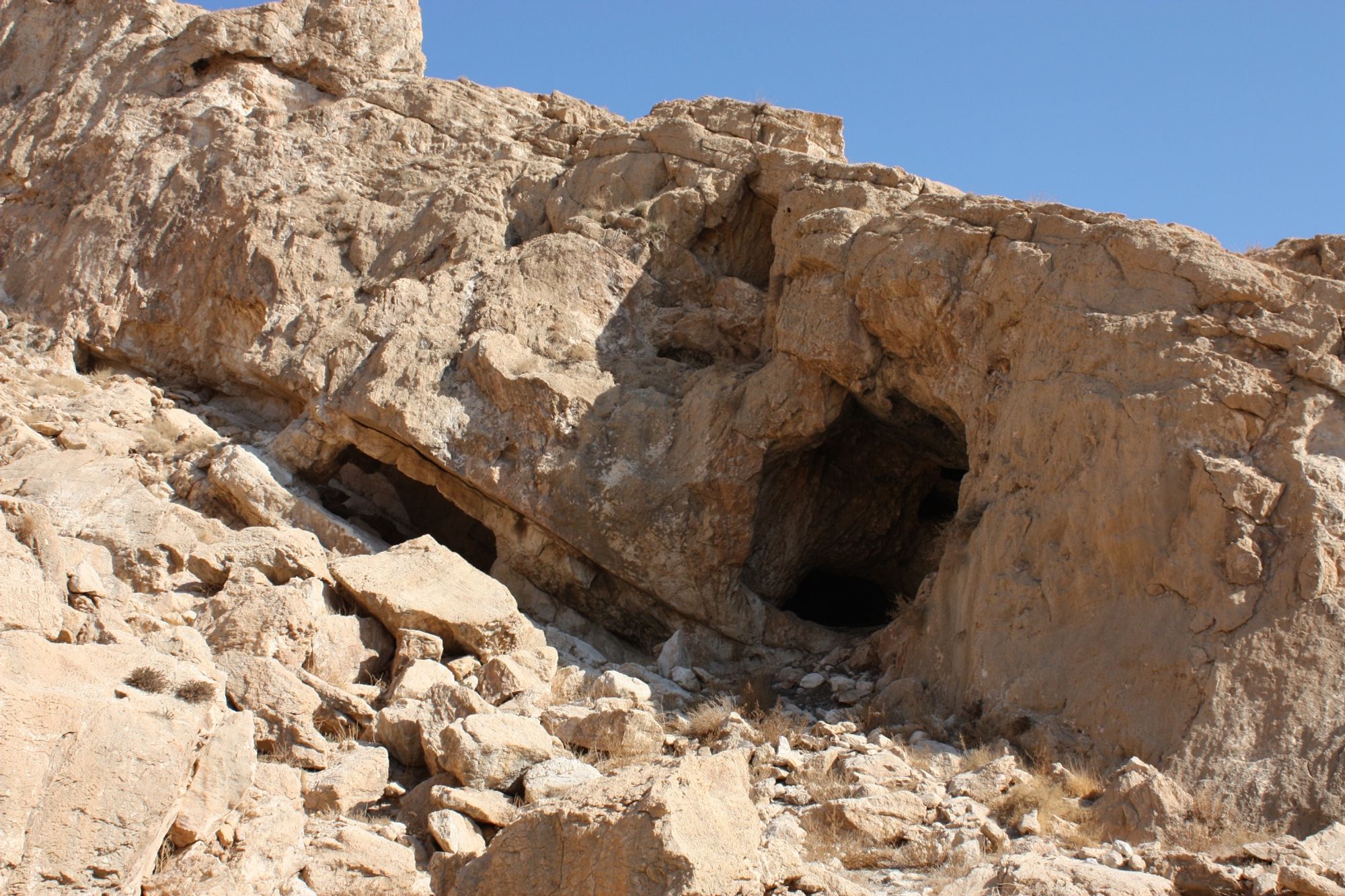
Barbur Cave is a small cave that developed by phreatic dissolution processes in limestone of Turonian age (Shivta Fm.). The most important cave in terms of a natural sedimentary sequence in the Judean Desert. The cave is located at the foot of a cliff of the Shivta Formation in the flexure ( dips of 20-30 degrees) southeast of the Diya Dimona Kmarir anticline. The cave has a large, rectangular entrance facing south, located on the northern side of the channel. Around the cave and inside it there is iron mineralization rich in rare elements that was studied by Shimon Ilani and Uri Rib.
Access:
Access is possible for a high-clearance 4x4 vehicle on the red trail leaving Dimona, along Nahal Dimona. At a certain point the vehicles must be left and one must proceed on foot in a steep channel leading to the cave entrance.
The cave space:
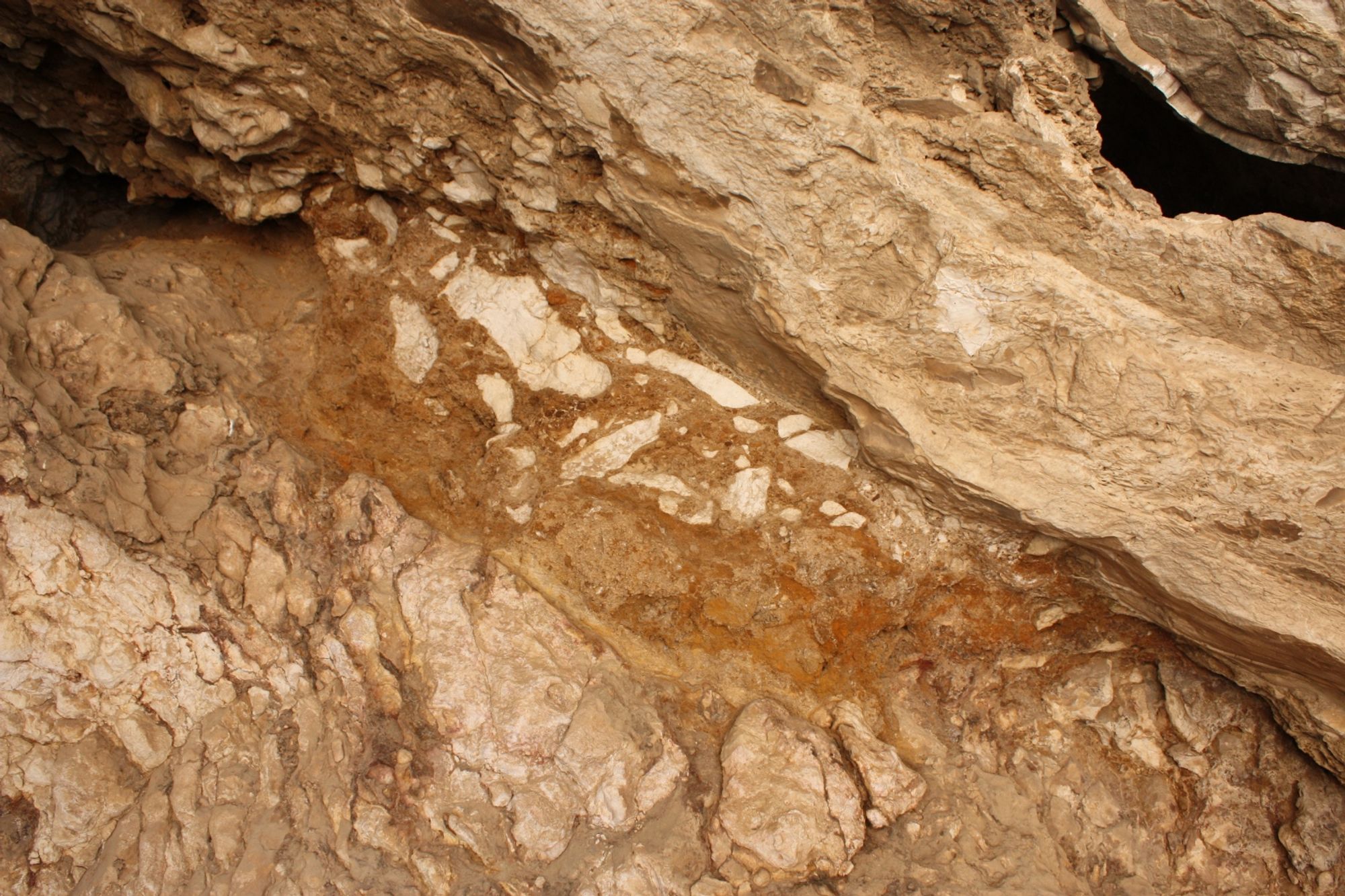
Sand of the Hatzeva Formation entered the cave and the spaces around it. This sand is cemented by iron mineralization that entered from the direction of the Dead Sea and is dated to about 11 million years ago. Phreatic mammillary crusts several cm thick coat the walls and ceiling above the iron-bearing sandy deposit, some of them having undergone secondary dissolution by thickening. Some of the mammillary crusts are covered with folia, which apparently indicates proximity to groundwater. Their present position is horizontal, as they formed, which indicates that no significant tilting has occurred since they formed.
A layer of about half a meter of grounded calcite rafts covers the layer of iron-bearing sand. It testifies with certainty to the last moment at which groundwater was in the cave.
Notes:
- Further information about the cave can be found in the master's thesis of Uri Rib
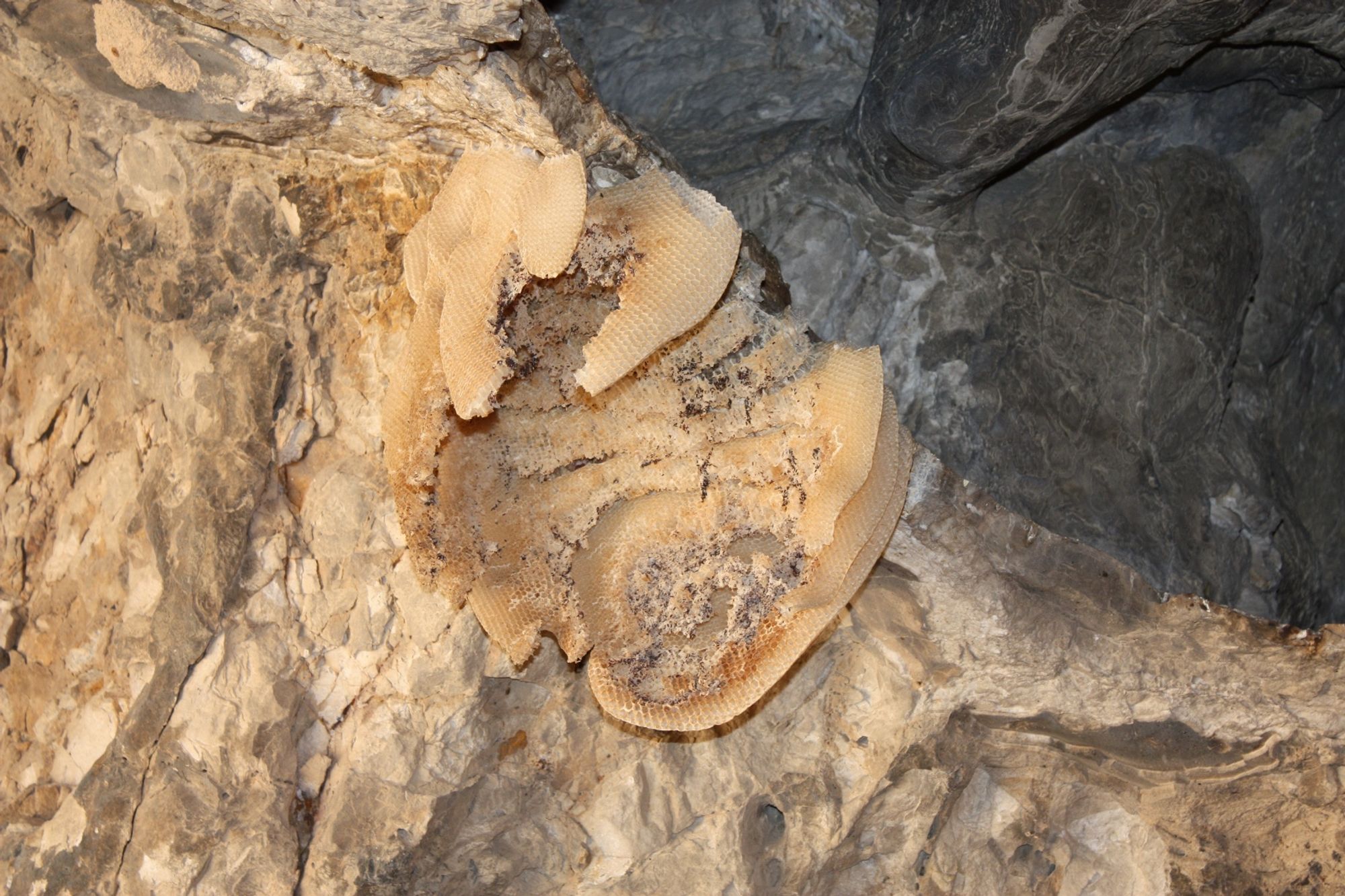
- A recent beehive was observed in the cave, which was active for 3 years and was abandoned
Written by: Amos Frumkin and Yoav Negev