Otsar Cave - Besor Dayka
- Grid ref.
- 124047/036426
- Location
- Nahal Besor
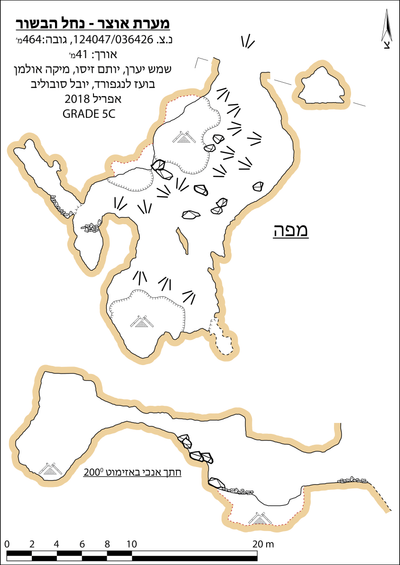 Cave mapView the map (PDF)
General:
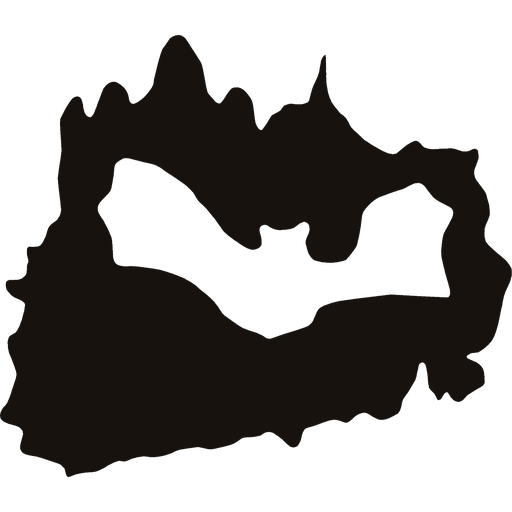
Otsar Cave is a small cave consisting mainly of a developed hall and a side passage. The total length of the cave is 41 m and its maximum depth reaches 12 m. Rounded dissolution marks indicate that the cave was formed below the water table in the confined aquifer of the Shivta Formation. Later processes in the formation of the cave include the deposition of gypsum and salt deposits as well as a significant accumulation of abundant sediments.
Description of the space:
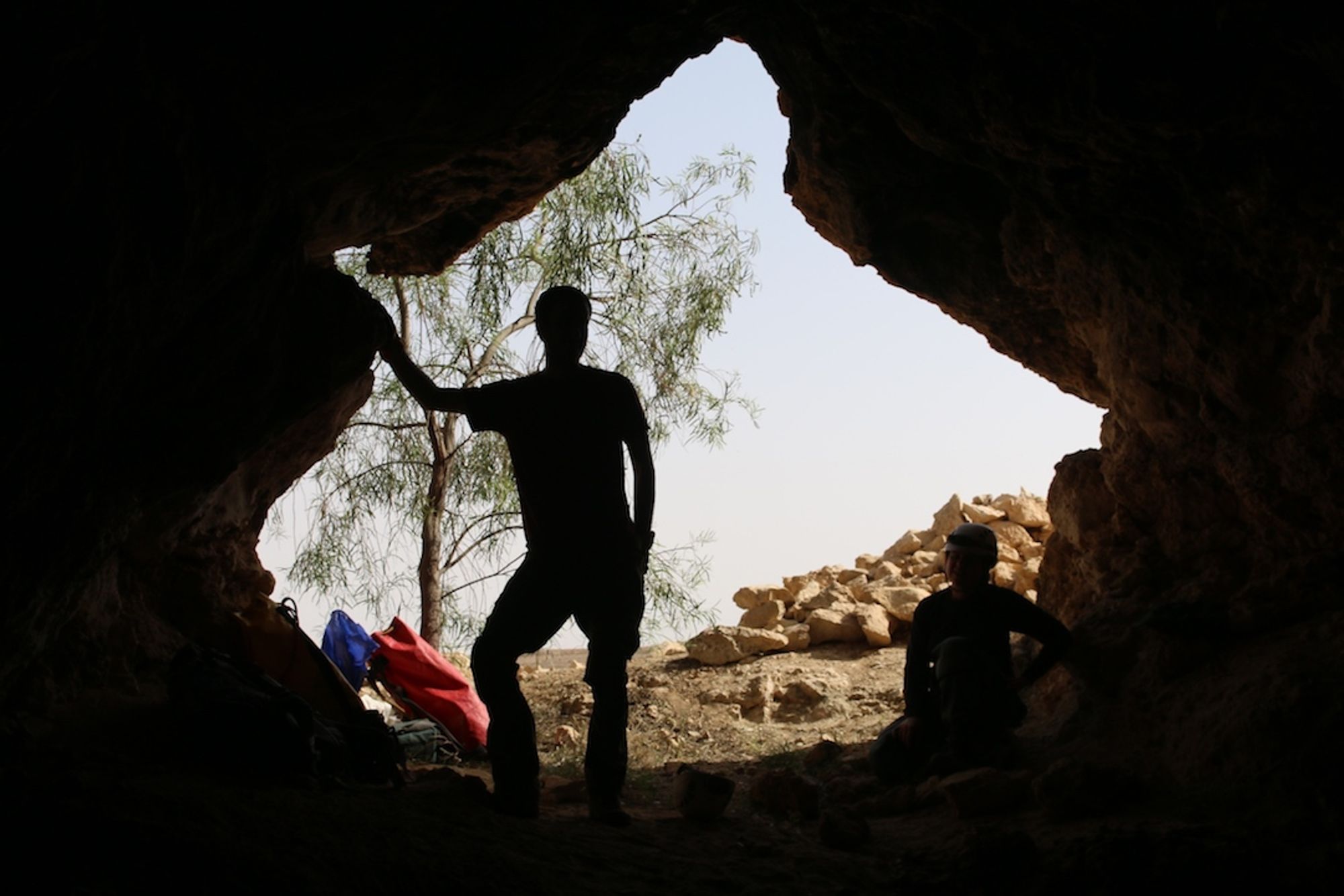
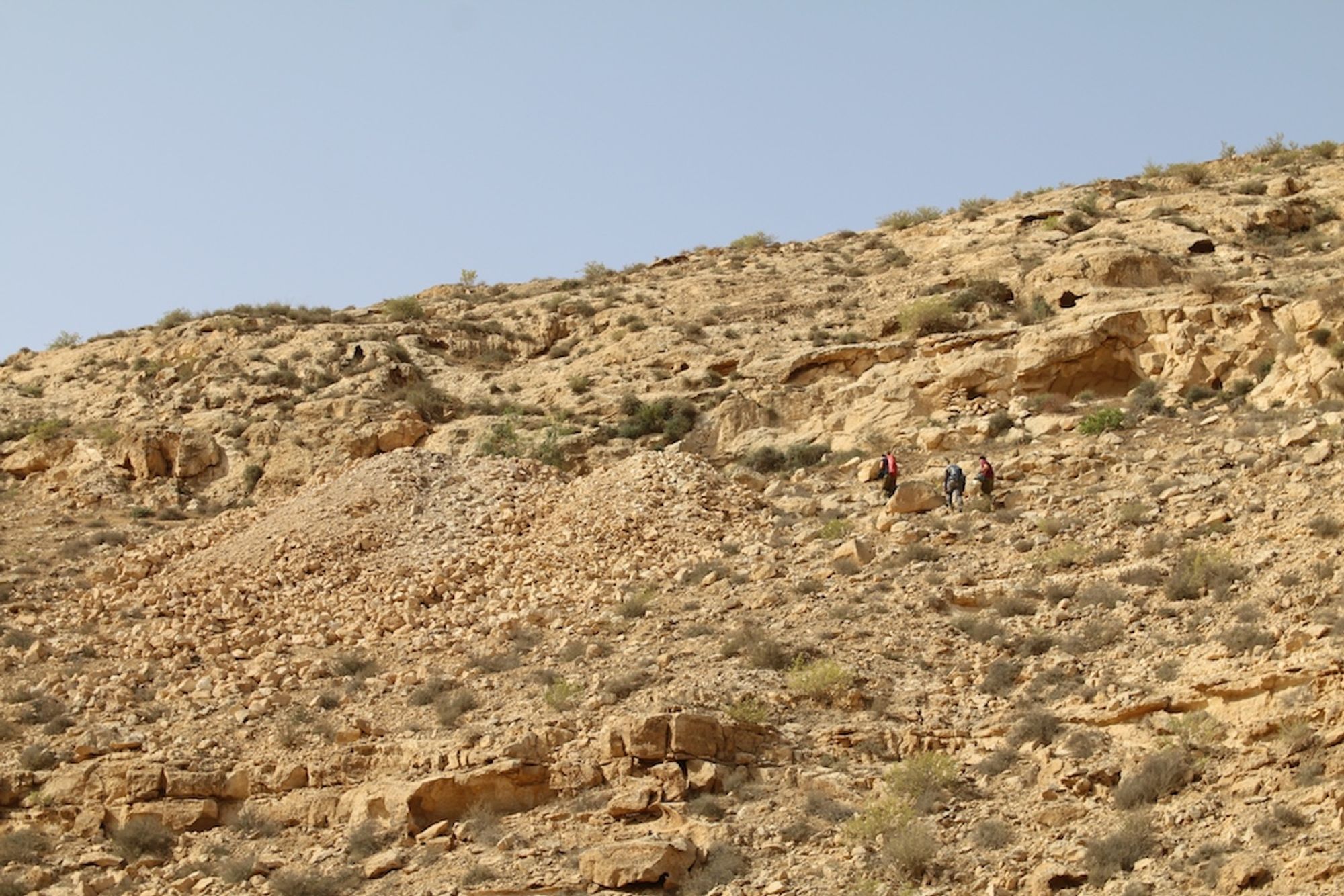
Otsar Cave has an arched entrance that yawns at the height of the southern bank of a local channel that empties into the center of the Besor Dayka. The entrance is easy to identify thanks to a huge pile of spoil scattered in front of it. The spoil pile was created by the activity of treasure hunters who carried out extensive digging in all parts of the cave space. The excavations include two large pits spread over an area of ~4X3 m and reaching a depth of ~4 m. The pits were dug into the sediment on the floor of the cave space, using mechanical tools to break up large rocks scattered in the space.
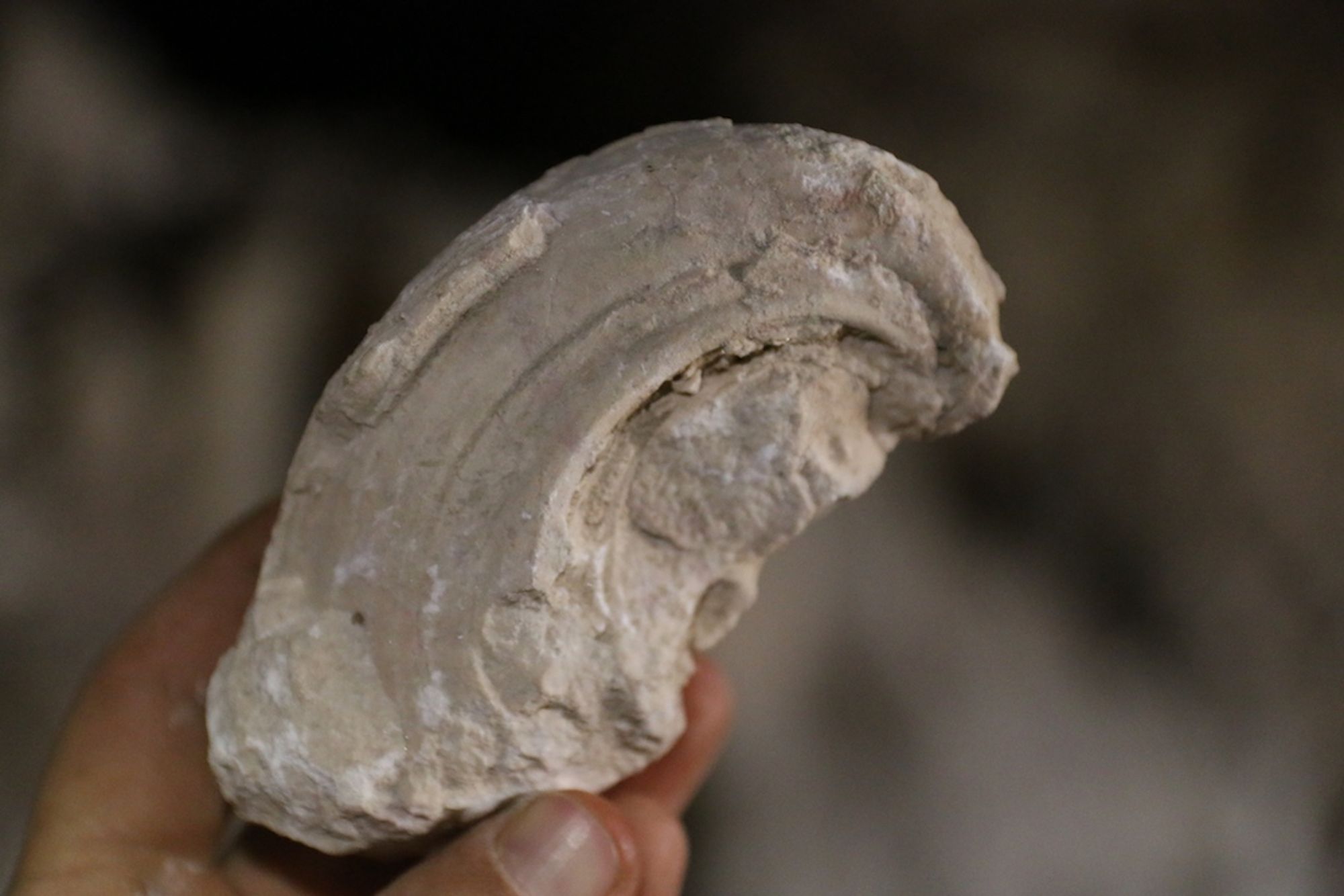
On top of the spoil pile and in front of the cave entrance, a small Australian acacia tree grows. From the entrance the cave hall continues south, divided into sub-spaces by the spoil piles scattered in all its parts. The spoil piles separate the outer, lit part of the hall from its inner, dark part. The hall developed along a prominent fracture in the direction of azimuth 200, along which a high step was also formed in the ceiling. Additional steps in the ceiling were formed by collapse along horizontal bedding planes. Most of the ceiling area is covered with black soot that blurs the original details in the host rock. In protected areas, which did not suffer collapse and sooting, signs of rounded dissolution can be seen, such as rounded depressions and smoothed walls. In the northeastern part of the hall, in the area near the entrance, a porous area was exposed in the ceiling, looking like a preserved and developed reef. In the ceiling of the southern side of the hall there are horizontal burrow fossils that apparently belong to the ichnofacies of the Skolithos type.
The floor of the hall is extremely disturbed because of the digging operations carried out there. Nevertheless, the original character of the sediment can be gauged from limited exposures remaining at various points adjacent to the walls of the space. A sediment exposure near the inner part of the entrance consists of light loess rich in snail shells (whitish). This accumulation is quite typical of the loess plains on the surface in the vicinity of the cave. A more distinctive accumulation appears in the innermost part of the space, adjacent to the southern wall. At this point there is a layered accumulation consisting in its lower part mainly of collapsed rocks and stones. The upper part consists of thin layers of loose, light soil, in which are mixed droppings of hyraxes, ibex, and bats, as well as plant material and a little gravel. On the surface of the exposure there are droppings of porcupines and hyraxes, as well as jaw bones of an ibex (?). On the walls in this area there are remains of a coating of massive gypsum and coin gypsum whose thickness reaches 2 cm. Many developed salt flowers cover the wall, sometimes even on top of the gypsum coating.
A horizontal, narrow and low passage extends from the western part of the center of the hall and westward. The floor of the passage is dug to a depth of 40 cm, which makes movement in it much easier. In the excavation section, layers of loose earth of gray-black color are visible, indicating a fire that occurred in the place. It is possible that this burnt material penetrated from the sooted entrance hall. In the walls of the passage there are thin gypsum crusts and an abundance of gypsum flowers.
Stages of development of the space:
According to the above description, it appears that the various stages in the creation and development of the cave can be summarized as follows:
- Creation of the original space in the confined aquifer of the Shivta Formation.
- Draining of the cave of water and deposition of a gypsum coating on the walls.
- Significant collapses in the cave ceiling caused a thick fill on the floor.
- Intersection of the cave space by the land surface and exposure of the entrances.
- Accumulation of sediment containing organic and biological materials to a thickness of about 0.5 m.
- Excavation of the space by treasure hunters.
Notes:
Rock doves nest in the cave, as well as another bird, apparently a swift or a swallow.
Written by: Boaz Langford
Elevation: 464+