Araq a-Nasana, Wadi Dalia
- Grid ref.
- 188708/155702
- Location
- Wadi Dalia – East Binyamin
- Elevation
- 134 m above sea level
Cave description:
General:
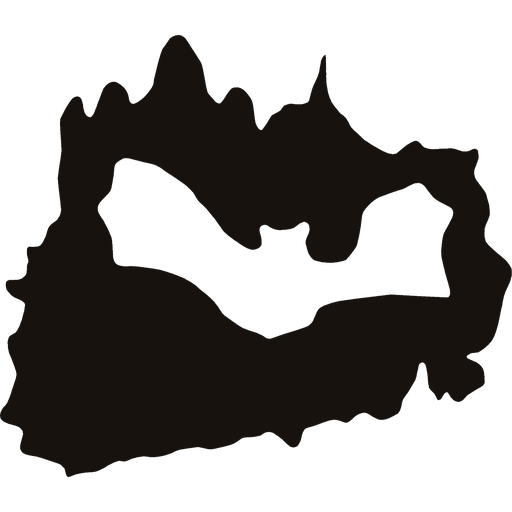
Araq a-Nasana Cave is a giant cave that developed under confined-aquifer conditions in limestone of Turonian age (Shivta and Netzer formations). The total length of the cave is 2238 m and its maximum depth from the entrance is 52 m. The different parts of the cave extend as branching horizontal passages in a network-like pattern or as wide rounded spaces that continue along parallel fracture axes whose general direction is northwest – southeast. Unlike the type of spaces described, the cave contains giant chambers, the largest of which measures 12X200 m.
Surveys and archaeological excavations carried out in the cave revealed finds indicating human presence in the Bronze Age and in the Early Roman period. The use of the cave in the Early Roman period is attributed to Jewish refugees who fled to the place during the days of the Bar Kokhba Revolt.
Cave description:
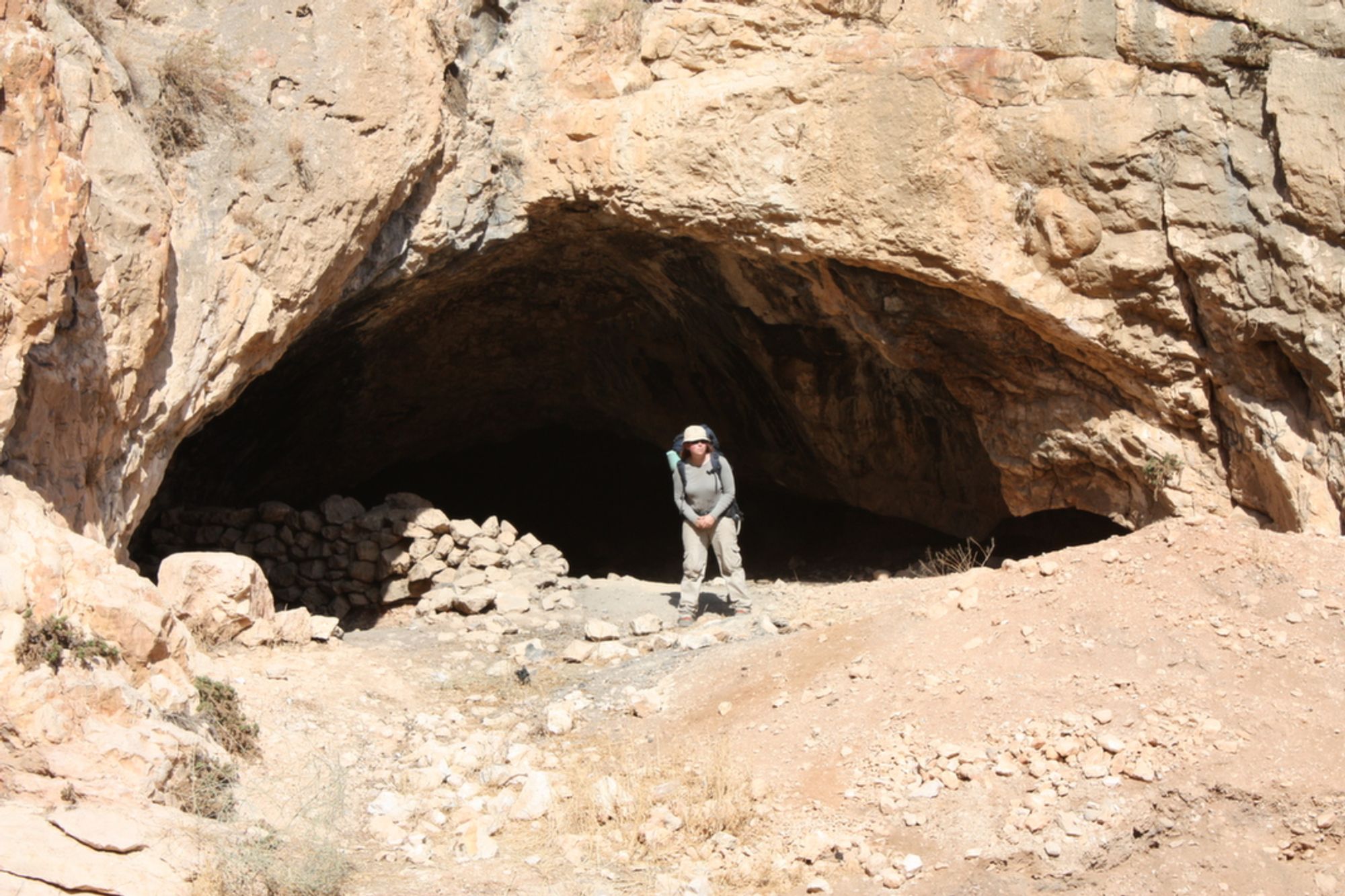
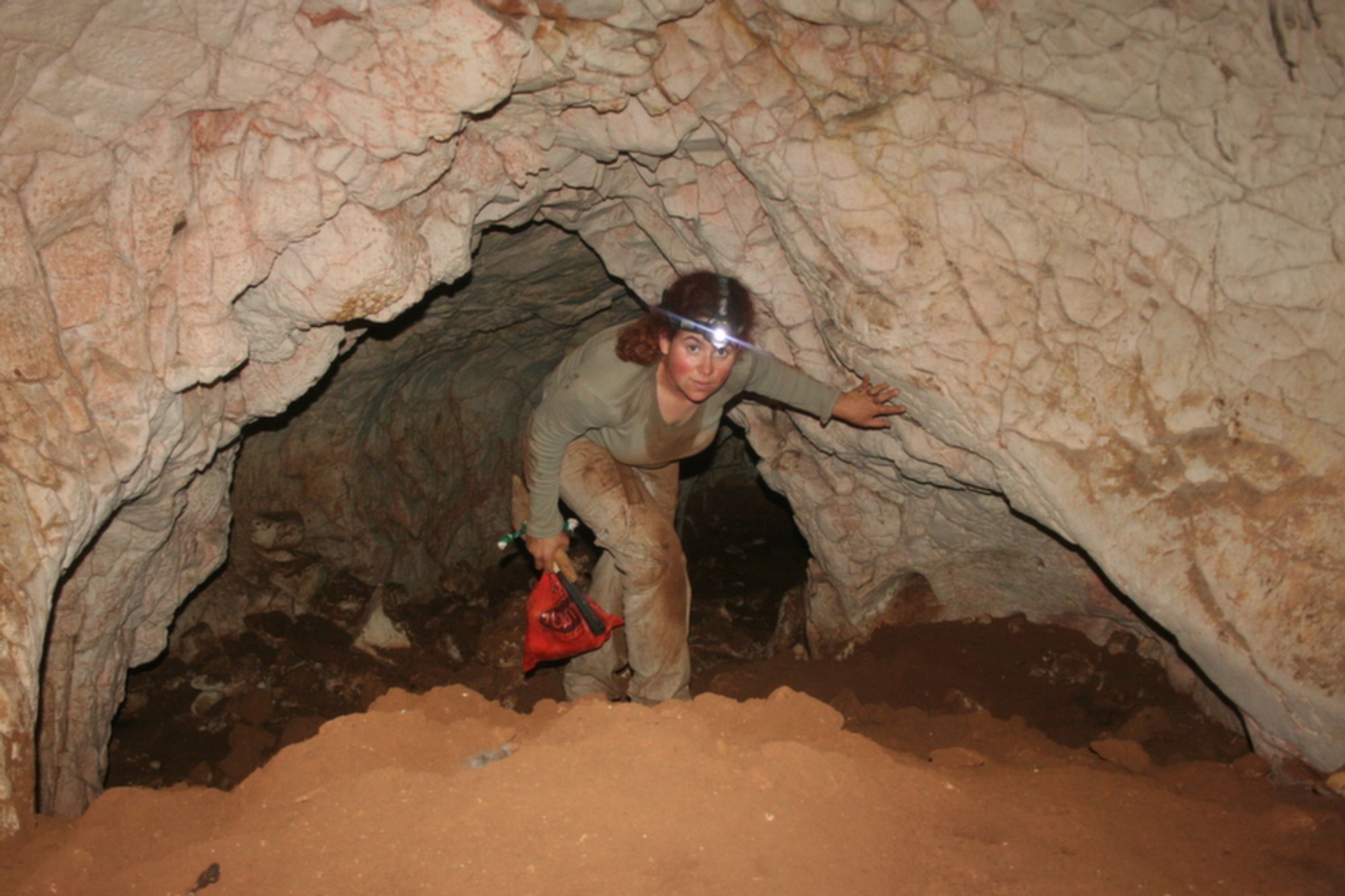
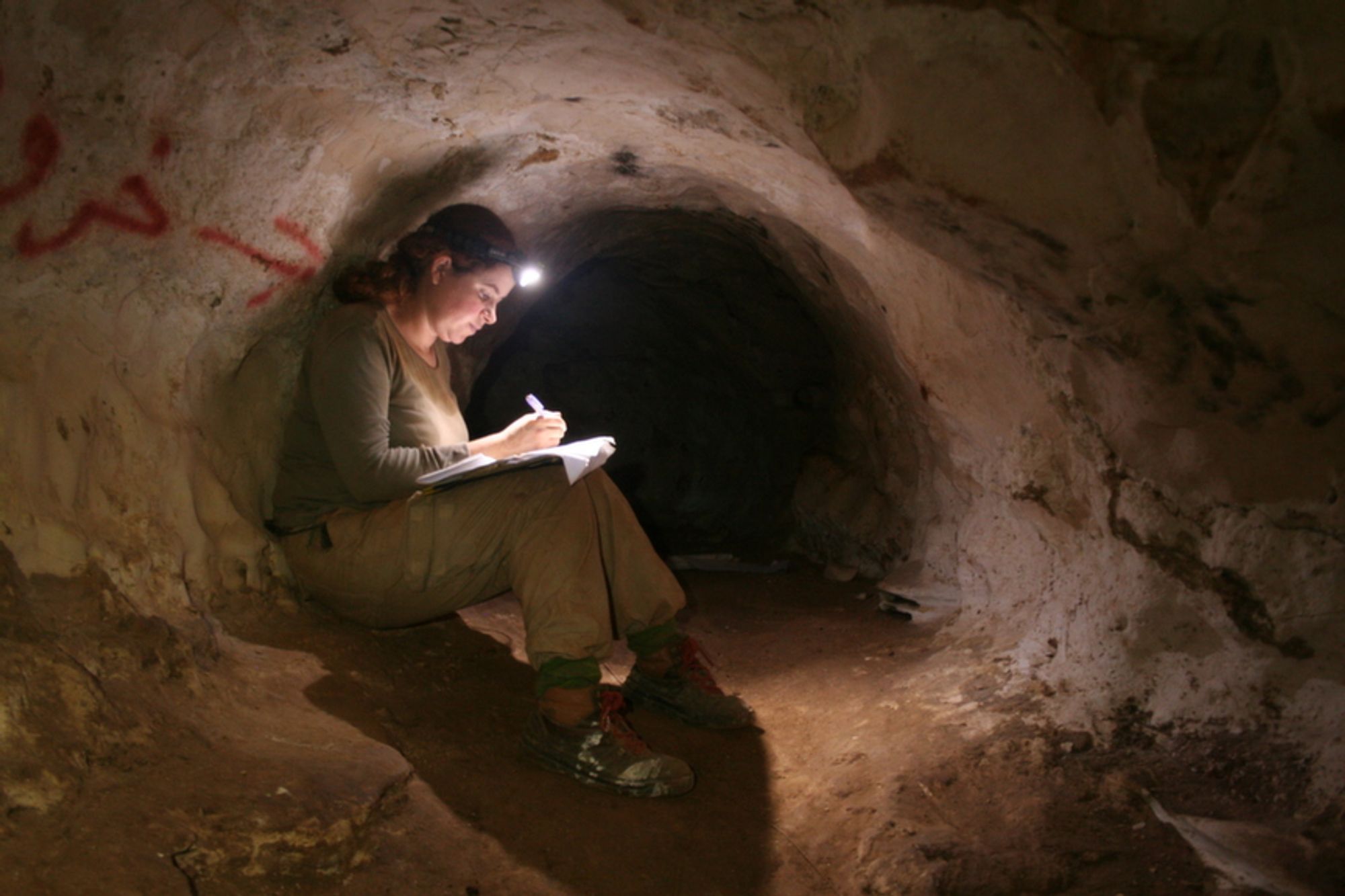
The entrance of Araq a-Nasana Cave opens in the northern bank of Wadi Dalia in East Binyamin, about 5 m above its channel. The entrance measures 10X3.5 m and is arched. In front of the cave entrance there is a wide terrace, partly supported by a poor stone wall. This terrace rests on the surrounding bedrock but is today covered by a thick layer of accumulation, whose main source is, apparently, human activity in the cave. From the cave entrance an elongated, wide passage extends northward, built of several rounded spaces separated from one another by low connections. The floor of the passage is covered with a layer of loose soil and its ceiling is built of weathered limestone, mostly covered with a layer of dark soot. At the sides of the passage there are several openings leading to limited spaces that developed parallel to the central passage. About 45 m from its beginning the passage connects to a wide space (B) in which many finds from the days of the Bar Kokhba Revolt were found. This space looks like a large room (15X8 m) elongated on an east – west axis. In the walls and ceiling of the room there appear rounded marks in the form of smoothed walls and wide dissolution domes. These marks, which appear prominently for the first time in this chamber, appear throughout the cave space to its far ends. On the eastern side of space B there is a prominent opening leading to a series of small spaces, from which, after a low step, a very narrow passage continues, leading at its end to a large chamber (C, measuring 16X14 m and about 1.5 m high) completely covered with many collapse rocks. The ceiling of the chamber slopes eastward, and at various points it contains concentrations of fossils, in some of which transparent calcite crystals developed.
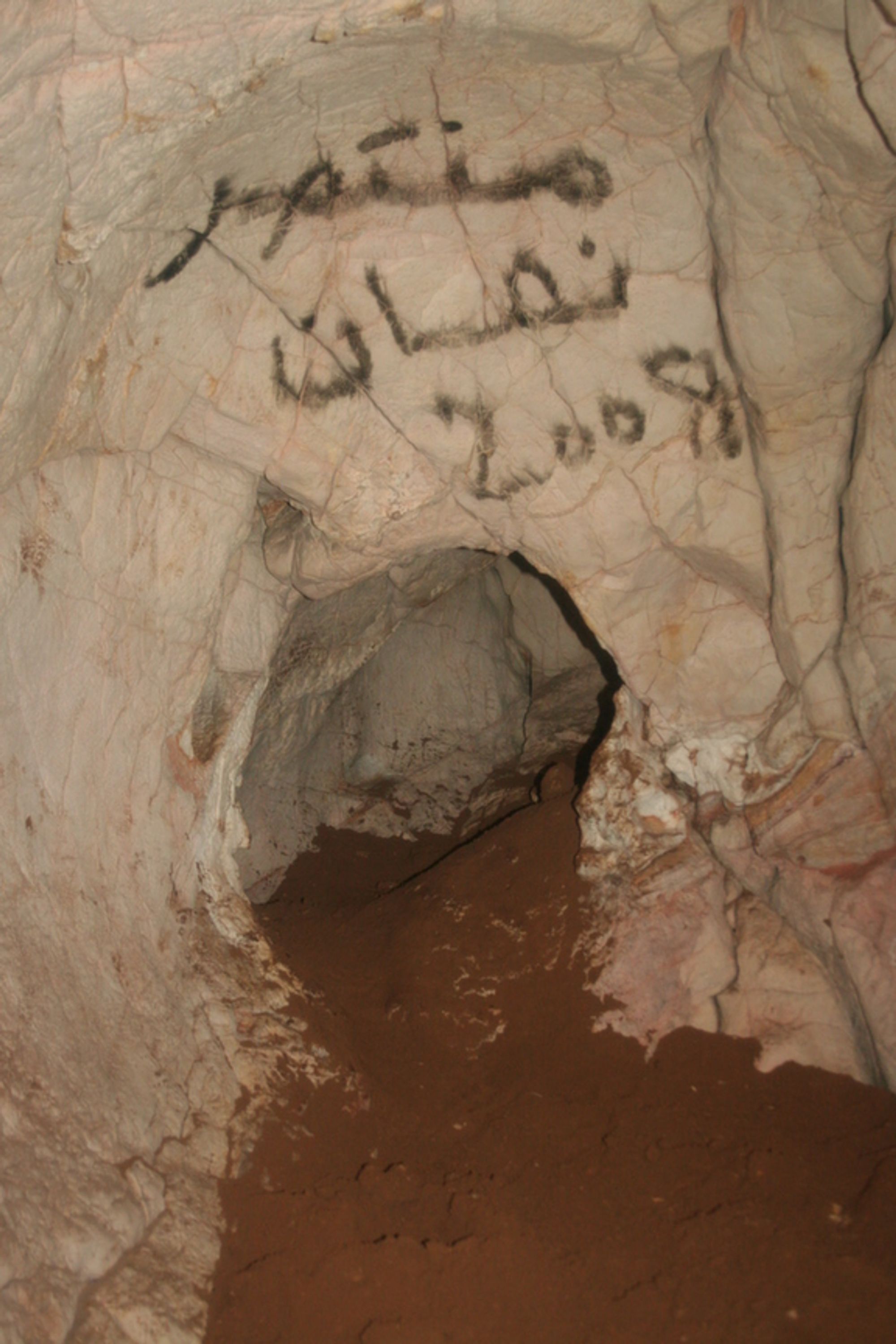
On the western side of space B there is a wide opening leading north and connecting to space D. This is a large space elongated on an east–west axis. Its length on this axis is 26 m and its width 6 m. In all the walls of the space there are rounded dissolution marks and many dissolution domes, which are covered over wide areas with many paint inscriptions, written mostly in 2004, when there was, apparently, a gathering of the Hamas organization in the cave. Space D is the central junction of passages in the cave. Its eastern side leads to the central continuation of the cave, while its western side leads to the western wing of the cave. This wing consists of narrow passages, with a rounded or elliptical profile, which developed in a horizontal network-like pattern with a total length of 240 m. The floor of the passages is covered with dark, damp, compacted soil covered with guano, porcupine quills and droppings. Some of the passage walls, and the surfaces of the tiny cracks in them, are covered with a fungus that looks like a brown, slimy layer. In various parts of this wing there are looters' digs that expose a few flint items and small bones.
The central continuation of the cave, whose opening lies to the east of space D, leads to a winding passage consisting of a series of rounded spaces connected to one another by low connections. At its beginning the series of spaces continues north, but after about 35 m it turns northwest and connects to an elongated chamber (E) that is 30 m long, about 12 m wide and up to 3 m high. In various parts of the chamber there are large collapse rocks and dug pits (perhaps the result of looters' digs). At the northwest end of chamber E there is a low opening leading to a wide space – space F. This is a rounded space continuing in the same direction in which chamber E developed. The ceiling of the space is high and collapsed. The collapse of the ceiling left a huge rockfall that completely covers the floor of space F, so that it slopes in the direction of the development of the space. At the northwest end of space F, at the top of the rockfall pile, there is a vertical opening leading to a small room, in whose ceiling there is a wide dissolution dome and at various points in whose walls there are coarse cave corals. In the ceiling at the head of the descent into this room there is an impressive fossil outcrop that stands out against the white cave wall as a result of shiny calcite deposits that developed within the fossils.
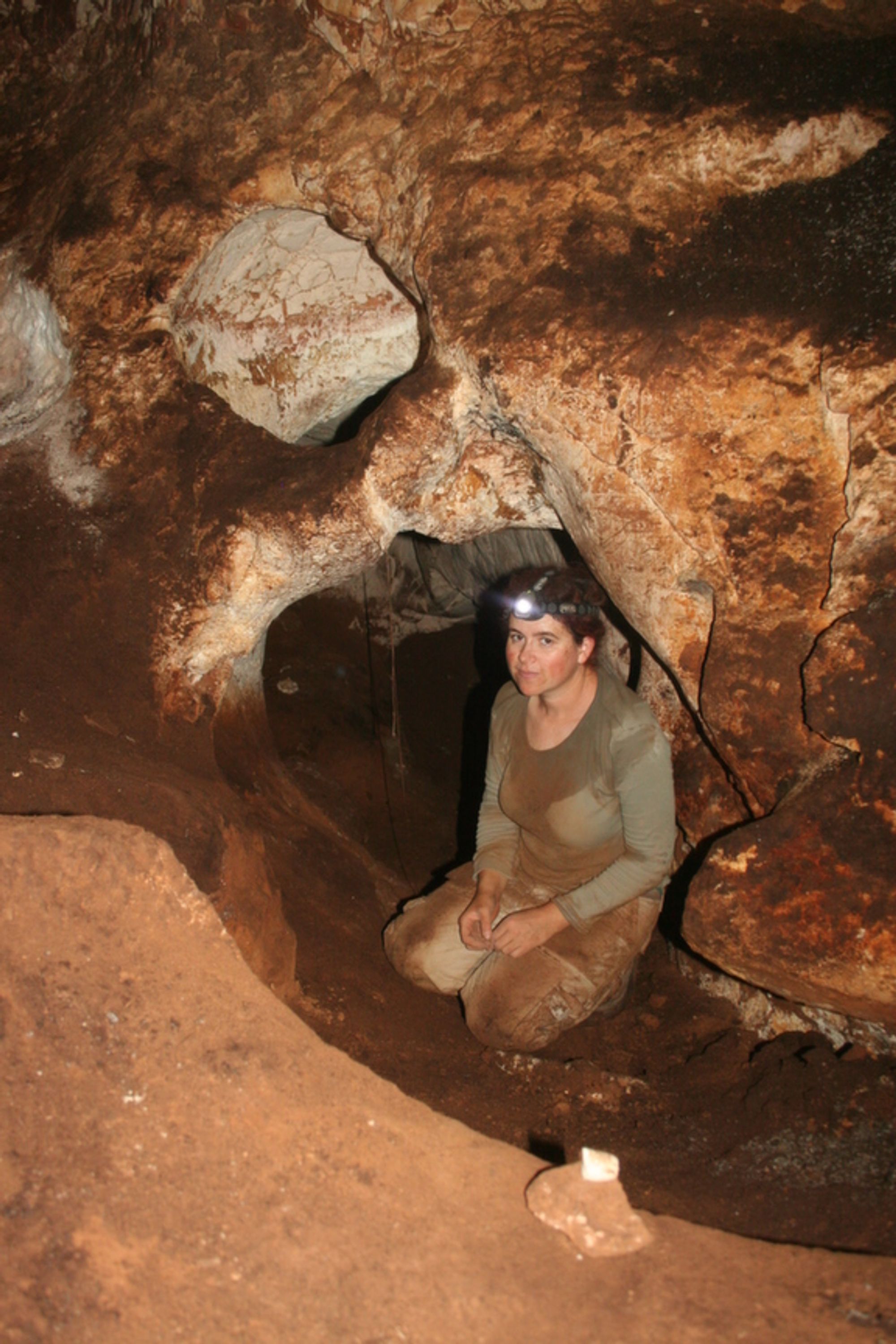
On the eastern side of the center of space F, at the bottom of the rockfall pile, there is a narrow vertical opening leading to the lower level of the cave. The outer part of this level consists of a large passage (G) that developed parallel to chamber E, that is, on a northwest – southeast axis. It is 85 m long, and its width varies between 1.8 and 10 m. Like its width, the height of the passage also varies, from 1.1 m in its southern part to 5 m in its northern part. The floor of the passage slopes south and is covered with many collapse rocks. On the walls and ceiling of the center of the passage many cave corals have been deposited, appearing as a dotted surface covering the passage walls at this point. On the southern side of the passage there is a small opening through which a strong wind blows constantly, and not by chance. This opening connects the cave space described so far with the large chamber that developed on the northern and eastern side of the cave. The chamber consists of several wings whose total length reaches 375 m – about a third of the length of the entire cave! Passage G connects to the chamber near its southern part. The floor of the chamber in this area is completely covered with huge collapse rocks and slopes north. South of the connection point the chamber develops in two branches: eastern (H1) and western (H2).
The eastern branch continues as a wide passage bounded at its margins by huge collapse rocks between which there are narrow passages. It appears that the southern side of this branch was in the past connected to space C, which lies close to the cave entrance, and that these spaces were separated by a collapse that created a pile of collapse rocks forming a wall common to the two spaces.
The western branch is significantly smaller than the eastern one but differs from it in character. This branch extends from the head of the talus slope covering the floor of the large chamber, where there is a high opening leading at its end to an elliptical space known as 'the Cathedral'. The floor of this space slopes north, toward the center of the large chamber, and its ceiling is horizontal and raised about 10 m above the floor of the space. The humidity in the space is high, apparently originating in the large concentration of bats (horseshoe bats) crowded in the ceiling of the Cathedral. The concentration of bats at this point is probably due to the structure of the place itself, which looks like a wide and tall chimney. Similar behavior can be seen also in vertical pits (hutot) in the Peqi'in ridge, where bats gather at the tops of karst chimneys. The concentration of bats also creates a concentration of animals that benefit from the high humidity and from the bat droppings (guano) present in the place. Thus, at this point one can find an impressive concentration of dozens of gray house spiders. The concentration includes individuals whose diameter reaches 10 cm.
North of the connection point between passage G and the large chamber lies the center of this chamber (I). From the center of the chamber an elongated passage extends to the southeast (N), another passage to the northwest (M), and a complex of narrow passages (P+Q) that also extend on a northwest – southeast axis, parallel to passages M and N, to the north.
Access:
- Access to the cave entrance does not require special equipment and is possible on foot from Kibbutz Gilgal up Wadi Dalia. It is also possible to reach the cave from the head of Wadi Dalia, on foot from the area of the village of al-Mughayyir, adjacent to Kokhav HaShahar.
- Movement through the cave spaces is mostly by walking. In the western wing of the cave there are long crawling sections.
- The passage from space F to passage G and to the lower part of the cave requires the help of a rope.
Equipment:
- A 10 m rope for the descent from space F to the lower part of the cave.
- Protective clothing against the cave ticks present in most parts of the cave.
Written by: Boaz Langford