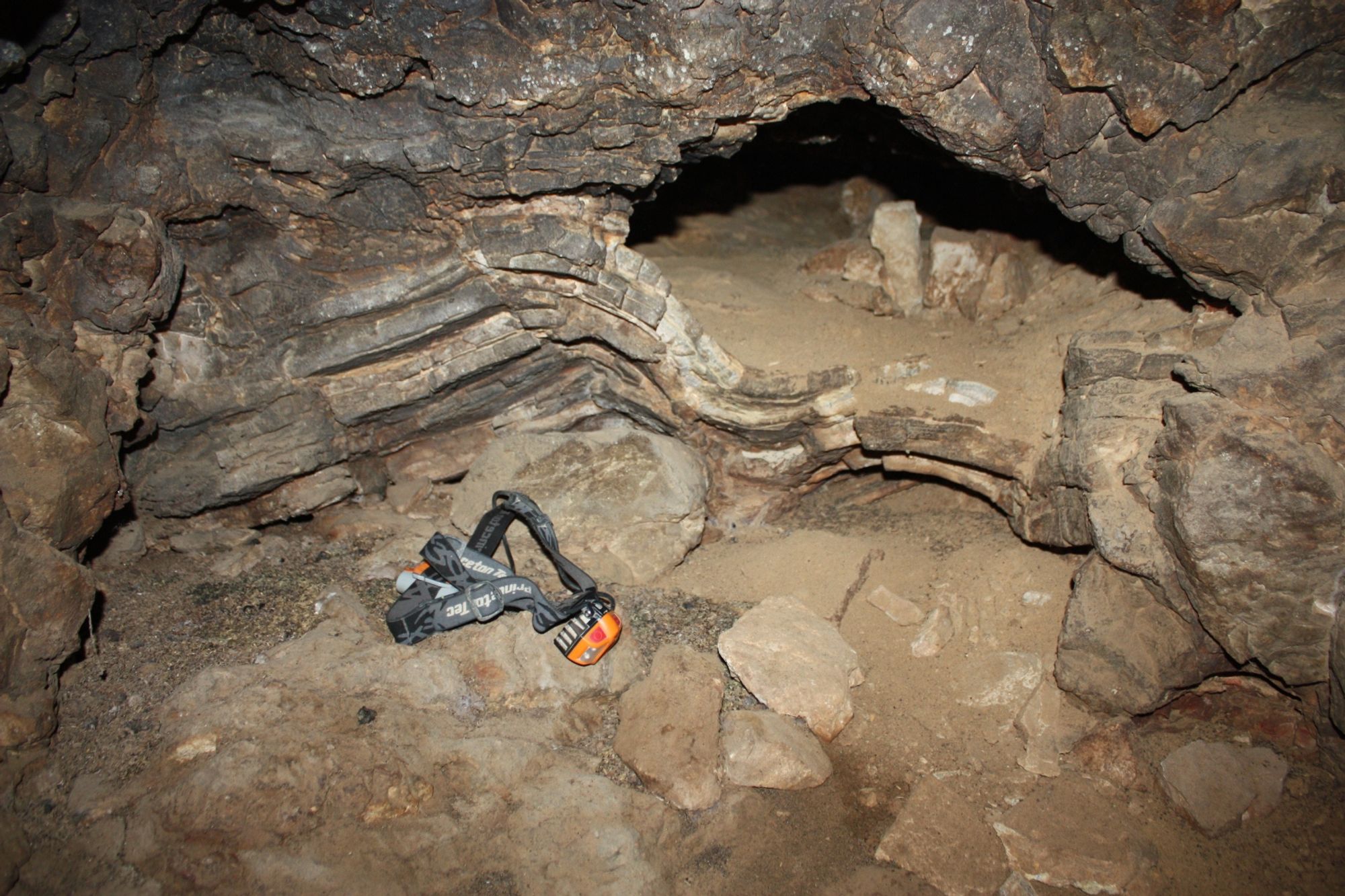
Arak Ti Cave, Bik'a
- Grid ref.
- 189039/155832
- Location
- Bik'a
- Elevation
- 77 m above sea level
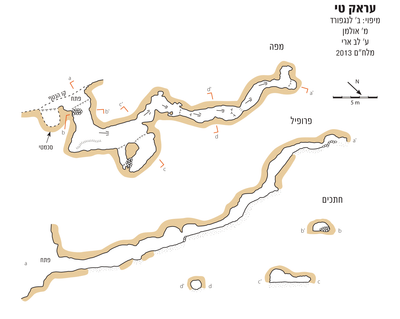 Cave mapView the map (PDF)
General:
Arak Ti Cave is a medium-sized cave (total length 49 m) consisting mainly of an elongated passage that developed in massive Turonian limestone (Shivta Formation). Rounded dissolution marks in the walls and ceiling of the passage indicate that it formed under hypogene conditions. In the center of the cave there are layered cave deposits that look like thick calcite rafts, filling a tiny space.
The cave was surveyed by the ICRC on several different occasions. In the early 1980s the cave was reported by Amos Frumkin, who provided general details about it. Vladimir Boslov updated the report after a visit to the site in April 2006. In June 2013 the cave was mapped by Mika Ullman, Amit Lev Ari, and Boaz Langford.
Description of the Cave:
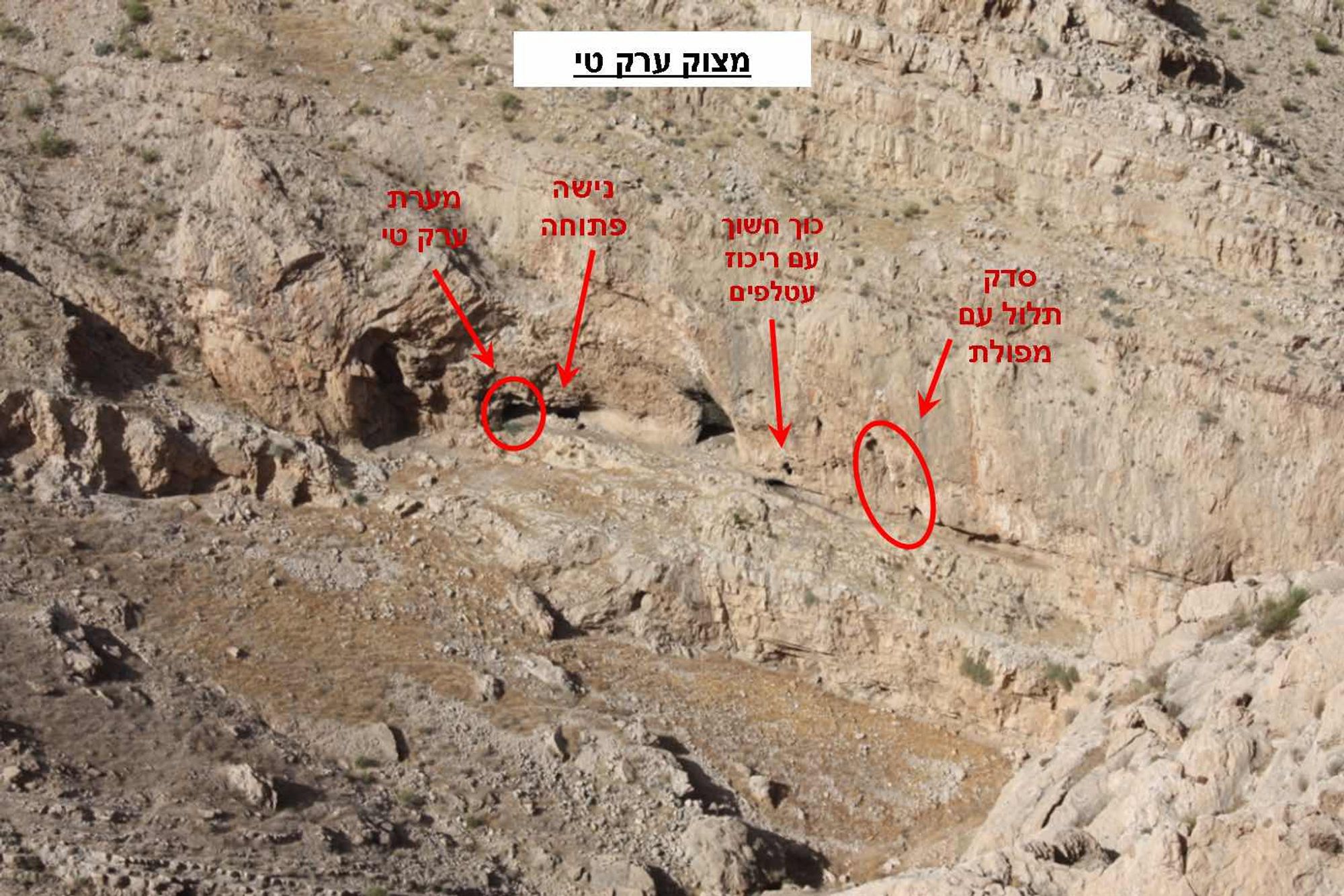
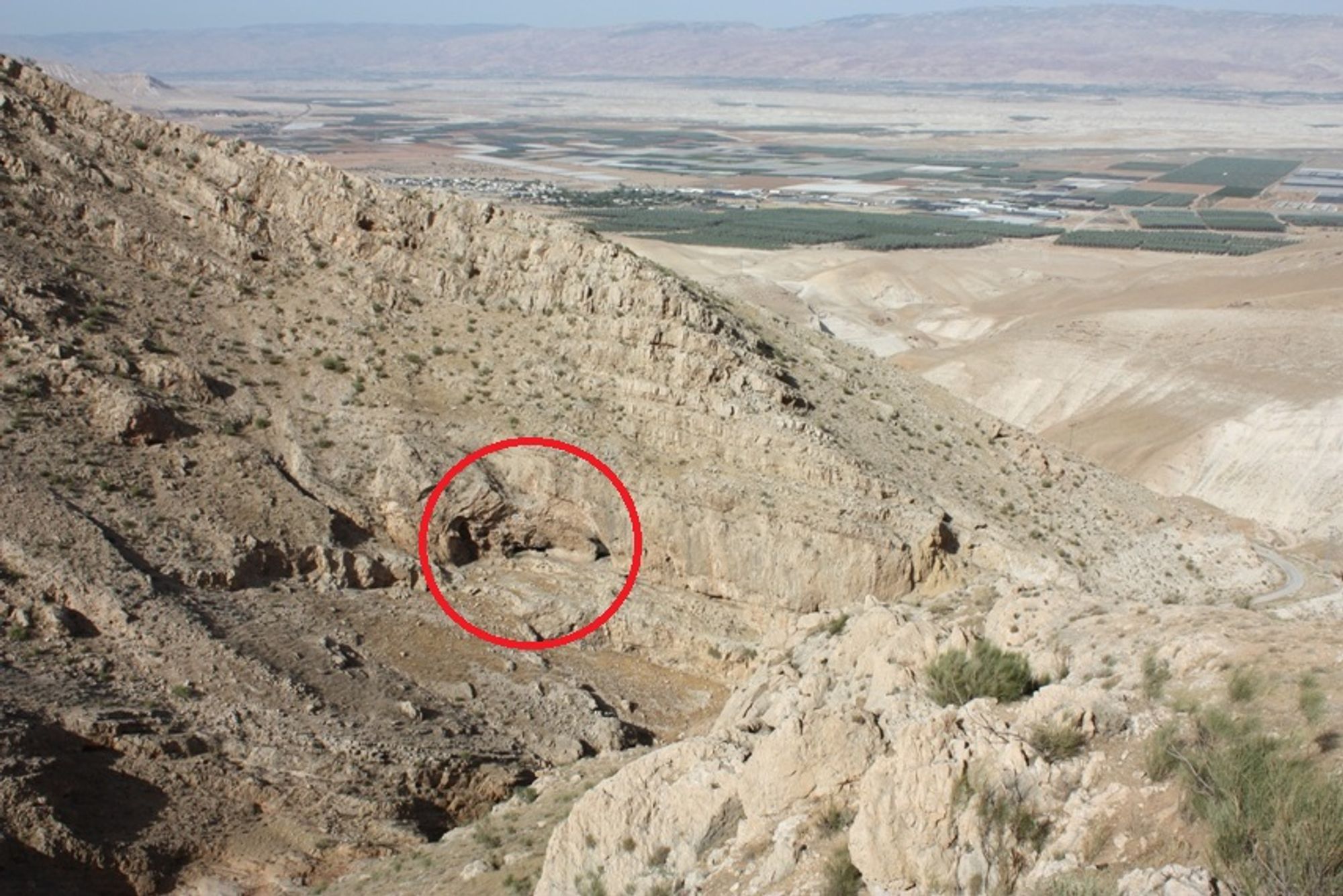
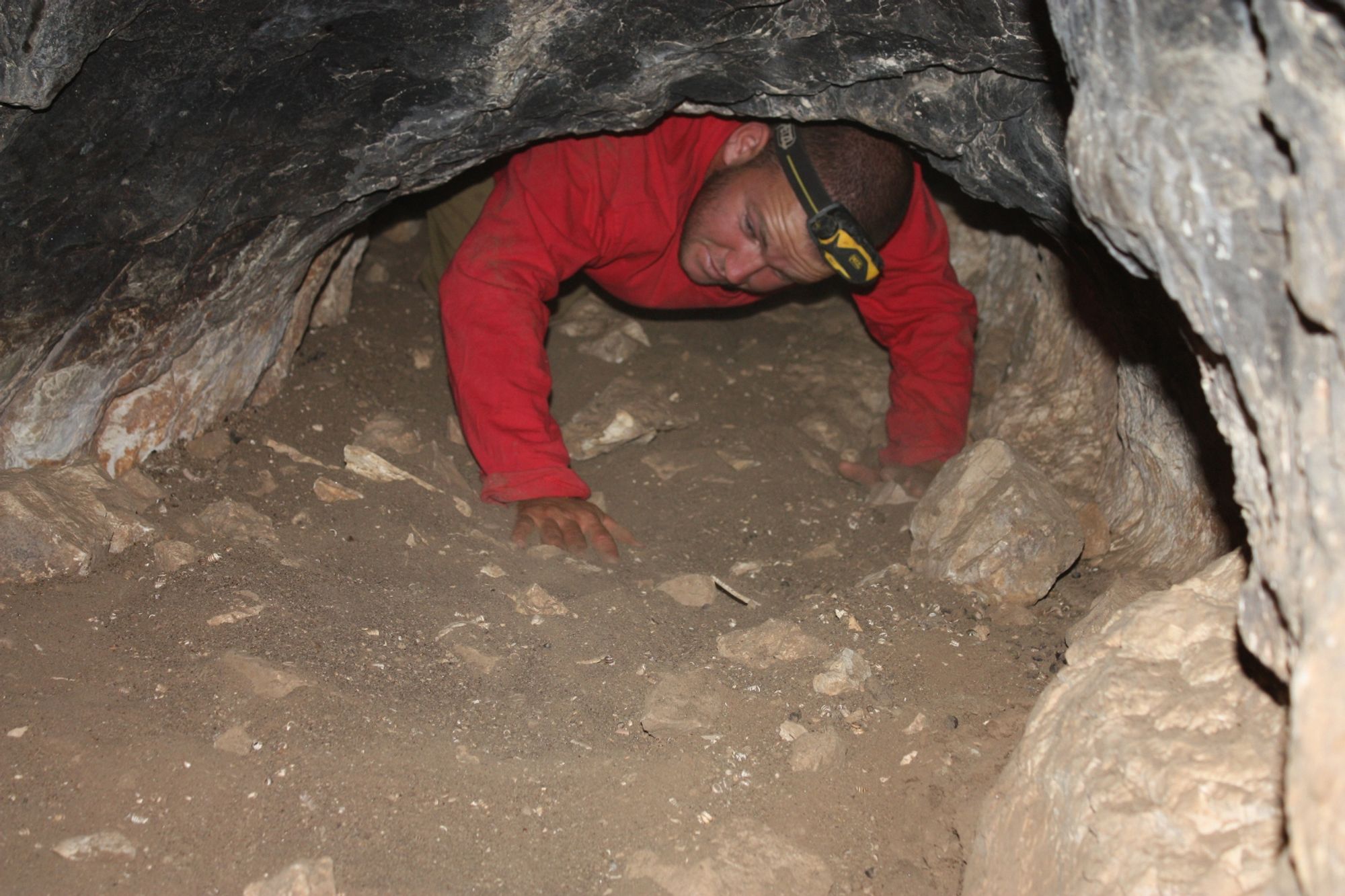
The cave opening opens at the foot of a prominent cliff, on the northern bank of the lower Wadi Abu Mahmud. The opening measures 2.5X1.7 m and its general shape is rounded. The cave opening leads to a horizontal passage that continues northeast and after a few meters turns northwest. The passage floor is horizontal, partly covered with dry sediment and partly composed of exposed bedrock. After its turn the passage continues in a gentle ascent that becomes steeper as one advances into the cave. The passage ceiling runs parallel to its floor, and at many points rounded dissolution domes open in it. Two short passages branch off from the main passage and extend north for a few meters. After the passages branch off, the space of the main passage narrows, and from this point to its end progress is possible only by crawling, at times with real squeezing at narrow points.
On the face of the cliff, around the cave opening, several additional openings open, leading to confined spaces. The largest of these spaces consists of a sub-vertical chimney, in which rockfalls are common, endangering the visitor.
Notes:
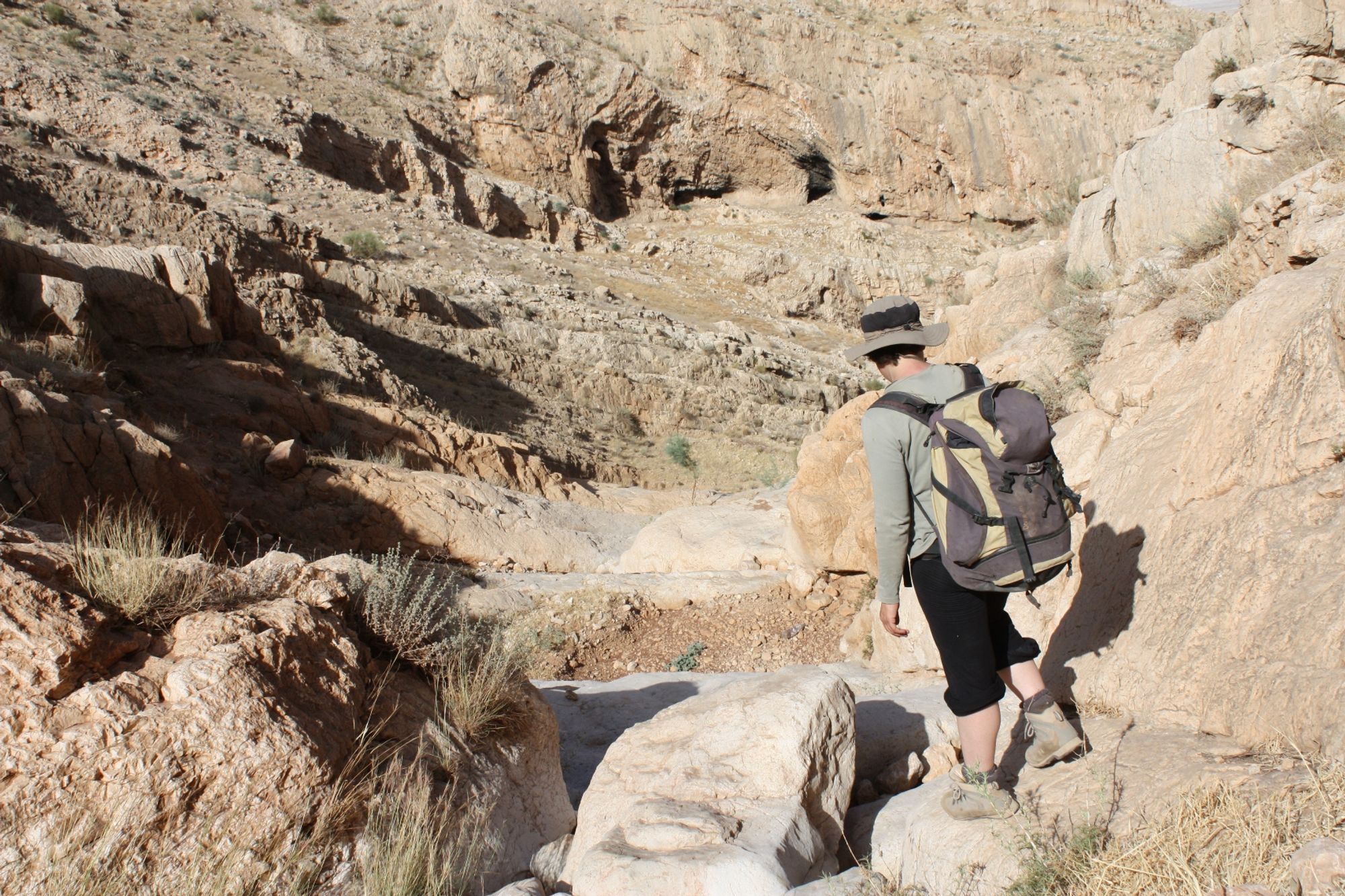
- The cave can be reached from the water borehole located 100 m below it. A dirt road that becomes an asphalt road leads from Kibbutz Gilgal to the borehole.
- Several dozen bats of the genus Yaznov were observed in the cave. Another group of bats was observed in the chimney adjacent to the cave.
- A pottery sherd was found in the inner part of the passage.
Written by: Boaz Langford