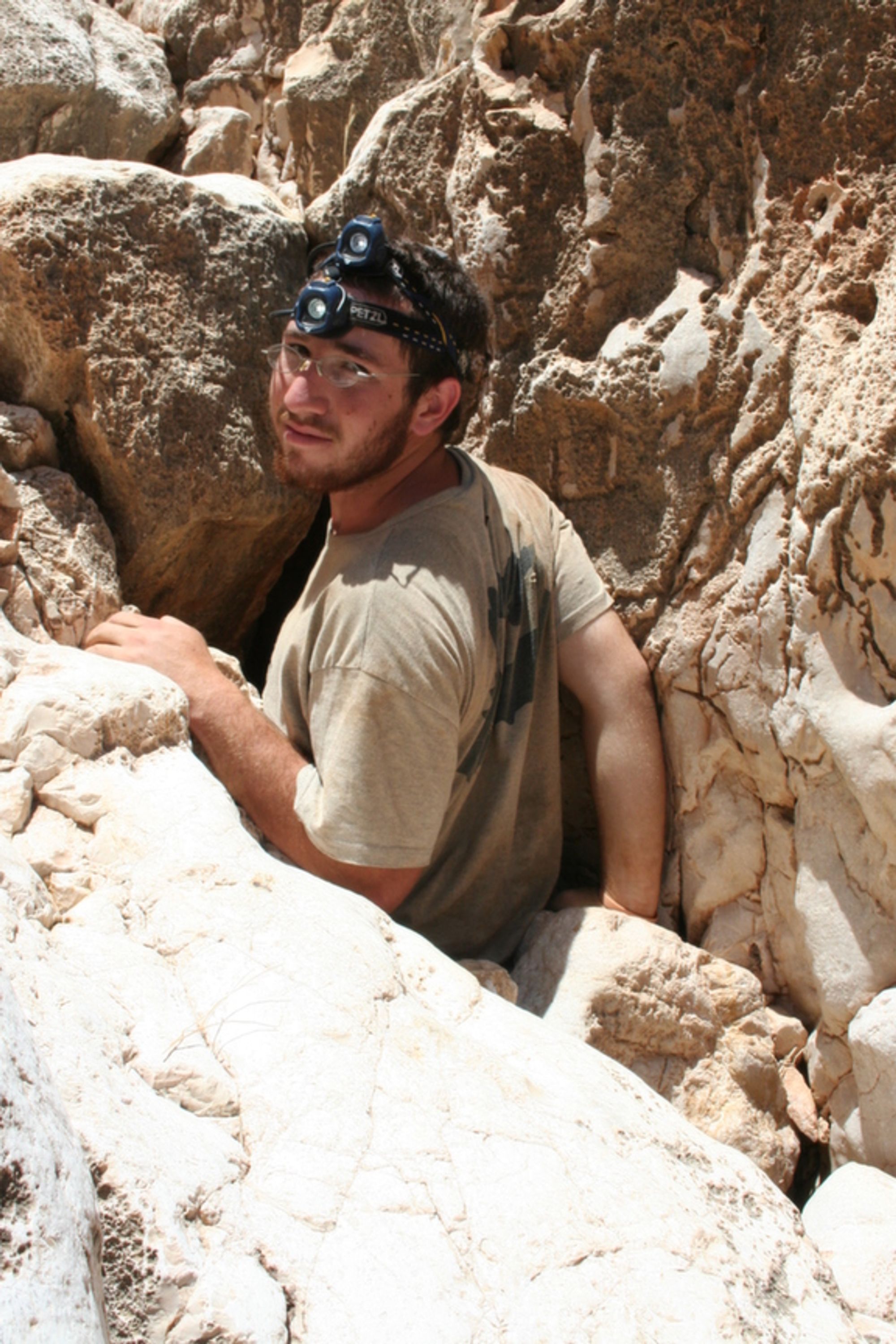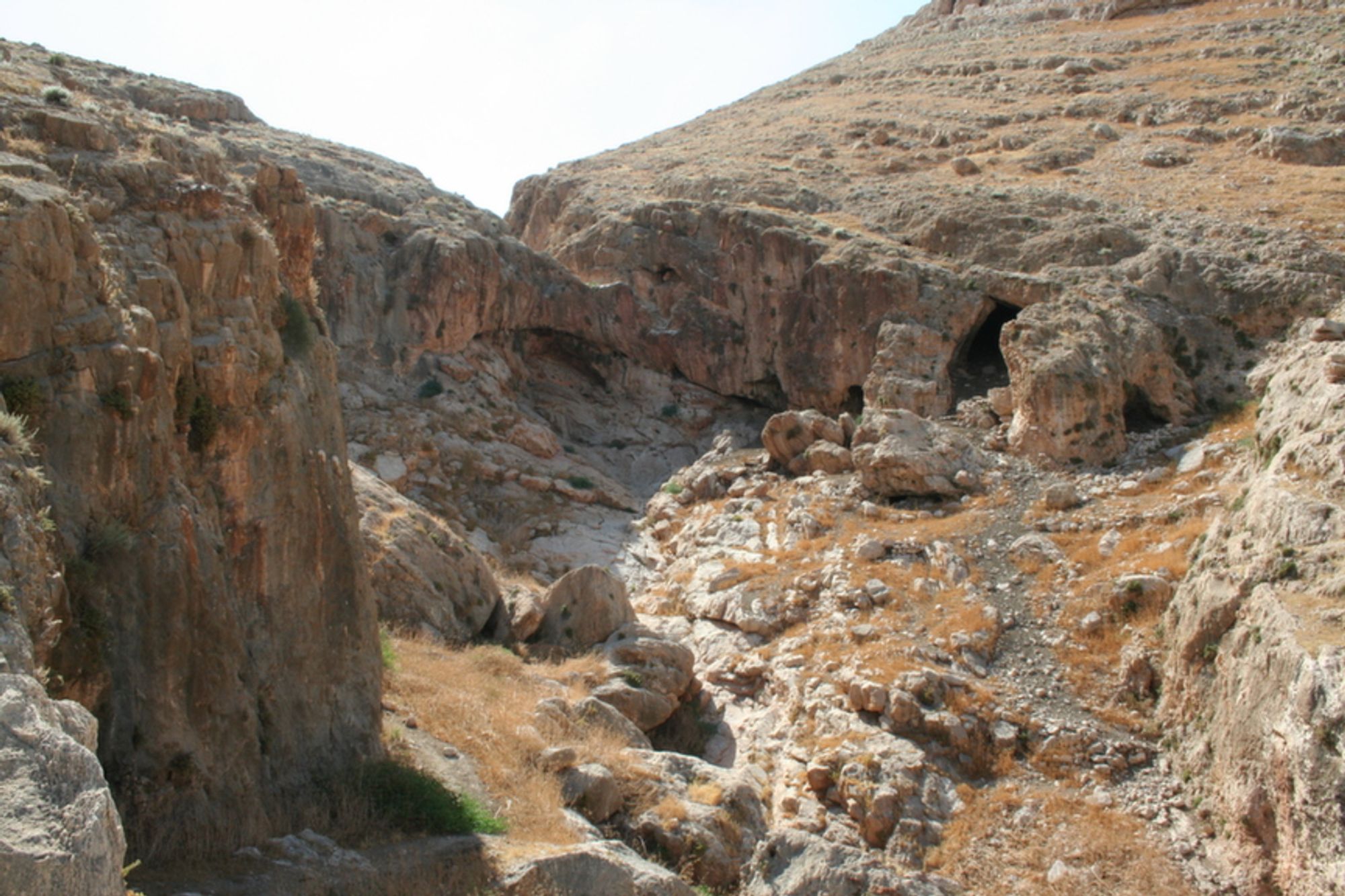
The Waterfall, Wadi Daliya
- Grid ref.
- 18870/15565
- Location
- Wadi Daliya
- Elevation
- 115 m above sea level
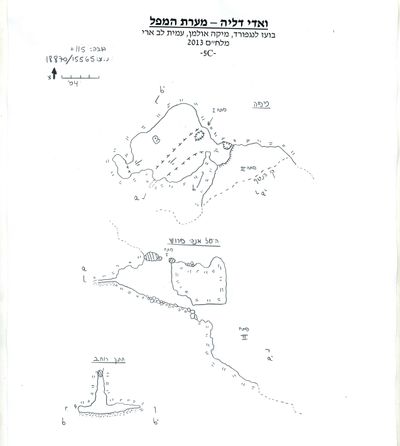 Cave mapView the map (PDF)
General:
Waterfall Cave is a small cave (total length 39 m), formed by phreatic dissolution processes in limestone of Turonian age (Shivta Formation). The cave consists mainly of a wide space and a vertical chimney exposed in the middle of the lower canyon of Wadi Daliya.
The cave was surveyed by the ICRC team (A.K, A.P) in 1980, as part of a comprehensive survey conducted in the caves of Wadi Daliya. In this survey the name of the cave was determined, given to it because of its location crossing the high waterfall in the middle of Wadi Daliya. In a tour of the stream's caves in June 2013 (B.L, M.A, A. L"A) the cave was surveyed again and fully mapped.
Description of the cave:
Two openings lead to Waterfall Cave, one from the bottom of the waterfall and one from its top. The upper opening opens in the middle of the streambed, near the lip of the waterfall. The opening measures 0.6X0.5 m and is rectangular. The location of the opening, in the middle of the streambed, allows floodwater to enter the cave space. The floodwater crosses the cave space and exits to the streambed through its lower opening. This opening is significantly wider than the upper one (measuring 6X10 m) and its general shape resembles a wide chute, of the type that characterizes waterfalls in the desert.
The cave space between the openings looks like a wide, lit room whose ceiling is higher in its center than at its edges. The room floor consists of a uniform rock layer inclined in a gentle descent to the northeast. The northern and western part of the room looks like a low, dark space that can be entered only by crawling. Some cave deposits (cave corals, stalactites and flowstone) appear on the walls of this area of the room. Another speleological element appearing in the walls at the room's edges is rounded dissolution marks showing that the cave developed under phreatic conditions.
On the east side of the space there is a narrow passage leading to the lower opening of the cave. Passing through this opening requires a careful descent down a high vertical step. In the ceiling of the opening a single specimen of sacred fig grows - a botanical specimen defined as an invasive species in Israel.
Notes:
- Access to the cave opening is possible on foot from the direction of Kibbutz Gilgal (east) or from the direction of the village of Al-Mughayyir (west). The access from the western part of the stream leads to a waterfall that can be crossed without a rope, through a cave running along the body of the waterfall.
- A few individual insectivorous bats of the Yiznov type were observed in the cave (June).
Written by: Boaz Langford