Leopards Cave
- Grid ref.
- 181321/155568
- Location
- Ein Samiya
- Elevation
- 495 m above sea level
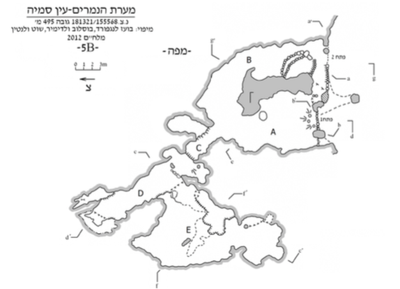 Cave mapView the map (PDF)
Cave description:
General:
Leopards Cave is a large cave (total length 168 m) that developed by phreatic-hypogenic dissolution processes, in limestone of Cenomanian age (Amminadav Formation).
The cave was discovered in 1985 by an Arab shepherd from the Ein Samiya area, after several goats in his flock were killed by a predator. Amos Frumkin, who visited the site in May 1985, drew a schematic map of the cave. In June 2012 the cave was mapped accurately by: Boaz Langford, Vladimir Boslov, Yuri Lisovich and Valentin Shot.
The story of the discovery of the cave as reported by Yitzhak Meir and written by Amos Frumkin:
"The cave was discovered by an Arab shepherd from the Ein Samiya area, after several goats in his flock were killed by a predator. The shepherd followed the tracks of the animal that had killed one of the goats. The tracks led to a cave in the northern bank of Wadi Samiya. After discovering the cave the shepherd came to the place together with 2 drilling workers from the Ein Samiya borehole, who crawled into the depth of the cave until they suddenly met a leopard! The shepherd and the drilling workers blocked the cave entrance with stones and placed burning tires there.
On 18.6.85 Giora Ilani and Yitzhak Meir arrived at the cave and identified the tracks of 2 leopards near the cave. The track measurements of one of the leopards were 64 mm (male?) and of the other 58 mm (female?). The leopards visited the place after 12.6.85, when a Nature Authority ranger had smoothed the soil around the cave entrances."
The entrance and its surroundings:
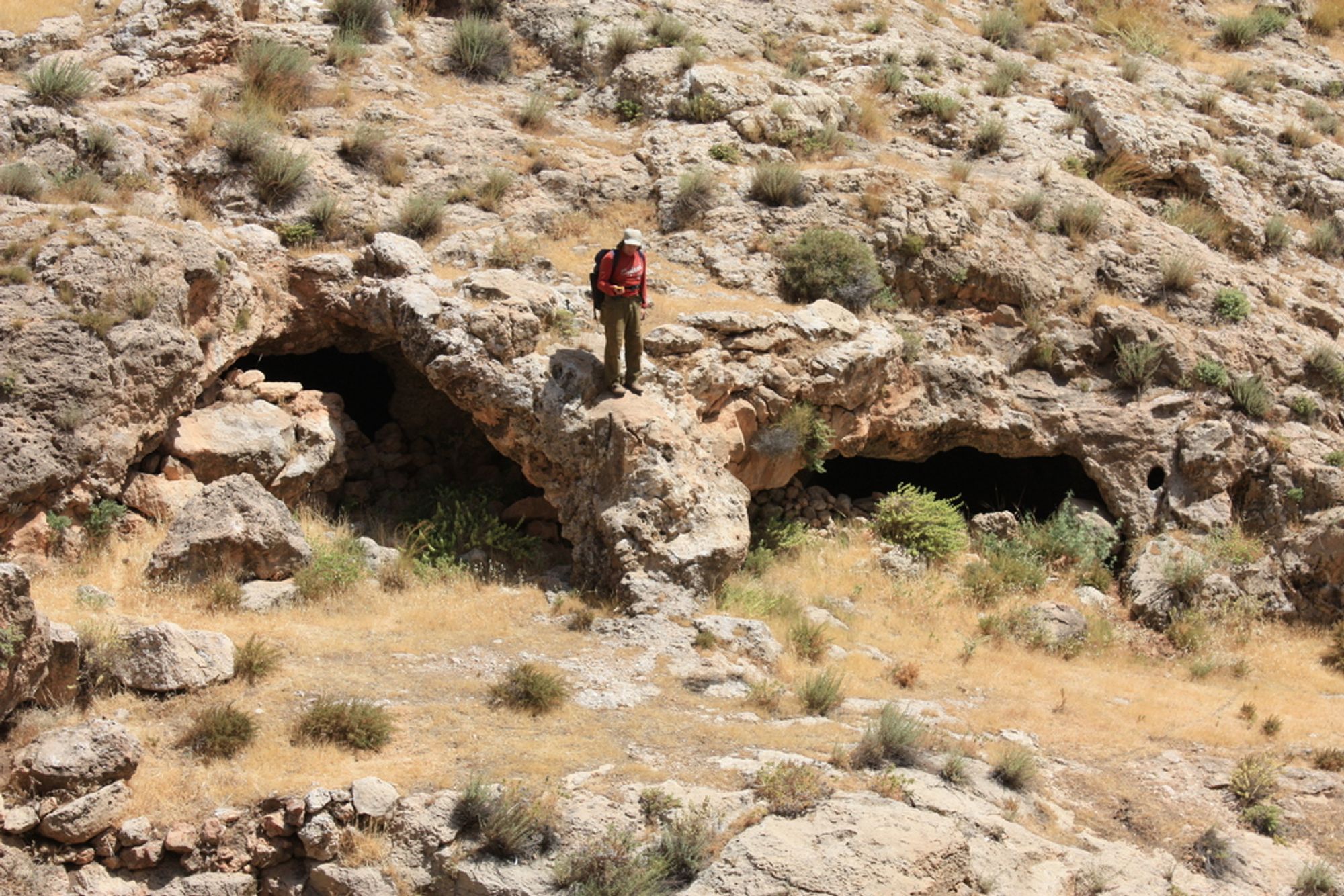
The cave has three entrances that were exposed at the bottom of the northern bank of the Wadi Samiya canyon, west of Ein Samiya. Two of the cave entrances are horizontal entrances separated by a natural rock bridge. The entrances are located one west of the other, about 6 m above the streambed, at the bottom of a stepped cliff. The original dimensions of the cave entrances (western entrance 2.2X1.9 m, eastern entrance 4X1.2 m) changed slightly following a fieldstone wall that was built there. Next to the western entrance there is another opening whose dimensions do not allow entry into the cave space through it. In front of the cave entrances there is a flat terrace bounded by the streambed. At the edge of the terrace there is a little geological breccia, which perhaps indicates the position of the drip line of the cave entrances in the past. In the center of the terrace, near the base of the rock bridge that separates the cave entrances, there are three rough depressions that may have been formed by quarrying and worn away over the years. Another rock cutting in the cave area is a small elliptical "window" that was cut east of the eastern entrance of the cave.
The cave space:
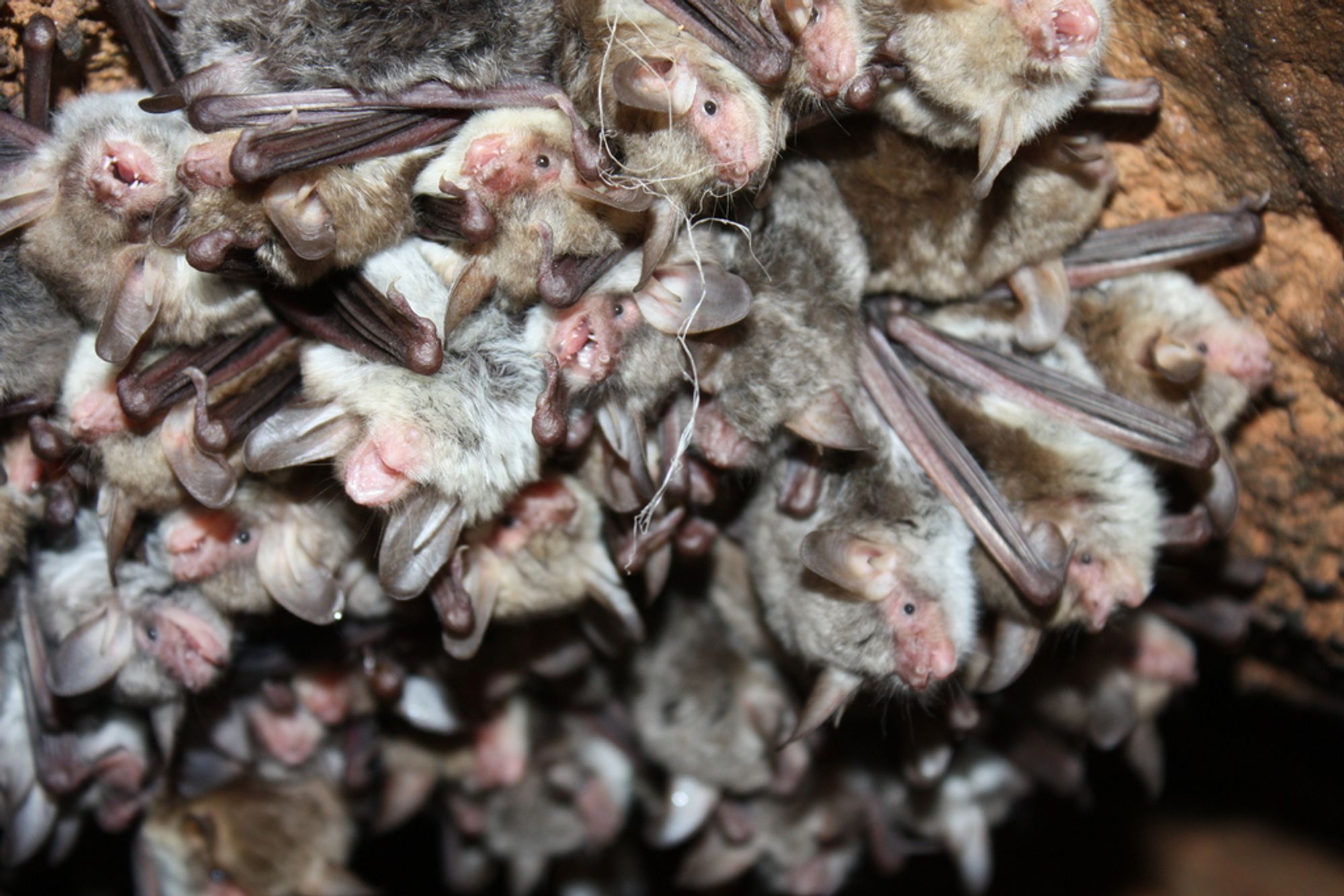
The eastern entrance of the cave leads to an elongated, high space (B), semi-lit by the light penetrating through the entrance. The floor of the space is horizontal and covered with dark soil. On the southern side of the floor of the space, near the inner side of the entrance, there is a low enclosure built of fieldstones. On its northern side space B turns west and connects to the northern side of space A. Space A is a rounded, high space extending from the western entrance of the cave northward. The floor of the space is horizontal and covered with a layer of dark soil mixed with a few potsherds. In the ceiling of the space a rounded vertical opening yawns, continuing in a short chimney up to the surface. From the northern side of space A, near the connection with space B, a short corridor continues north. On the eastern side of the middle of the corridor, about 2 m above its floor, there is a small elliptical chamber. On the northern side of the corridor there is a wide passage leading to space C. This is a small space consisting of a low chamber that serves as an intermediate space between the outer part and the inner part of the cave. The floor of the chamber is covered with a layer of dark, muddy soil, sloping slightly to the west, where many potsherds are scattered. On the northern side of space C there is a tiny opening through which passage is possible only by crawling. This restricted passage leads north to a wide, high space extending on a north-south axis (space D). The floor of the space is horizontal and covered with a layer of dark soil in which many looting digs are evident, in which a few potsherds still remain. In the ceiling of the space there are wide dissolution domes. In May 2012, in one of these dissolution domes, a cluster of about 60 insectivorous bats of the species Hemprich's long-eared bat was observed.
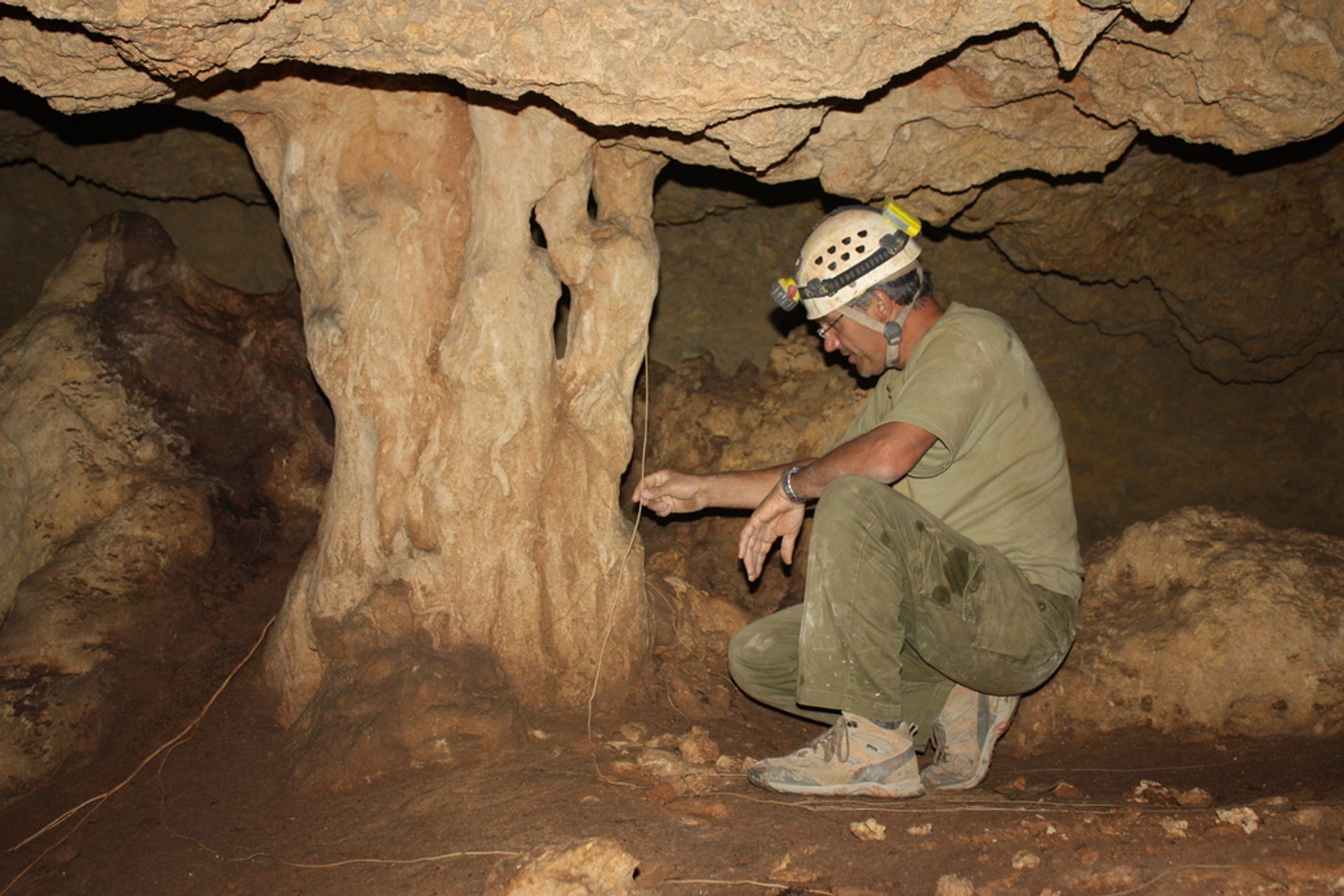
On the southeastern side of space D there is a wide opening, separated by natural rock bridges into several sub-openings located at different levels one above the other. This opening (or openings) leads east to a wide hall (E), the largest of the cave's spaces. The dimensions of the hall are 10X10 m and its height reaches 3 m. In its southern part there is an area slightly lower than the rest of the hall. From the center of this area a narrow passage extends north, passing beneath the northern part of the hall. On the western side of the hall there is a rounded chamber from which wide niches extend in various directions. In the center of the hall stands a natural rock pillar that was formed during the creation of the hall and not after it (that is, it is not a speleothem).
Notes:
- The cave entrance can be reached on foot from Ein Samiya.
- In May 2012 about 60 insectivorous bats of the species Hemprich's long-eared bat were observed in the cave. In June 2012, in addition to these bats, a dwarf horseshoe bat or a horseshoe bat and about 10 individuals of the greater mouse-eared bat were observed in the cave.
- Potsherds scattered in all parts of the cave were dated to the Hellenistic period and the Early Roman period. Some of the Early Roman potsherds fit the period of the Bar Kokhba revolt (Boaz Zissu, identified from a photograph).
- In all parts of the cave there are many looting digs.
Written by: Boaz Langford