This page was translated from Hebrew and has not been reviewed yet. The Hebrew page is the reference. עברית
Nahal Teenim Cave Survey
Nahal Teenim is a large channel descending from the Mount Gerizim plateau westward to its end in the channel of Nahal Alexander, in the south of the Hefer Valley. The length of the stream, from the head of its upper channel to its end, is 45 km, over which it drops a vertical height difference of 790 m.
During several tours in the lower part of the stream, several caves were located in it, and in the Wadi a-Tina channel that empties into it. The repeated tours focused on the section of the stream between the asphalt road connecting the villages Beit Lid and Kur and the outlet of the stream onto the plains of the Hefer Valley (Sha'ar Efraim pass).
Continue reading about the general background of the survey and the working methods
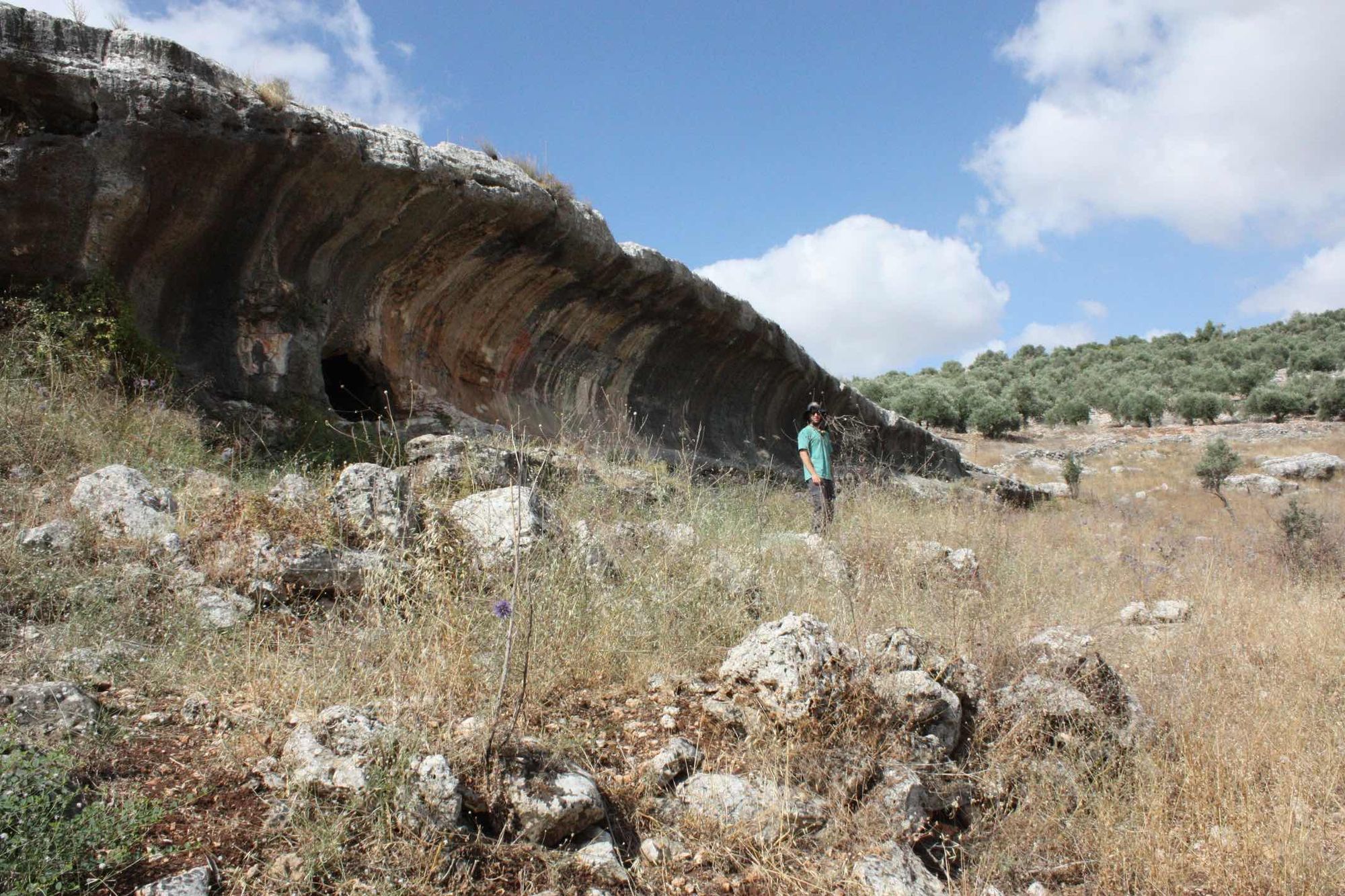
163661/183443
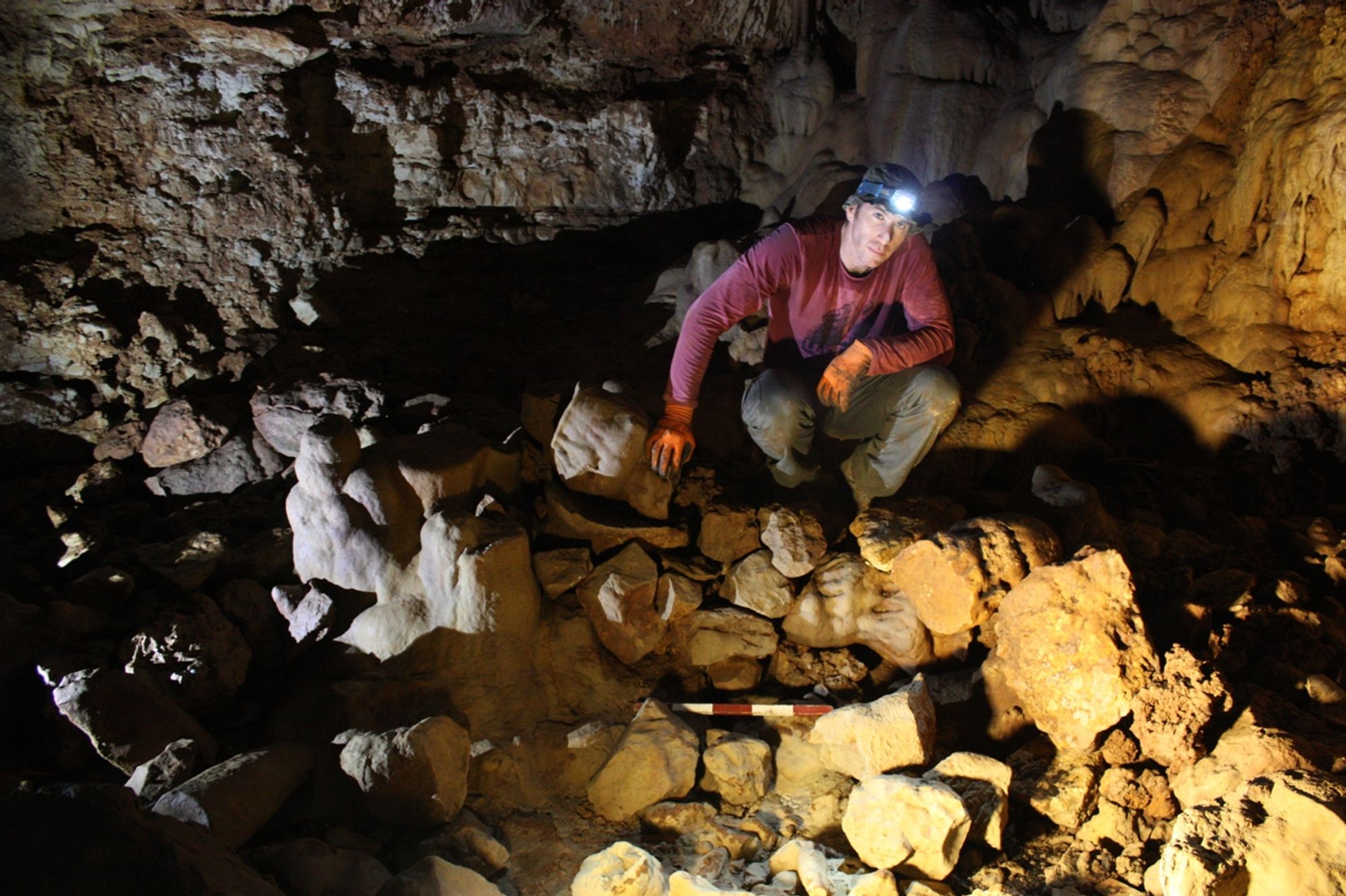
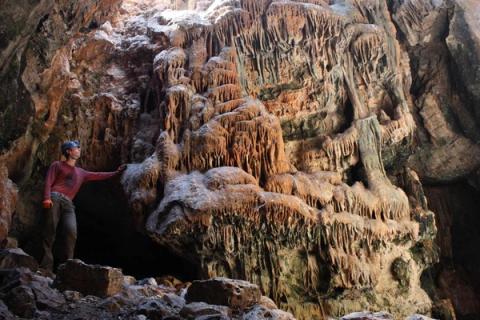
A medium-sized cave (total length 93 m and maximum depth 16 m), consisting mainly of an elongated chamber that developed in Cenomanian limestone (Weradim Formation). Judging by the general shape of the chamber, it was originally formed below the water table. Abundant cave deposits appear throughout the cave.
Cave page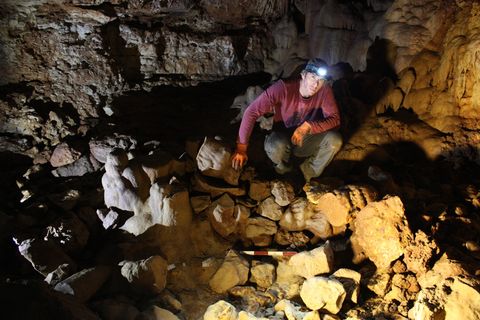
161746/183391
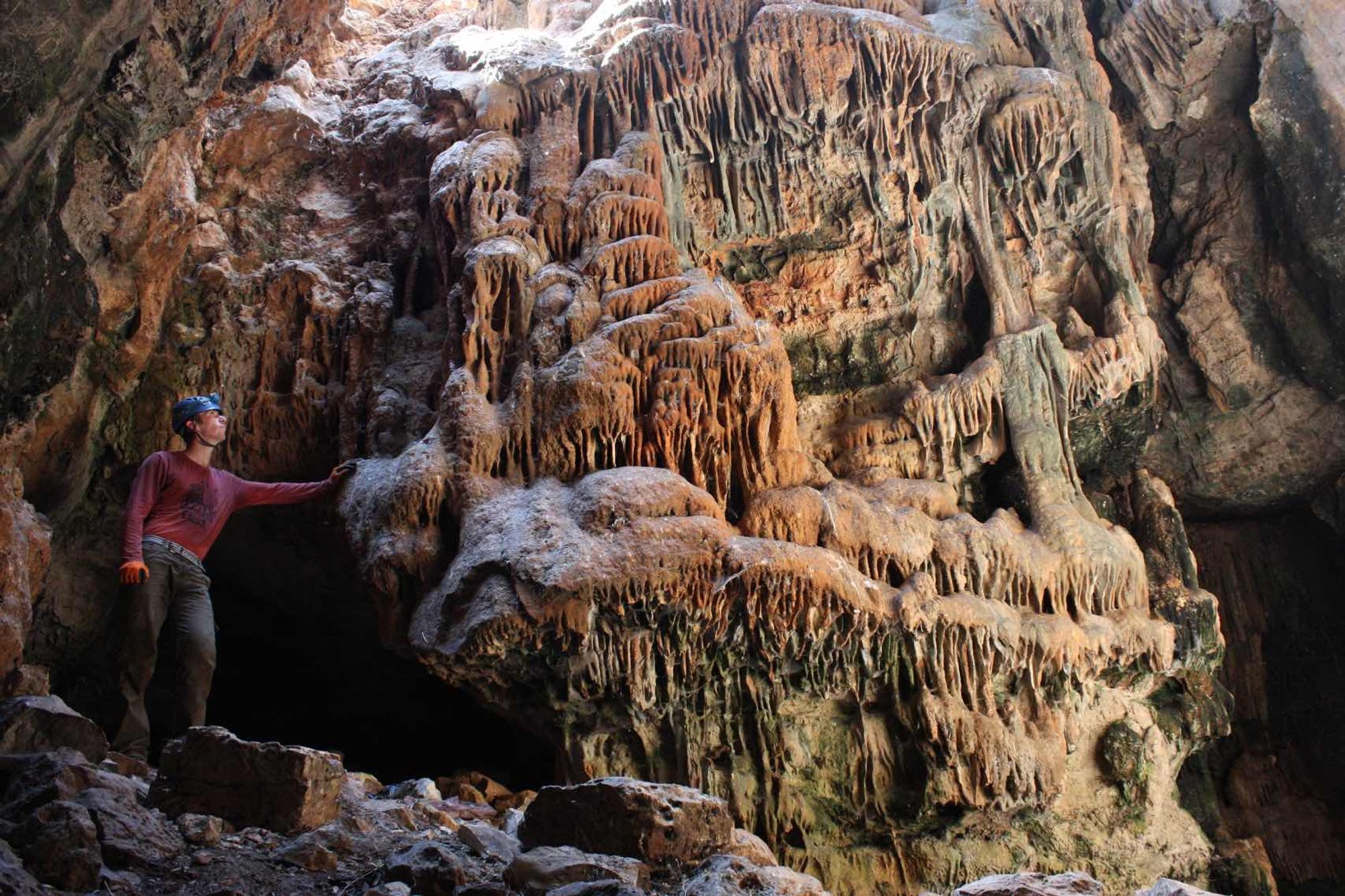
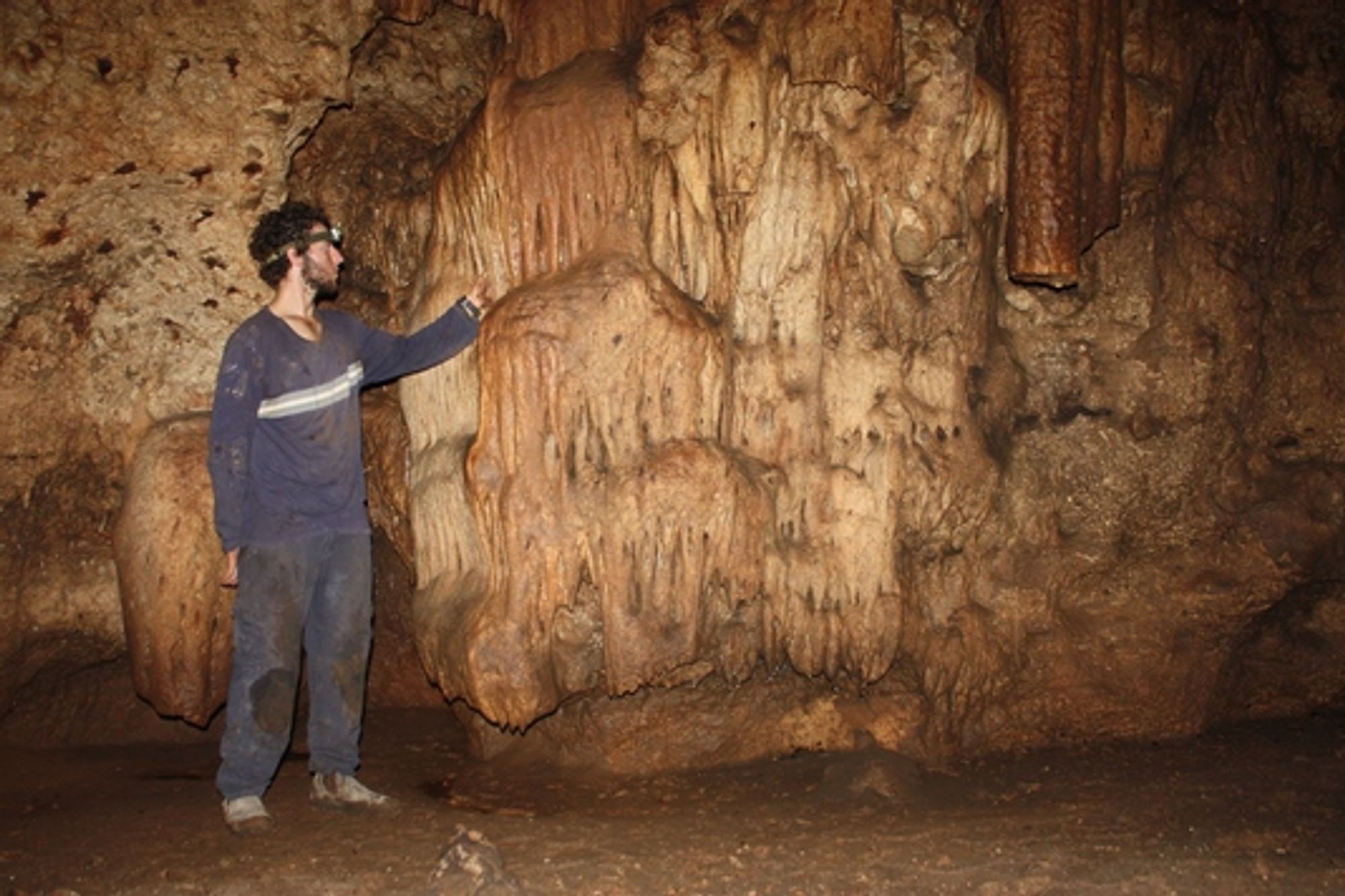
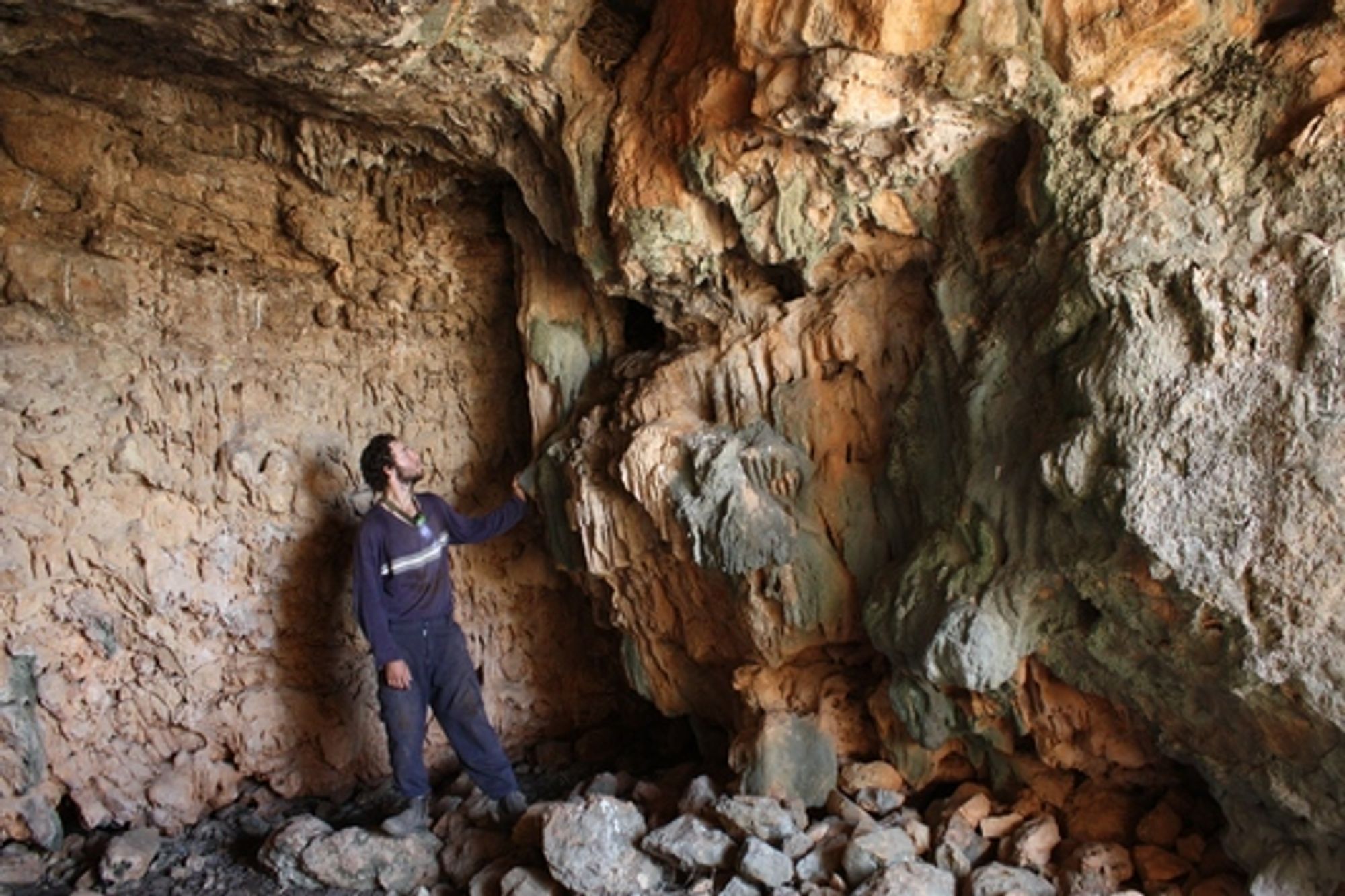
A medium-sized cave consisting of 3 large chambers. The entire cave space is completely covered with abundant cave deposits (stalactites, stalagmites, flowstone, pagodas, coralloids, cave pearls, elephant ears) that coat its walls and make it hard to discern the original dissolution morphology. Nevertheless, several deep dissolution domes can be seen opening in the ceilings of the cave chambers. These domes, as well as the general structure of the cave, indicate that the cave developed as a hypogenic cave in the phreatic zone.
Cave page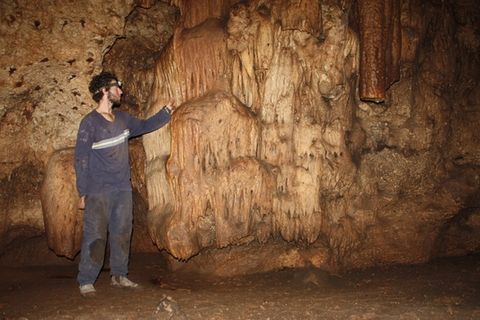
156445/186408
A medium-sized cave consisting mainly of a vertical shaft and several chambers. The total length of the cave reaches 65 m and its maximum depth 18.5 m. Throughout the cave there are rounded dissolution features and well-developed chimneys, which indicate that the cave was formed by phreatic-hypogenic dissolution processes in massive Cenomanian dolomite (Sakhnin Formation).
Cave page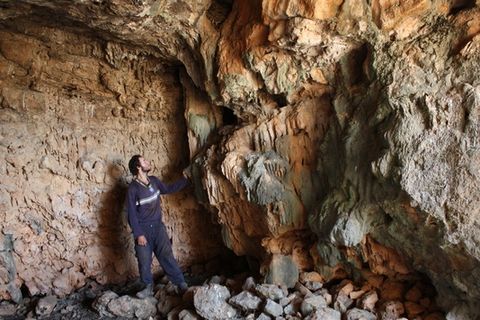
156634/186299
A small cave consisting mainly of a rounded chamber (after which the cave is named) and a short passage. The total length of the cave reaches 22 m and its maximum depth 2 m. At various points in the cave there are rounded dissolution features, which indicate that the cave was formed by phreatic-hypogenic dissolution processes in massive Cenomanian dolomite (Sakhnin Formation).
Cave page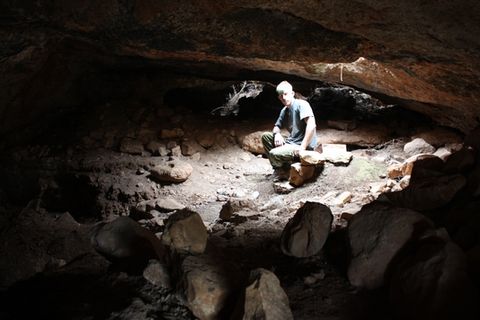
156152/185640
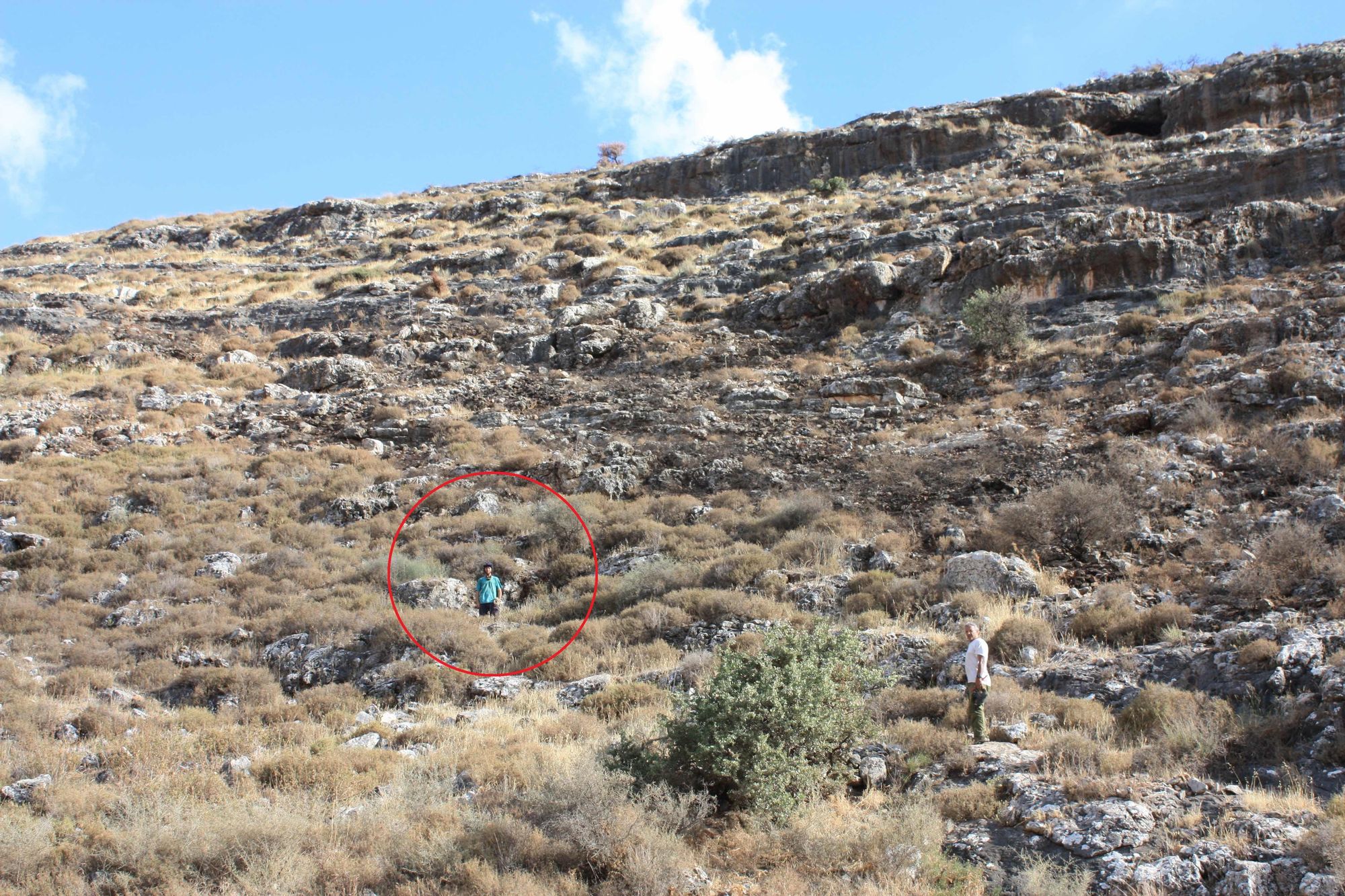
A medium-sized cave consisting mainly of an elongated chamber. The total length of the cave reaches 33 m and its total height is 3 m. The cave was formed by quarrying in weathered rock extending beneath a harder rock layer (Sakhnin Formation). The cave has a square, weathered entrance measuring 1.4X0.9 m. The cave entrance opens in the upper part of the slope on the southern bank of lower Nahal Teenim, about 80 m above the channel bed.
Cave page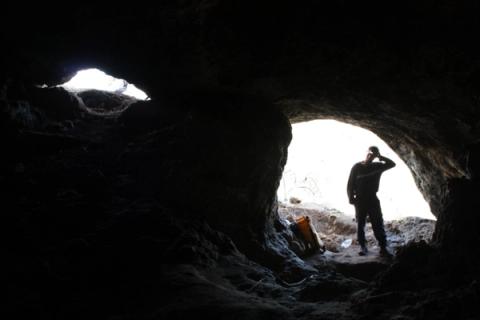
155967/185926
A medium-sized cave consisting mainly of an elongated chamber. The total length of the cave reaches 49 m and its total height is 10 m. The cave appears to have been formed by phreatic-hypogenic dissolution processes that acted in massive Cenomanian dolomite (Sakhnin Formation).
Cave page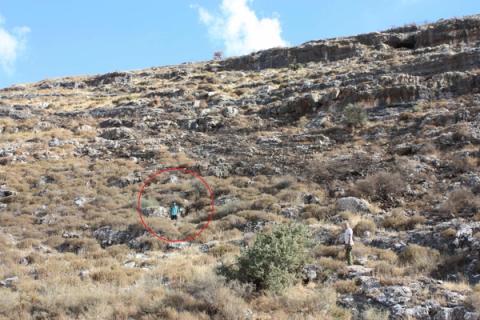
156724/185625
The cave entrance, which opens from the slope surface downward, is not visible when looking from the bottom of the slope. A horizontal opening of a shallow niche, set in a local cliff on the slope above the pit entrance, gives away its location.
The cave entrance leads to a vertical chimney 6 m deep, whose walls are partly covered with green moss. At the bottom of the chimney there is a rounded space whose floor and ceiling slope down to the northeast.
Cave page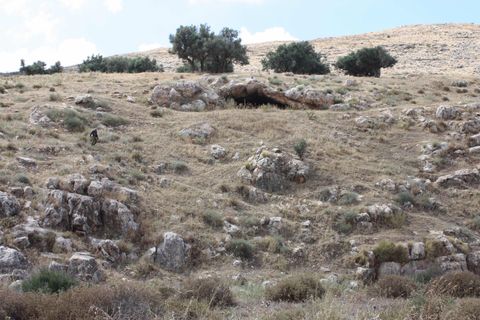
158258/184867
A small cave consisting mainly of a single space that was formed in Cenomanian dolomite (Sakhnin Formation). Judging by the structure of the cave as a spacious chamber, and in line with the caves found in the nearby surroundings, it is likely that the cave was formed under phreatic-hypogenic dissolution conditions.
Cave page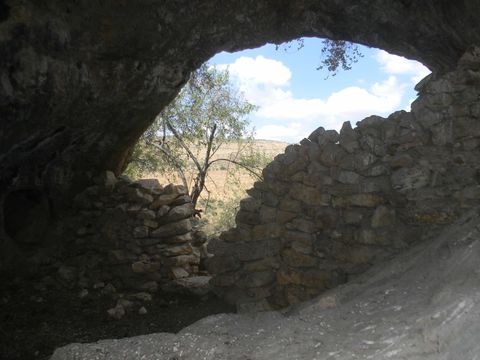
158934/184218
A small cave consisting mainly of a single space that was formed in Cenomanian dolomite (Sakhnin Formation). Rounded dissolution pockets and domes, a convex cross-section profile and the general structure of the cave as an elliptical chamber are signs indicating that the cave was formed as a hypogenic cave in the phreatic zone. A few dry speleothems, deposited in a narrow passage near the inner part of the entrance, indicate a vadose phase of activity, after the space was drained of water.
Cave page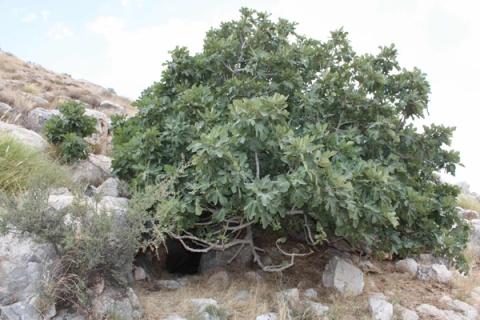
158934/184218
Mahbo Teenim Cave is a small cave consisting mainly of a single space that was formed in Cenomanian dolomite (Sakhnin Formation). Rounded dissolution pockets and domes, a convex cross-section profile and the general structure of the cave as an elliptical chamber are signs indicating that the cave was formed as a hypogenic cave in the phreatic zone. Active speleothems (stalactites, flowstone, small columns), deposited throughout the cave, represent a vadose phase of activity, after the space was drained of water.
Cave page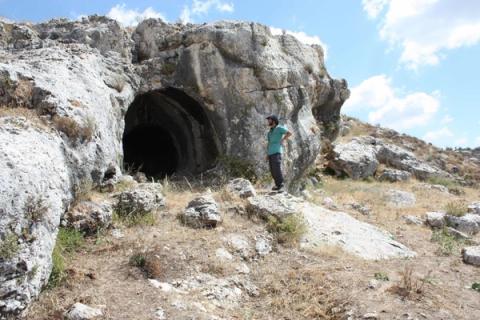
157579/184339
Nihoachot A-Ras Cave is a small cave (total length 13 m) consisting mainly of a single space that was formed in Turonian dolomite (Beina Formation). Rounded dissolution pockets and domes, as well as a convex cross-section profile, indicate that the cave was formed as a hypogenic cave in the phreatic zone. Weathered speleothems (stalactites, flowstone, coralloids), deposited throughout the cave, represent a vadose phase of activity, after the space was drained of water.
Cave page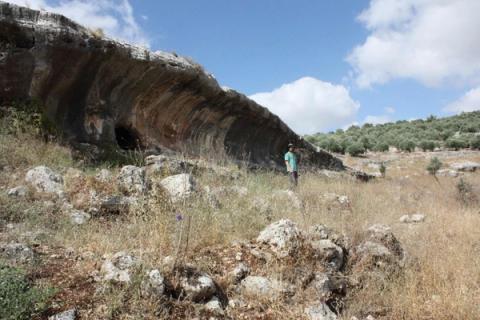
159675/185720
Tzanir Safarin Cave is a small cave (total length 15 m) consisting mainly of a single space that was formed in Turonian dolomite (Beina Formation). Rounded dissolution pockets and domes, as well as a rounded cross-section profile, indicate that the cave was formed as a hypogenic cave in the phreatic zone.
Cave page