Nahal Teenim Cave, Nahal Teenim Survey, Western Samaria
- Grid ref.
- 161746/183391
- Location
- Nahal Teenim
- Elevation
- 260 m above sea level
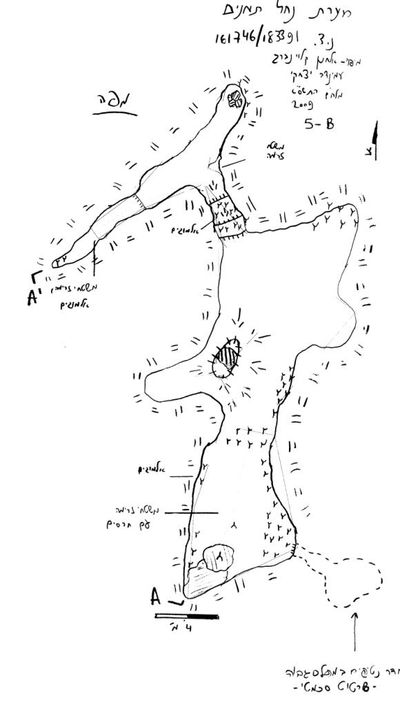 Cave mapView the map (PDF)
Description of the cave:
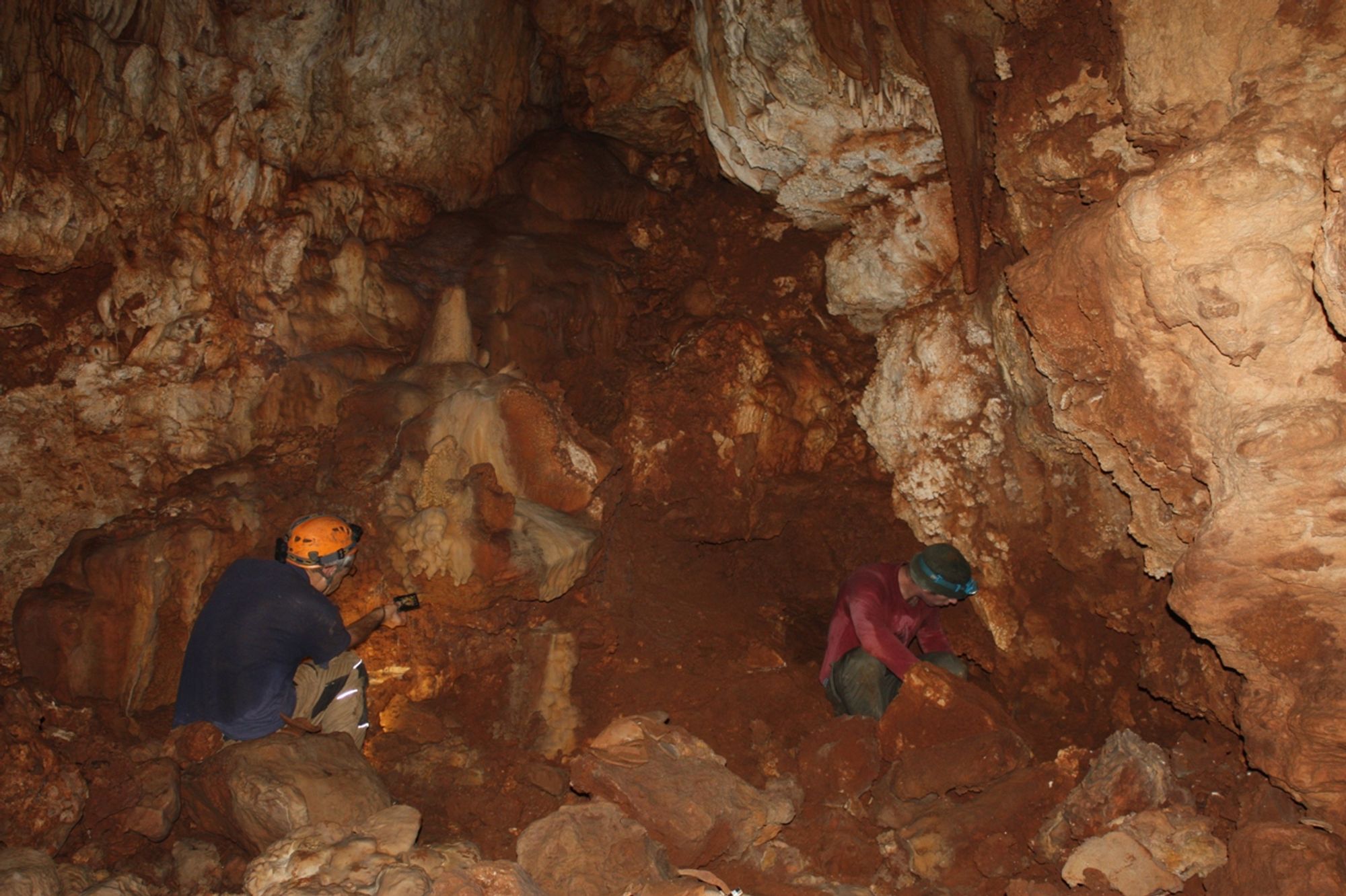
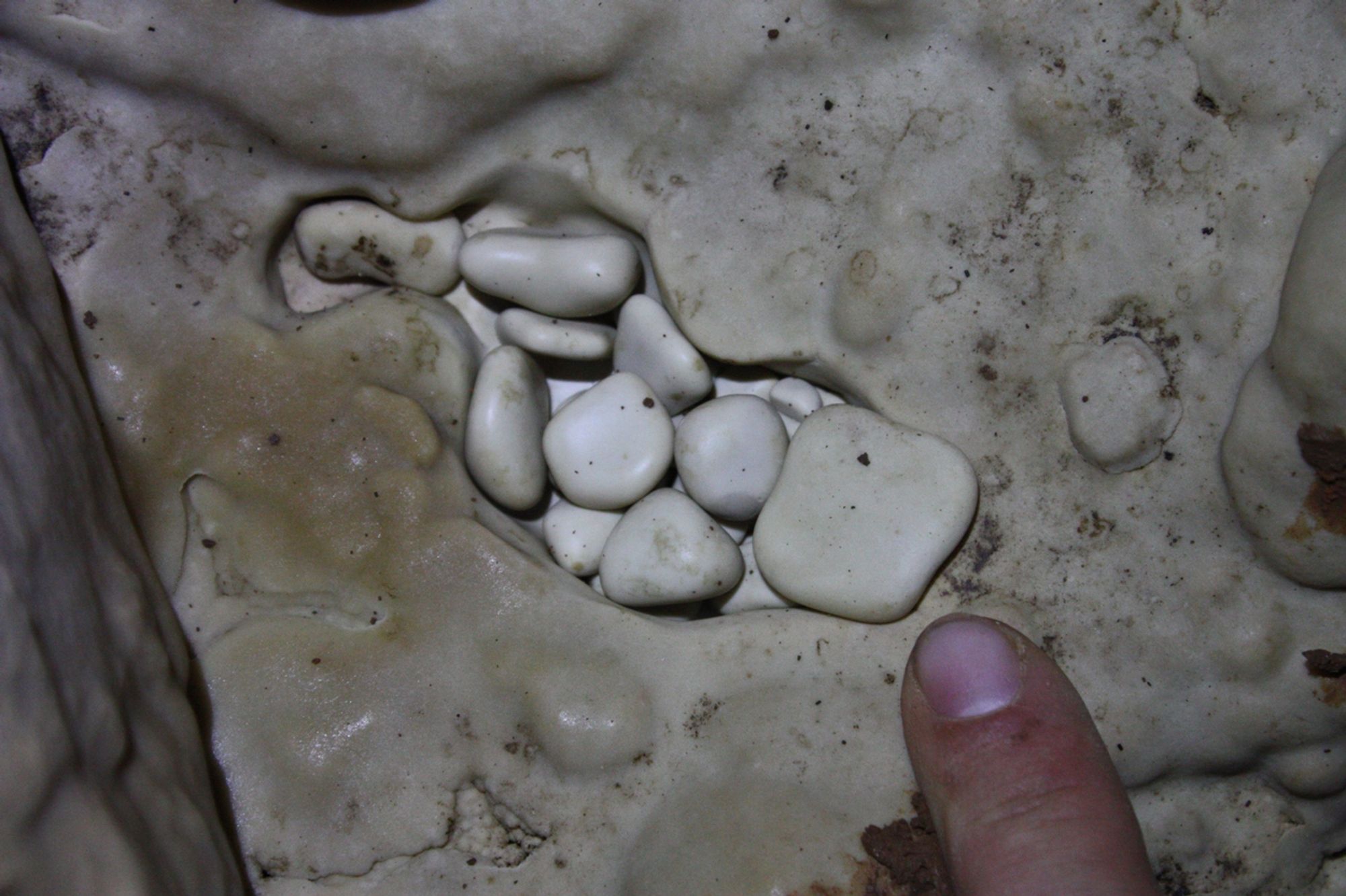
Nahal Teenim Cave is a medium-sized cave consisting of 3 large chambers that developed in the rock. The entire cave space is completely covered with abundant cave deposits (stalactites, stalagmites, flowstone, pagodas, coralloids, pearls, elephant ears) that cover its walls and make it hard to discern the original dissolution morphology. Nevertheless, a number of deep dissolution domes can be discerned opening in the ceilings of the cave's chambers. These domes, as well as the general structure of the cave, indicate that the cave developed as a hypogenic cave in the phreatic zone.
The cave was discovered in the winter at the beginning of 2009 by an ICRC team that was on its way to the nearby Al Amud Cave (Vladimir Boslov, Nevo Fishbein, Boaz Langford). At the time of discovery the cave entrance was blocked with stones and covered with moss, evidence that the locals were not familiar with the cave.
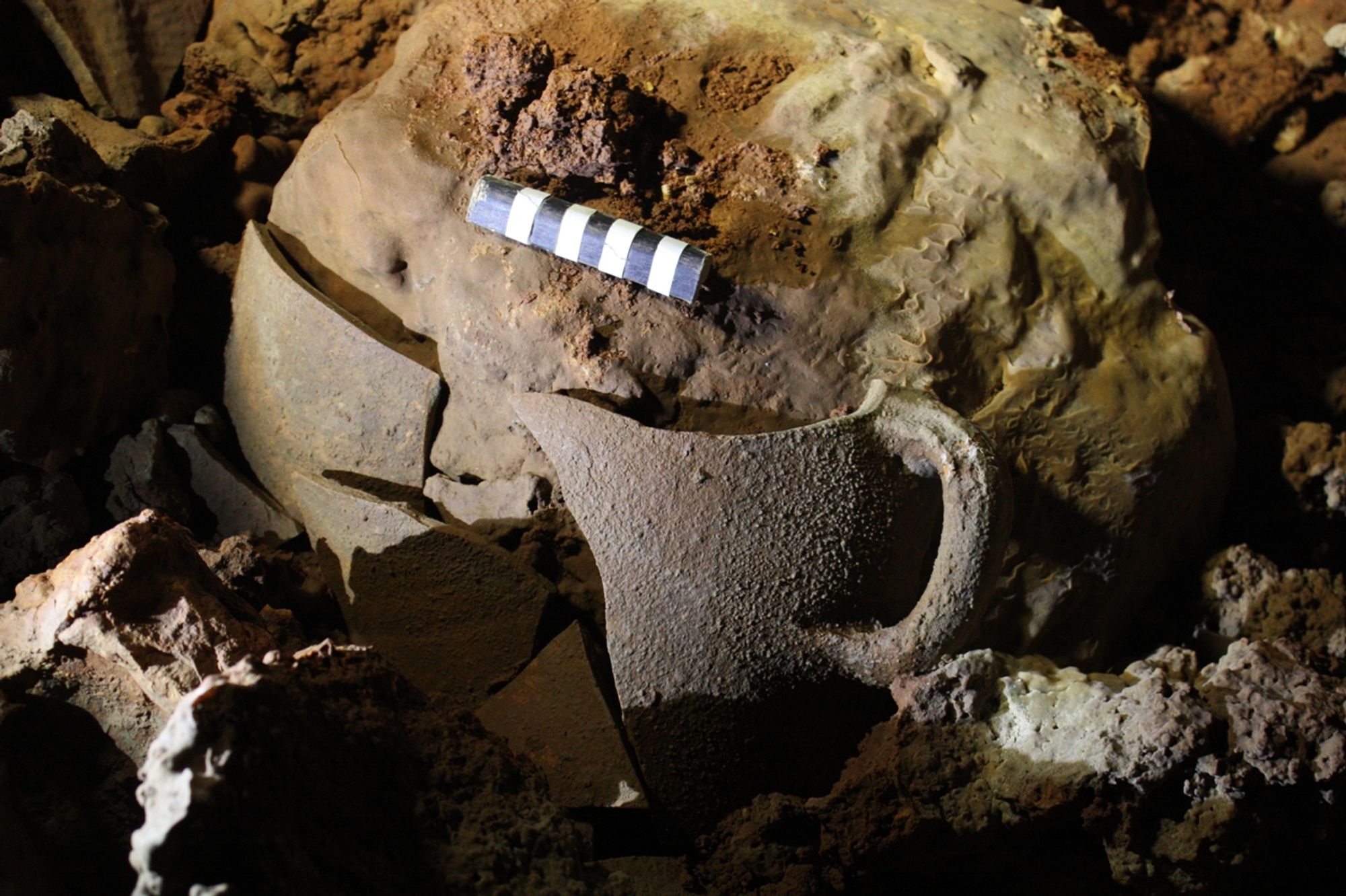
At the time the cave was discovered, several concentrations of fragments of large pottery vessels were found in it, looking like storage jars that broke in place. The jars should probably be dated to the Hellenistic-Persian period. Other archaeological finds located in the cave include a pottery lamp dated to the Muslim period (Ayyubid/Umayyad?) as well as a decorated bronze rod and a coin, whose dating is uncertain.
The cave entrance (2X1.3 m) is the head of a vertical chimney about 12 m deep. In the middle of the chimney there are two horizontal branches with abundant cave deposits - one of them ends after a short distance, and the other connects to the main chamber. The entrance chimney leads to the ceiling of a large chamber that forms the central space in the cave. The chamber measures 7X15 m and its height reaches 6 m, so that from the cave entrance to the bottom there is a descent of 18 m. The floor of the chamber, in the area beneath the entrance, is covered with a conical rock pile that slopes gently to all sides of the chamber. At the bottom of the rock pile the floor is covered with dark muddy sediment and a few stones. The walls and ceiling of the chamber are vertical and completely covered with abundant cave deposits, forming spectacular curtains.
On the southern side of the chamber there is a wide, low passage leading to another chamber, smaller than the previous one. In this chamber many speleothems have been deposited, covering the walls and ceiling but also parts of the chamber floor. At the edges of the space there are small spaces that were almost completely filled with abundant cave deposits.
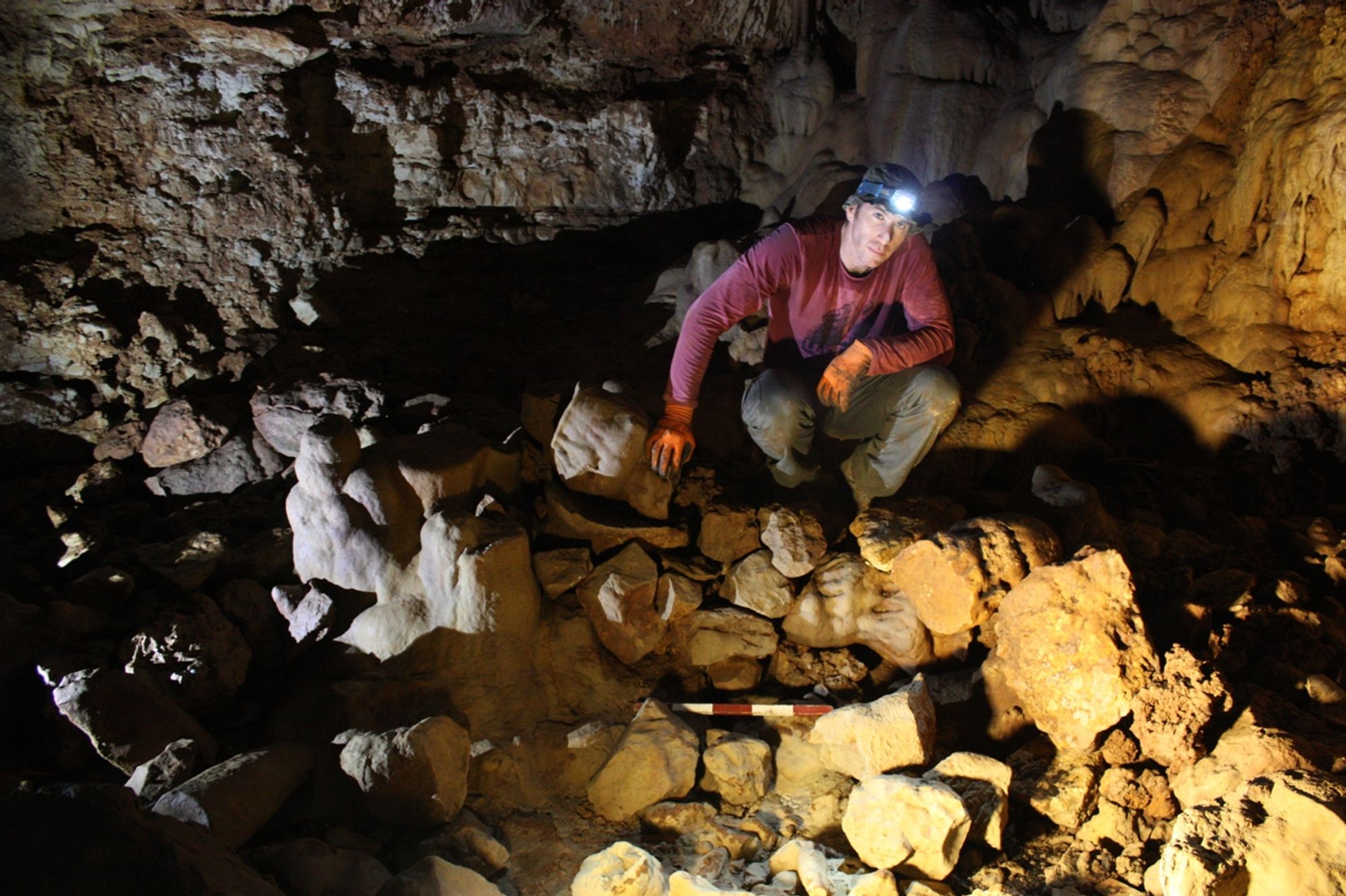
The cluster of cave deposits on the floor in the center of the space contains many cave pearls and a number of stalagmites, some of which were deposited on top of pottery sherds. It is possible that the location of the sherds at this point is not accidental and that storage jars were placed here to collect the drip water. Next to the stalactite cluster a low fieldstone wall is built (maximum height about 60 cm), above which a horizontal surface was arranged. The surface was arranged by placing stones side by side and also by filling natural cracks with fieldstones.
Another significant space opens on the northern side of the central chamber. This space looks like a high passage extending perpendicular to the axis of the center of the cave. The passage floor is covered with red terra rossa soil and a few stones and gravel, which is partly cemented by cave deposits. The passage walls are vertical and covered with abundant cave deposits. A number of steps in the ceiling and floor divide the passage into several small spaces, which do not differ much in character.
Notes:
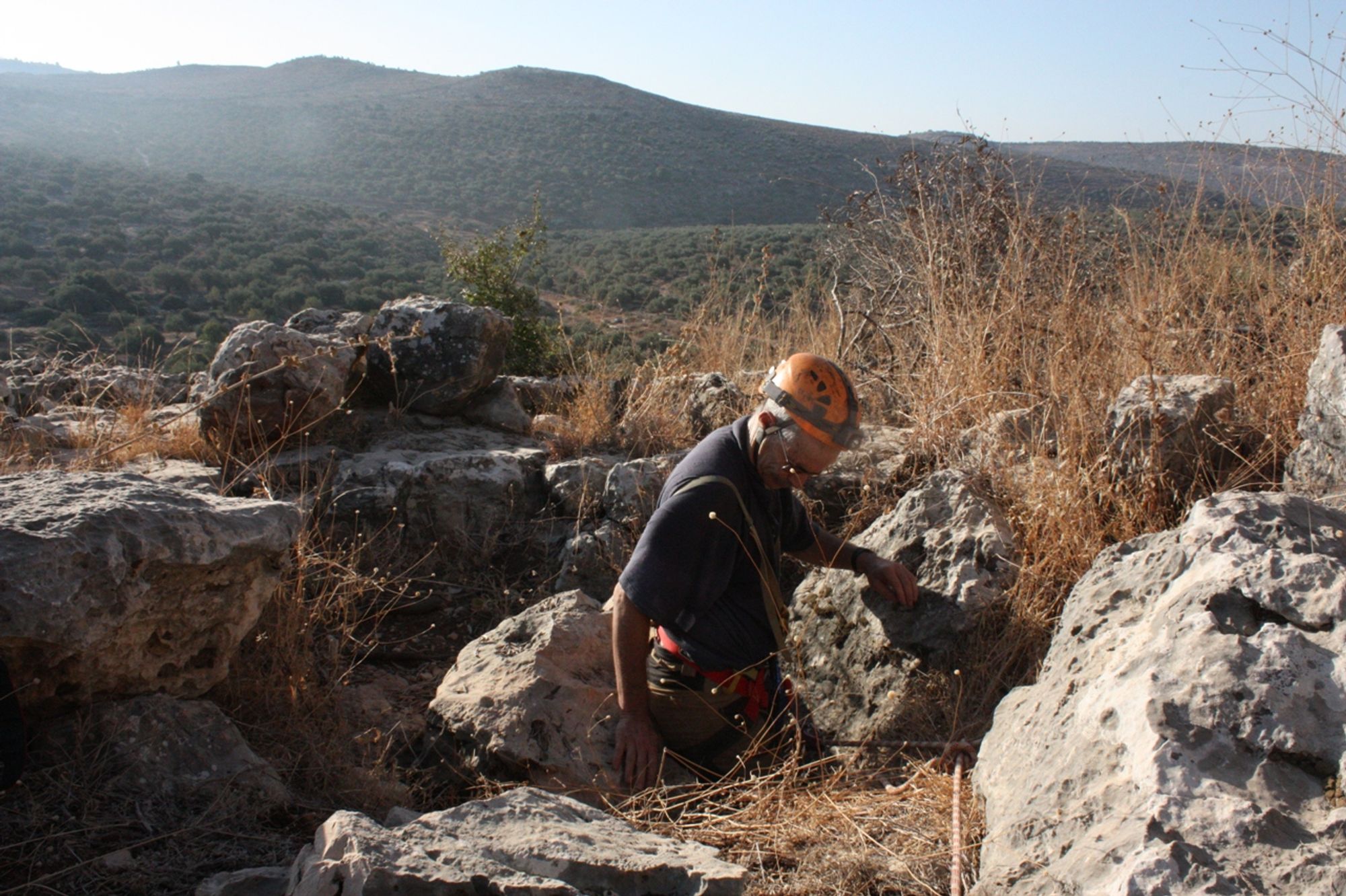
- Access to the cave entrance is possible on foot from the settlement of Kedumim (3.5 km).
- The descent into the cave requires the help of a rope, which can be anchored to rocks in the entrance area.
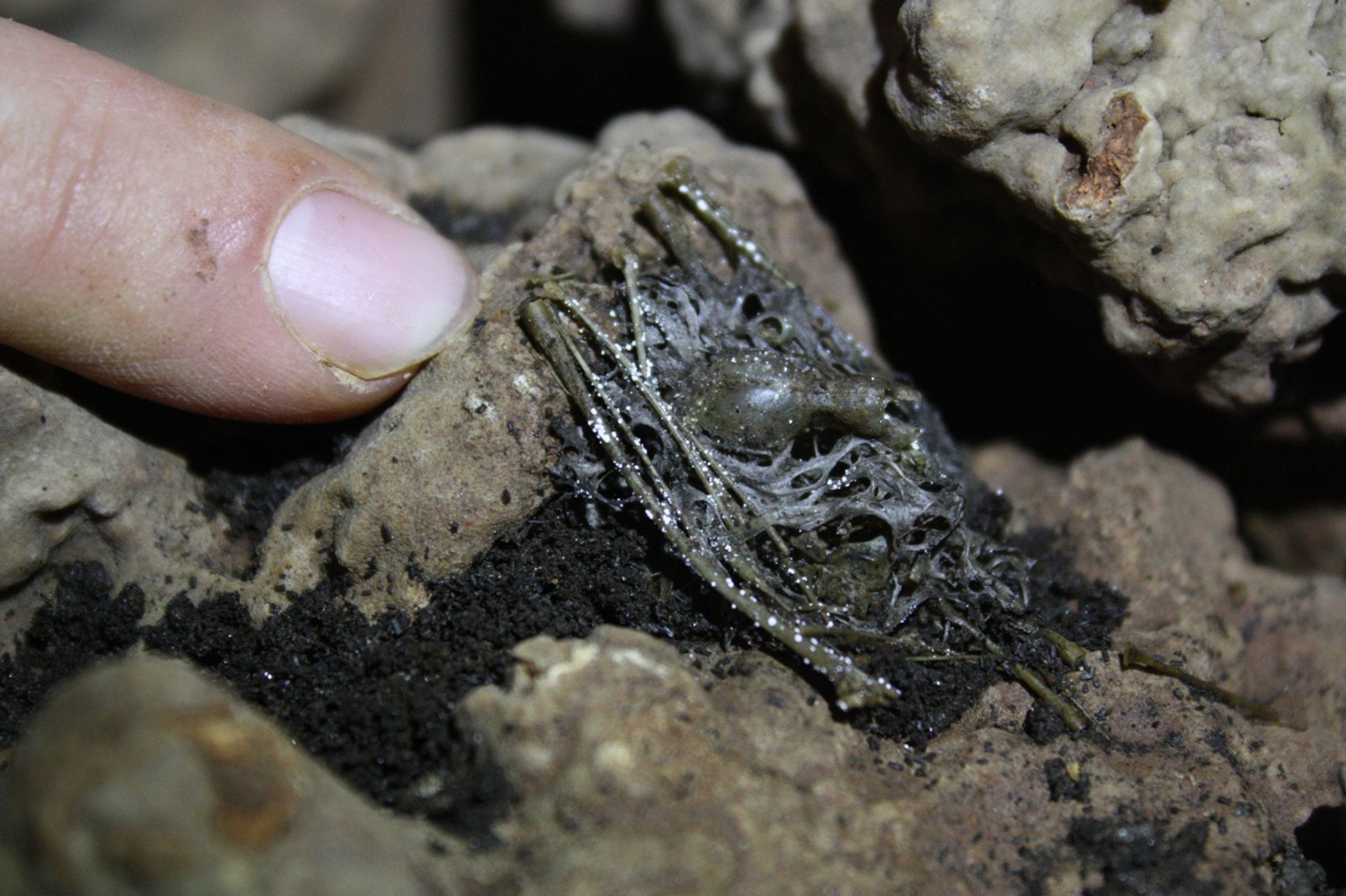
- In the cave 2 individuals of an insectivorous bat (one of the horseshoe bat species) and a number of small guano concentrations were observed. Also observed: a single individual of a northern slender zaman bat (dead) and the skeleton of a large rodent.
Written by: Boaz Langford