Yoney Teenim Cave, Nahal Teenim - Nahal Teenim Survey, Western Samaria
- Grid ref.
- 158934/184218
- Location
- Lower Nahal Teenim
- Elevation
- 210 m above sea level
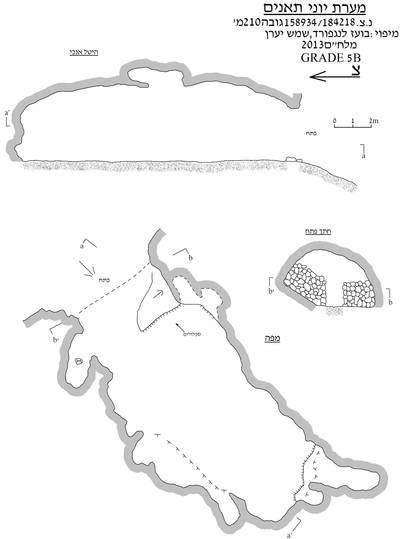 Cave mapView the map (PDF)
Cave description:
Yoney Teenim Cave is a small cave consisting mainly of a single space formed in dolomite rock of Cenomanian age (Sakhnin Formation). Rounded dissolution hollows and domes, a convex cross-sectional profile, and the general structure of the cave as an elliptical chamber are signs indicating that the cave was formed as a hypogenic cave in the phreatic zone. A few dry speleothems, deposited in a narrow passage near the inner part of the entrance, indicate a vadose stage of activity, later than the draining of the space of water.
The cave was discovered by Vladimir Buslov, Yuri Lisovich, Shemesh Yaran and Boaz Langford in June 2013.
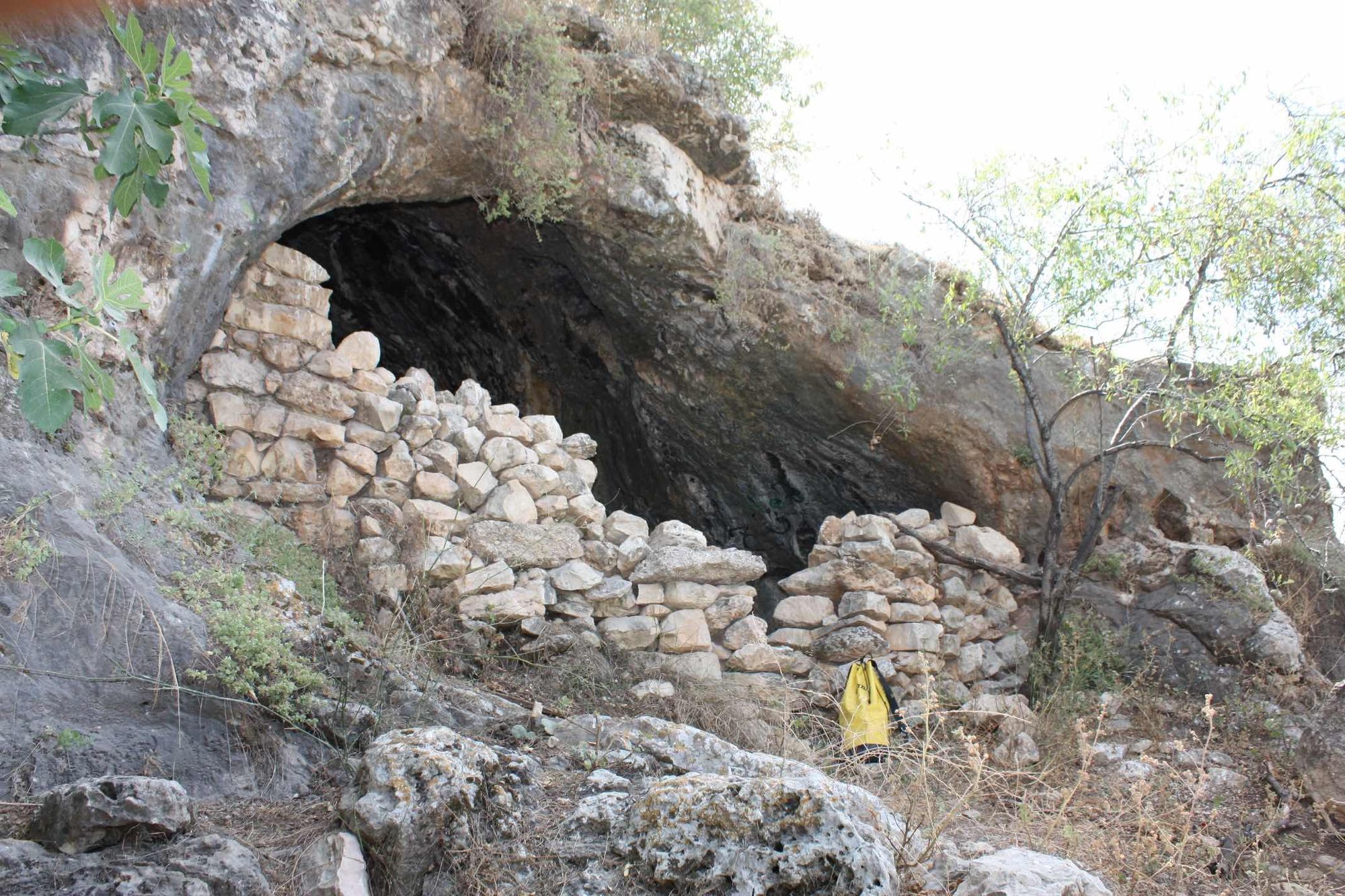
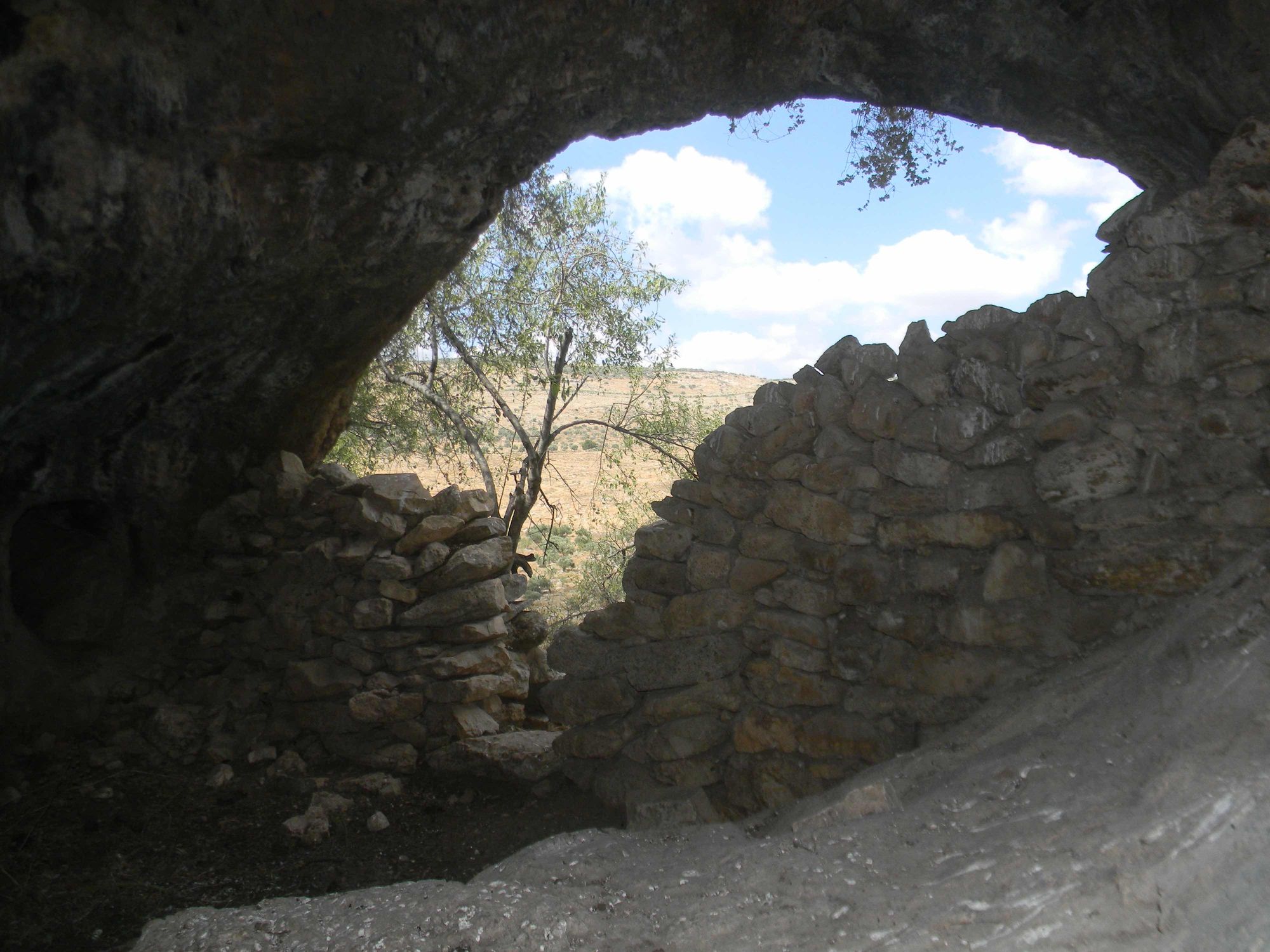
The cave has a large entrance (4.5X2.5 m) of elliptical shape, which opens at the bottom of a local cliff on the southern bank of Nahal Teenim, about 30 m above the stream bed. The entrance area was blocked by a modern stone wall, as evidenced by concrete parts incorporated in its construction. In the center of the wall there is a rectangular opening allowing a defined entry into the cave, apparently for its use as a pen or as a resting place for shepherds. In front of the entrance grow several fruit trees (figs and almonds) that hide it from an observer in the middle of the stream bed.
The cave space consists of a horizontal, semi-lit elliptical chamber measuring 15X7 m, with a characteristic height of 4 m. The floor of the chamber is horizontal and covered with red terra rossa/hamra soil as well as pigeon droppings and a great deal of debris. The ceiling of the chamber is vaulted and consists of uniform rock covered with a little dry mold. From the margins of the chamber extend limited passages or shallow niches, separated from the main part of the chamber by a change in ceiling height. Near the inner part of the cave entrance, on a raised rock surface, 4 concave cupmarks are hewn.
Notes:
- Access to the cave is possible on foot from Road 557 (about 850 m). It is possible to reach within 50 m of the cave entrance by 4X4 vehicle on a dirt road running through the center of the Nahal Teenim channel.
- The cave was named for the presence of pigeons throughout it.
Written by: Boaz Langford