Esbar Cave - Nahal Teenim Survey, Western Samaria
- Grid ref.
- 155967/185926
- Location
- Lower Nahal Teenim
- Elevation
- 120 m above sea level
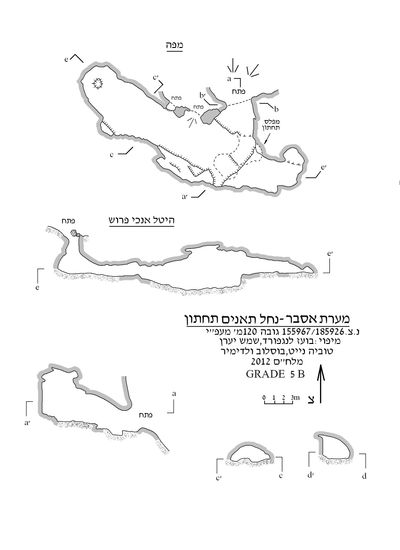 Cave mapView the map (PDF)
Cave description:
Esbar Cave is a small cave consisting mainly of an elongated chamber. The total length of the cave reaches 49 m and its total height is 10 m. The cave appears to have been formed by phreatic-hypogenic dissolution processes that acted in massive dolomite rock of Cenomanian age (Sakhnin Formation).
The cave was discovered by Vladimir Buslov, Shemesh Yaran, Tuvia Knight and Boaz Langford in October 2012.
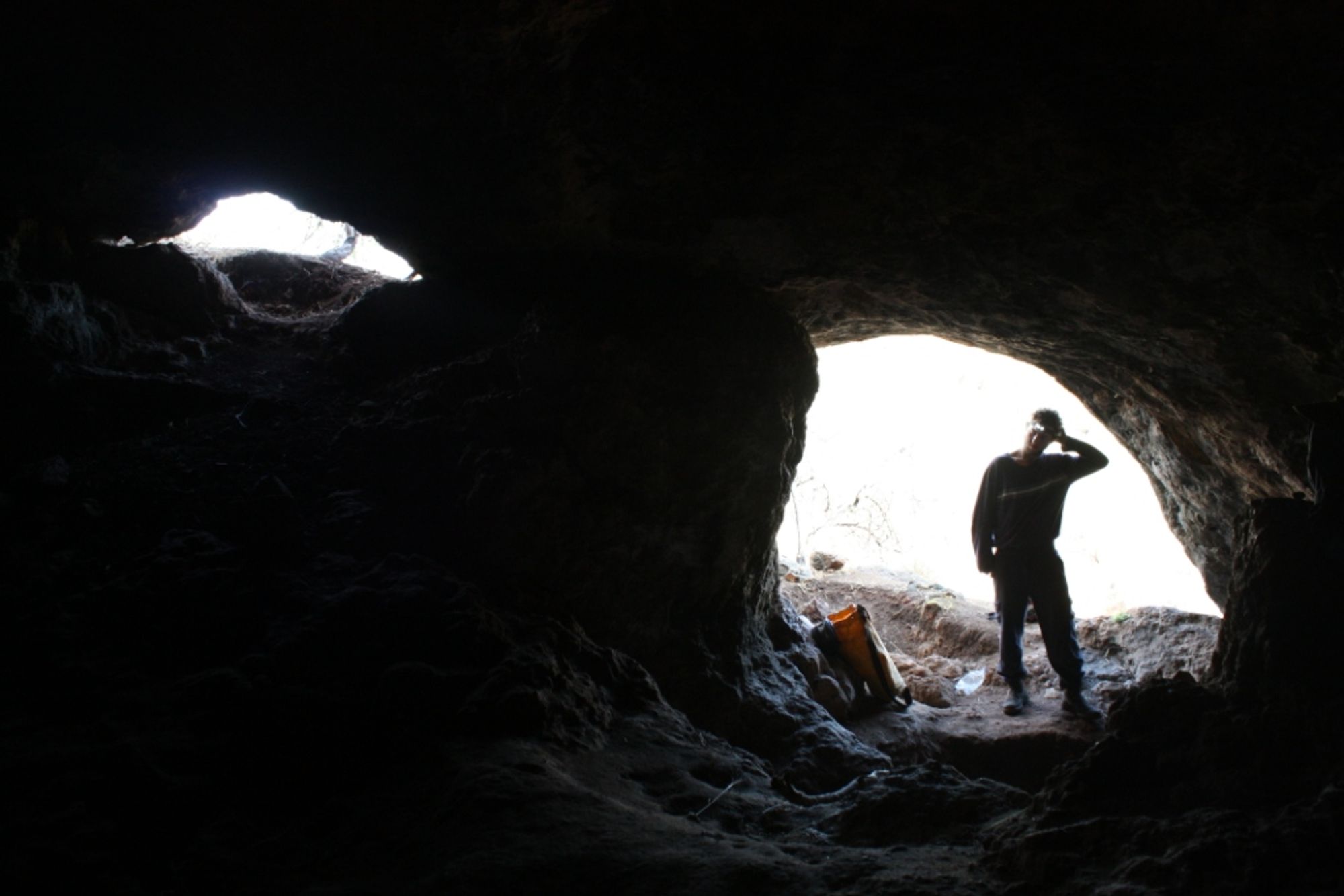
The cave has an arched entrance (measuring 2.3X2.7 m) that opens in a low cliff on the southern bank of lower Nahal Teenim, about 15 m above the base of the channel. The outer surroundings of the entrance consist of a gentle slope inclined north. The slope is covered with herbaceous scrub, and at its bottom, near the stream bed, large chaste trees grow. In front of the cave entrance there is a small horizontal terrace.
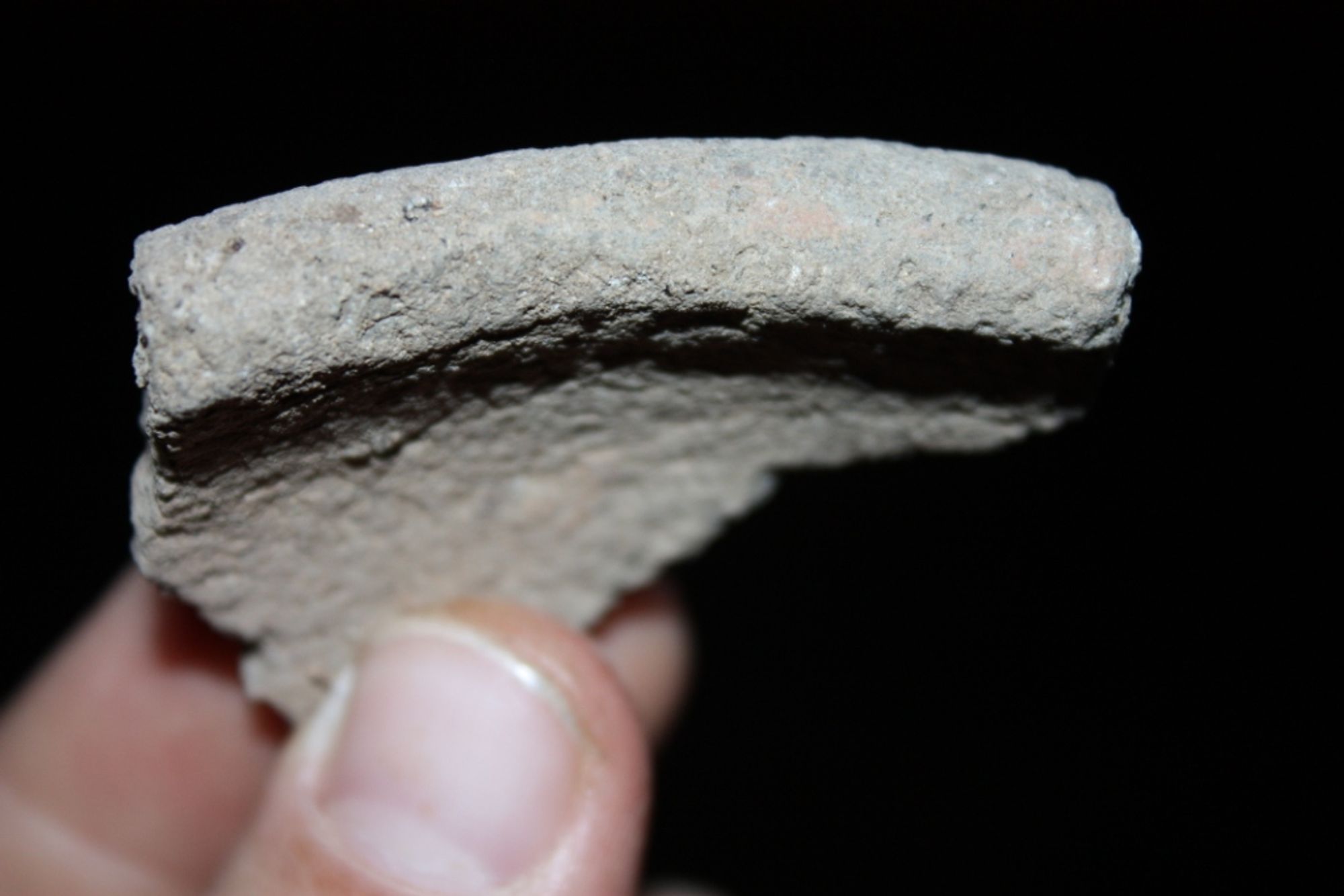
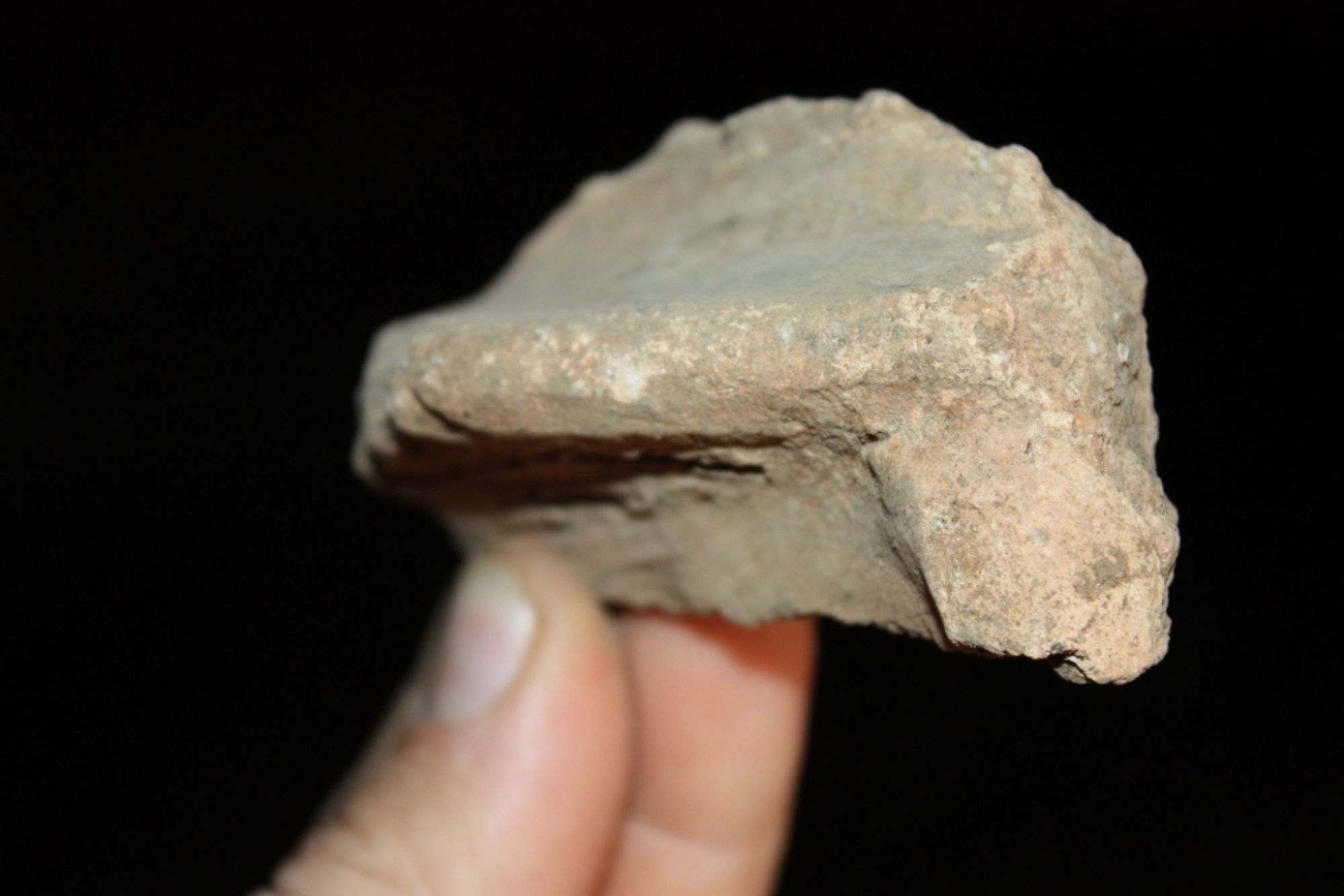
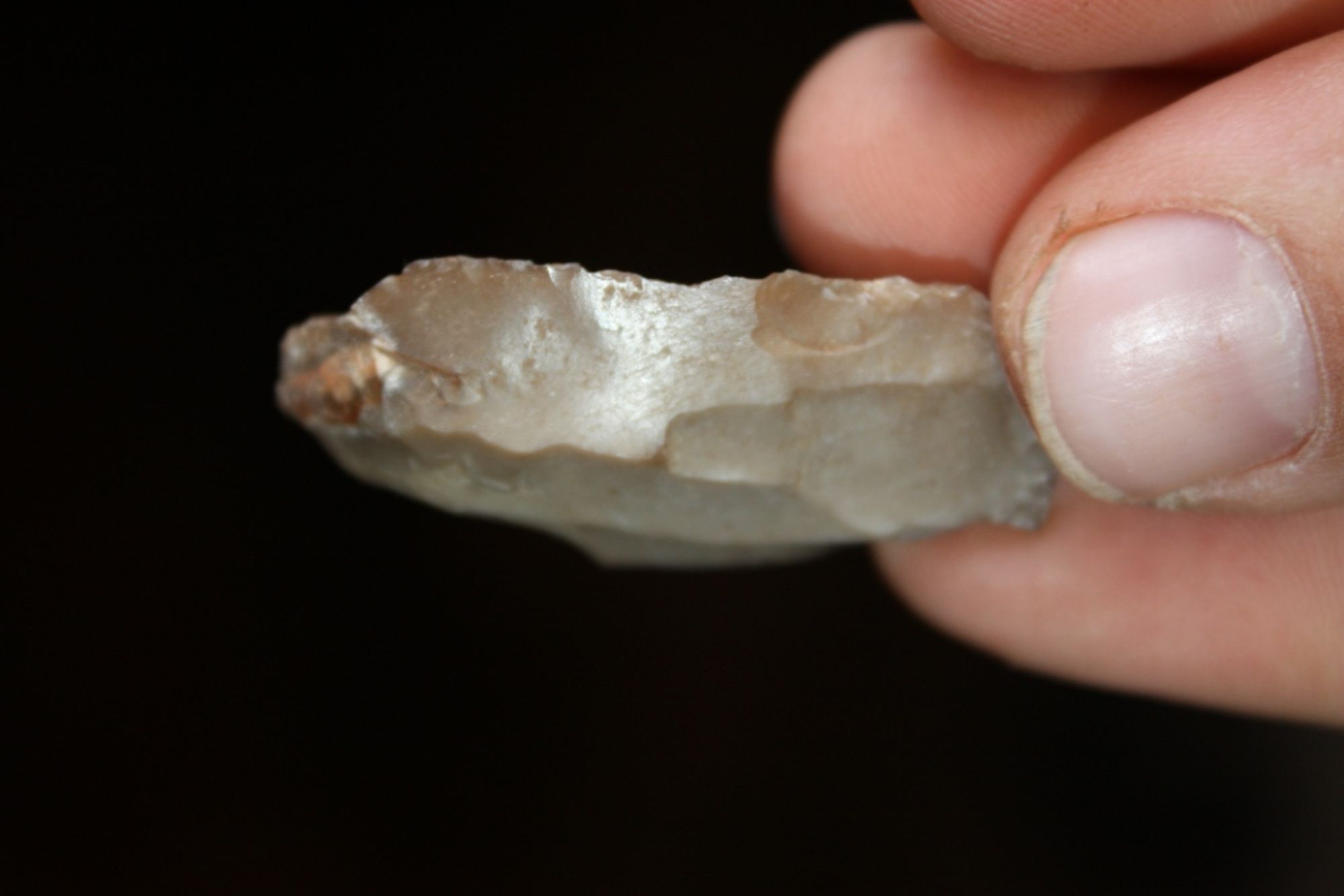
The cave entrance opens on the northeastern side of an elongated chamber (chamber measuring 25X6 m and 5 m high) extending on an east-northeast – west-southwest axis. The different parts of the chamber are separated from one another mainly by changes in the level of the floor and ceiling. The entrance area of the cave is separated from the rest of the chamber by a step in the floor, so that it is slightly lower than the rest of the chamber. On the eastern side of the step separating the center of the chamber from the cave entrance, there is a vaulted passage leading to a sloping passage that descends about 2 m to the south and then turns about 5 m to the southwest. The entire area of the passage was dug by antiquities looters. The looters' tools were found lying in a tiny space located outside the cave, east of and above the entrance. A few potsherds (Bronze Age?!) and a single flint item were found in the excavation area.
Opposite the cave entrance, beyond the step in the floor, the central part of the chamber continues. This part is separated from the east of the chamber by a step in the floor (a step connecting to the one opposite the entrance), and from the west of the chamber by the lowering of the ceiling. The center of the chamber is the highest area in the cave. In this area the chamber ceiling reaches a height of 5 m. Its floor is horizontal and covered with light sediment and a few stones. On the inner (southern) side of the center of the chamber there are several rock steps and above them an elongated niche.
On its eastern side the chamber space is narrower than at its center. The floor of this area is slightly raised above the center of the chamber, but its ceiling does not change, so that the height of the space is lower. At the easternmost side of this part there is a low niche extending north and ending after a few meters.
On its western side the chamber continues similarly to its central part, except for its lower height. In the ceiling of the western side of the chamber a vertical opening, partly blocked by rocks and stones, opens. Additional openings open in the northern wall of the center of the chamber, west of its entrance. These are small openings that open along the continuation of the cliff line in which the cave developed, west of the entrance.
Notes
- Access to the cave is possible on foot from Road 557 (about 1100 m). It is possible to reach within 20 m of the cave entrance by 4X4 vehicle on a dirt road running through the center of the Nahal Teenim channel.
- The name of the cave was given to us by an elderly Arab resident of the village of Shufa. According to him the name has no translation and it has been the name of the cave from time immemorial.
- No bats were seen in the cave and no guano was observed.
Written by: Boaz Langford