Peleg Cave, Gush Etzion
- Grid ref.
- 167873/120013
- Elevation
- +788 m
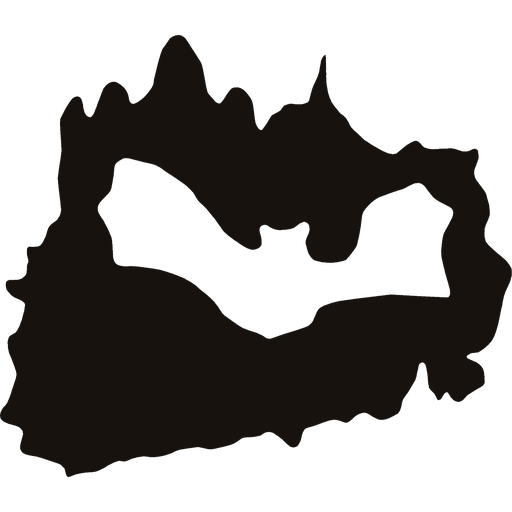
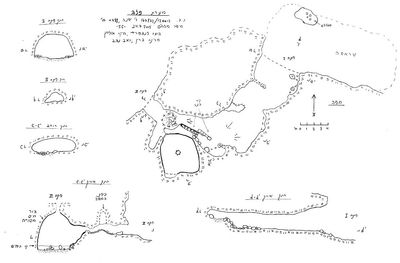 Cave mapView the map (PDF)
General:
Peleg Cave is a small cave consisting mainly of an elongated chamber, which opened in Turonian limestone (Shivta Formation). Throughout the cave there are rounded dissolution features, such as domes and dissolution pockets. These features, together with the general character of the cave, indicate that the cave was formed as a hypogenic cave in the phreatic zone.
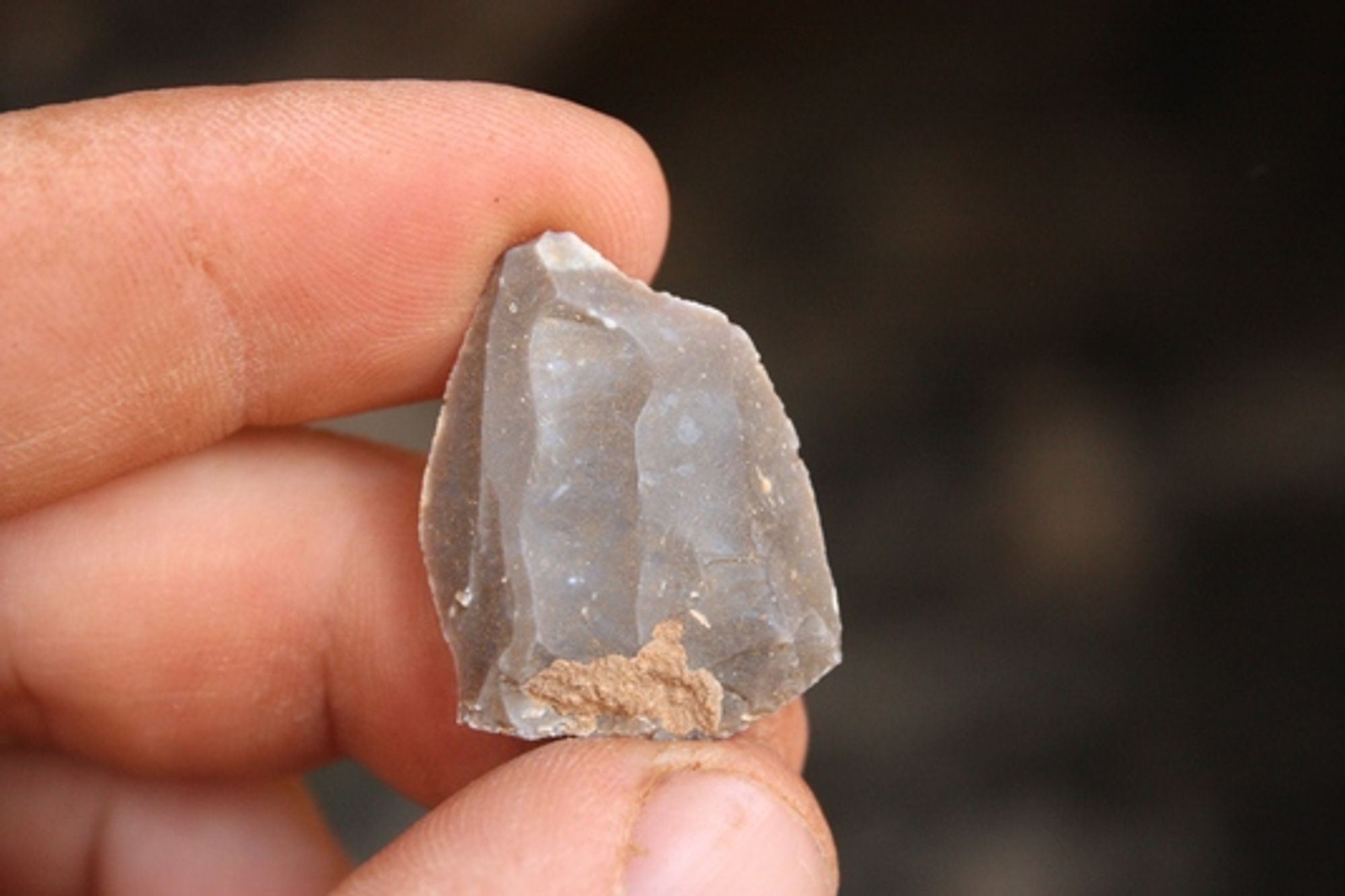
A report about the cave was submitted by Yuval Peleg, who visited the site in 2013. During his visit Yuval located prehistoric finds, including a flint crescent, which allows dating the activity in the cave to the Natufian culture.
In July 2015 the cave was mapped by the ICRC team (Mika Ullman, Boaz Langford, Yoav Negev, Vladimir Boslov, Yuri Lisovitz, Marina Green). Yuval's unexpected death cut short the plans to reach the cave together with the ICRC people; when the cave was finally mapped, it was named in Yuval's memory.
Description of the Cave:
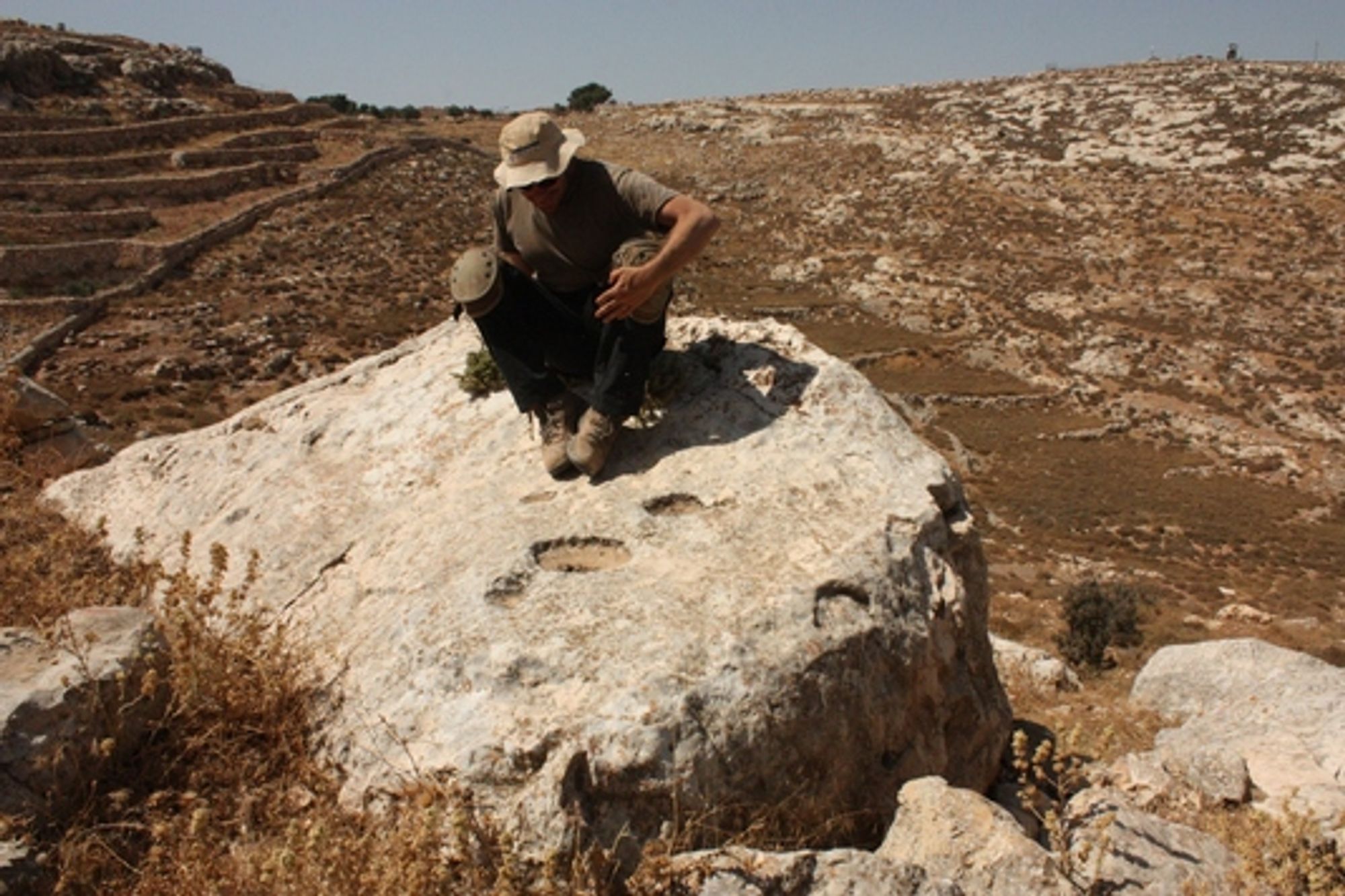
Peleg Cave has three entrances opening in the cliff in the middle of the southern bank of Wadi a-Tin. The main entrance of the cave is visible from afar, measures 5.7X3.2 and has a generally arched shape. The entrance opens at the bottom of a local cliff, on the western side of a horizontal terrace measuring 18X7 m. At the edge of the terrace, opposite the main entrance of the cave, there is a large collapse boulder on which 4 bowl-like cupmarks were cut.
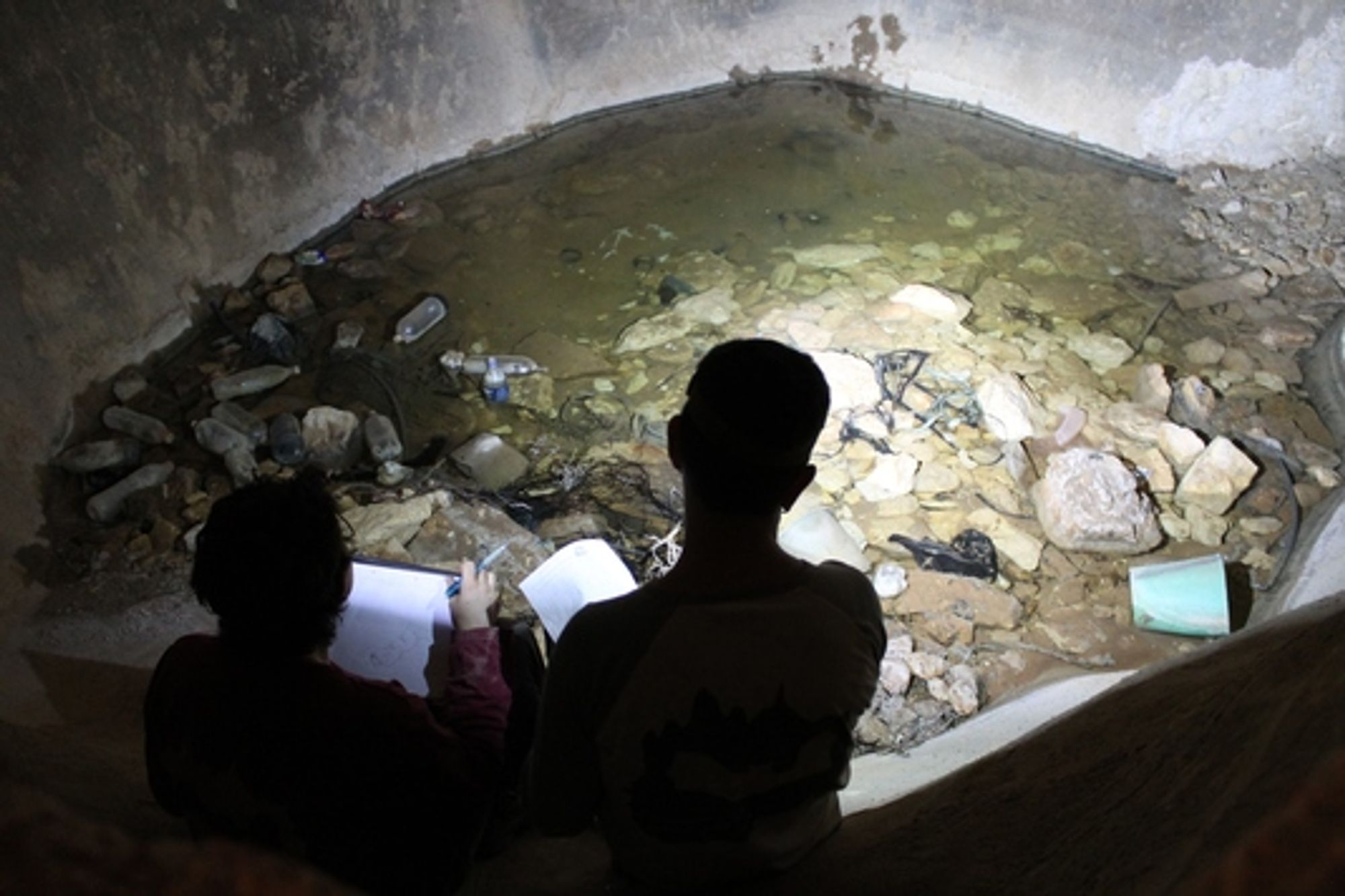
The cave entrance leads to an elongated chamber divided into sub-spaces by natural rock pillars that appear in its different parts. The chamber space is lit to semi-lit, as a result of natural light penetrating through the large entrance of the cave. The chamber floor is horizontal; in most of it bedrock stands out, covered with a thin layer of sheep droppings. The ceiling and walls of the chamber are rounded and covered with black soot. In the inner part of the cave the floor is covered with light-colored soil and many stones. The source of most of the stones is an artificial fill at the end of the chamber made of fieldstones and dressed stones, which were bonded to each other with light plaster (light plaster containing red ceramic grit). The western side of the fill is preserved so that today it looks like a vertical wall built with a high-quality finish. The wall continues west and passage along it is possible only by crawling along a narrow passage bounded between the wall and the natural wall of the cave. The end of the passage is completely blocked by a pile of large fieldstones. On the western side of the blockage there is a narrow passage in whose ceiling a very deep and impressive dissolution dome opens. The southern side of the passage reaches the second entrance of the cave. This entrance also opens at the bottom of a cliff, about 25 m southwest of the main entrance of the cave. The northern side of the passage leads to a tiny opening (0.5X0.5 m) leading to the inner space of the cave. This space looks like a rounded room measuring 6X5 m and about 3 m high. All the walls of the room, and most of its ceiling, were plastered with light plaster, of the same type used in the wall at the end of the cave. It seems that the inner fill and the plastering of the walls of the space were intended to prepare it as a water reservoir. In the ceiling of the room a narrow vertical shaft was cut, enabling water to be drawn vertically with a rope.
Notes:
- The cave can be reached on foot from Givat Itam, east of the town of Efrat. The hill can be reached by off-road vehicle, crossing Palestinian built-up areas.
- Various animals were observed in the cave: cave ticks, fox bones, dragonflies, a pipistrelle bat, various spiders (mainly funnel-web spiders), a common agama lizard (drowned in water).
- A few flint items were found in the terrace area in front of the main entrance of the cave.
- The walls of the cave entrance are decorated with several specimens of a plant of the 'rock acorn' type.
To our great sorrow, the late Yuval Peleg did not live to read these lines, and we can only give him the highest honor of cavers and name this cave, which he discovered, after him.
http://www.nrg.co.il/online/1/ART2/589/163.html
Written by: Boaz Langford
Region: Gush Etzion