Aharoni Cave
- Grid ref.
- 18159/09321
- Location
- Nahal Hever
- Elevation
- 180 m above sea level
Description of the Cave:
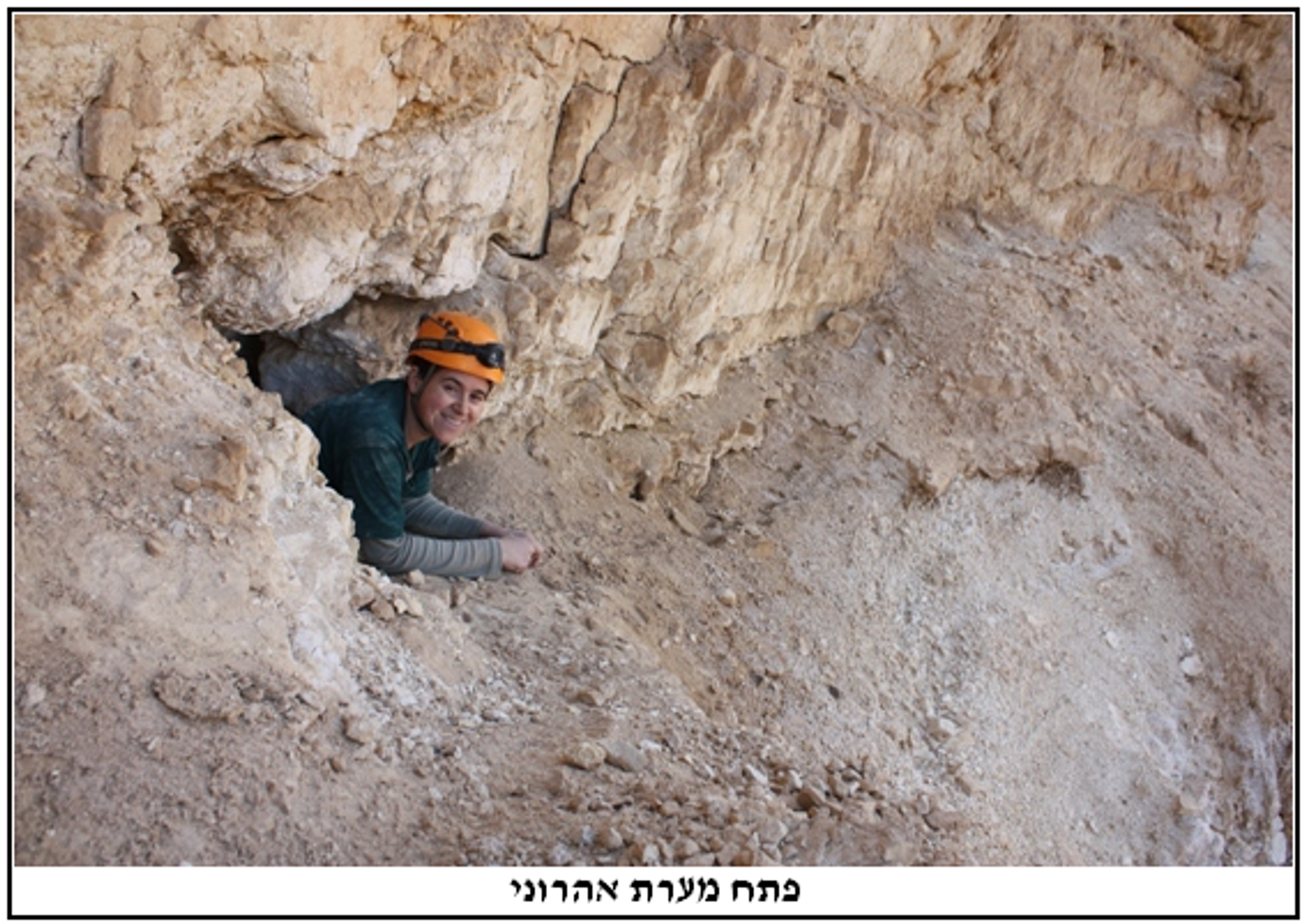
The cave has a tiny rectangular opening measuring 0.5X1 m. The opening is cut about 70 m below the cliff edge south of the high waterfall, about 15 m above the entrance of Terror Cave and about 40 m north of it.
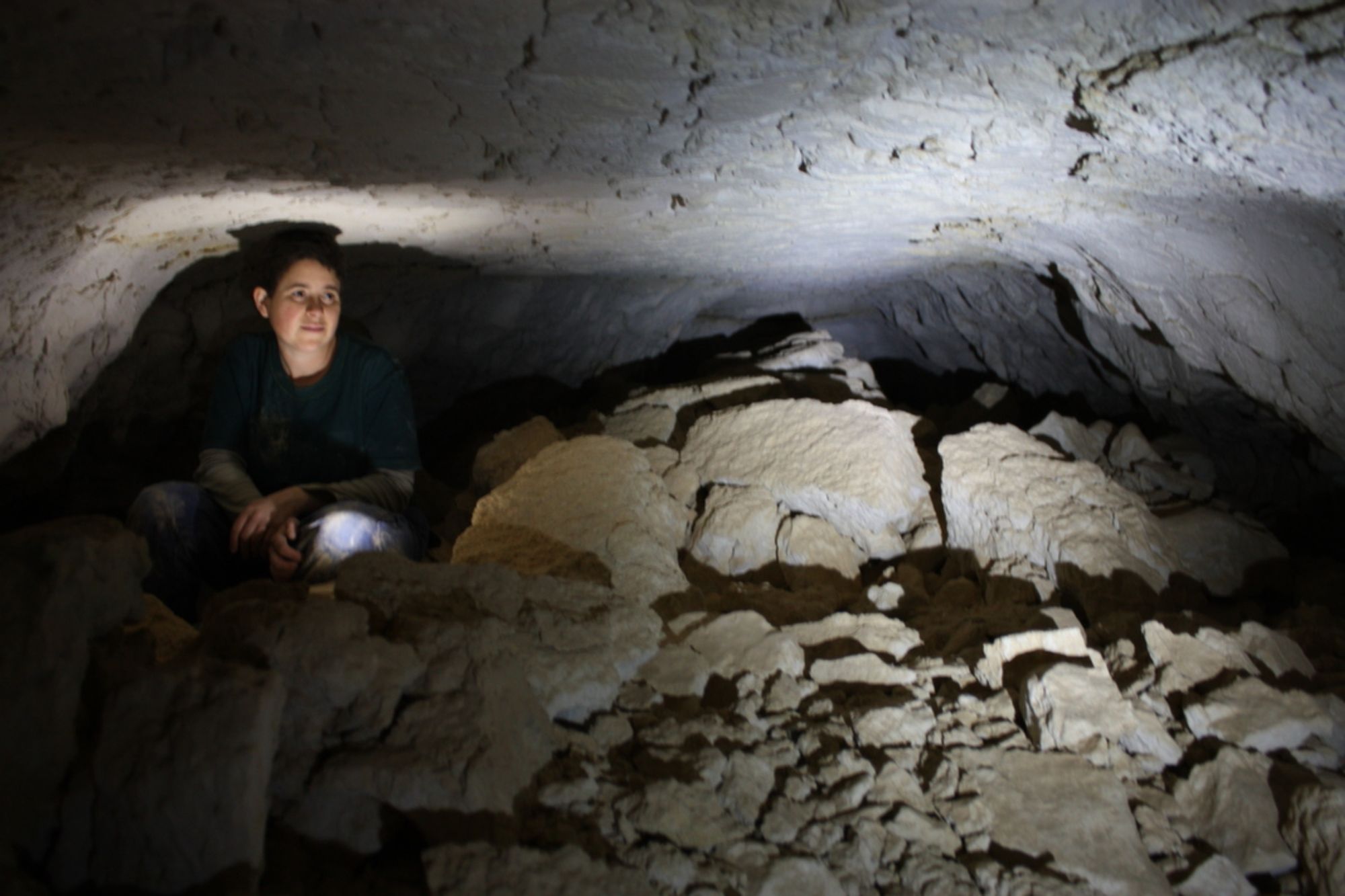
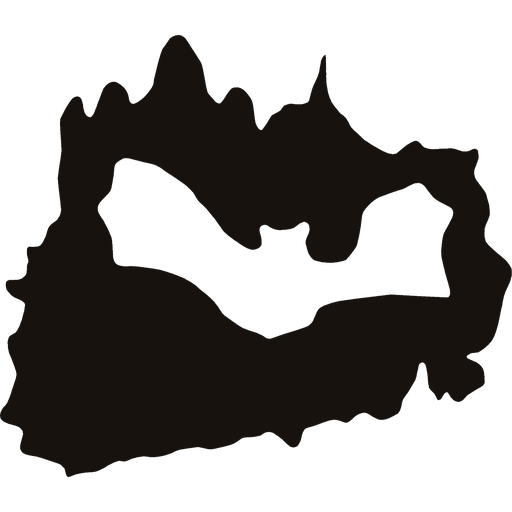
The cave entrance leads to a wide, low corridor extending to the southwest (space A). The floor of the corridor is completely covered with medium-sized collapse rocks that detached from the cave ceiling along the bedding plane of the rock in which the cave developed. The plane from which the collapse rocks detached is clearly visible in the ceiling, which consists of a continuous, gently dipping rock layer in which isolated dissolution domes are cut.
At the end of the corridor there are two low passages, one facing west and the other facing southwest. The two openings lead to an elongated space extending west (space B). The floor of the space is horizontal and covered with an accumulation of soil and a lot of gravel. In the ceiling of the space rounded dissolution marks are evident, creating a discontinuity in the ceiling outline. The general cross-section of the space is vaulted and its typical dimensions are 3.5X1 m. Along its whole length, horizontal, narrow passages with a rounded profile branch off from the central space, extending perpendicular to the axis of the space. At the western end space B connects to a pair of spaces (Ba + Bb) which also extend perpendicular to the central space. Space Ba looks like an elongated room extending south while narrowing.
At the inner end of space Ba there are translucent-white coatings covering its ceiling and walls. Space Bb extends north of spaces B and Ba and is separated from them by a step in the ceiling and several collapse rocks. The western wall of the space is composed of collapse rocks. In the inner part of the space, among the collapse rocks, there is a wide passage leading west and connecting to a large space (C), which is part of a huge passage that constitutes the inner part of the cave. The width of the passage at this point reaches 6.5 m and its height 1.2 m. Its floor is covered with collapse rocks and gravel spills, and its ceiling is built of horizontal, somewhat crumbly rock layers (dip +4.3 at azimuth 167).
South of space C the passage turns west and connects to a rounded chamber (space D - dimensions 6X6 m and height about 1 m). The floor of the chamber is covered with collapse rocks and a little accumulation of soil and guano, sloping steeply east toward space C. The ceiling of the chamber consists of a shallow dissolution dome in which several dozen insectivorous bats of the Lesser Mouse-tailed Bat species were observed (January).
North of space C the passage continues north, with the passage space almost completely blocked by a large rock block (area E). North of the rock block the passage splits into a pair of short branches. The direct continuation of the main passage is the eastern branch (area G), extending from the rock block northward. The floor of this area is horizontal and covered with dark soil and a few stones. The ceiling of the area is vaulted and completely covered with developed salt blooms. The western branch (area H) consists of a narrow, low passage extending west and, after a short distance, turning north. Most of the passage space has collapsed and is blocked by large rock masses.
Notes:
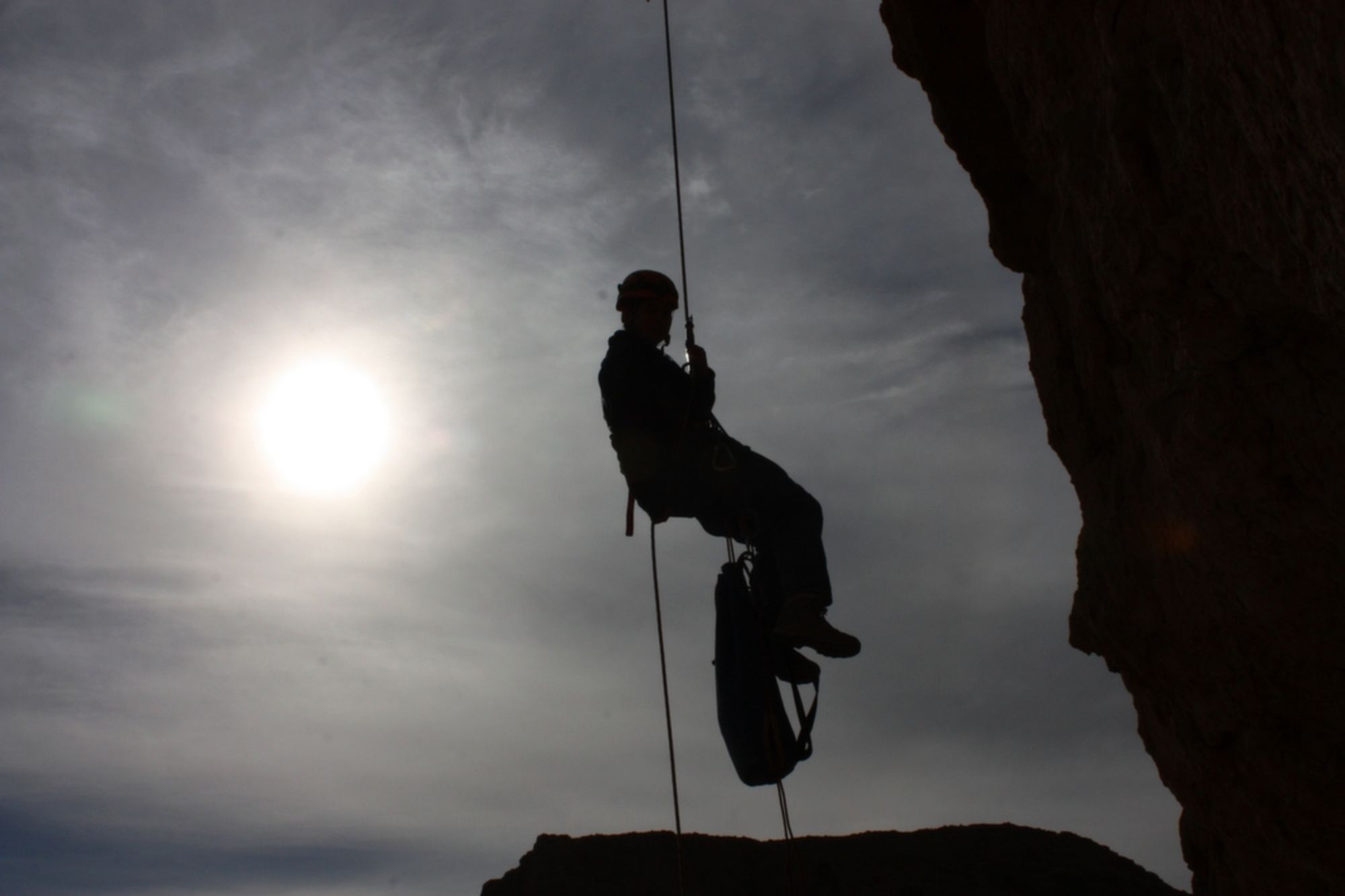
- The remains of the Roman camp built on the top of the cliff in which the cave is cut can be reached by 4X4 vehicle. The descent to the cave requires the help of a rope, which can be anchored around iron pegs (bolts) driven into the cliff edge, south of the camp remains. The upper part of the descent consists of a steep slope ending in a vertical, stepped cliff. At the bottom of the cliff, about 60 m below the anchor point, there is a prominent ledge into which several more iron pegs are driven. On this ledge one can proceed north to the cave entrance, while the ledge becomes a narrow path - hanging over an abyss.
- In all parts of the cave few animal remains were found, all of them of young individuals. Among the remains found were identified several individuals of ibex/goat, a skull of an animal of the canine family and a scatter of unidentified bones. These remains perhaps indicate predator activity in the cave. The difficult-to-reach location of the cave perhaps allows us to assume that the animals were brought to the place by a leopard.
Written by: Boaz Langford