Manot Cave
- Location
- Moshav Manot
- Elevation
- 220 m above sea level
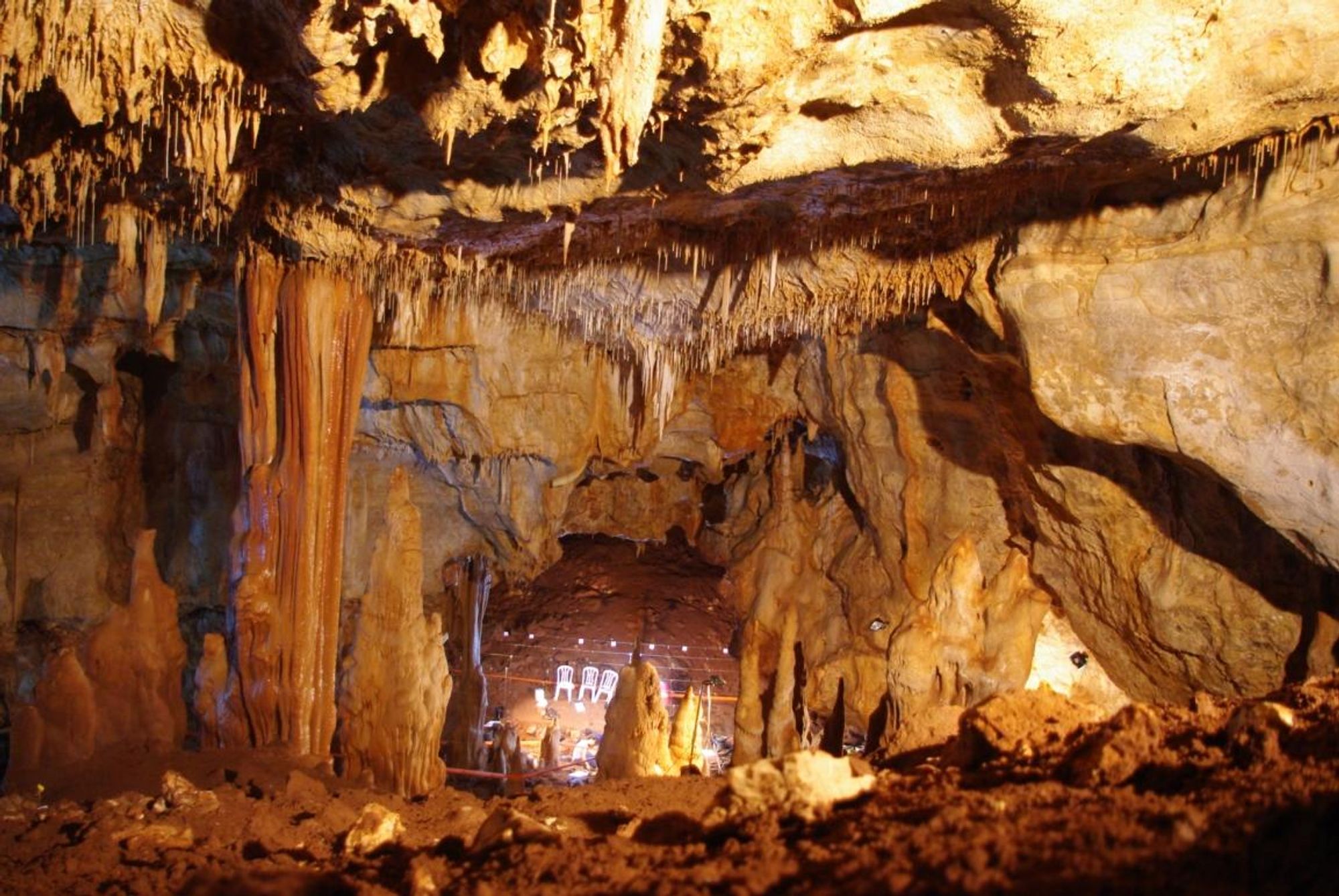
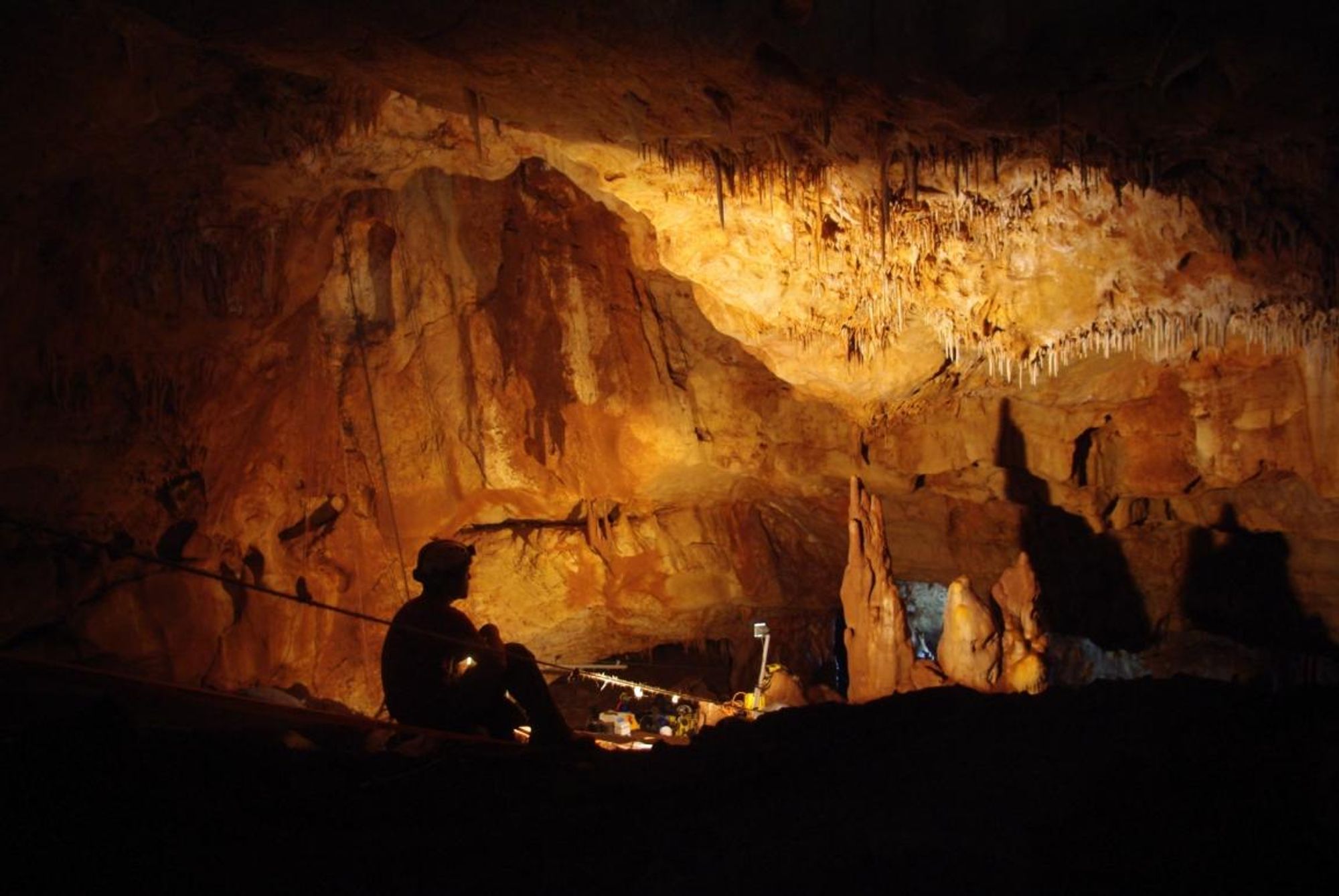
Manot Cave is an active karst cave, rich in stalactites, that was discovered by chance in 2008 in the Western Galilee when a bulldozer working at the site struck it. The cave is located 40 kilometers northeast of the well-known prehistoric sites of the Carmel caves.
Following the discovery an archaeological survey was carried out, which revealed a wealth of archaeological finds, mainly from the Upper
Paleolithic (47-50,000 - 22,000 years ago), and also a few finds from the Middle
Paleolithic (200,000 - 47-50,000 years ago) and from the Epi-Paleolithic period (11,500-22,000 years ago). After these discoveries a systematic excavation began, aimed at documenting the chronostratigraphic and cultural sequence of human settlement in the cave.
Five excavation seasons have been conducted in the cave so far (2010-2014), in which an impressive archaeological sequence was documented, containing
remains of several prehistoric cultures.
In the initial survey carried out by the ICRC upon the discovery of the cave, it became clear that the cave consists of an elongated chamber (80 m long, 10-25 m wide) and two rooms at a lower level that connect to the chamber from the north and the south. The central chamber is divided into three areas: a western talus, a plain and an eastern talus. Horizons of coarse-grained flint, of poor and medium quality (as raw material for tool manufacture), were documented along the cave walls. A rockfall and active stalagmites apparently blocked the main entrance to the cave at the upper end of the western talus. This blockage sealed the cave for a long period of at least 15,000 years, since the youngest archaeological find identified in the cave was dated to the Epi-Paleolithic period. It is reasonable to assume that the cave had two entrances: a main, steep one in the west, and a smaller, gentler secondary entrance facing the stream channel in the east.
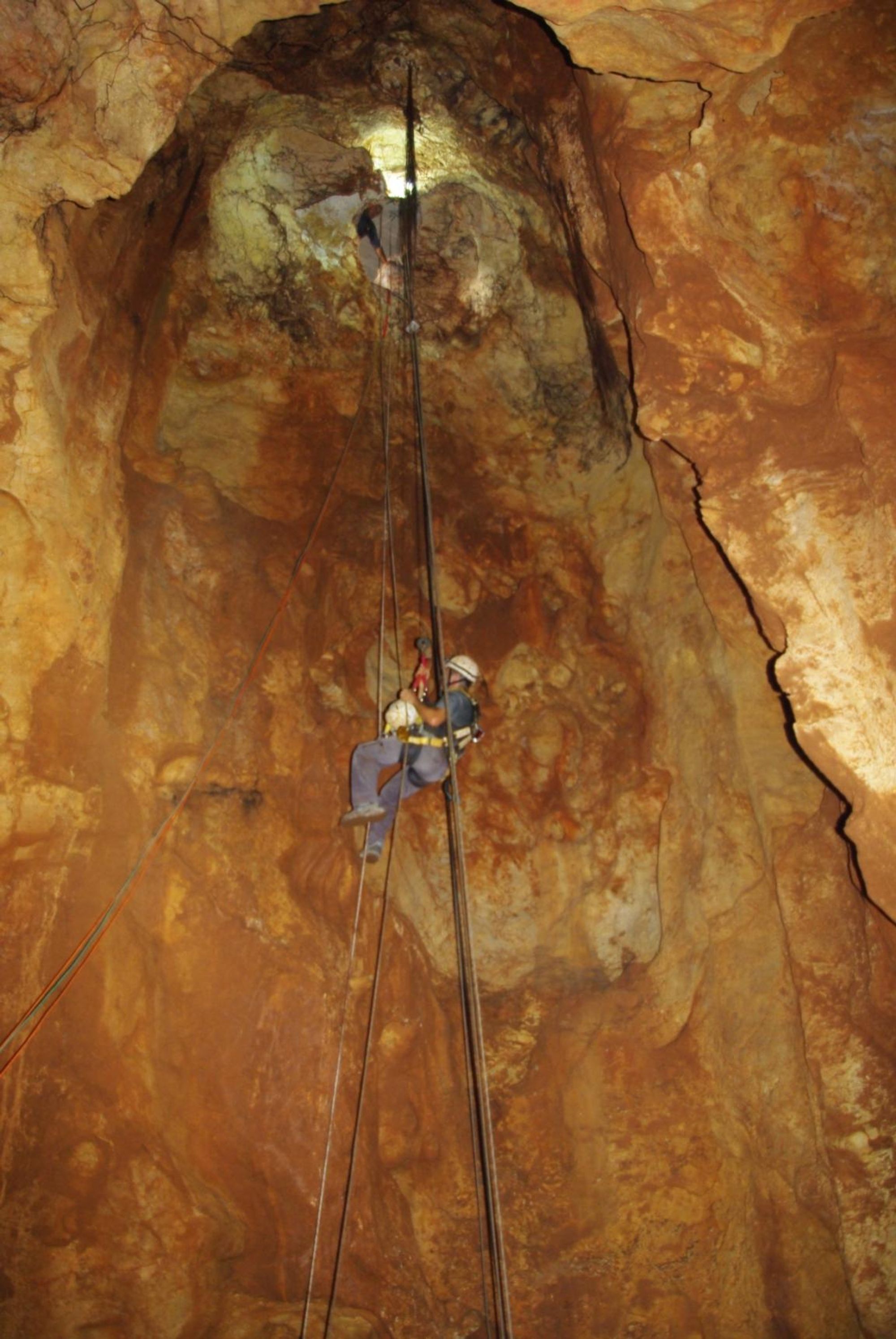
In the first excavation season (2010) the cave was entered by rappelling from the top of the chimney, while during 2011 the Jewish National Fund built a proper opening (which is not the original opening of the cave) in order to make research in the cave more efficient and, in the more distant future, to allow visitors to the site.
The Prehistoric Discoveries and the Skull from Manot Cave:
A team of researchers from Tel Aviv University, Ben-Gurion University, the Israel Antiquities Authority, the ICRC,
the Hebrew University, the Geological Survey and others report in the new issue (29.1.2015) of
the magazine Nature (NATURE) on one of the most important discoveries in the study of human evolution.
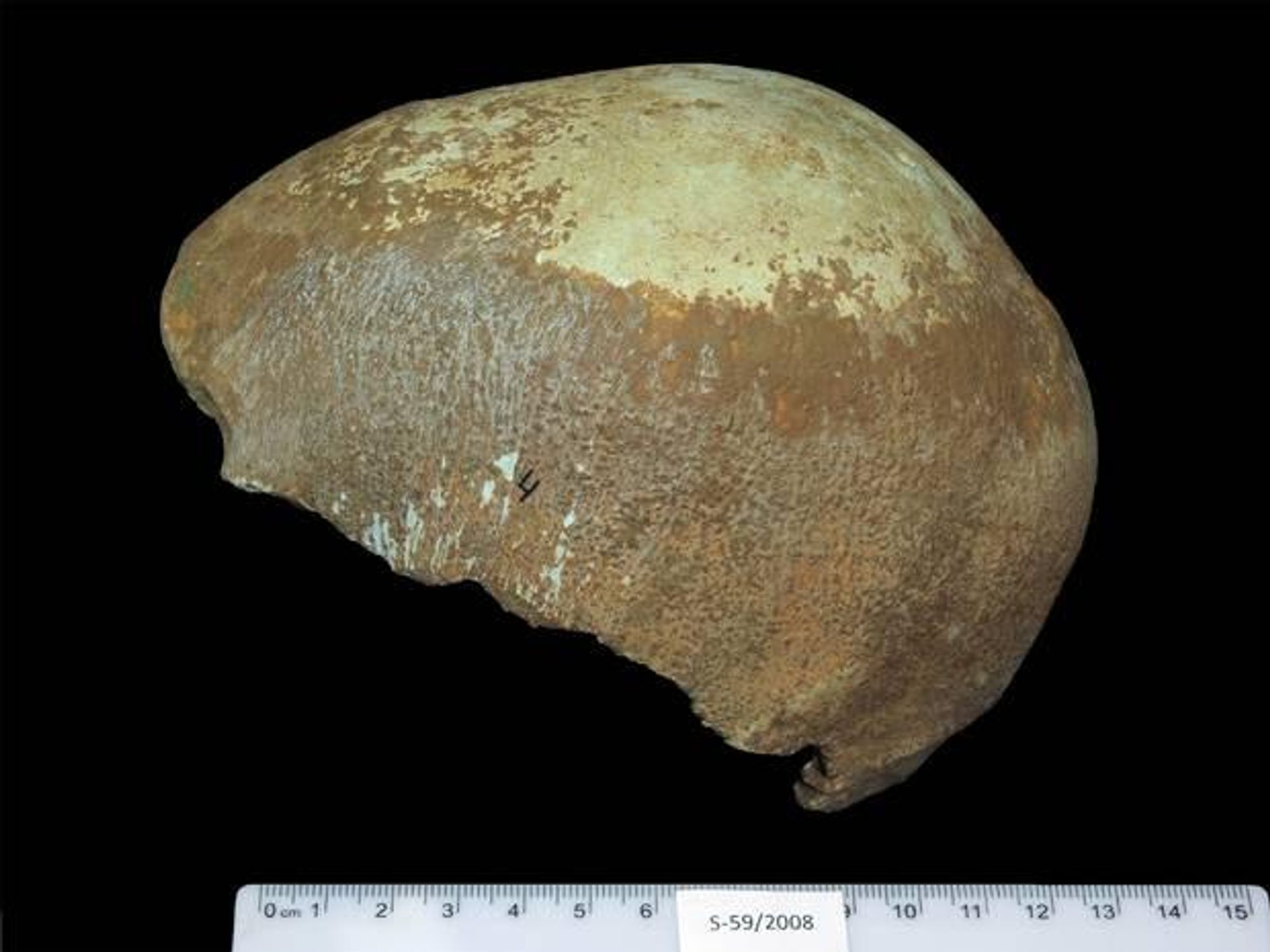
This is a 55,000-year-old modern human skull found in Manot Cave in the Western Galilee. This rare skull is the earliest fossil evidence outside Africa that present-day human populations originate from a wave of migration out of Africa that began about 25,000 years ago.
According to the researchers, the discovery sheds light on one of the most dramatic periods in human evolution: the appearance of modern humans as we know them today.
The study of the skull from Manot Cave, named after Dan David, led by Prof. Israel Hershkovitz, Dr. Omry Barzilai and Dr. Ofer Marder, is funded by the Dan David Foundation, the Israel Academy of Sciences and Humanities, the Irene Levi-Sala Foundation, the Leakey Foundation and the Israel Antiquities Authority.
The origin of modern humans (Homo sapiens) and the routes of their spread in the Old World is an issue that has occupied
scientific research for more than 150 years, since the publication of "On the Origin of Species" by Charles Darwin.
Since the 1980s there has been significant progress in the research, following the entry of
genetic research into the field, which made it possible to extract DNA from bones and to date them accurately. The results of genetic studies
of recent years, carried out on modern populations and on fossils, suggested two conclusions:
1) Modern humans originate from an ancient core population 200,000 years old from East Africa,
which migrated and reached our region about 100,000 years ago. This hypothesis is supported by fossil evidence.
2) The origin of today's modern population is in a later wave of migration, which began about 25,000
years ago. This is the period in which populations of modern humans of African origin spread throughout the Old World,
and replaced local populations, such as Neanderthals in the Middle East and in Europe. According to this
hypothesis of the geneticists, these populations constitute the ancient core from which all populations of
modern humans known today developed. One of the migration routes for the spread of modern humans in the world passes
through the Levant (the Mediterranean basin), which is the only land passage between Africa and Europe, but so far
no remains of modern humans dated to the period between 45-65 thousand years ago have been found in this land bridge.
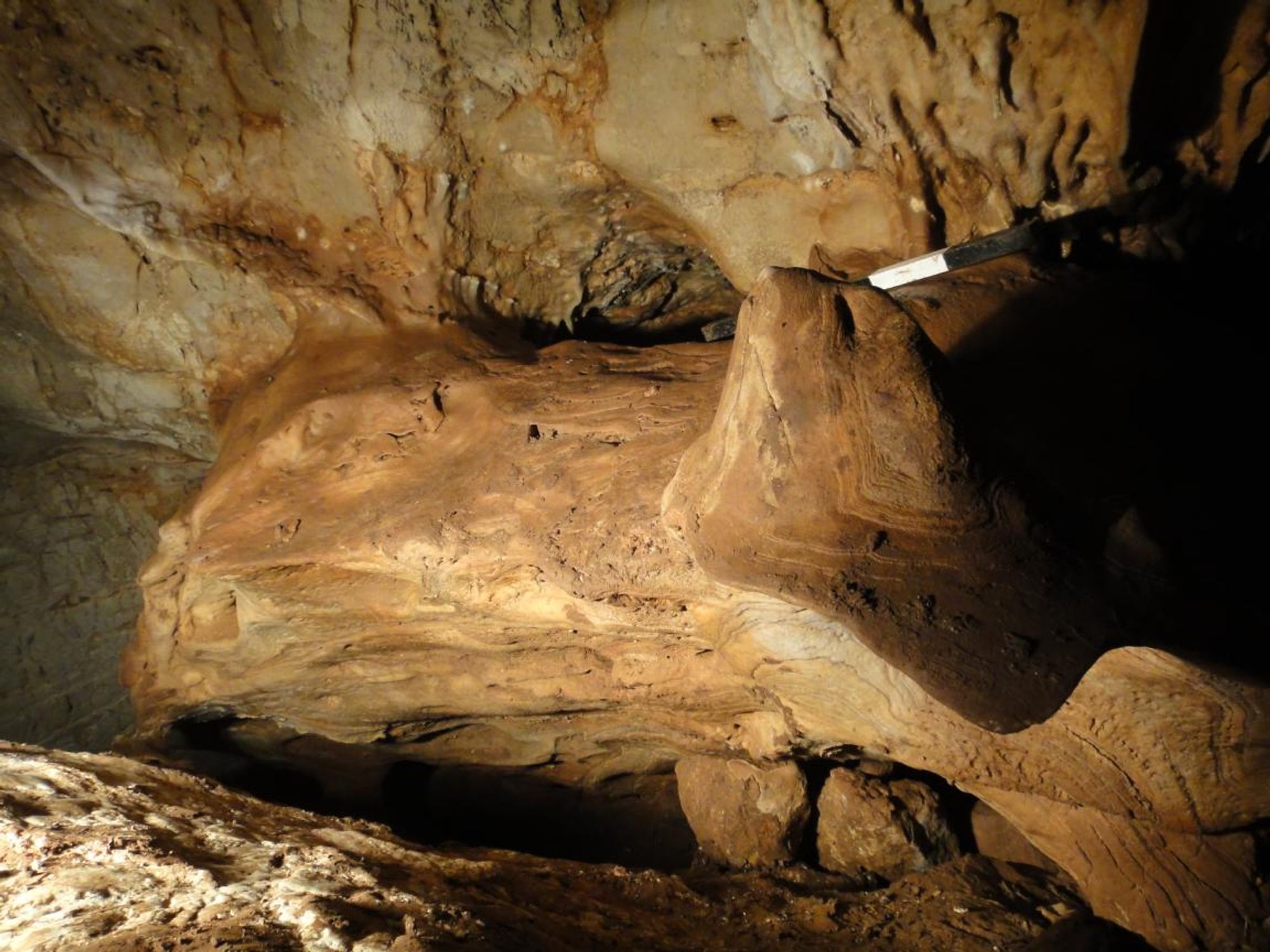
The Manot skull was found on a raised rock shelf in a small chamber at the edge of the cave. Both its inner and outer surfaces were covered with cave deposit, which was dated by the uranium-thorium method to 22 thousand years. A morphometric analysis of the skull showed that it is the skull of a modern human with similarities to modern skulls from Africa on the one hand, and to early modern human skulls from Europe on the other.
The cave is located in the Western Galilee, in an area characterized by low limestone hills of the Sakhnin Formation of Late
Cenomanian age, and by an abundance of water sources. The surroundings have Mediterranean woodland vegetation and the annual
precipitation is 600-700 mm. The site is located about 10 km north of Yonim Cave and about 50 km northeast
of the cave sites on the Carmel.
In the section exposed west of the cave, speleothems are exposed in blocked cavities, indicating that the karst system
of Manot Cave was larger in the geological past. Processes of denudation and slope retreat
cut off and blocked the outer part of the system, and left the present cave void intact, while opening it to the atmosphere in the Middle Pleistocene (according to the finds in the cave, below).
The morphology of the cave is characterized by dissolution domes, smooth walls and the existence of a chimney, which are typical of
phreatic (hypogenic) caves formed below the water table. The cave is currently located at an elevation of about 220
m above sea level, at least about 100 m above the water table, which indicates that the cave was formed before the uplift of the region. Afterwards, vadose processes took place in the cave and created a large number of calcite speleothems (cave deposits such as stalactites and stalagmites). Runoff flow on the cave floor cut channels along the northern wall of the cave. In addition, corrosion takes place in the cave through condensation of water rich in carbon dioxide. It appears that some of this activity took place at the time of human activity at the site.
A prominent phenomenon in the archaeology of Manot Cave is the large accumulations of animal bones
with good preservation on the surface and along the cave walls. The concentrations ('find spots') differ greatly
in size and location. Initial observations in the field emphasized the differences between the fauna finds collected
at the find spots and the fauna finds originating from the Upper Paleolithic stratigraphic layers.
The bones at the 'find spots' are not associated with the lithic finds, and show signs of gnawing by carnivores.
The ungulate species are identical to those in the excavation areas (deer, gazelles, equids, cattle). At the find
spots there are fewer small animals (tortoise, hare, fox and squirrels). In addition, there are many burned bones,
with cut marks and crushing marks made during the process of butchering the animal and exploiting its bone marrow. Analysis
of the finds shows that both humans and large carnivores (mainly hyenas) played an important role in creating the bone accumulations in Manot Cave.
Researchers from Tel Aviv University, Ben-Gurion University, the Israel Antiquities Authority,
the Geological Survey, the Weizmann Institute of Science, the ICRC - the Hebrew University, the University of Haifa, the University of Vienna, Harvard University, Case Western University, the Max Planck Institute
for Genetics and Evolution, Columbia University and Simon Fraser University took part in the study.
Edited from a press release by: Prof. Israel Hershkovitz, Dr. Omry Barzilai, Prof. Ofer Marder.