Sulam Cave
- Grid ref.
- 166844/277370
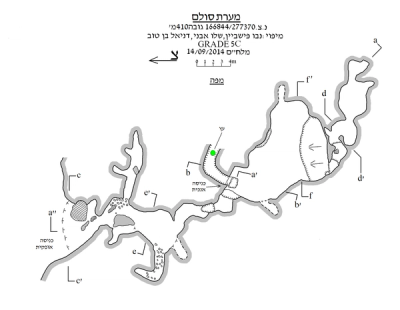 Cave mapView the map (PDF)
 Cave mapView the map (PDF)
General:
Sulam Cave is a medium-sized cave composed mainly of a wide chamber and several passages. The total length of the cave reaches 76 m, while its maximum depth reaches 13 m.
The cave spaces were formed in Turonian limestone (Bina Fm.), in which a passage structure sloping to the south developed, with the central chamber developing at its center. In the area of the chamber, as well as in the spaces of the southern part of the cave, there is an abundance of cave deposits.
Unlike the south of the cave, no speleothems were deposited in the spaces of its northern part, so the original shape of the cave walls was preserved. Thanks to this preservation one can discern signs of rounded dissolution, in the form of passages with a rounded cross-section as well as rounded domes and dissolution pockets.
These dissolution marks make it possible to determine that the cave was formed below the water table, and only after it emptied of water did cave deposits begin to form in it.
The cave was discovered in 1940 by members of Kibbutz Hanita. The leader of the discovery was a kibbutz member named Itamar, who led his friends by matchlight to the central chamber. Later Itamar returned to the place leading Moshe and Ruth Dayan behind him.
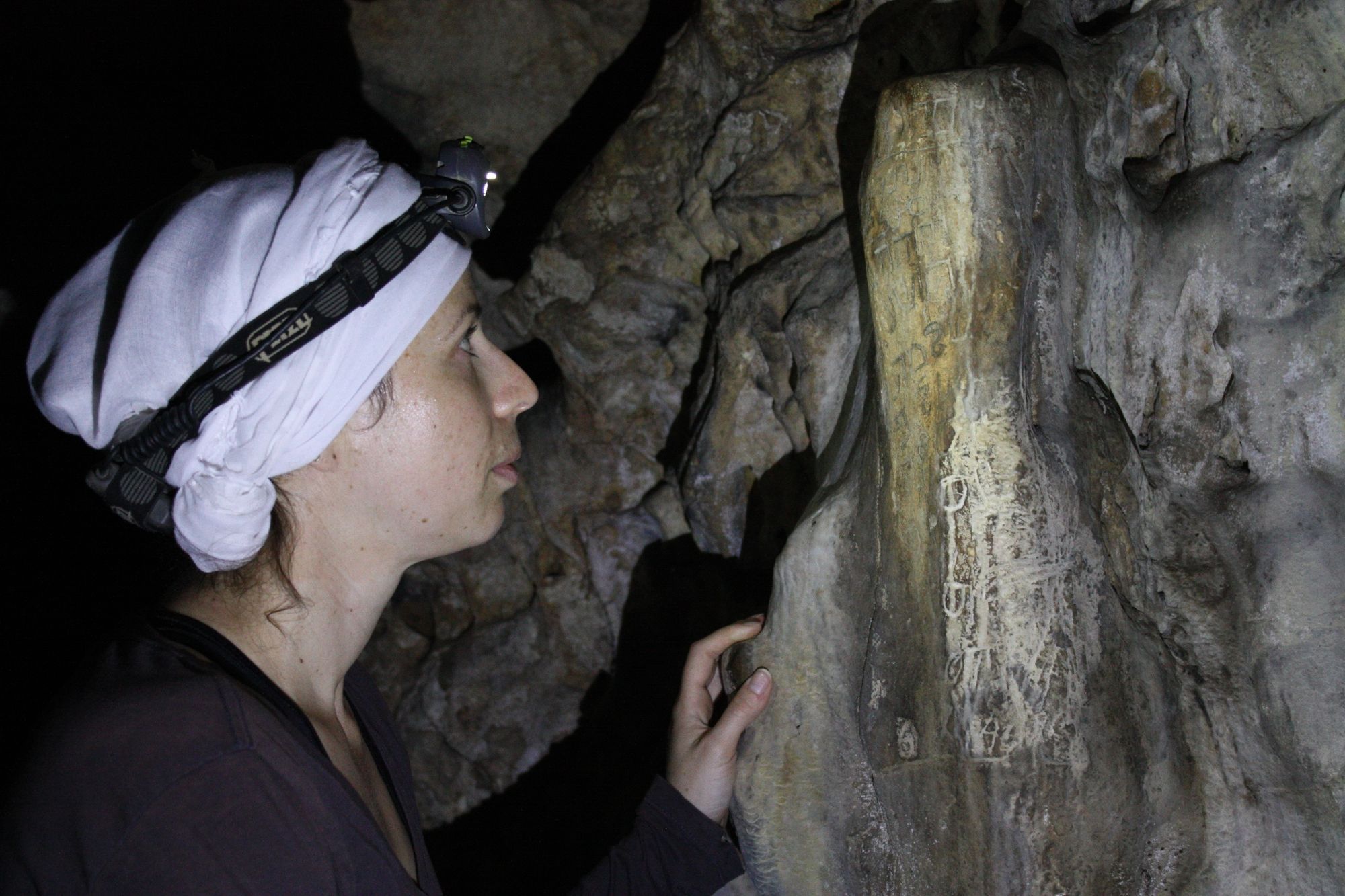
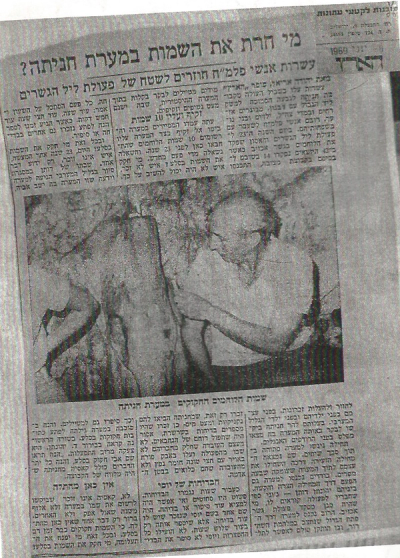
During this visit Itamar fell from the entrance passage down to the floor of the central chamber, and Moshe Dayan himself was put in charge of rescuing him from the place. On 16.6.1946 some of the members of the squad that blew up the railway bridge hid in the cave. In memory of their stay in the cave, those in hiding carved their names on a stalagmite, adjacent to the western wall of the central chamber (Yonatan, Yosef Z., Yehuda B., Yehoshua G., Shlomo H., Shaul P., Yosef K., Yosef S., Yosef Y., Yaakov R., and Yosef G.).
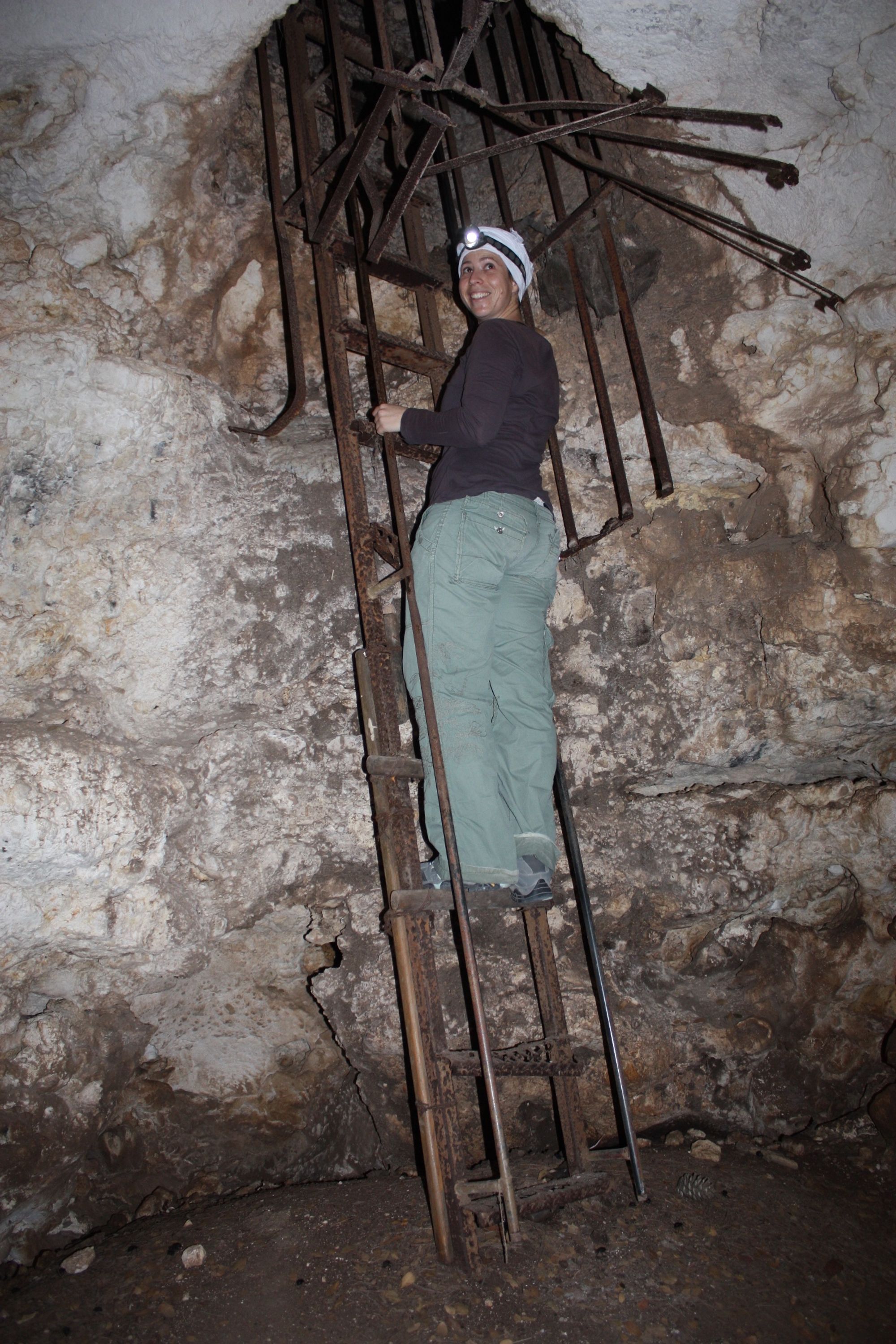
The name of the cave was determined by the State Names Committee, after an artificial shaft was breached in the cave ceiling and an iron ladder (sulam) was installed there.
Since its discovery the cave has been explored many times by hikers and visitors. It seems that these frequent visits, together with the visitors' lack of awareness of the need to protect the place, caused the cave great damage. The damage is seen in the large amount of litter scattered in the central chamber, in soot and carved inscriptions appearing in all parts of the cave, and in the defacing of the cave deposits. In addition, of the reports on the presence of potsherds and flint items, only very few sherds remain, scattered in the most remote parts of the cave.
We can only hope that the unintentional harm that occurred in this cave will serve as an example to the hiking public and will prevent an "embrace that is too tight," precisely from cave lovers.
During the various visits to the cave, various animals were observed in it, including: an atzandal, a Blaps beetle, a myriapod, a cellar spider, a Mavrishan spider, and several individuals of one of the large mouse-tailed bat species.
Description of the Cave:
Sulam Cave has two openings, one horizontal and one vertical. The horizontal opening is the original entrance of the cave and therefore it will be described from the direction of the entrance through it.
The entrance opening opens beneath a natural rock ledge and is slightly concealed by a thicket of trees. The opening measures 5X1.5 m and looks like an open, semi-lit rock shelter. In the inner part of the opening there is a narrow passage leading to a low but easily traversed passage.
The passage floor is covered with stones and a little dry soil, in contrast to its walls and ceiling, which consist of exposed limestone. Side passages branching off the sides of the main passage are similar to it in their characteristics. In the inner part of these passages a few potsherds can be found.
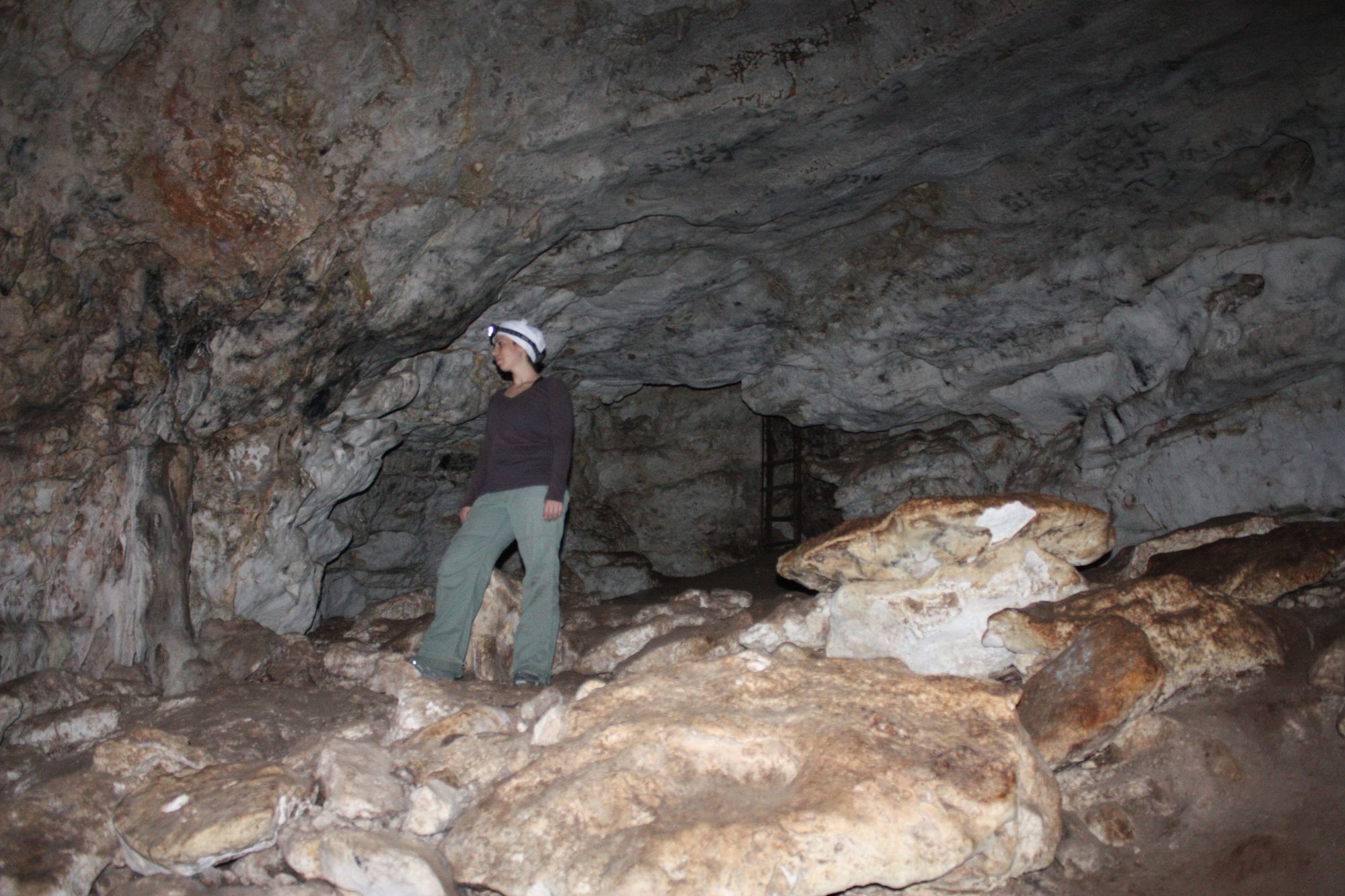
The system of passages extends south and ends after several meters at a connection to the center of the cave space. The center of the space consists of a rounded chamber measuring 12X8 m and whose height reaches 2 m.
The entrance passages connect to the chamber adjacent to its ceiling, so that the transition from the passages to the chamber space requires a careful vertical descent on natural rock steps found there. Near the junction between the passages and the chamber there is a high vertical shaft (6 m) in which a massive iron ladder was installed. This shaft and ladder lead to the second opening of the cave, which was cut above the chamber ceiling.
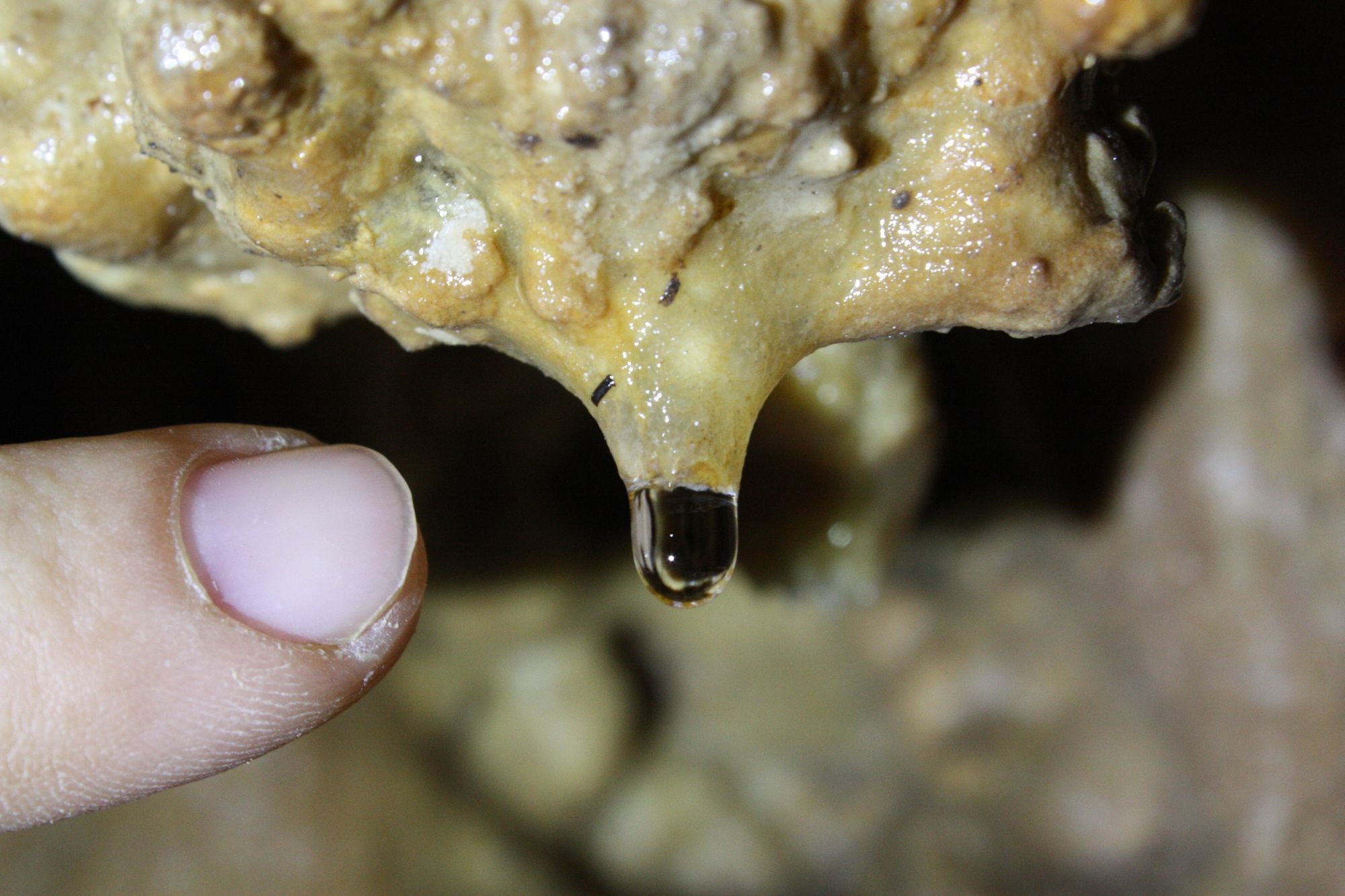
The chamber floor tilts moderately to the south and is covered with collapse boulders, a little soil and a few cave deposits. A tiny vertical opening at the bottom of the wall on the southern side of the chamber leads to the southern part of the cave. This part consists of a narrow passage descending south in several low steps. The entire passage area, as well as narrow niches branching off it, is covered with many cave deposits. Most of the cave deposits are dry, weathered and damaged, but some are still active and dripping water.
Written by: Boaz Langford
Region: Western Galilee
Elevation: +410 m
Further Reading :
Who carved the names in the Hanita cave? From Haaretz newspaper
Treasures of the Hanita archive