Masha Cave
- Grid ref.
- 194021/274701
- Location
- Nahal Yiron
- Elevation
- 517 m above sea level
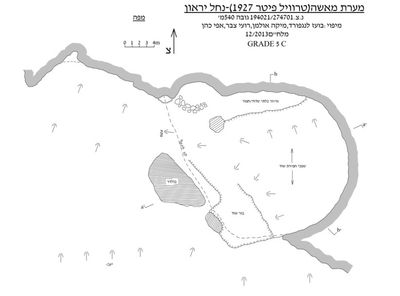 Cave mapView the map (PDF)
General:
Masha Cave is a small cave consisting of an open chamber, which developed by phreatic dissolution processes in limestone of Eocene age (Timrat Formation). The rock layers in which the cave developed dip gently toward azimuth 25 (dip -º10.7).
The cave was explored in the 1920s by Francis Turville-Petre, who excavated an extensive area at the site, in which remains from the Early Bronze Age and the Chalcolithic period were discovered. A renewed report about the cave was submitted by Vladimir Buslov, who visited the site in 2010. In December 2013 the ICRC team made another visit to the cave, during which the cave space and the terrace in front of it were mapped. During the visit significant looting activity was noticed, concentrated in a massive dig into the old excavation pit, near the inner part of the entrance. A report about this activity was passed to the Israel Antiquities Authority's looting unit.
Description of the cave:
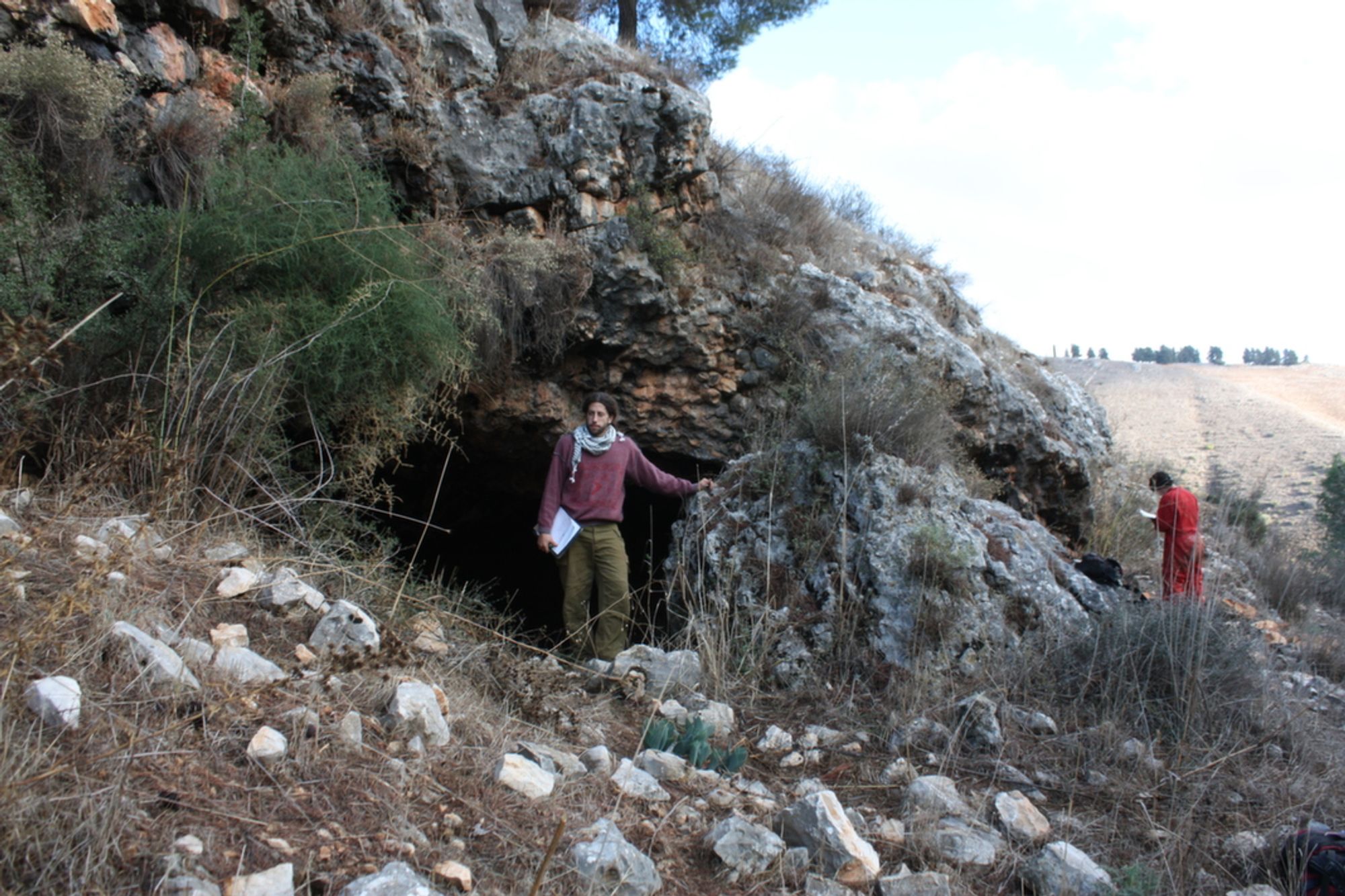
The cave entrance opens on the northern bank of Nahal Yiron, about 25 m above the streambed. The entrance measures about 10.5X2 m and its general shape is vaulted. A large collapse rock blocks the center of the entrance area, so that from a distance it looks like a rounded entrance measuring 4.5X2 m. In front of the entrance extends a narrow terrace, as wide as the entrance and a few meters long. The edge of the terrace is bounded by the slope of the stream bank, which descends to the south (slope gradient -º26).
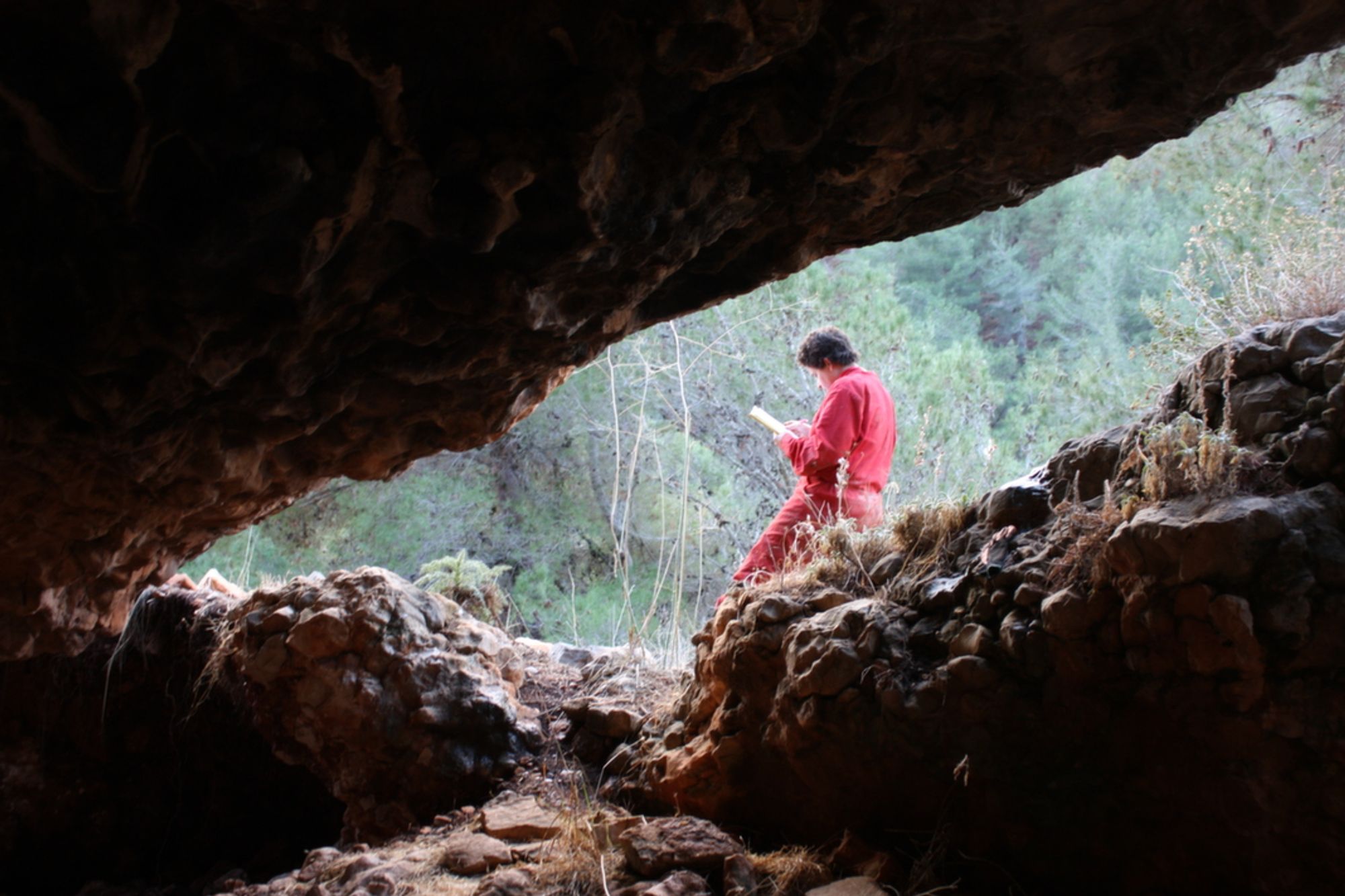
The cave space consists of a rounded, semi-lit chamber. It measures 11X11 m and its maximum height reaches 4 m. The floor of the chamber is covered with dry, mixed soil, in which many stones are mixed. Most of the floor area was disturbed by the excavation carried out at the site. Along the northern wall of the chamber runs a narrow strip of ground that was not excavated, so the original level of the cave floor can be discerned. The cave ceiling is vaulted and mostly covered with a layer of soot. At various points worn cave deposits (flowstone and soda straws) hang from it.
Very few chert items and pottery were found in the cave space and on the terrace in front of it. A recent skull of a wild boar was also found. In the cave ceiling a tiny nest of an unidentified bird was located.
Notes:
- Access to the cave is possible on foot from the asphalt road running along the base of the southern bank of Nahal Yiron. The cave entrance is clearly visible even while driving on the road. It is possible that in the future the entrance will be hidden by several pine trees growing in its vicinity.
- No bats were observed in the cave and no guano was seen.
Written by: Boaz Langford