Tinshemet Beit Arif Cave, Western Samaria
- Grid ref.
- 147128/156273
- Location
- Nahal Beit Arif
- Elevation
- 100 m above sea level
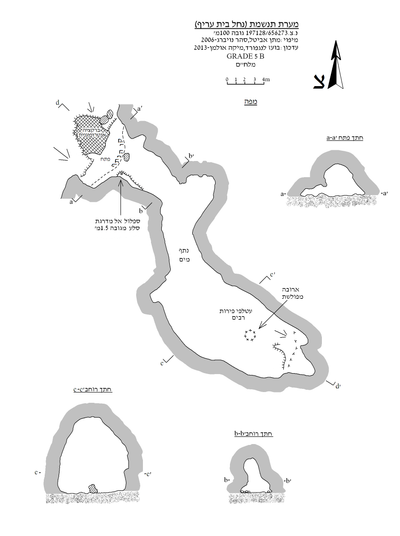 Cave mapView the map (PDF)
Cave description:
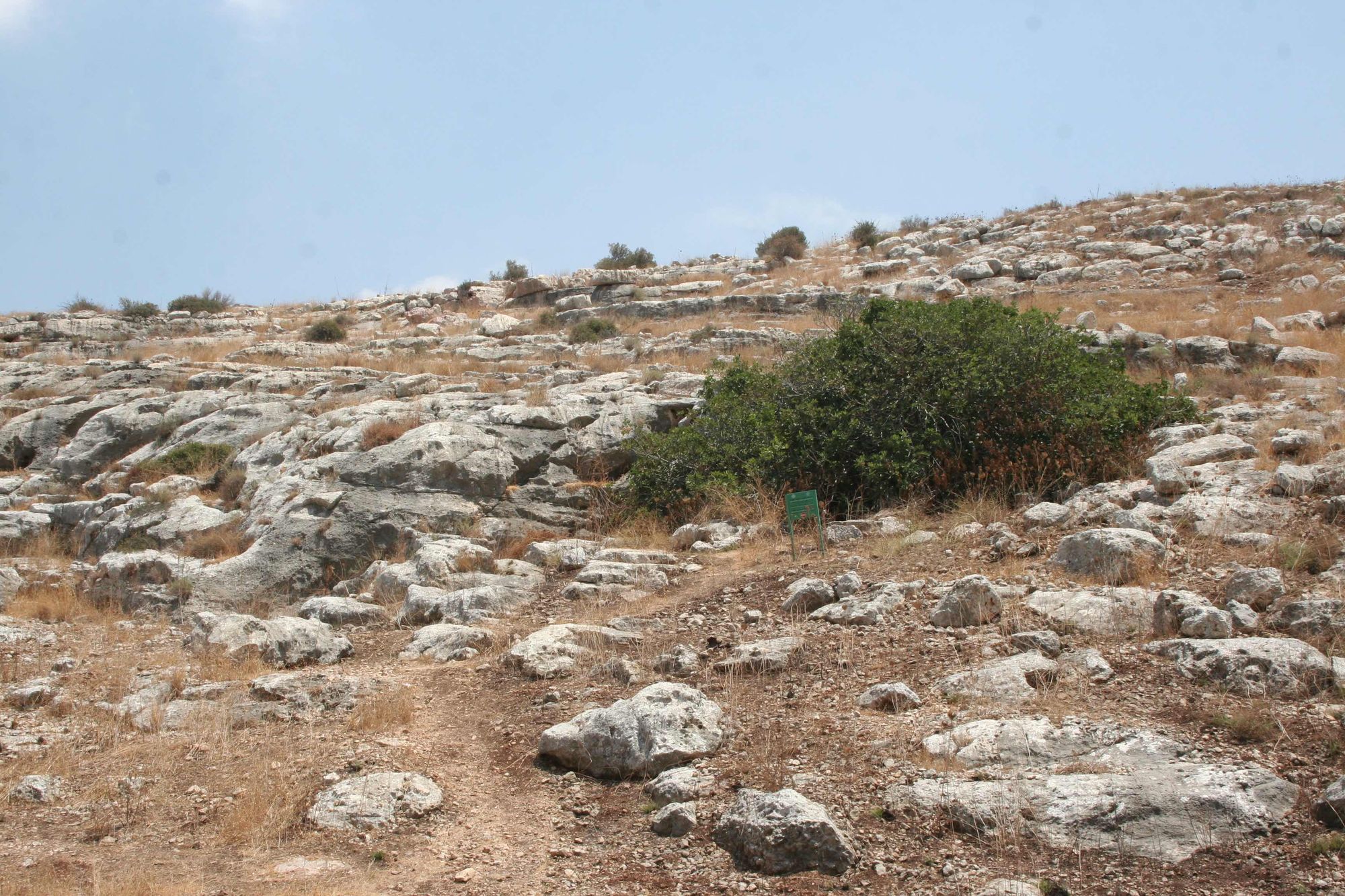
Tinshemet Cave is a medium-sized cave that developed, by hypogenic dissolution processes, in limestone of Turonian age (Bina Fm.) and is located in the middle of a gentle slope on the eastern bank of Nahal Beit Arif, before the stream's outlet to the coastal plain. Tinshemet Cave is the last cave in the stream before it opens onto the coastal plain.
The cave has a wide entrance (dimensions about 4X4 m) that opens about 12 m above the streambed and at a distance of about 25 m from it. The entrance is completely hidden by a large fig tree.
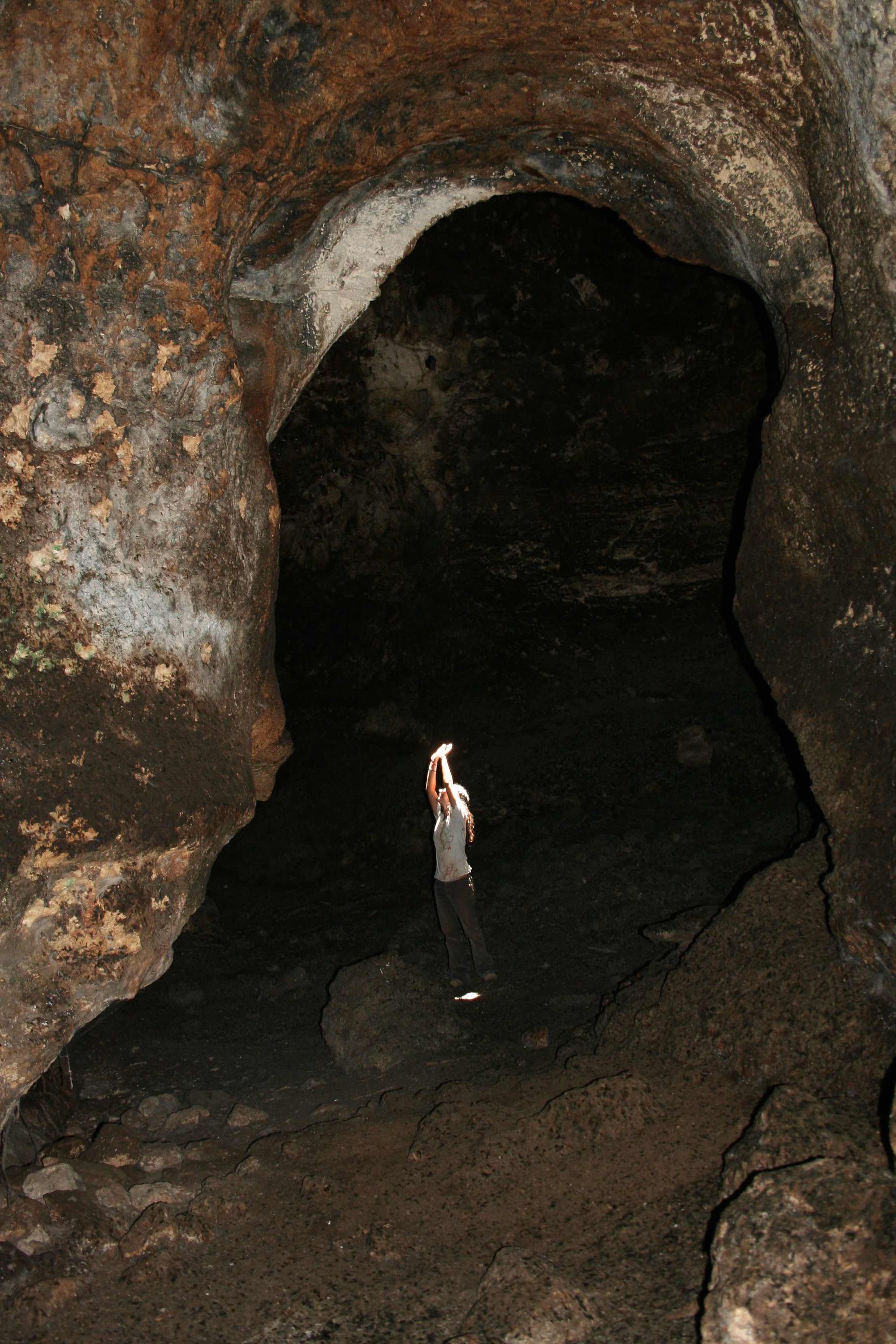
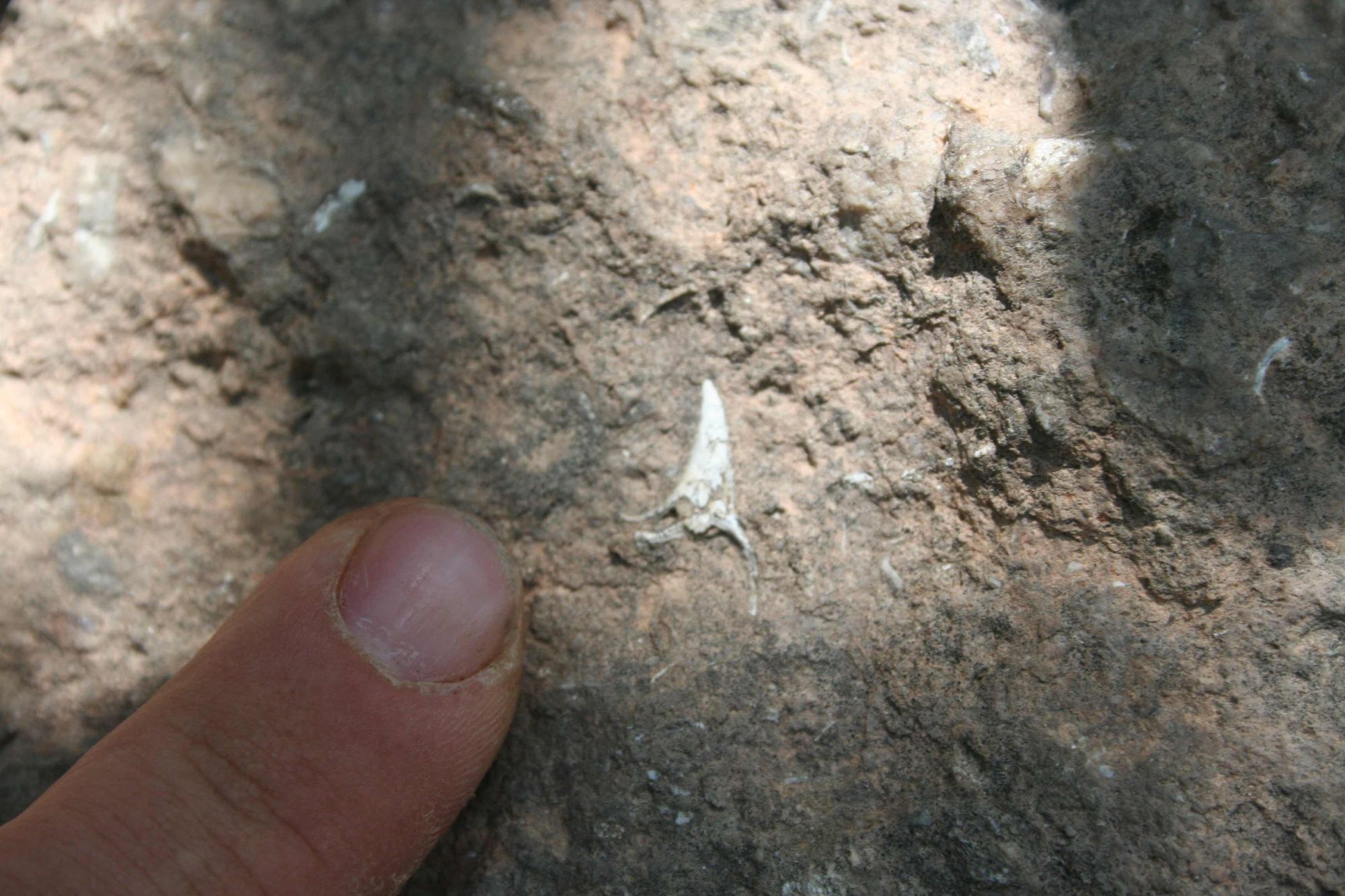
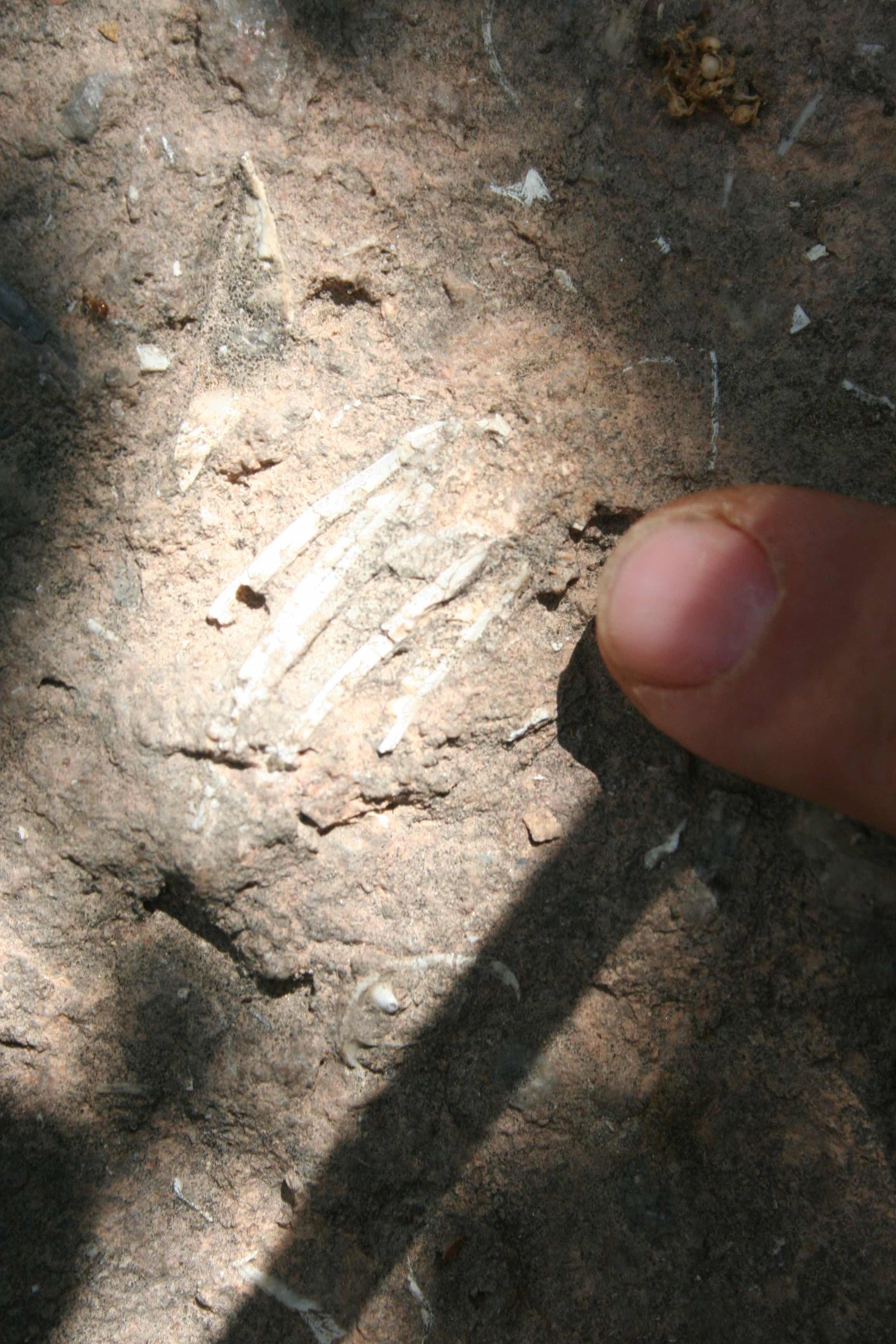
On the floor of the entrance, beneath the fig branches, there is a prehistoric breccia surface on which large rockfall boulders are scattered, perhaps a sign of the retreat of the original cave entrance. From the cave entrance a corridor extends east, with a cross-section rounded at its top and widening at its base. Its dimensions are about 2.5X3.5 and its length about 15 m; at its end the corridor connects to the cave hall. The hall has a rounded shape, its ceiling is vaulted and wide dissolution domes open in it. In the center of the hall ceiling there is a rounded, narrow opening through which light penetrates into the hall space. In the cave walls there are wide niches in which, as in the hall ceiling, many fruit bats were observed.
In the corridor connecting the entrance with the large hall at the back of the cave, there is dripping water during the winter.
A cave deposit of the Flow Stone type is found on the northern wall of this corridor and in the wide niche in the middle of the corridor.
The cave floor is covered with fresh guano. The cave walls are sooted and covered with dark mold and guano. In the area of the cave entrance large nylon sheets are scattered, left in the cave from attempts to exterminate the population of fruit bats that dwell in the cave.
Access:
The area of the cave (about 100 m from its entrance) can be reached through the Shoham industrial zone.
Written by: Boaz Langford