Completion of the Mapping of Rahav Cave
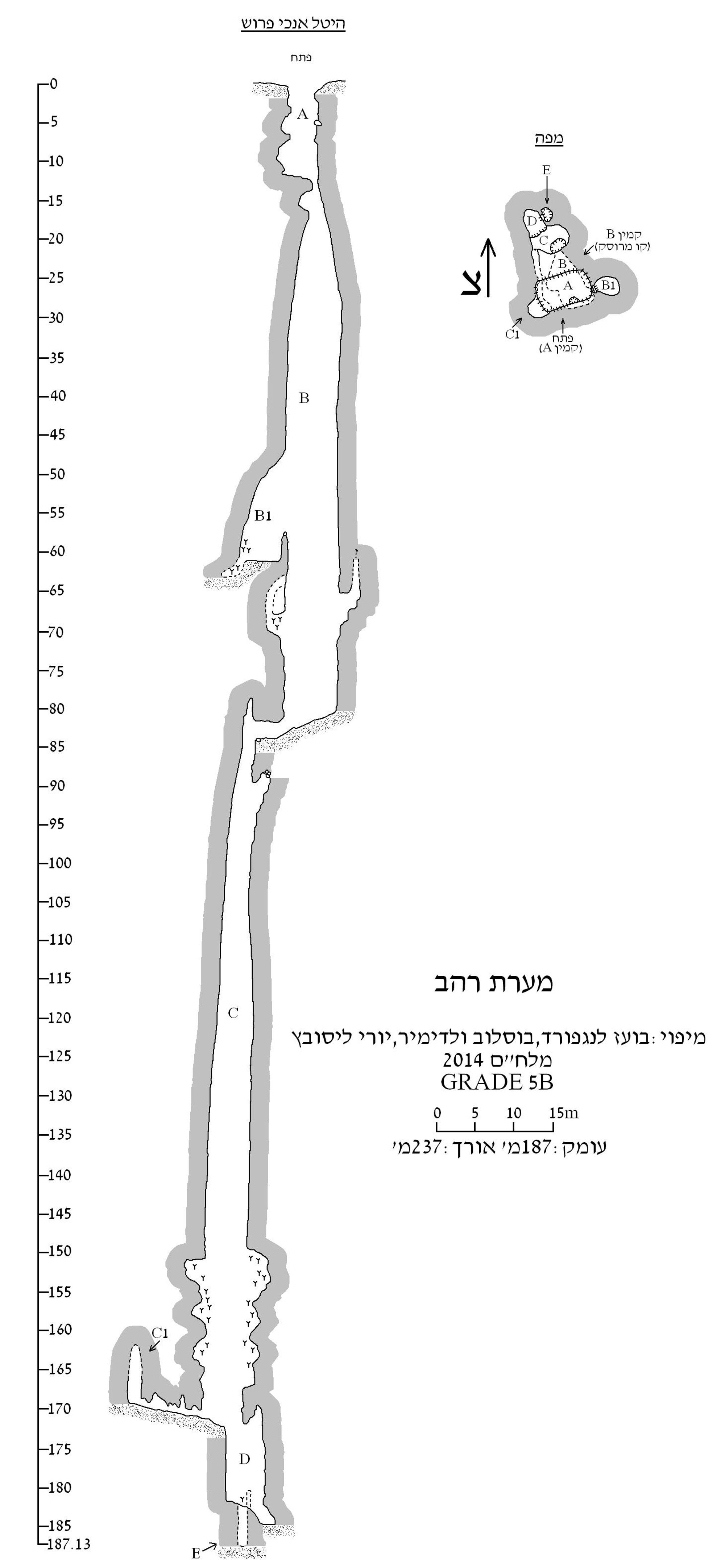
The mapping of Rahav Cave - the deepest cave in Israel - has been completed.
(Boaz Langford and Amos Frumkin 2.10.2014)
People of the Cave Research Center in the Department of Geography at the Hebrew University of Jerusalem (the ICRC) and Vladimir Boslov, Yuri Lisovich and Boaz Langford recently finished mapping the deepest cave in Israel, Rahav Cave, near the Lebanese border. The cave, whose depth reaches 187 m below the ground surface, sets a new record for reaching depth into the earth in our small country.
38 years ago ICRC veterans managed to penetrate into the depths of 'Hota Jarmaq' (Rum Chimney) on Mount Meron (see Frumkin and Seidner, Nikrot Tzurim 10). There, at a depth of 157 m below the ground surface, they set a depth record which, over years of surveys and searches, researchers did not manage to cross. Only in the summer of 2014, after almost 4 decades, was the record broken. The first to notice the cave was Hanoch Kalil HaHoresh.
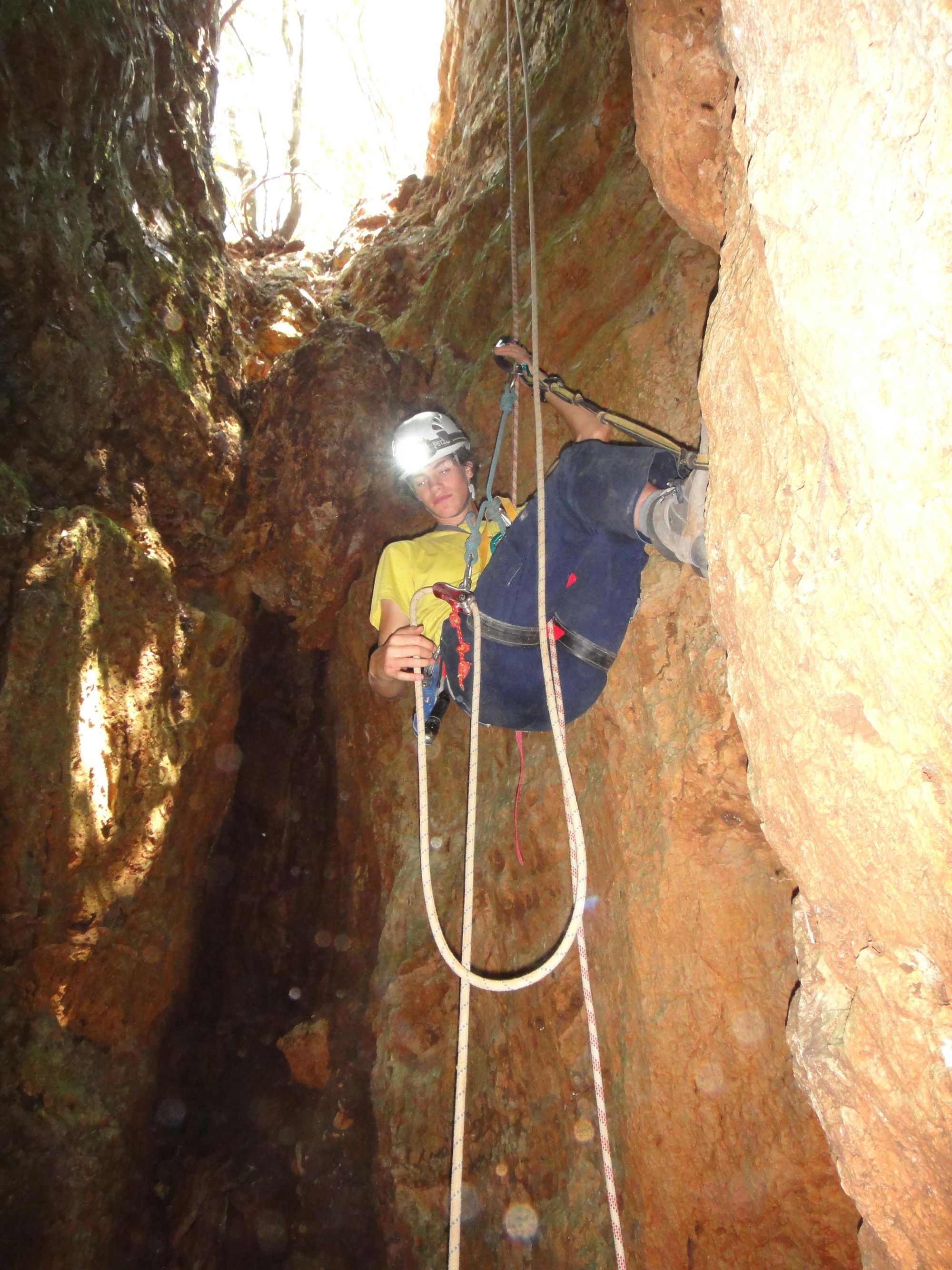
An initial examination included rappelling by ropes to a depth of 100 meters below the ground surface. "We rappelled along huge natural chimneys until I noticed that the end of the rope was dangling in air beneath me," says Shalev Avni, an ICRC volunteer. A repeat examination of the cave was carried out a week later, when the prospect of crossing the 160-meter line finally became reality!
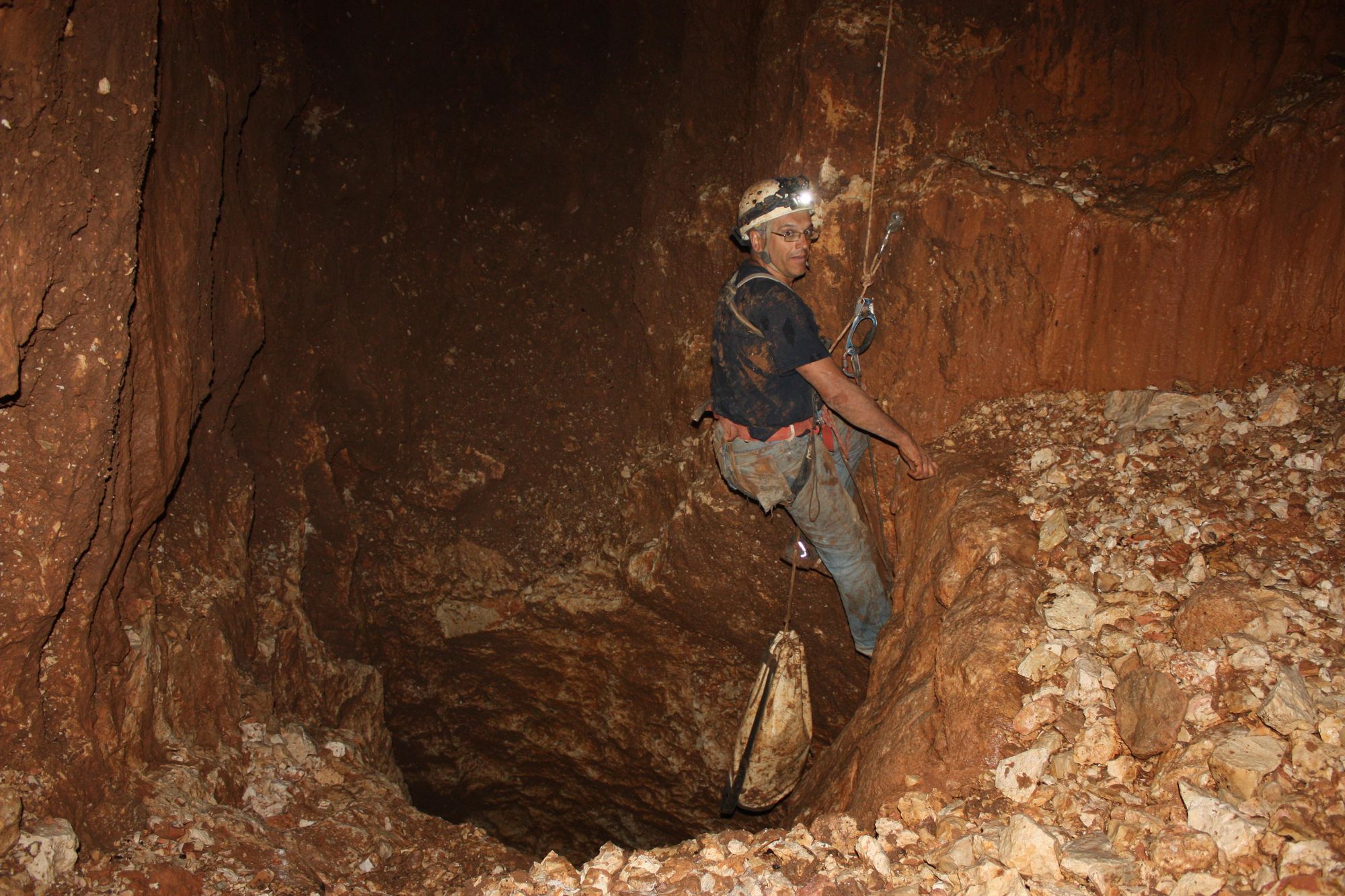
Yuri Lisovich climbing out of the bottom of Rahav Cave.
Photo: Boaz Langford
The entrance of Rahav Cave. Photo: Amos Frumkin
The cave is of the karst chimney type: a narrow and deep space that develops as water rich in carbonic acid percolates along vertical fractures in karstic rock. On their way from the surface, which is rich in biogenic activity and yields acids, the waters dissolve the rock and reach the groundwater at great depth. Its horizontal extent is only about 100 m2 (very little relative to Hota Jarmaq), which indicates that the groundwater had no part in the formation of the cave, unlike other Galilee caves (see Nikrot Tzurim 10).
This new record brings us slightly closer to our neighbors in Lebanon, where caves are known whose depth reaches at least 612 m below the ground surface (see Shaber, Nikrot Tzurim 7). There is no doubt that caves of a similar order of magnitude, and even deeper, are hidden within the borders of Israel, but their discovery requires more research and cooperation from various bodies. Mount Hermon, ranked among the top ten places in the world in potential for the existence of deep caves, is one of the most important places for continued research in the field.