Orange Door Cave, Modi'in Illit
- Grid ref.
- 154707/148857
- Location
- Modi'in Illit
- Elevation
- 300 m above sea level
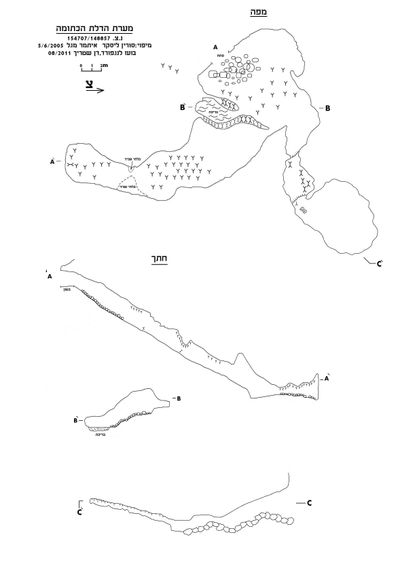 Cave mapView the map (PDF)
General:
Orange Door Cave is a medium-sized cave (total length about 60 m) that developed by phreatic-hypogenic dissolution processes in Turonian limestone (Bina Formation). The cave was discovered during site preparation work for paving an internal road in the community of Kiryat Sefer. During the bulldozer work an entrance was exposed that opened on the northwestern side of the cave. After the entrance was exposed, it was closed with a concrete wall and an iron door (a sliding door) that was painted orange and gave the cave its name.
The cave was surveyed by the ICRC immediately after its discovery (April 2005) and several more times afterward. In June 2005 the cave was mapped by Sorin Lisker and Itamar Magal. At the beginning of 2011 Elroi Dvir found a corridor leading to an inner chamber that had not been known until then. In August of that year the new wing was mapped by Boaz Langford and Dan Strich. In August 2015 Shmulik Avidan reported heavy-machinery work in the area of the cave. An examination by an Israel Nature and Parks Authority (INPA) ranger, Ohad Alt, revealed that the cave had been destroyed for construction purposes.
The following is a description of the cave before its destruction:
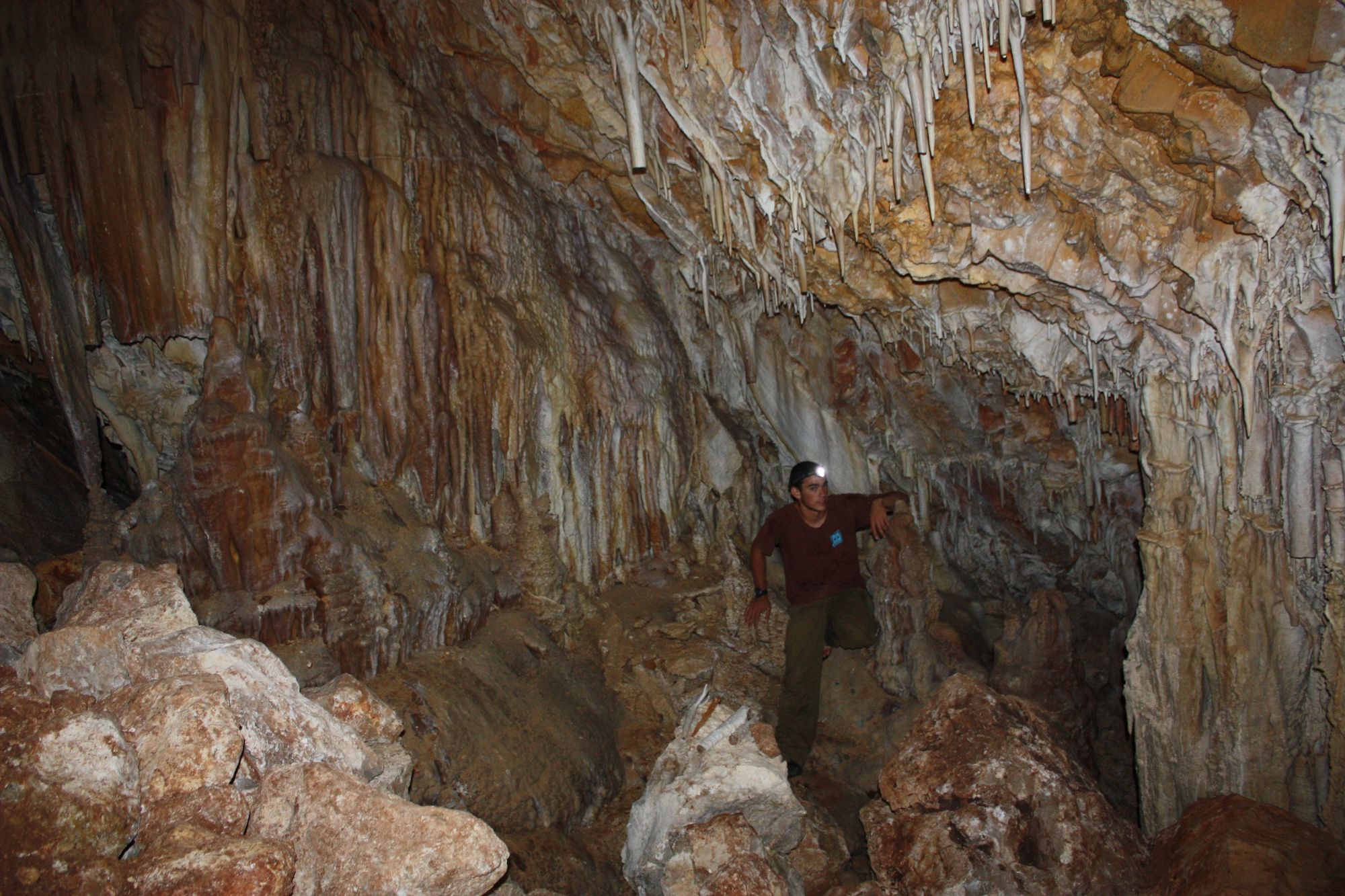
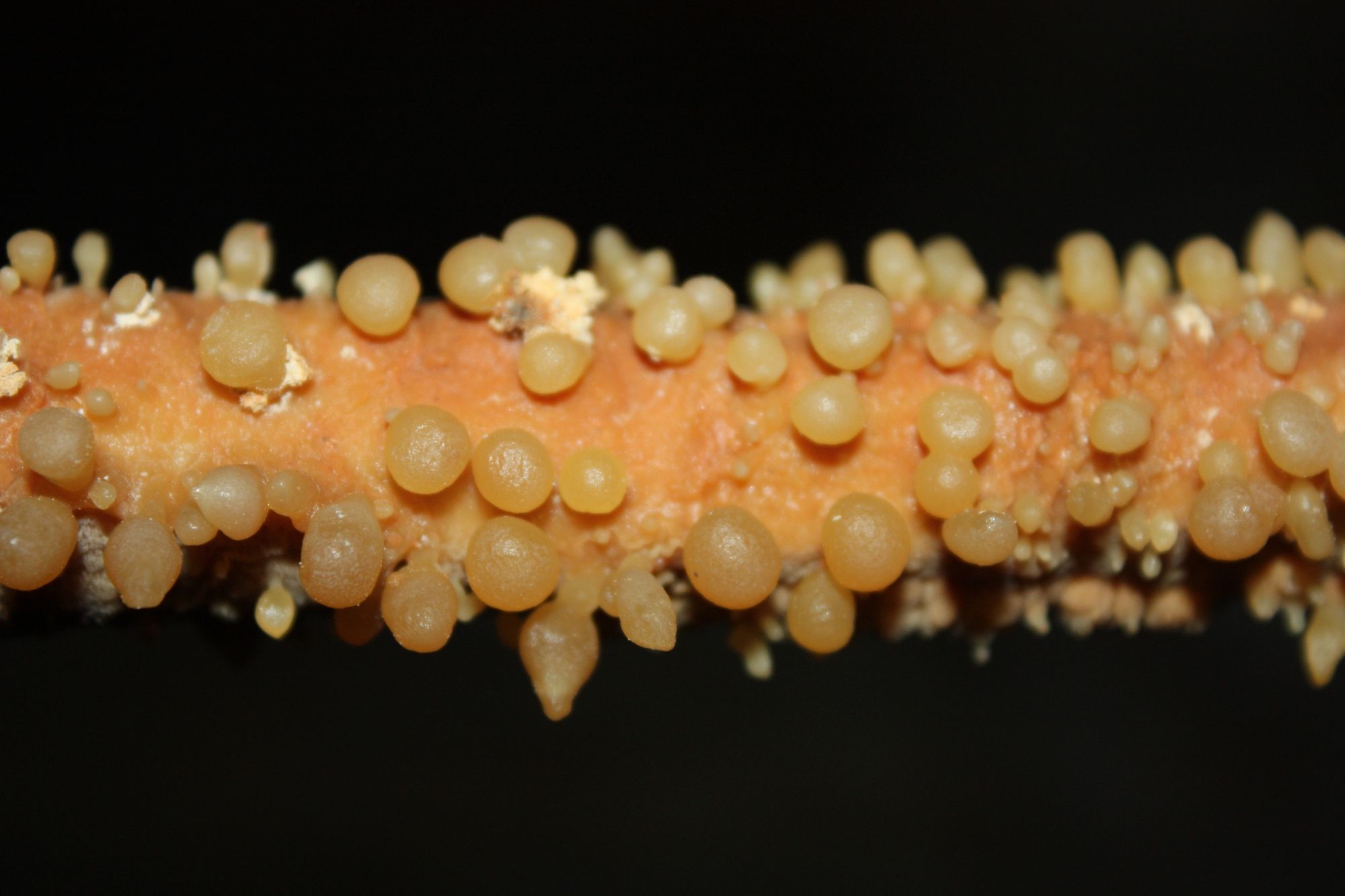
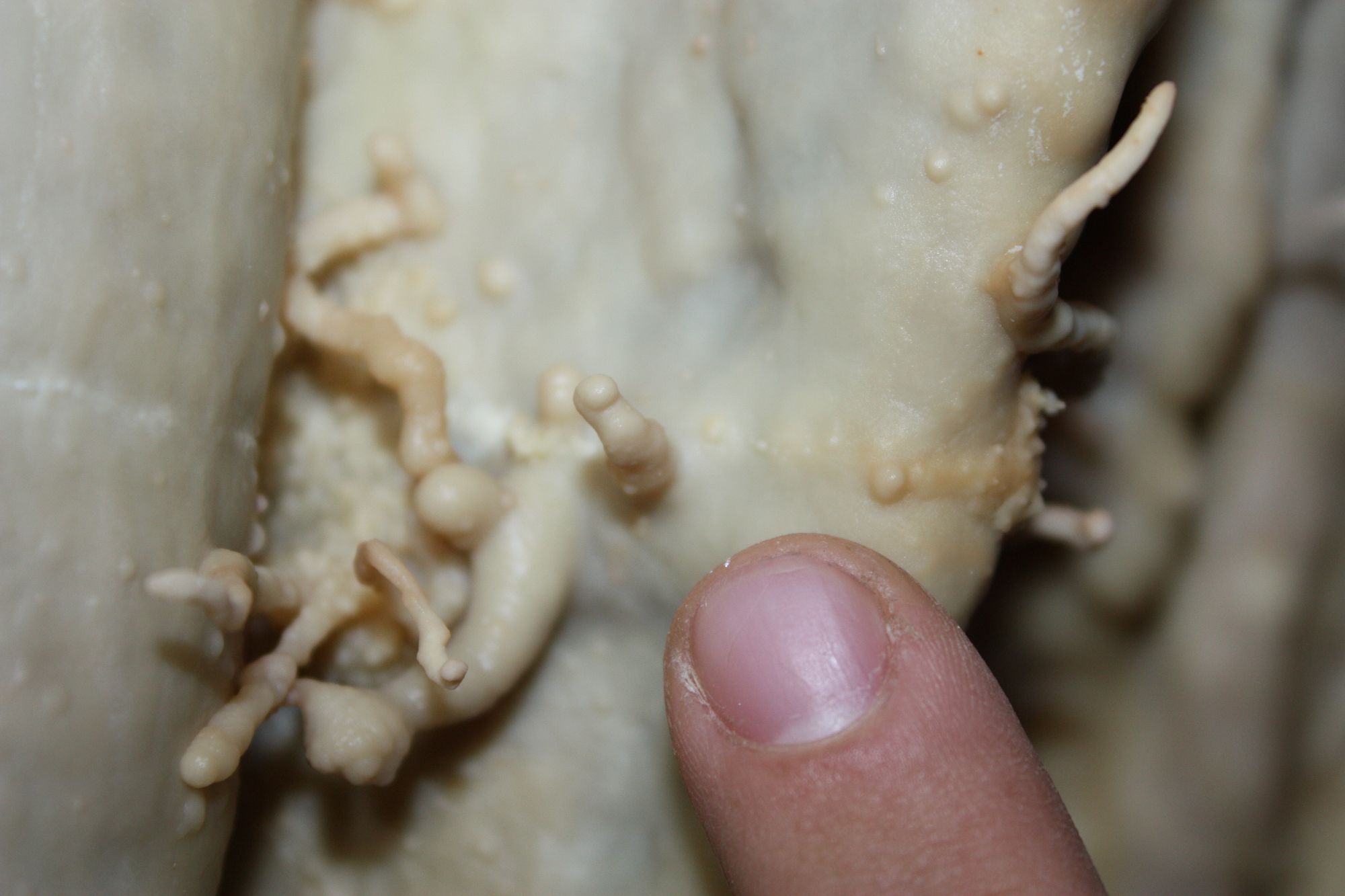
The cave space consisted mainly of a low chamber that developed along a general north - south axis; its length on this axis was about 35 m, its typical width about 6 m and its typical height about 1.5 m. The chamber space slopes along its axis of development and descends south at an angle of about 30 degrees. Throughout the chamber space there was an enormous wealth of cave deposits, the most beautiful of which were concentrations of tiny lactites growing in a tangled, dense structure (common in all parts of the cave).
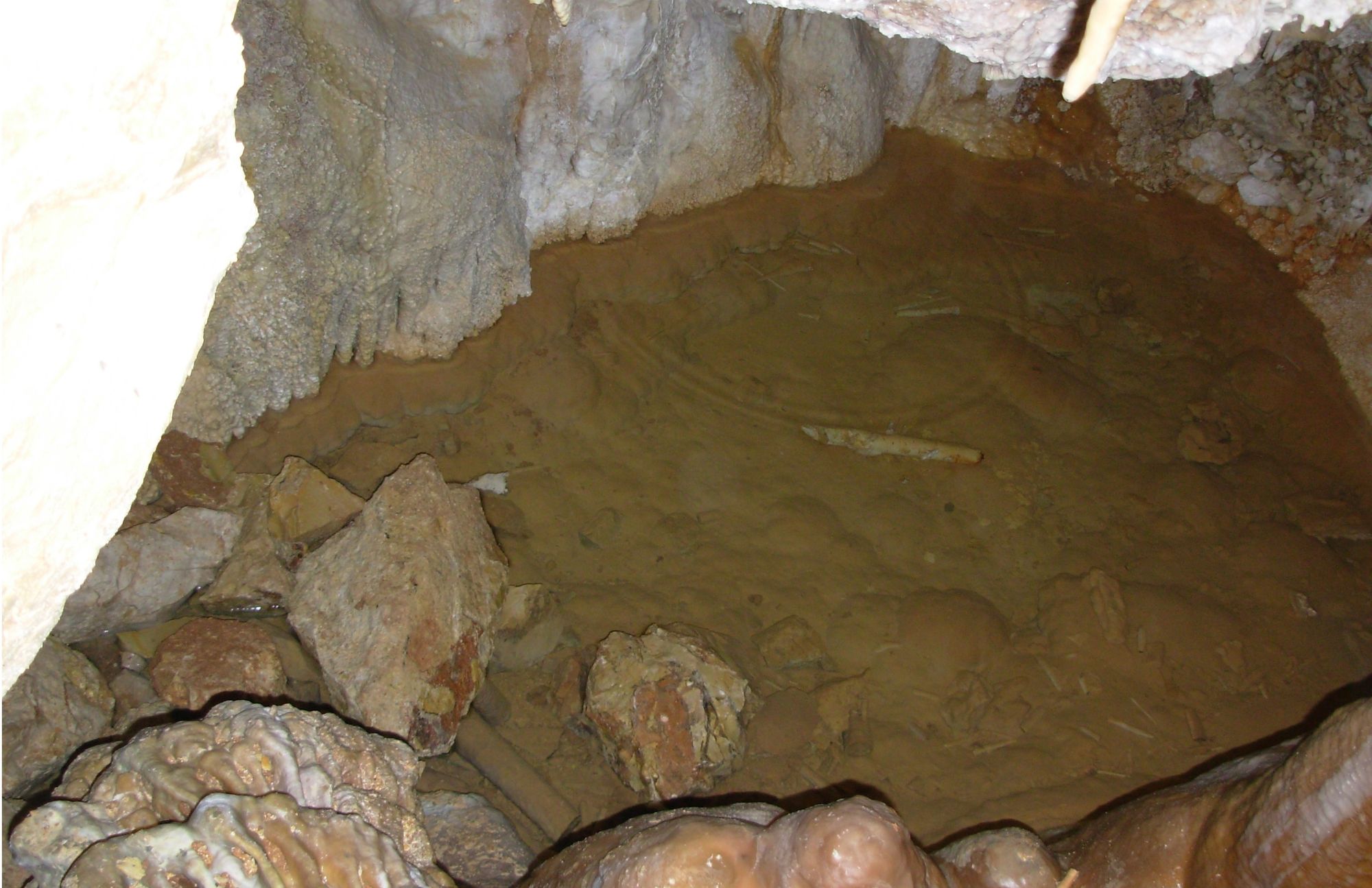
On the western side of the center of the chamber, among curtains of speleothems, there is a large water pool, measuring about 3X1.2 m, with a water depth of up to 0.5 m.
On the northeastern side of the chamber space it branches into another space extending east. This branch is mostly clogged with cave deposits, so that passage is possible only by gentle crawling, between and over cave deposits. At the end of the branch it connects to a rounded room measuring 8X8 m and 0.8 m high. Like the entrance space, this room also slopes along a north - south axis.
Written by: Boaz Langford