East Nahal Beit Arif Cave, Western Samaria
- Grid ref.
- 147141/156560
- Location
- Nahal Beit Arif
- Elevation
- 113 m above sea level
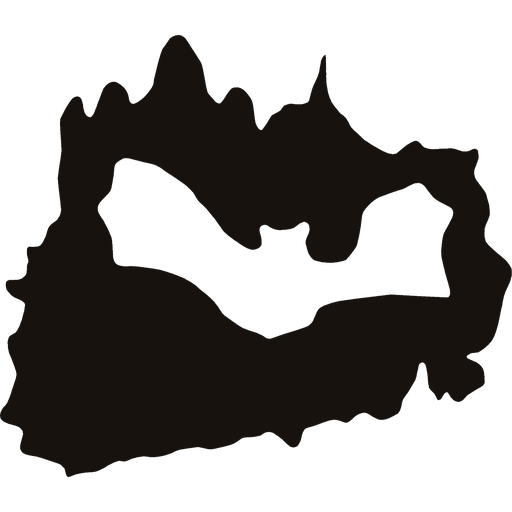
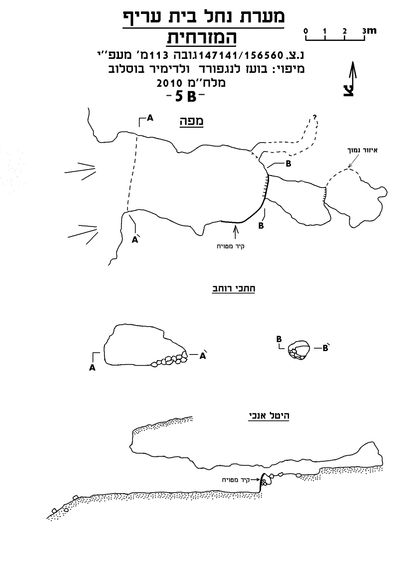 Cave mapView the map (PDF)
Description of the cave:
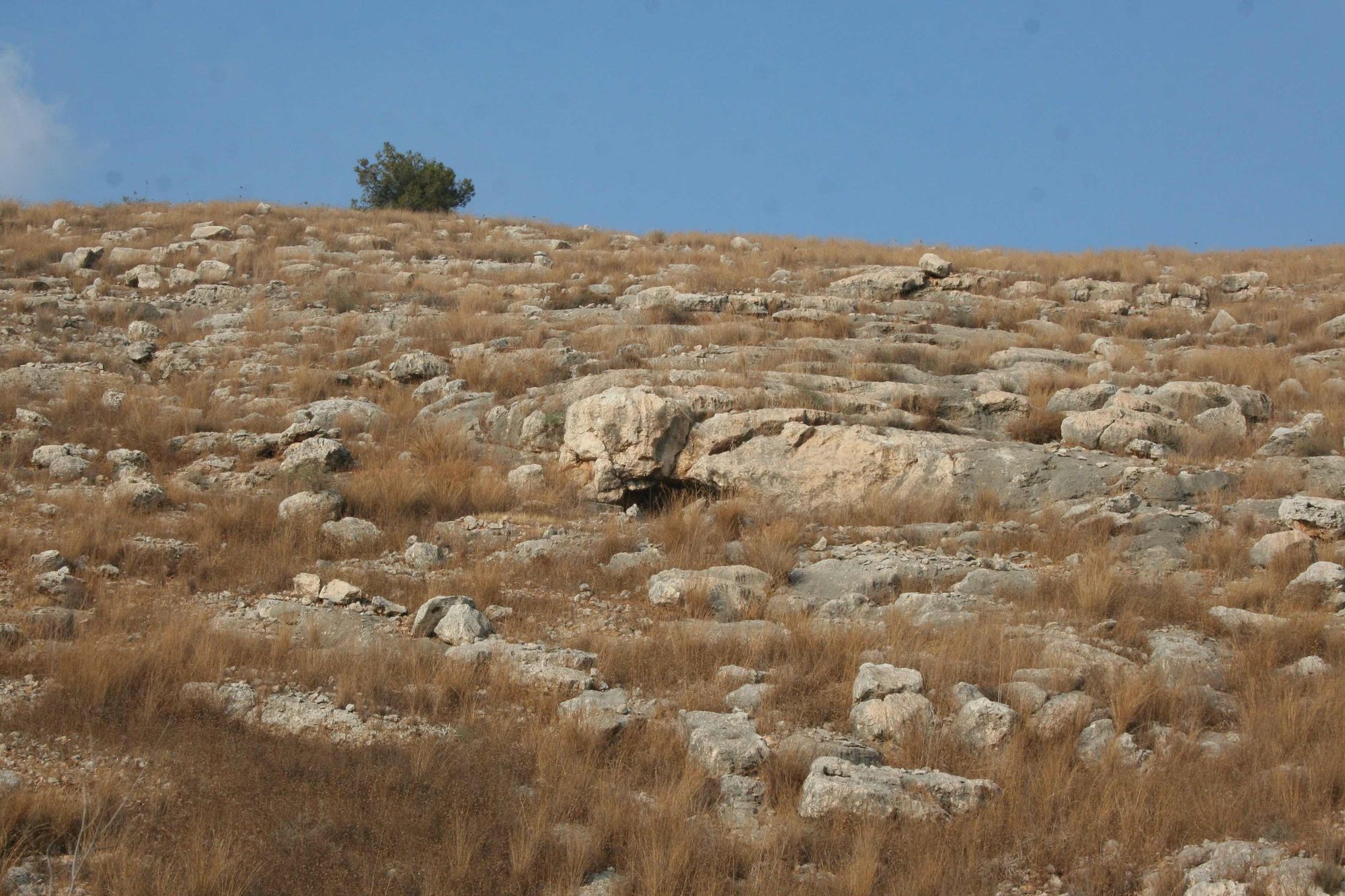
East Nahal Beit Arif Cave is a small cave that developed by phreatic dissolution processes in Turonian-age limestone (Bina Fm.). The cave has a conspicuous entrance opening at the top of the slope of the eastern bank of Nahal Beit Arif, near the stream's exit to the coastal plain. The entrance measures 3.5X2 m, is arched, and abundant light penetrates through it into the cave space. In the outer vicinity of the entrance there is a stone collapse, perhaps a sign that the original shape of the entrance changed in a collapse.
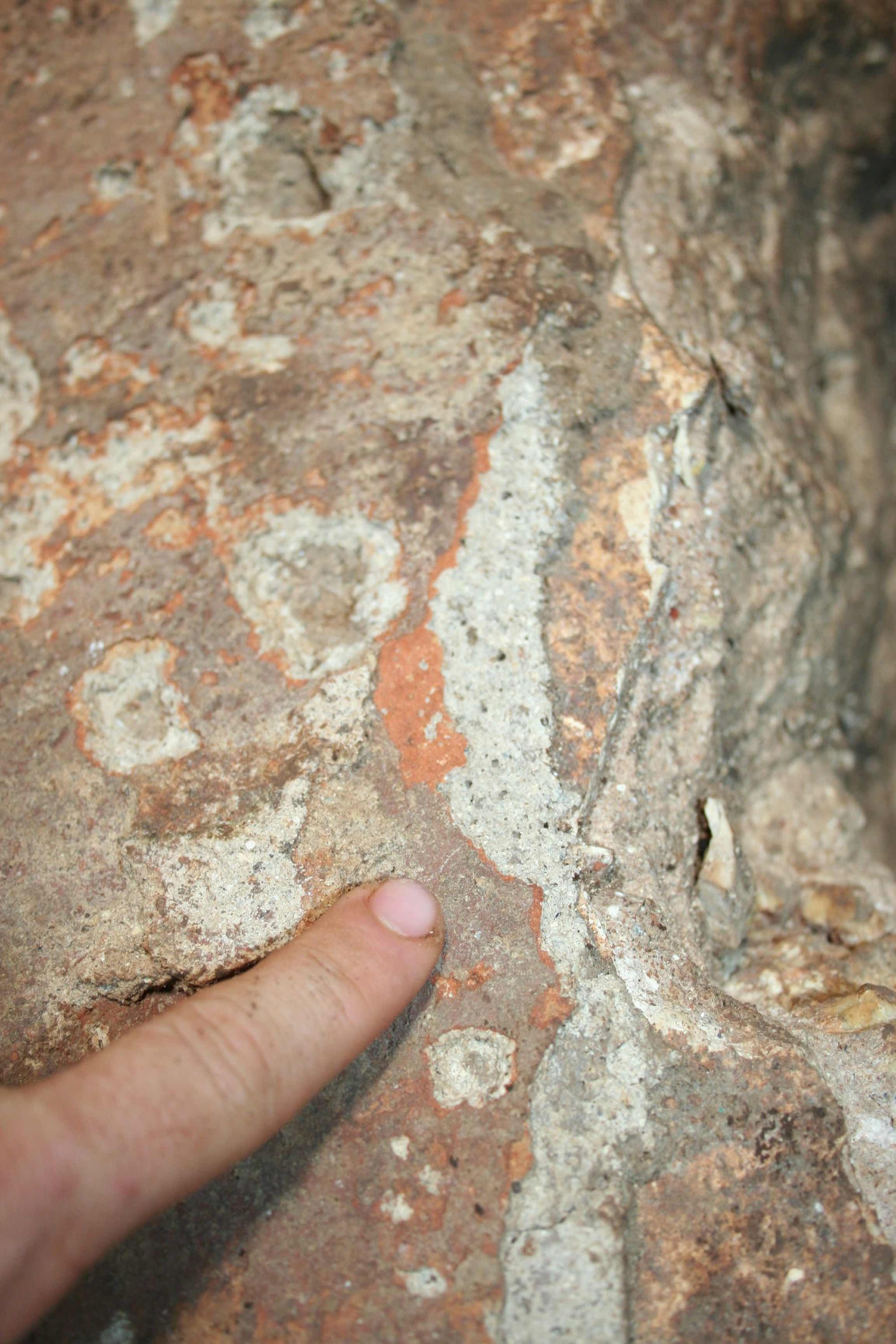
The cave entrance leads to a space elongated on an east-west axis, measuring 6X4 m and about 2 m high. The space has a wide arched profile, its floor is horizontal and covered with compacted soil on which cattle dung and abundant debris are scattered. The space ceiling slopes down from the entrance to the center of the room, from where it rises back to its original height. The space walls are vertical and covered with 3 layers of hydraulic plaster. In various places in the space walls, a wall or fill of fieldstones was built, which were also plastered. The fieldstone fill can be seen in a horizontal crack to the south and near the entrance, and also in a rounded opening on the eastern side of the entrance space, about 0.5 m above the space floor. This opening leads to two small rooms (one measures about 3X3 m and their average height is about 1 m) standing one east of the other on a slope rising eastward parallel to the dip of the rock layers at this point. The floor of these spaces is bedrock covered, in some parts, with a layer of dark soil.
In the northeast corner of the entrance space, at the level of the space floor, there is a narrow passage that continues east.
* Droppings and quills indicating porcupine activity were found in the cave. These porcupines are probably the dispersers of the cave tick. The tick is common in all cave spaces.
Access:
The cave vicinity (about 100 m from its entrance) can be reached through the Shoham industrial zone.
* No bats were observed in the cave.
Written by: Boaz Langford