Zanav Cave - Nahal Kana
- Grid ref.
- 164100/173192
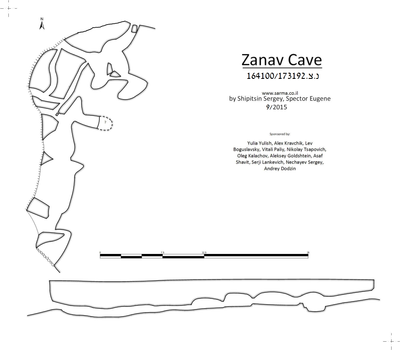 Cave mapView the map (PDF)
General:
Zanav Cave is a medium-sized cave consisting of a network of passages that developed in dolomite rock of the Vradim Formation. The cave spaces are spread on a single level and extend along a local cliff in the upper part of the southern bank of Nahal Kana.
The cave has a number of openings that were exposed due to the incision of the stream and the "cutting" of the passage network. The disintegration of the cliff and the development of tension cracks in its rear part cause the continued "cutting" of the cave and the weathering of the space.
The cave was discovered by Asaf Shavit and Sergey Shpitsin in the summer of 2015 during their comprehensive work locating caves in the Nahal Kana basin. Mapping of the cave was carried out under the leadership of Sergey Shpitsin during the autumn of that same year.
Description of the space:
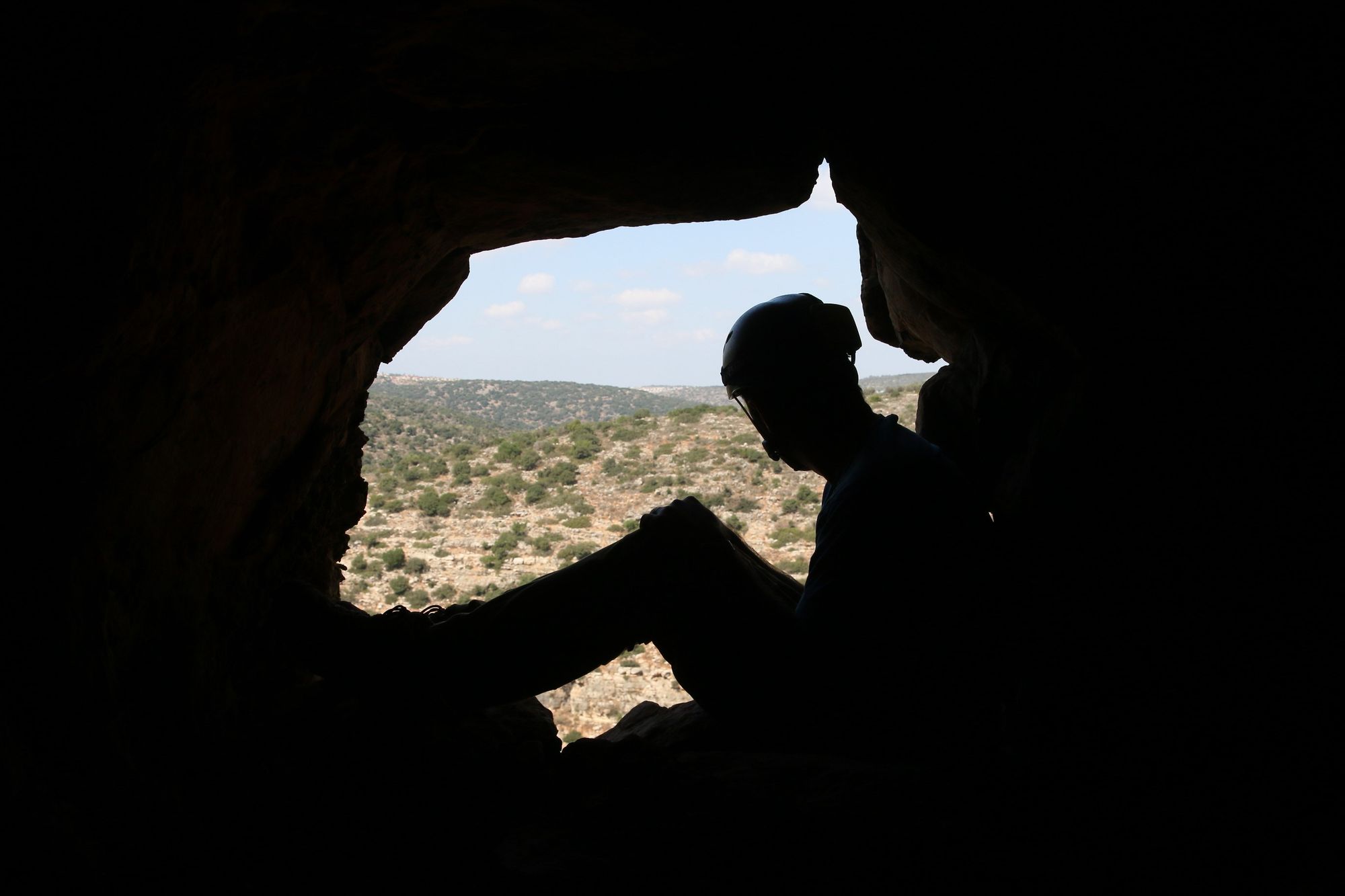
The cave has eight openings gaping like windows across a local cliff line on the southern bank of Nahal Kana, opposite the prominent opening of Maghar Kahan. The cave is easy to locate because of a high-voltage line passing above the cliff.
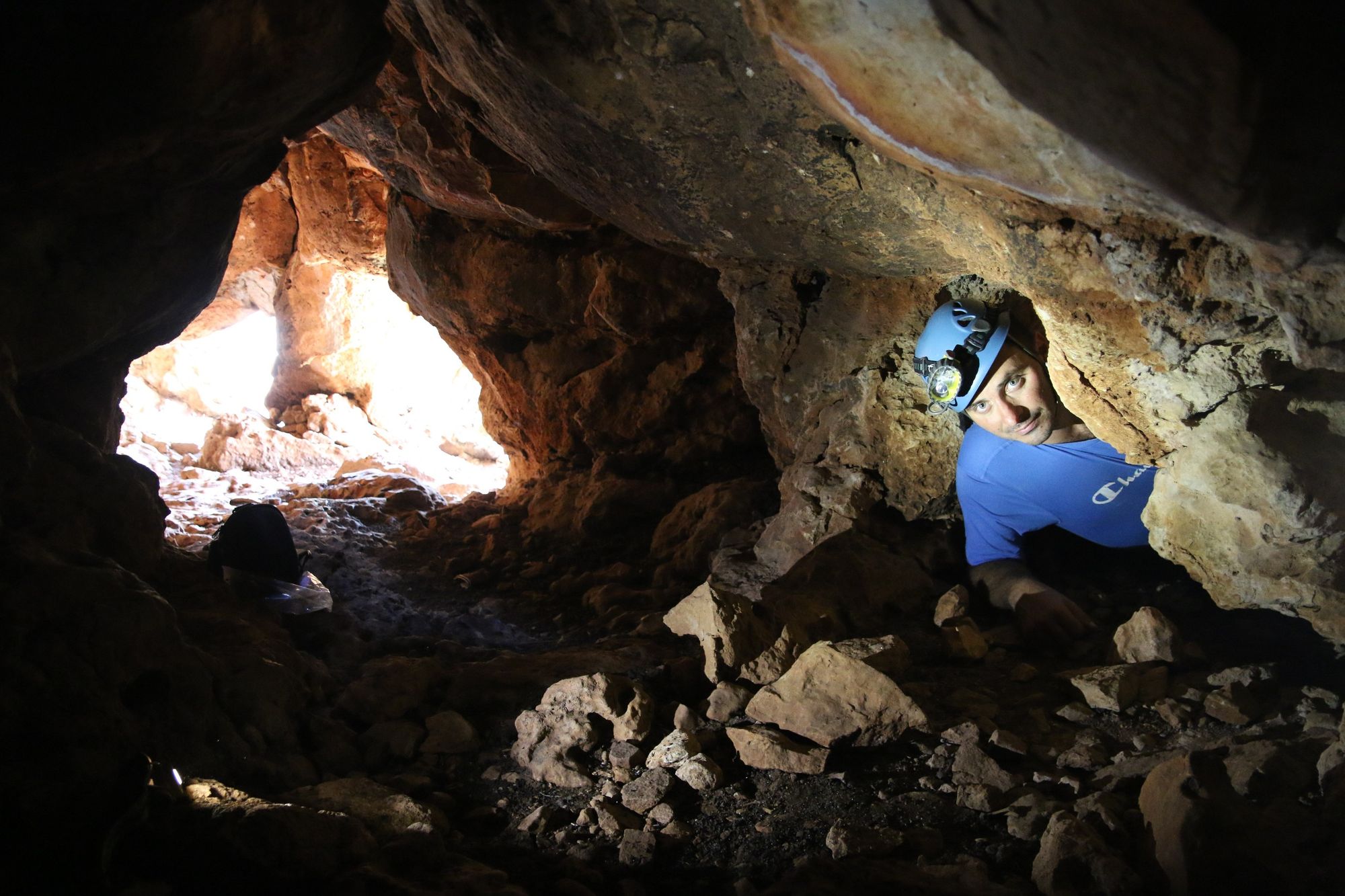
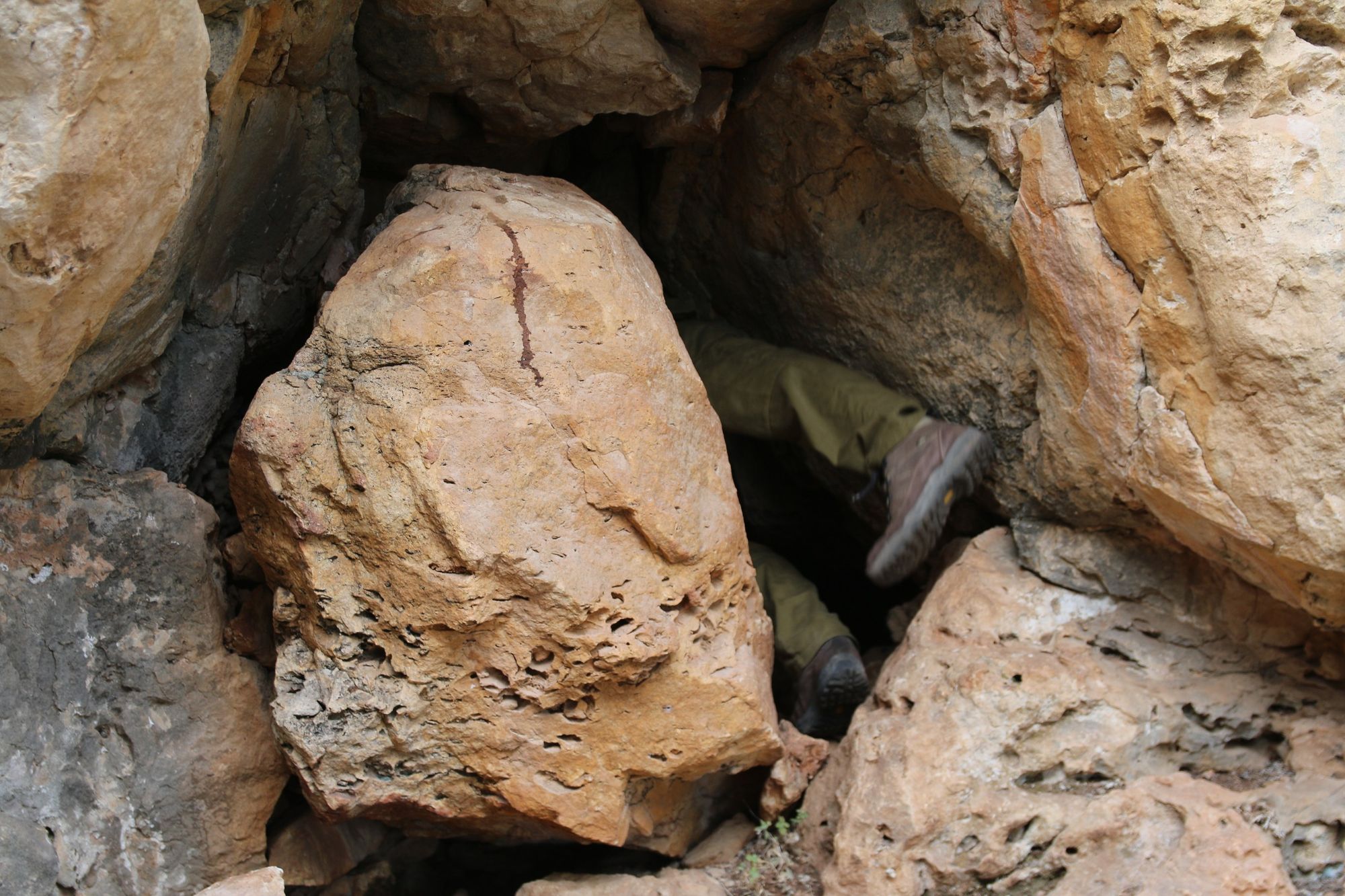
The northern opening of the cave is a convenient entry point, despite being partly blocked by a large rock. The opening lies in the shade of the cliff, next to a rock arch that was certainly once part of the cave space. The opening leads to a two-dimensional network of passages extending along prominent cracks. Some of the cracks are almost open, most likely due to the stress regime near the cliff, in which the lowest principal stress is in the direction perpendicular to the cliff face.
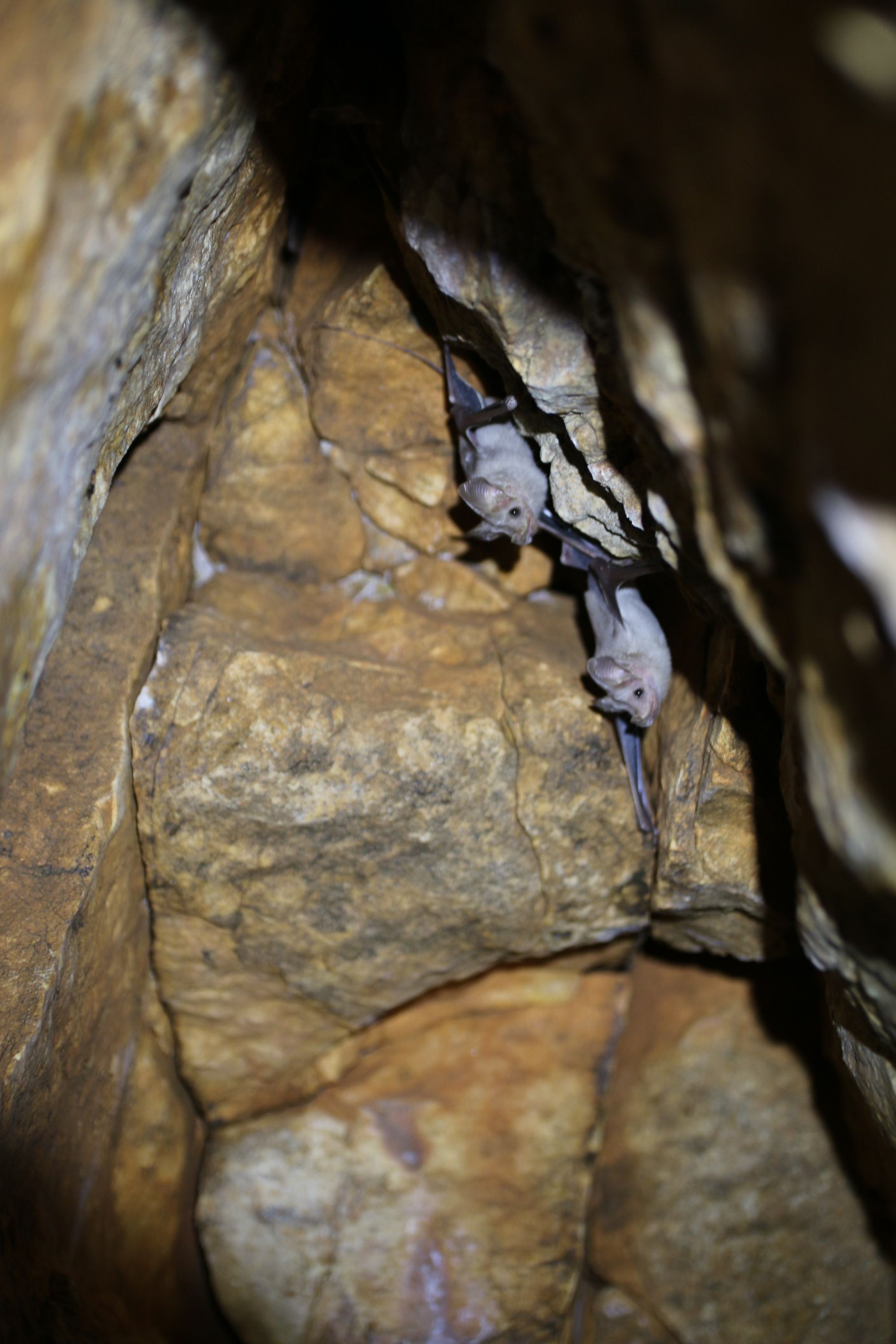
The floor of the passages is covered by a thin cover of dry, dark sediment mixed with guano. A population of about 20 insectivorous bats of the lesser mouse-tailed bat species was observed in this part of the cave, especially at the tops of the cracks. A single individual of an insectivorous bat of another species (a horseshoe bat or lesser horseshoe bat) was observed on the southern side of the cave. The southern area is characterized by wide, semi-lit spaces that look like open balconies facing the cliff face. Shepherds make use of the comfortable balconies as a preferred resting place.
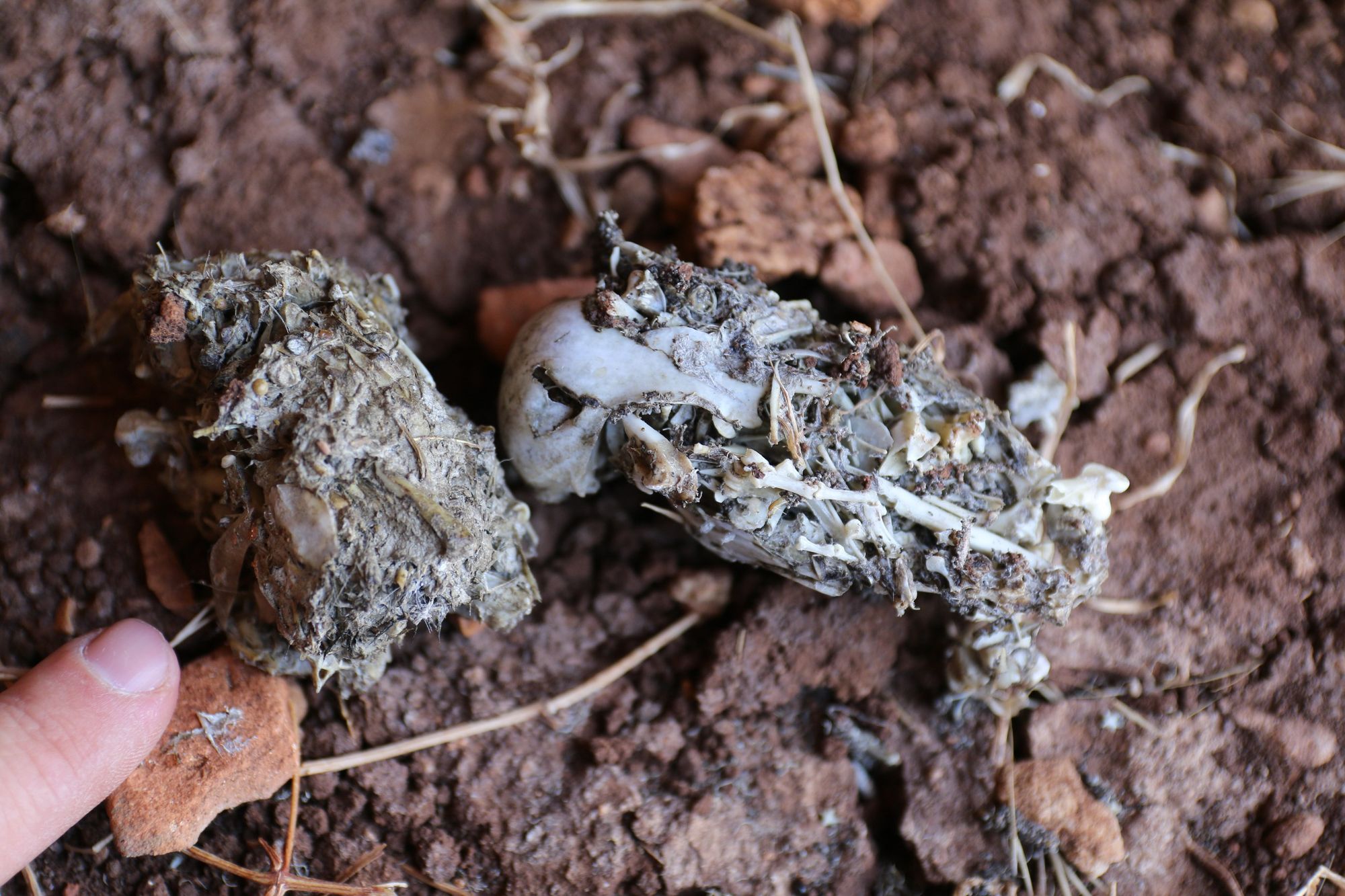
Worn potsherds are scattered in all parts of the space, most of them body sherds, but a single rim was also seen. This adds to another archaeological find, cupmarks cut into the rock surface at the top of the cliff above the cave. In addition to potsherds, many animal bones are also scattered in the space, among them: goat teeth, the skeleton of a small mammal, and teeth of a small carnivore (possibly a fox). Rock hyrax droppings were also seen. In the southern part of the cave large pellets of an eagle owl were found, and beside them white droppings on a rock ledge. In the various parts of the cave arthropods were found, including: many spiders (mainly cellar spiders), tiny centipedes, and cattle ticks. Invertebrates found in the cave include shells of large snails, probably of the genus Kadmum.
Written by: Boaz Langford and Asaf Shavit
Region: Western Samaria (Nahal Kana)
Elevation: 330+ m