Wadi Kelt Cave
- Grid ref.
- 1812/1377
- Location
- Wadi Kelt
- Elevation
- 189 m above sea level
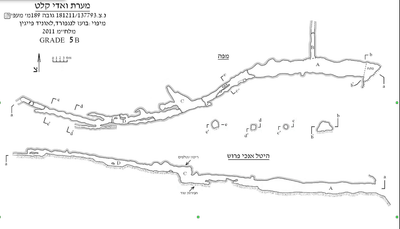 Cave mapView the map (PDF)
Description of the Cave:
General:
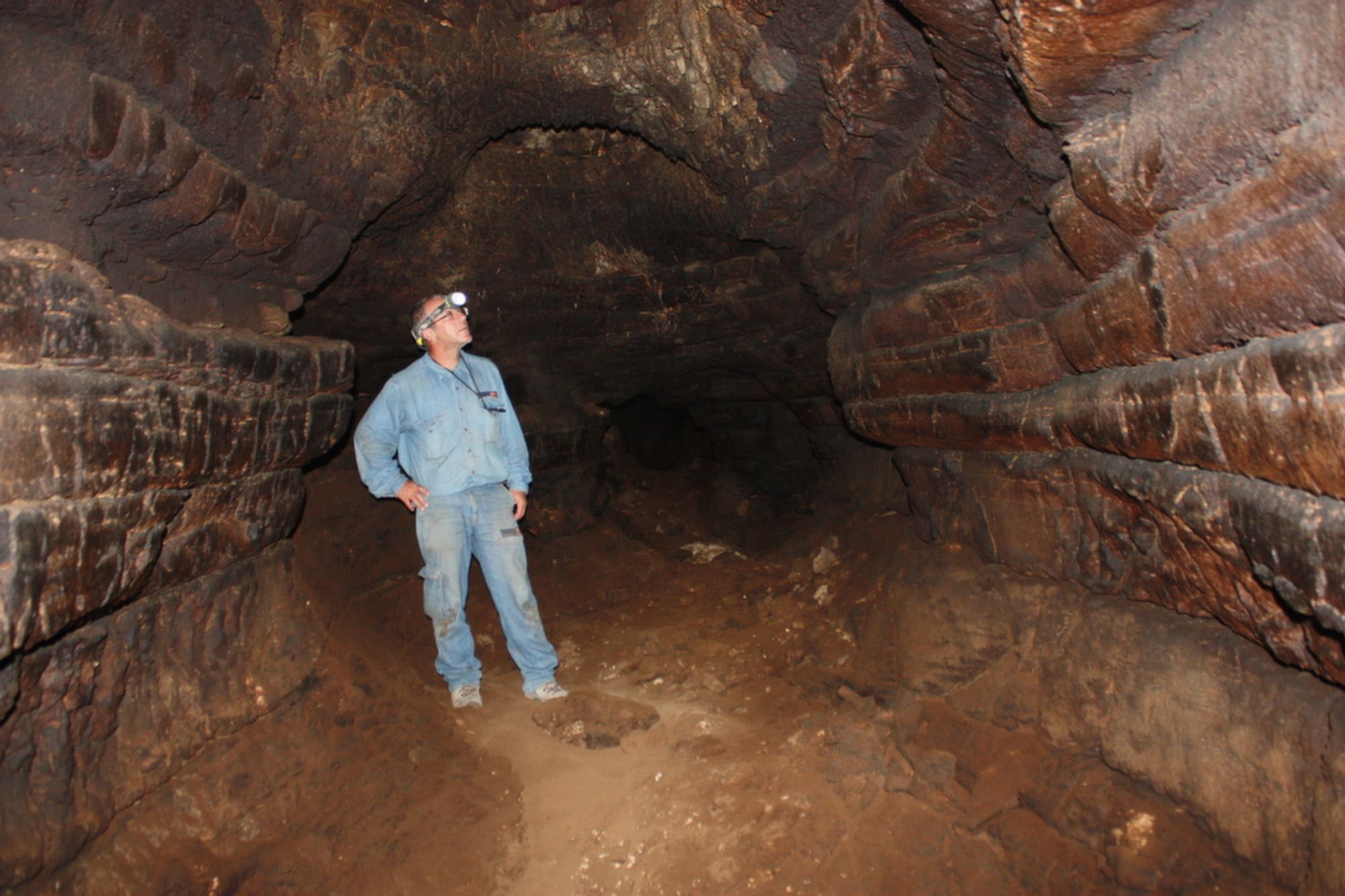
Wadi Kelt Cave is a large cave (total length 146 m) that developed by phreatic dissolution processes in Turonian limestone (Bina Formation). The cave consists mainly of an elongated passage extending at a moderate gradient (average slope about º10) along an east-west axis, in accordance with the rock beds in which the cave developed, which dip at º5 toward azimuth 295.
The cave was first reported by Prof. Amos Frumkin, who visited the site in 1975. During a survey of the wadi in October 2011 the cave was located again.
The Entrance and Its Surroundings:
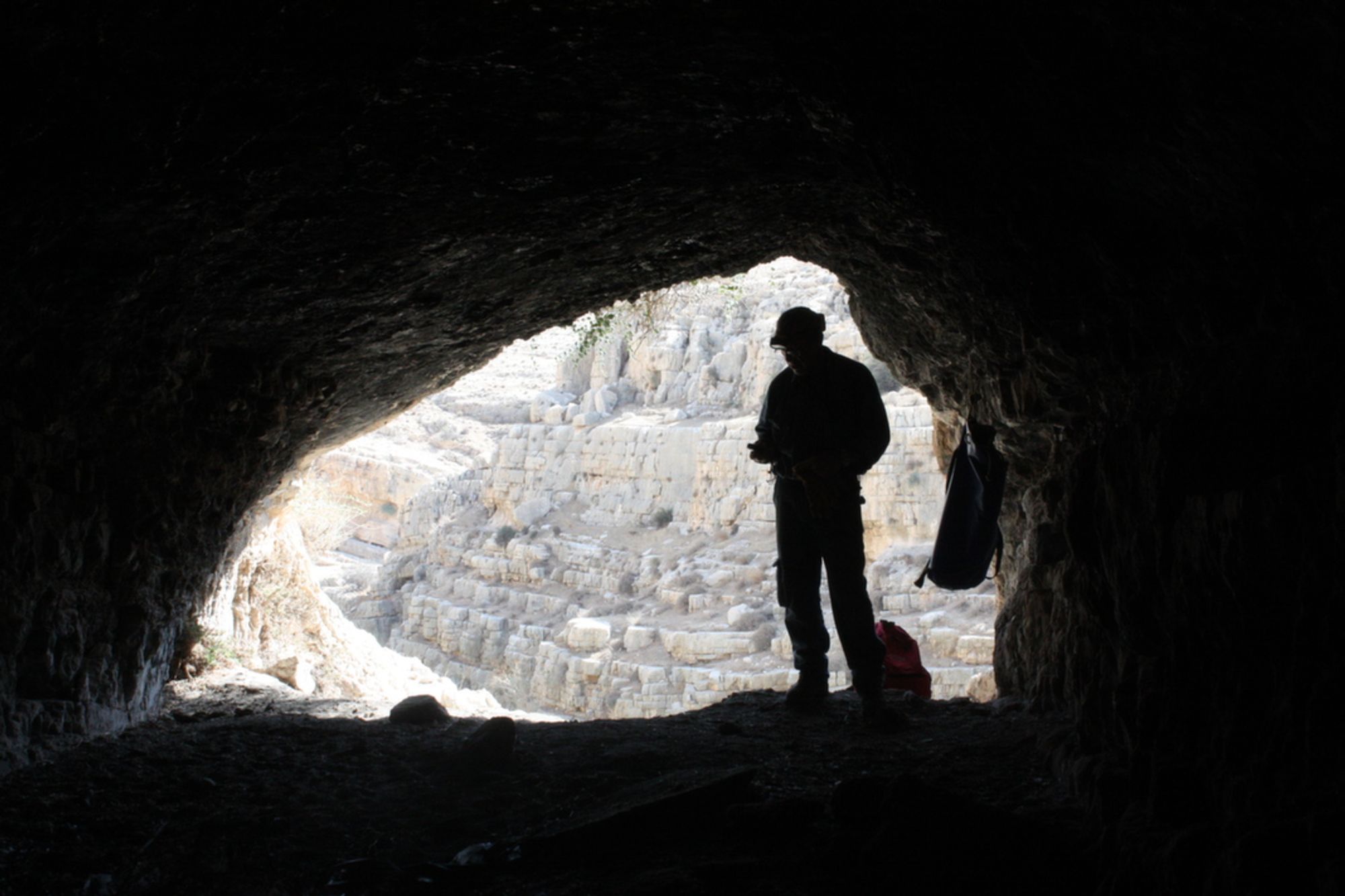
The cave has a prominent arched entrance (measuring 4X2.3 m) opening at the height of the northern bank of Wadi Kelt, about 25 m above the streambed. In front of the entrance there is a small terrace bounded between the cave entrance and the bank of the wadi, made up of natural steps descending to the streambed. Along these steps, below the cave entrance, three more openings open, leading to small spaces. Near the uppermost of the three, on a small rock surface about 5 m below the cave entrance, a large cupmark is cut, now filled with soil.
The Cave Space:
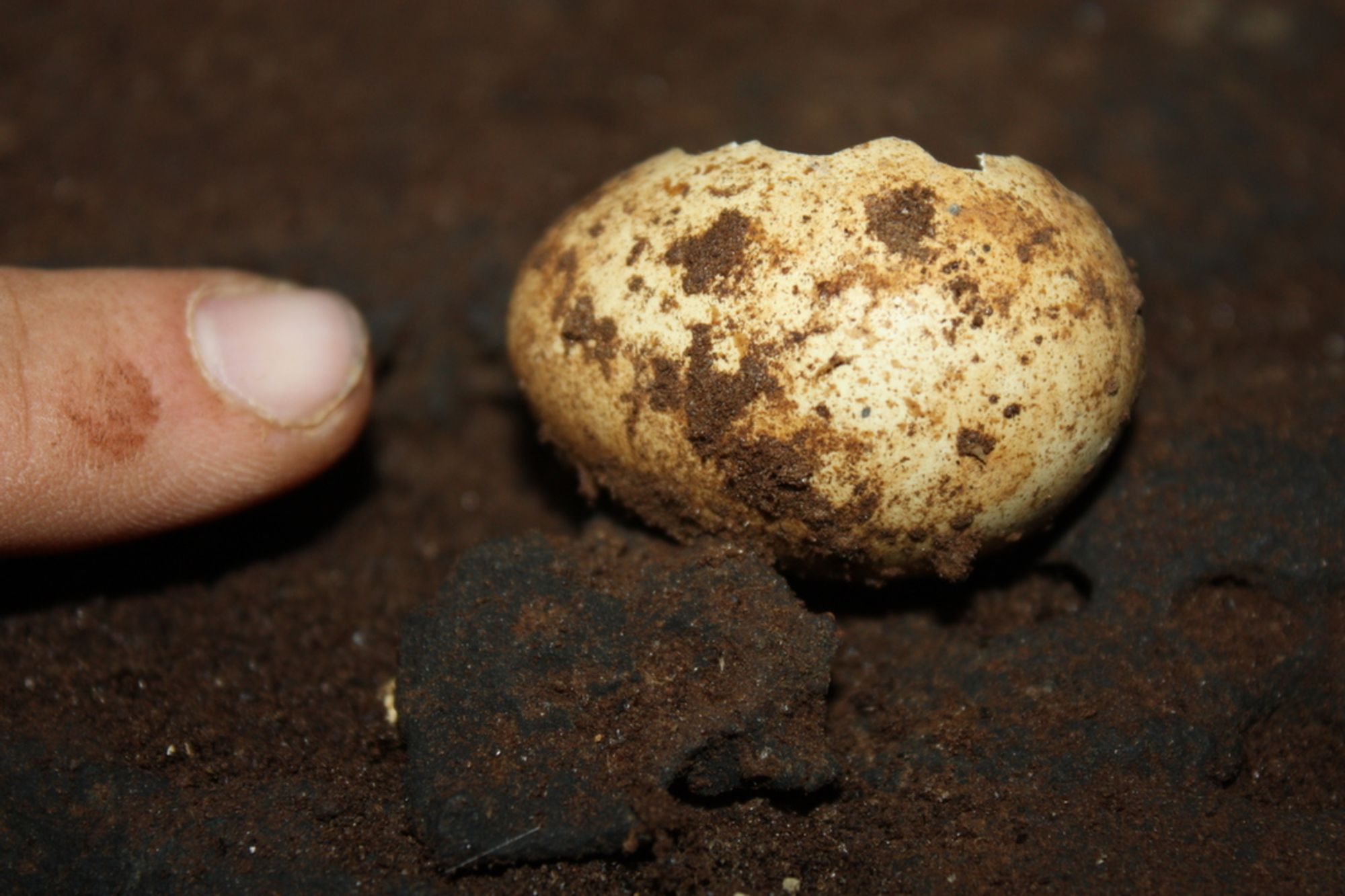
The cave entrance leads to a wide passage (A) with an arched cross-section and a horizontal floor covered with a compacted layer of goat droppings, loose soil and a few stones. The walls and ceiling of the cave are covered with soot and contain wide, shallow rounded depressions; in some of them tiny, heavily weathered cave deposits can be seen. On the northern side of the cave space, about 15 m west of the entrance, a low passage (B) extends north, blocked after about 6 m by a high step, above which the passage continues, narrow for passage. Near the entrance of passage B, in a semi-lit area, several mud nests of a mud-dauber wasp and a single mud nest of a barn swallow are attached to the cave walls. Throughout the entrance area, but also in the innermost parts of the cave, there are eggs of a rock dove that apparently nested in the cave in the past.
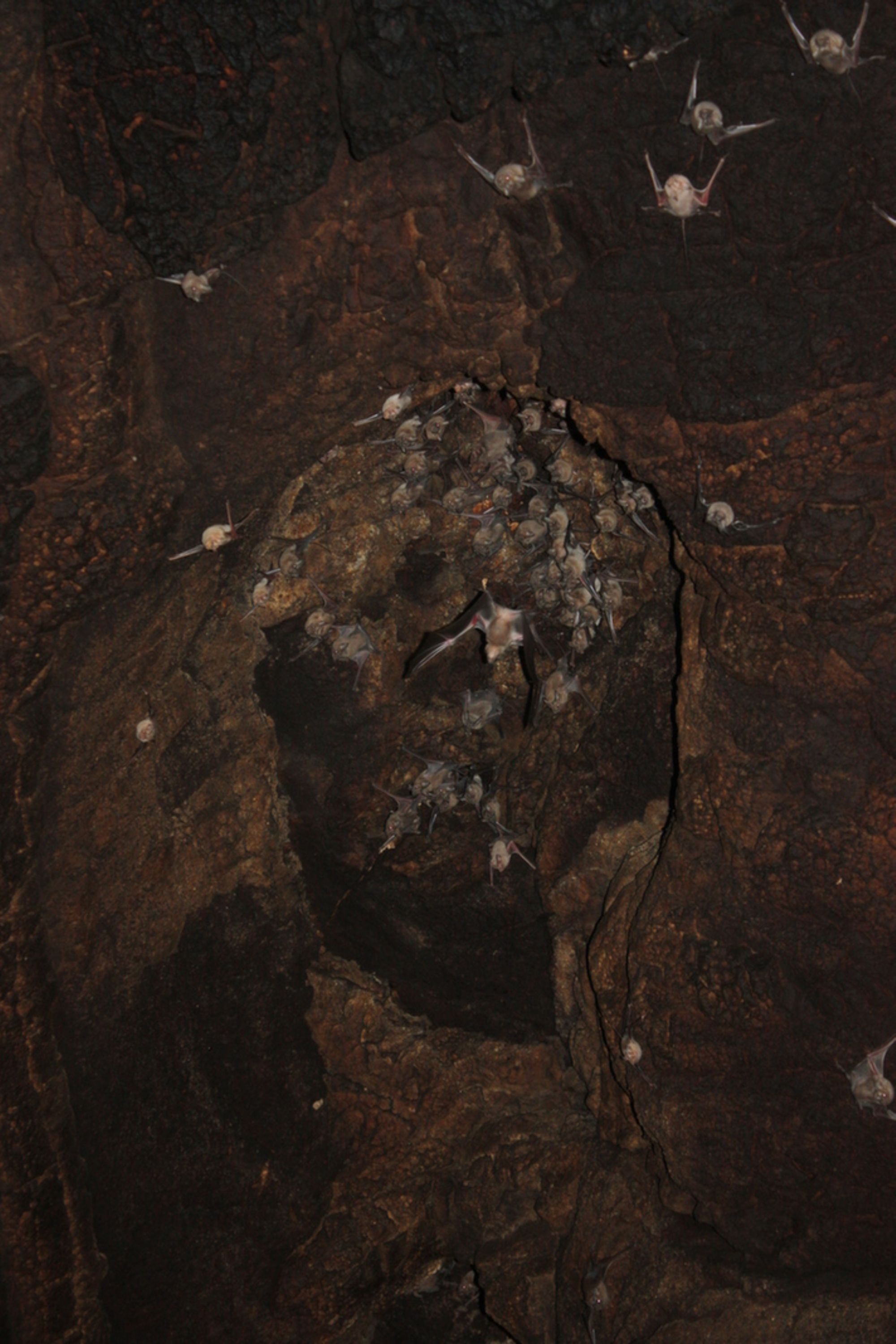
About 40 m west of the entrance, passage A splits into a pair of parallel passages that rejoin after about 5 m. The northern passage is blocked by stones cemented in dark soil, so passage through the cave is possible only via the southern passage. After the two passages join, the main passage widens slightly and descends in a low step, beneath which a narrow, rounded passage continues. Additional passages appear on the sides of the main passage and end after a few meters, either naturally or by blockage of stones and soil. About 3 m after the step the main passage connects to a large room (C), measuring 6X4 m and 4.5 m high. In the ceiling of the room wide dissolution domes open, in which hundreds of insectivorous bats of the bent-winged bat type crowd together (in October 2011 about 200 individuals were observed in the cave). The floor of the room is horizontal and covered with many stones, among which many ceramic fragments are scattered (apparently from the Bronze Age - identified from a photograph by Uri Davidovich). It seems that looting digs were carried out at the site, which penetrated also into the short passages branching off from the room space and the main passage. On the western side of the room, about 2 m above its floor, the cave passage continues west, growing narrower (D). The floor of the passage is horizontal and covered with loose soil mixed with a few potsherds and bones. The profile of the passage is rounded and shallow dissolution domes open in its ceiling. Narrow, short passages extend for a short distance parallel to the main passage, which ends after about 50 m when it becomes too narrow to pass.
Notes:
- The cave entrance can be reached by a steep climb from the streambed.
- Cave ticks are present in the cave.
Written by: Boaz Langford