Peretz Cave, Amiaz Plain
- Grid ref.
- 185193/058026
- Location
- Amiaz Plain
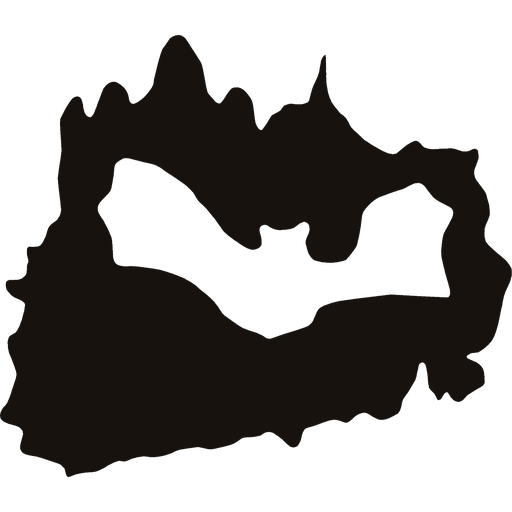
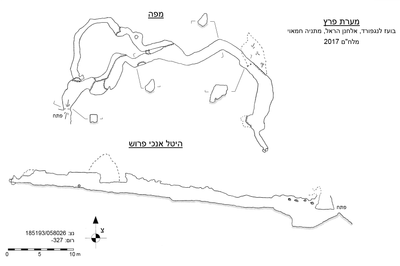 Cave mapView the map (PDF)
Description of the Cave:
Peretz Cave is a medium-sized cave (length 79.55 m) that developed in marl of the Lashon Formation. The cave consists of a pair of flow channels, one active and one abandoned, descending in a general direction from east to west.
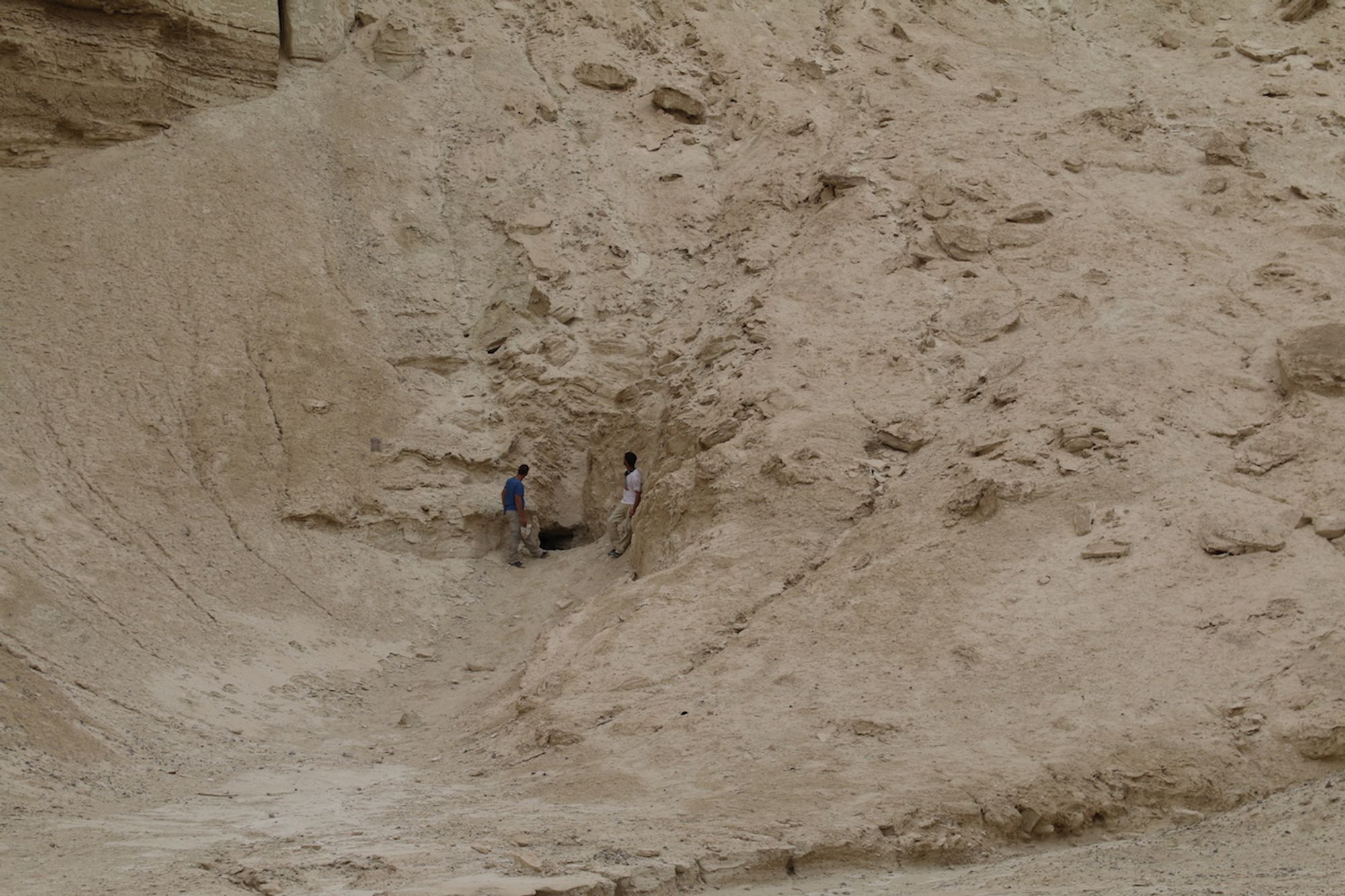
The cave entrance is at the outlet (bottom) of the active channel, at the top of a local pile of spoil blocking the channel outlet. At the surface the entrance opens near the base of a slope on the northern bank of a wide channel that drains into Nahal Peratzim. The entrance measures 1X1 m and has a square outline. The entrance leads to a rounded, semi-lit room to which the two channels of the cave connect. The main (active) channel connects to the eastern side of the room, into which it descends in a waterfall 1.5 m high.
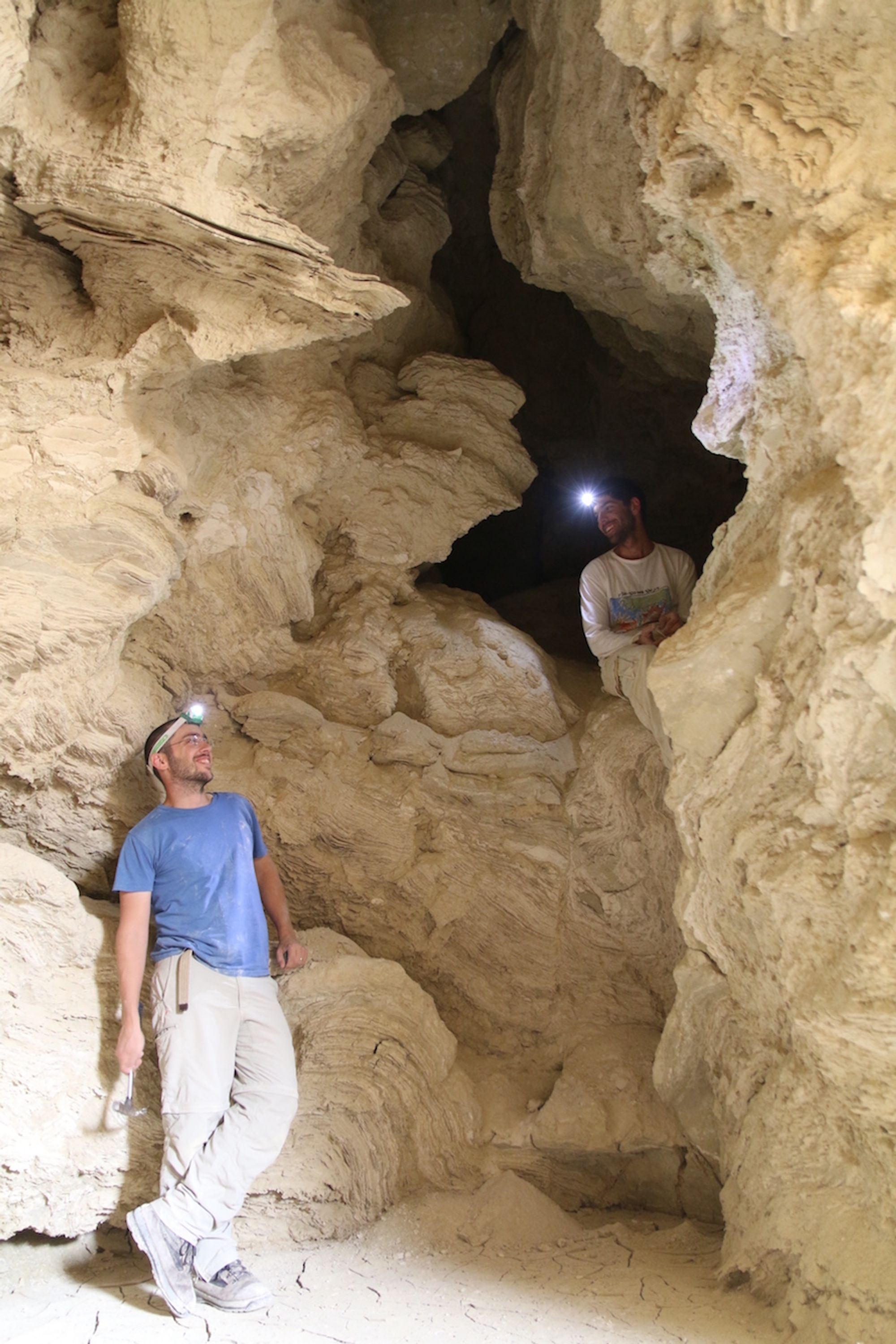
In the body of the waterfall folds characteristic of the Lashon Formation can be seen. These are crossed by a thin clastic dike passing at the height of the middle of the waterfall. The junction of the abandoned channel is less prominent than that of the active one and looks like an elongated window at the top of the northwestern wall of the room. The floor of the room is horizontal and covered with mud cracks. These apparently formed because of the closed outlet of the active channel and the settling of clay from standing water at the base of the channel.
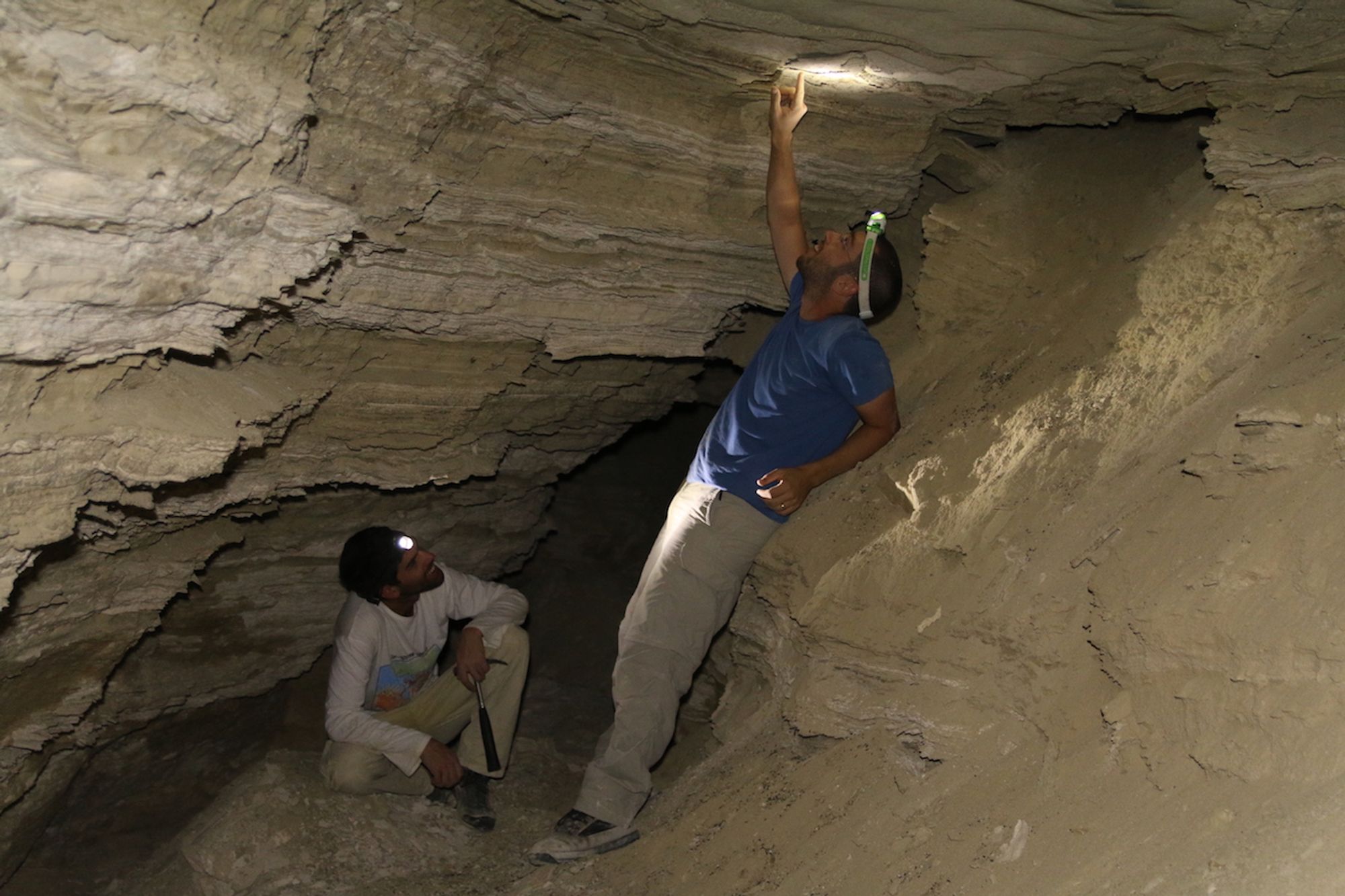
From the head of the waterfall of the active channel a wide, horizontal passage extends, winding in meanders in a general direction to the east. After about 15 m the passage of the abandoned channel joins at the height of the northern wall, and from this point the abandoned channel descends in a narrow passage (usually about 0.5X0.5 m) in which a low waterfall appears. From the point where the channels join, the passage of the active channel continues east and after about 10 m turns south. A few meters after the turn south the passage crosses a collapse dome formed at the height of the northeastern wall of the passage. A population of several dozen bats (small bent-winged bats) is concentrated at the height of the dome, where body-fat stains appear. From the dome to the end of the cave the passage continues south until it is blocked by small collapse rocks. In the ceiling at the end of the cave there are fluvial deposits of coarse conglomerate containing mainly flint pebbles, apparently reworking of pebbles from the Lashon Formation. Among the pebbles of the conglomerate a fruit pit or nutshell was found.
Written by: Boaz Langford
Elevation: -327