Karmiel Karst Fissure
- Location
- Karmiel
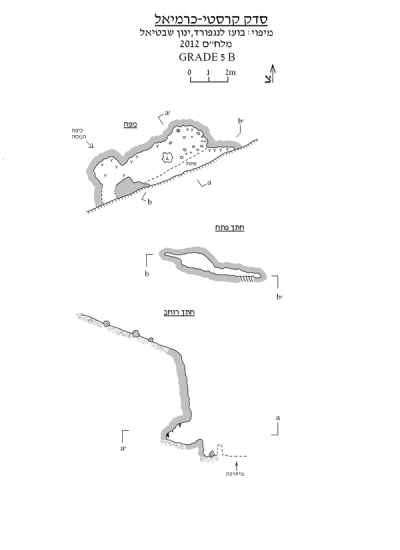 Cave mapView the map (PDF)
Description of the cave:
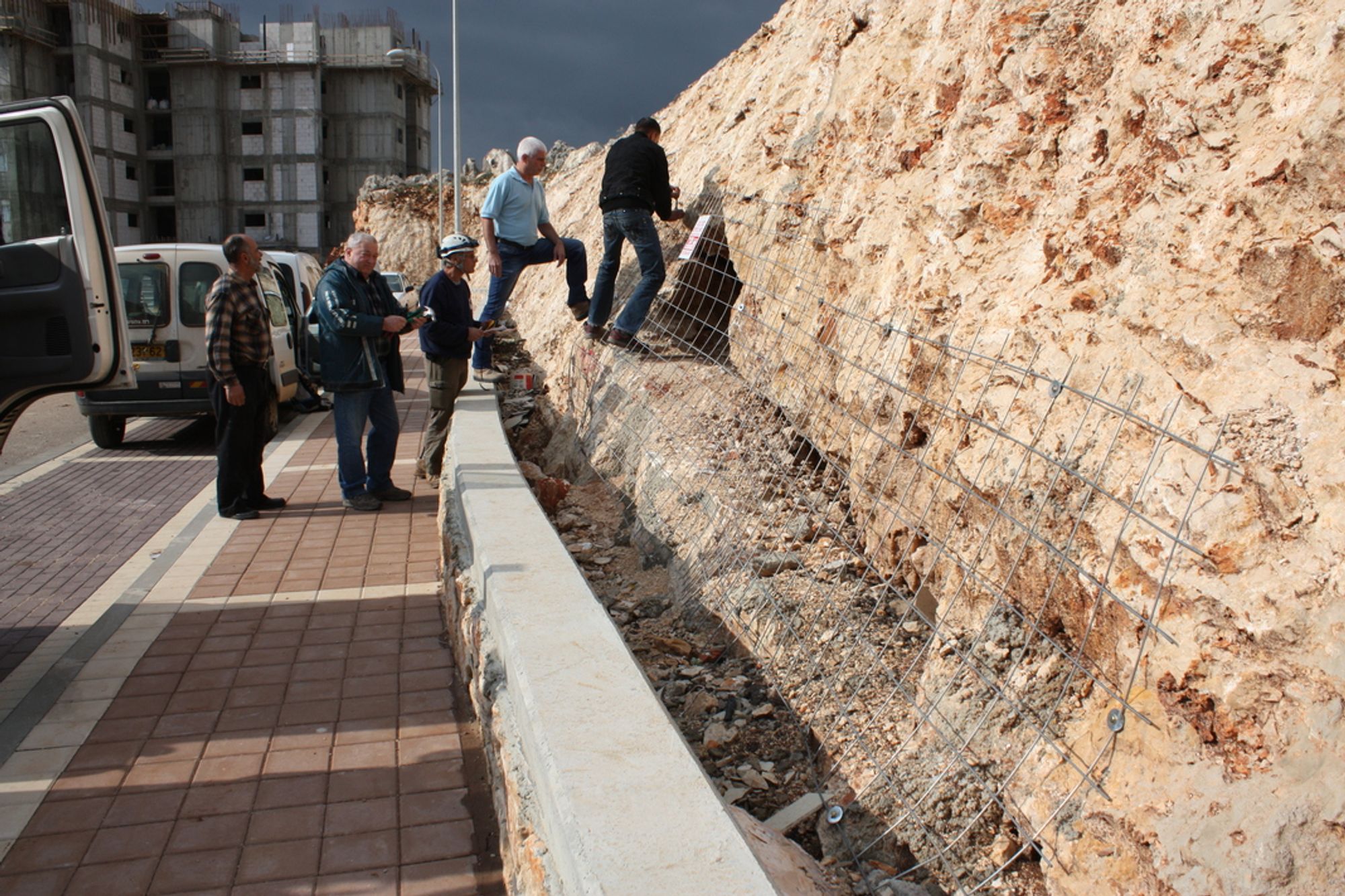
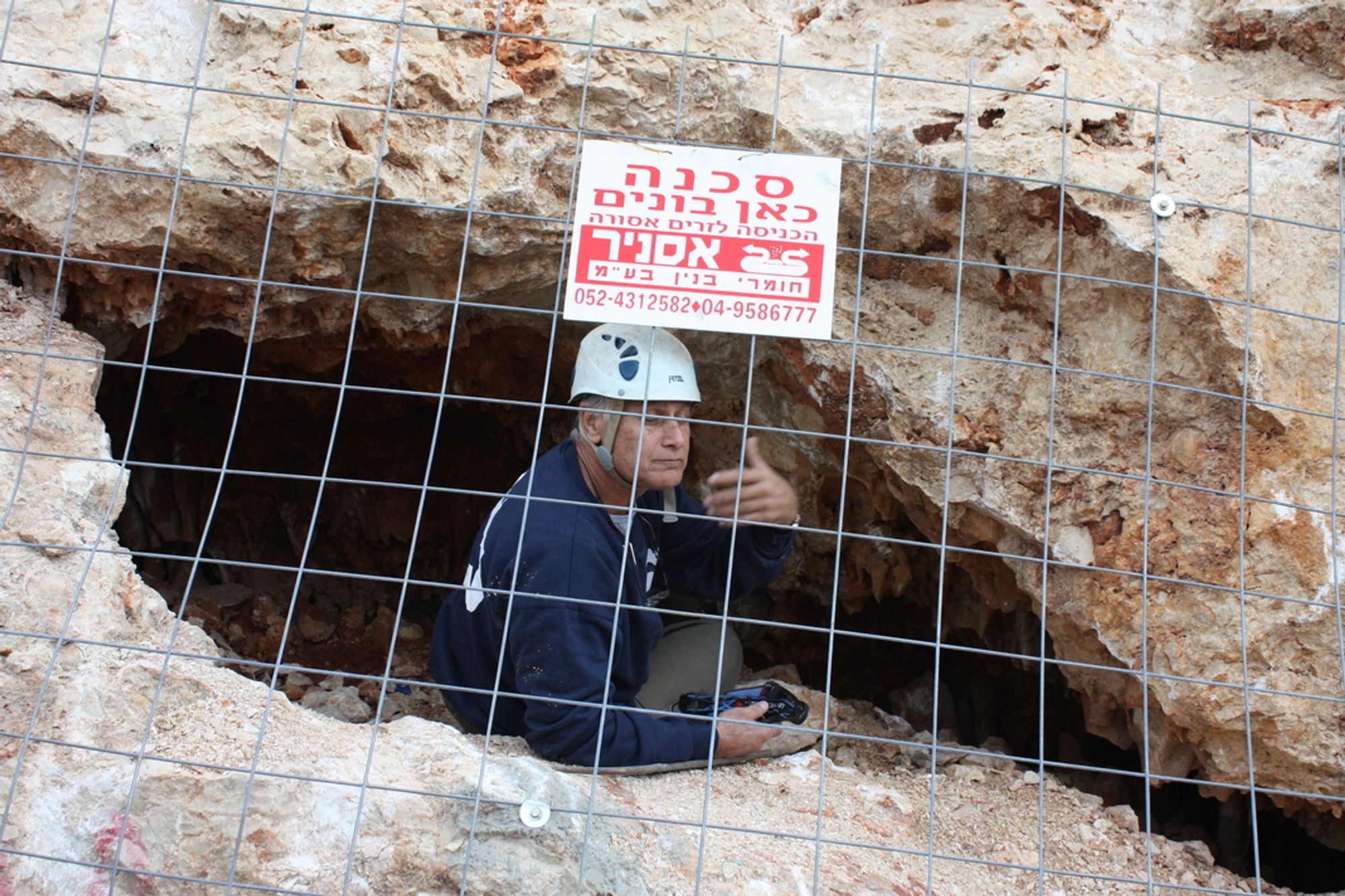
On the south side of the Ramat Alon neighborhood of the city of Karmiel, in a rock-cut step on Harel Brigade Street, there is an elongated karst fissure that was discovered during site preparation for construction.
The fissure was formed by karst dissolution processes that acted in limestone of Turonian age (Bina Formation, upper member).
Judging by the dissolution domes opening in the fissure ceiling, it can be inferred that the space formed in the phreatic zone as a hypogenic space (that is, the fissure space formed within the rock body below the water table).
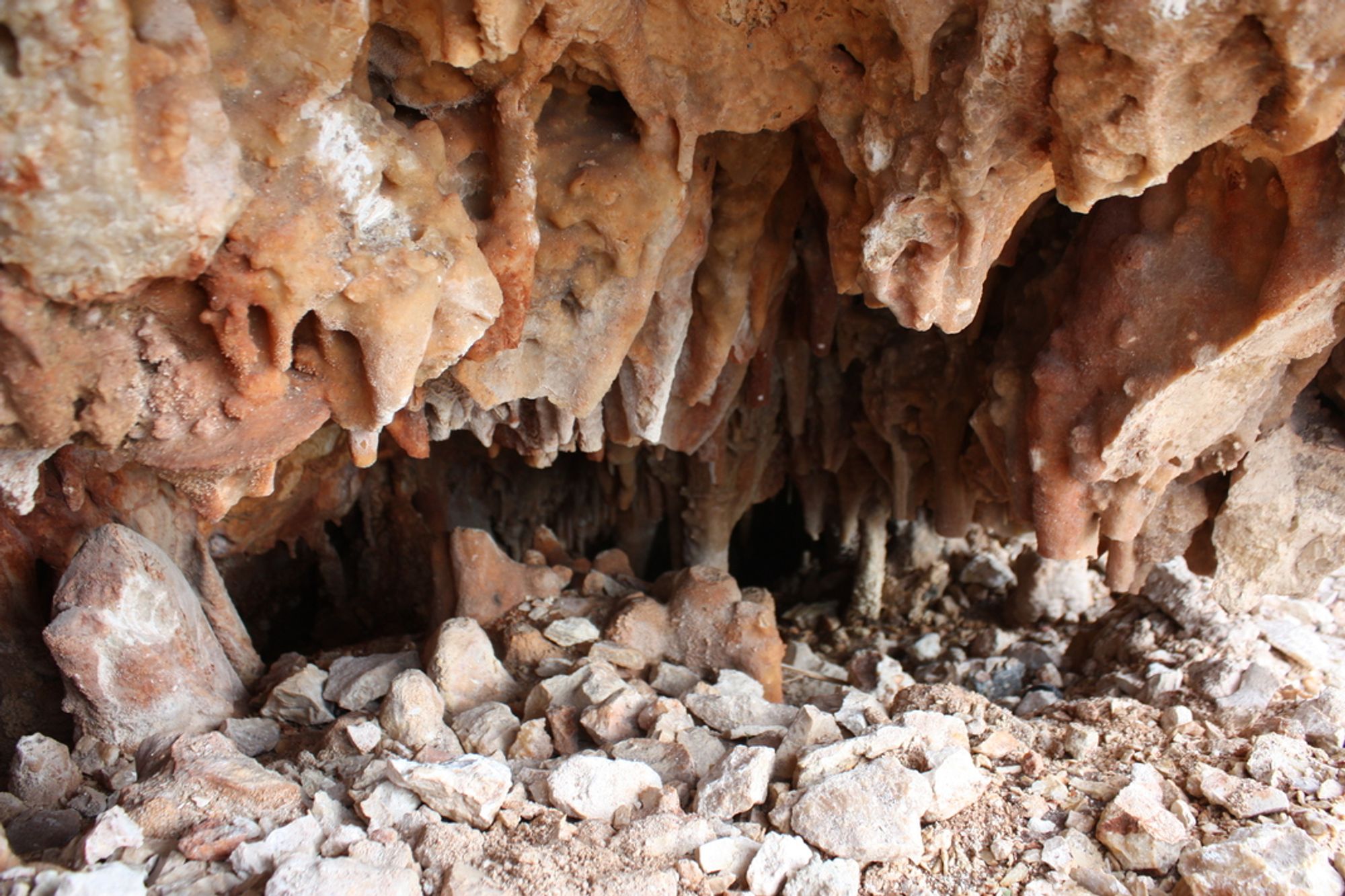
After the water table dropped and the space passed into the aerated (vadose) zone, the deposition of the many speleothems (cave deposits) found in it began. The types of cave deposits observed in the space are: stalactites, stalagmites, pool deposits, flowstone, cave corals, elephant ears, soda straws and columns. Cave deposits appear throughout the fissure space but mainly on its east side, where the space is blocked by a "forest" of many columns.
The cave deposits are not large in size compared with other sites in the region, a result of the limited dimensions of the space in which they developed. In the fissure space, mainly on its west side, there is a deposit of dark terra rossa soil that characterizes the surface around the fissure.
It is possible that soil penetrated into the fissure space through cracks that connected the fissure space with the adjacent surface.
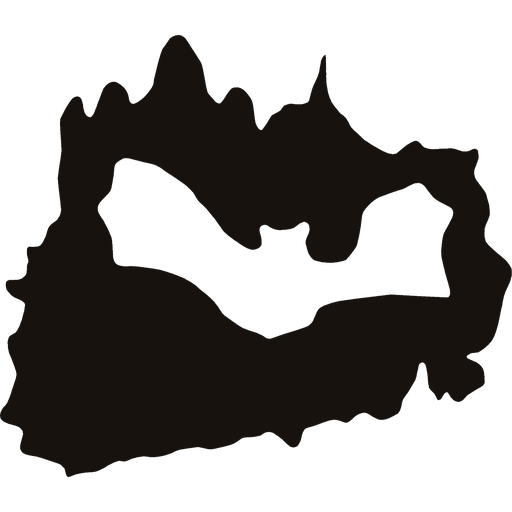
The fissure is built as an elongated space (measuring about 7X2.5 m and with a maximum height of 0.9 m) extending mainly on a northeast - southwest axis, inclined along this axis at a slope of about 8 degrees.
The center of the fissure looks like a low horizontal space in which a few speleothems (elephant ears) descend, covered with dark terra rossa soil. The east side of the fissure looks like a low space blocked, almost completely, by many cave deposits. On the inner side (the easternmost) of the east of the fissure there is a small horizontal section covered with horizontal pool deposits and flowstone (S.F).
The manner in which the cave deposits were deposited shows that this point is the end of this area of the space. The west of the fissure consists of a rounded space separated from the center of the fissure by a narrowing of the space walls.
This area is the darkest in the fissure and has more stable weather conditions in terms of humidity and temperature. The floor of this area is covered with dark terra rossa soil, and its ceiling is bare with a prominent conical dissolution dome. On the south side of this area there is a tiny opening through which little light enters the space.
The boundaries of the space in this area were examined thoroughly and it appears that there are no continuations leading to additional sectors. The stability of the air and the structure of the cave also indicate that this is the end of the space in this area.
Written by: Boaz Langford