Hadar Betar Cave, Jerusalem Mountains
- Location
- Hadar Betar
- Elevation
- 700 m above sea level
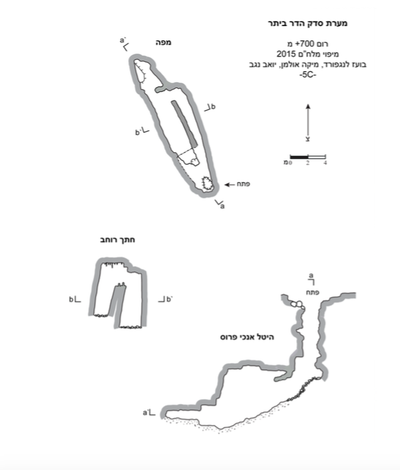 Cave mapView the map (PDF)
Description of the Cave:
Hadar Betar Cave is a small cave (total length 36 m and maximum depth 15.5 m) consisting mainly of a pair of passages and a vertical shaft. The information about the cave was received from Roi Cohen, a shepherd from Hadar Betar who discovered the cave in an area designated for construction and raised the alarm. On Friday 29.5.15, the cave was surveyed, documented, and mapped by the Cave Research Center team.
Geology:
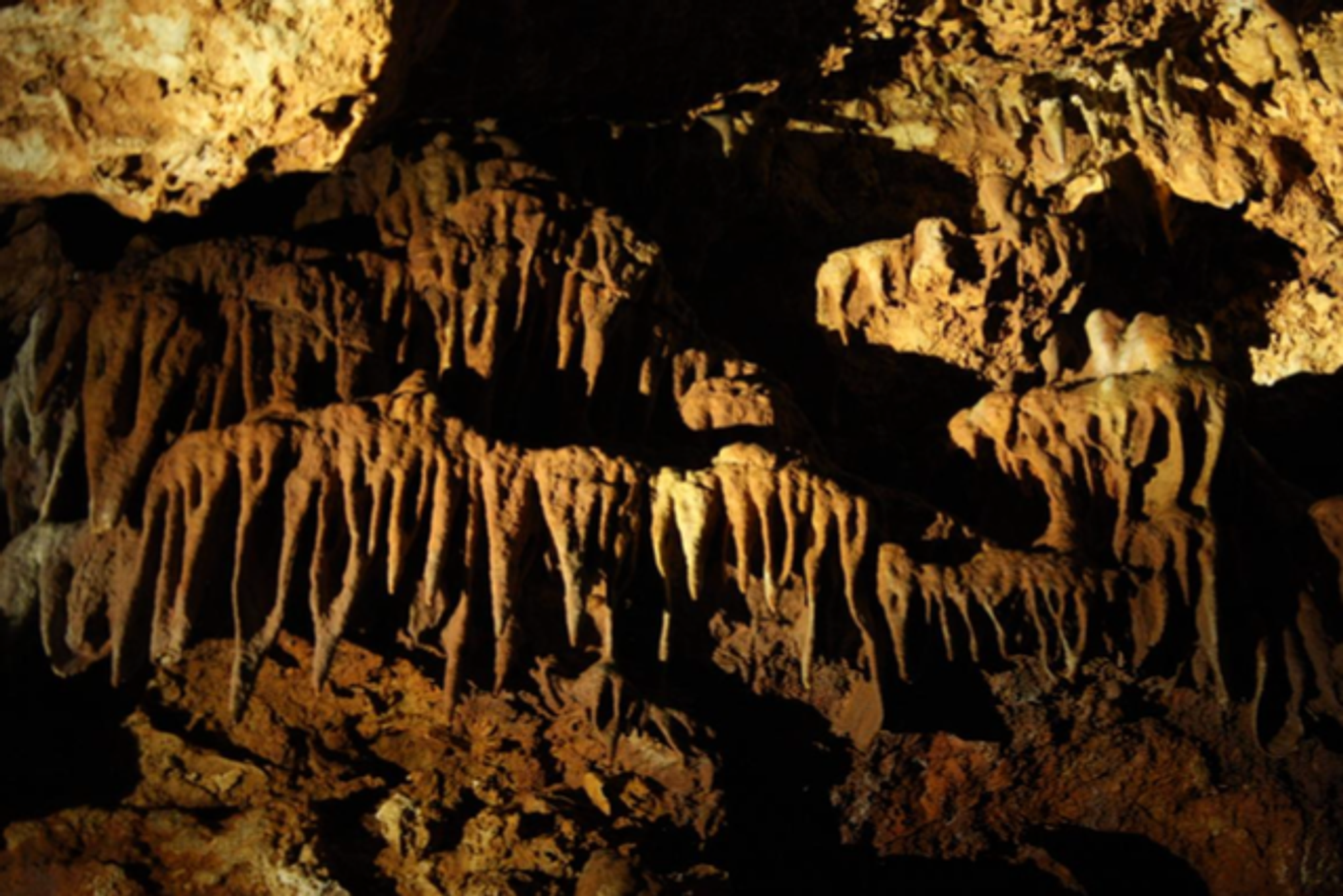
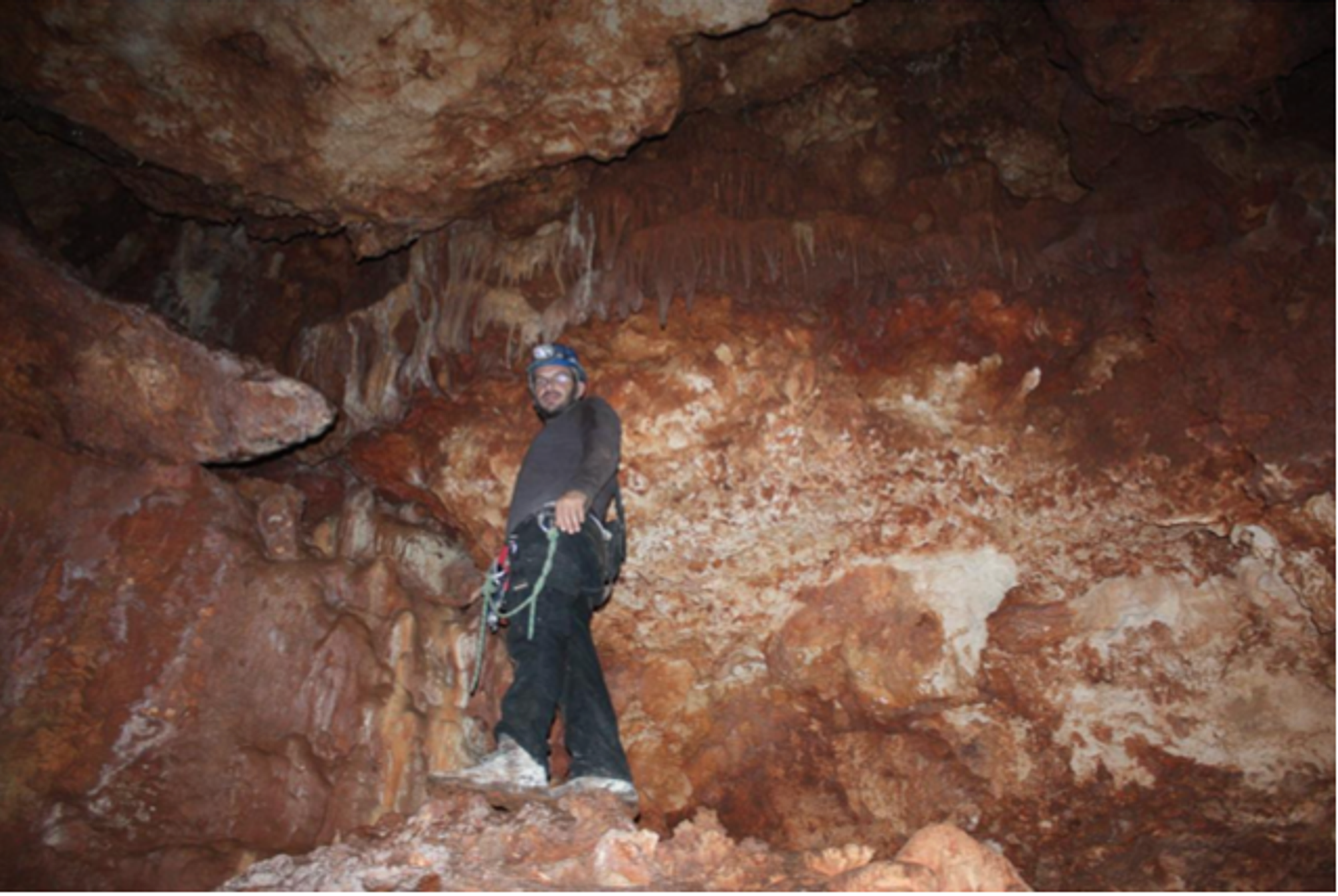
The cave was formed at the intersection of two tectonic faults that developed at azimuth 156 and azimuth 138. The faults pass through limy-dolomitic rock of Cenomanian age (Amminadav Formation). Signs of movement on the slip plane of the faults (slickensides) indicate that the faults underwent vertical movement, whose magnitude is difficult to determine. It is possible that the formation of the faults at the site was a factor encouraging vadose karst activity, which shaped the cave space and created its entrance. As part of this stage, speleothems (stalactites, elephant ears, pagodas, stalagmites, cave corals) were deposited throughout the space, mainly in the ceiling of its central part. After the entrance was formed, rocks entered the cave, and today they cover the floor of its southern part. Local collapses also created a rock cover in the inner parts, where they are mixed with horizons of red terra rossa soil, deposited by runoff water penetrating into the cave.
Description of the Space:
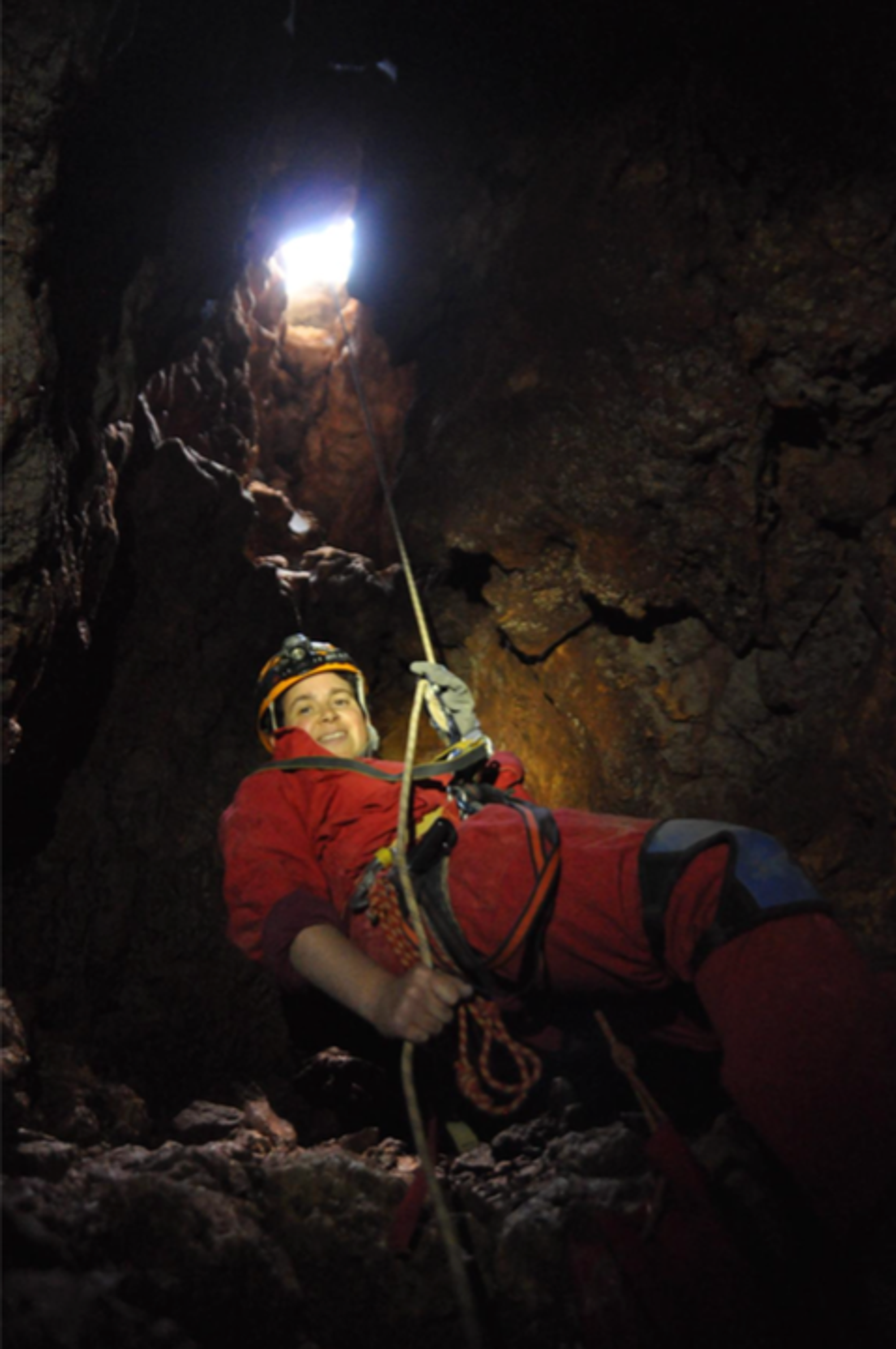
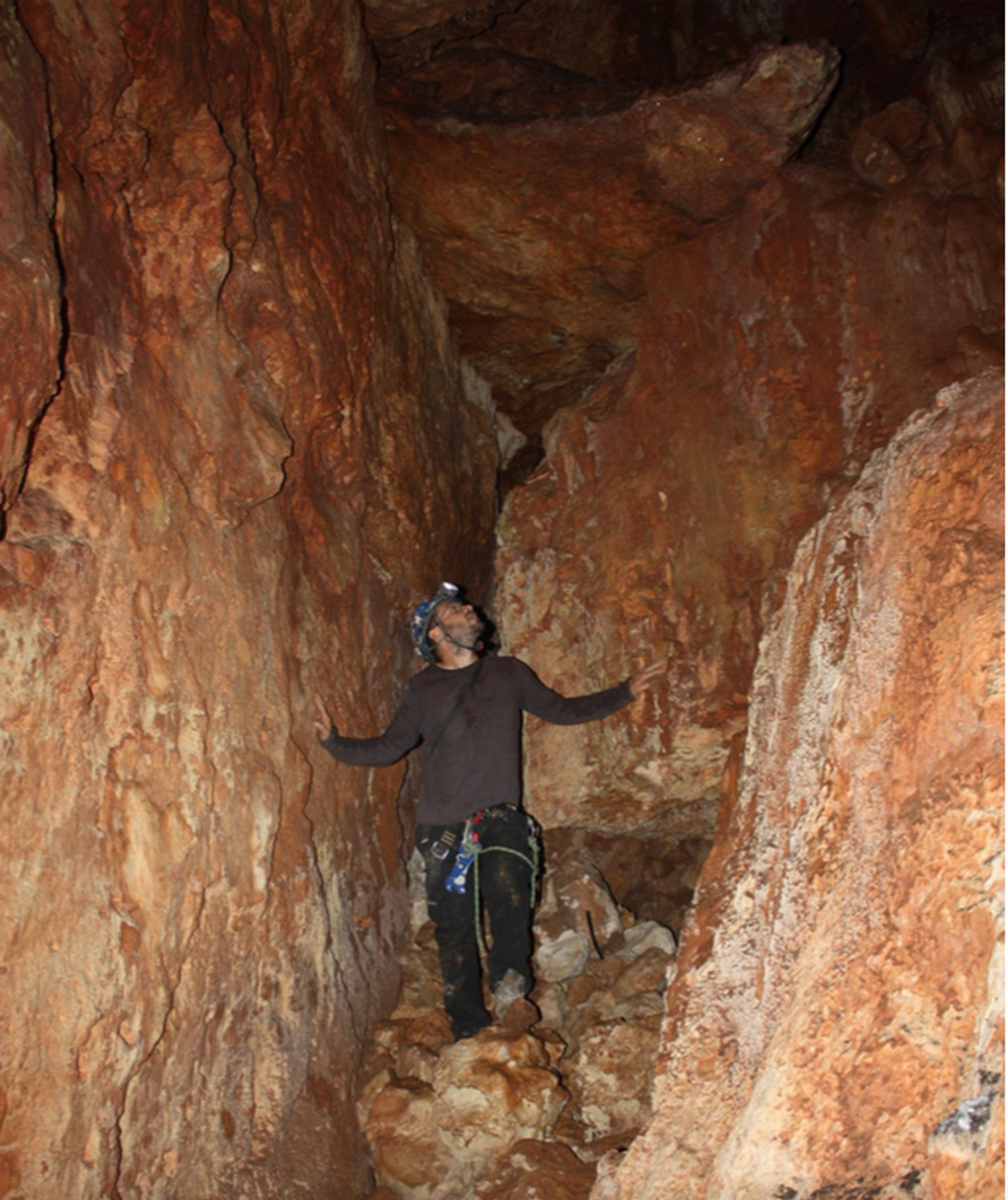
The cave has a vertical entrance measuring about 1X1.5 m. From the entrance a narrow vertical chimney extends, about 10 m deep, at whose bottom there is a wide room sloping north. A narrow passage at the end of the room leads north to a wide corridor dictated by the two walls of the fault. Northwest of this corridor extends a parallel corridor similar in its characteristics to the first. From the junction of the corridors a narrow, low passage extends northwest, which after 4 m becomes too narrow to pass.
Biology:
Three individuals of an insectivorous bat of the horseshoe type were observed in the cave. Beneath the point where the bats were observed there is a large patch of guano, partly covered with white fungus. Another species of yellow fungus covers parts of the cave walls. Also observed were millipedes, an American cockroach, and snail shells.
Archaeology:
Two potsherds were found in the cave. One (a body sherd) looks washed in and may have been carried into the cave by runoff water. The other (a handle) looks fresh and may have originated in the cave.
Written by: Boaz Langford