Ein Mahal Hiding Complex
- Grid ref.
- 182767/235550
- Elevation
- +303 m
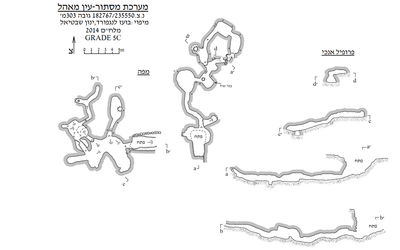 Cave mapView the map (PDF)
General:
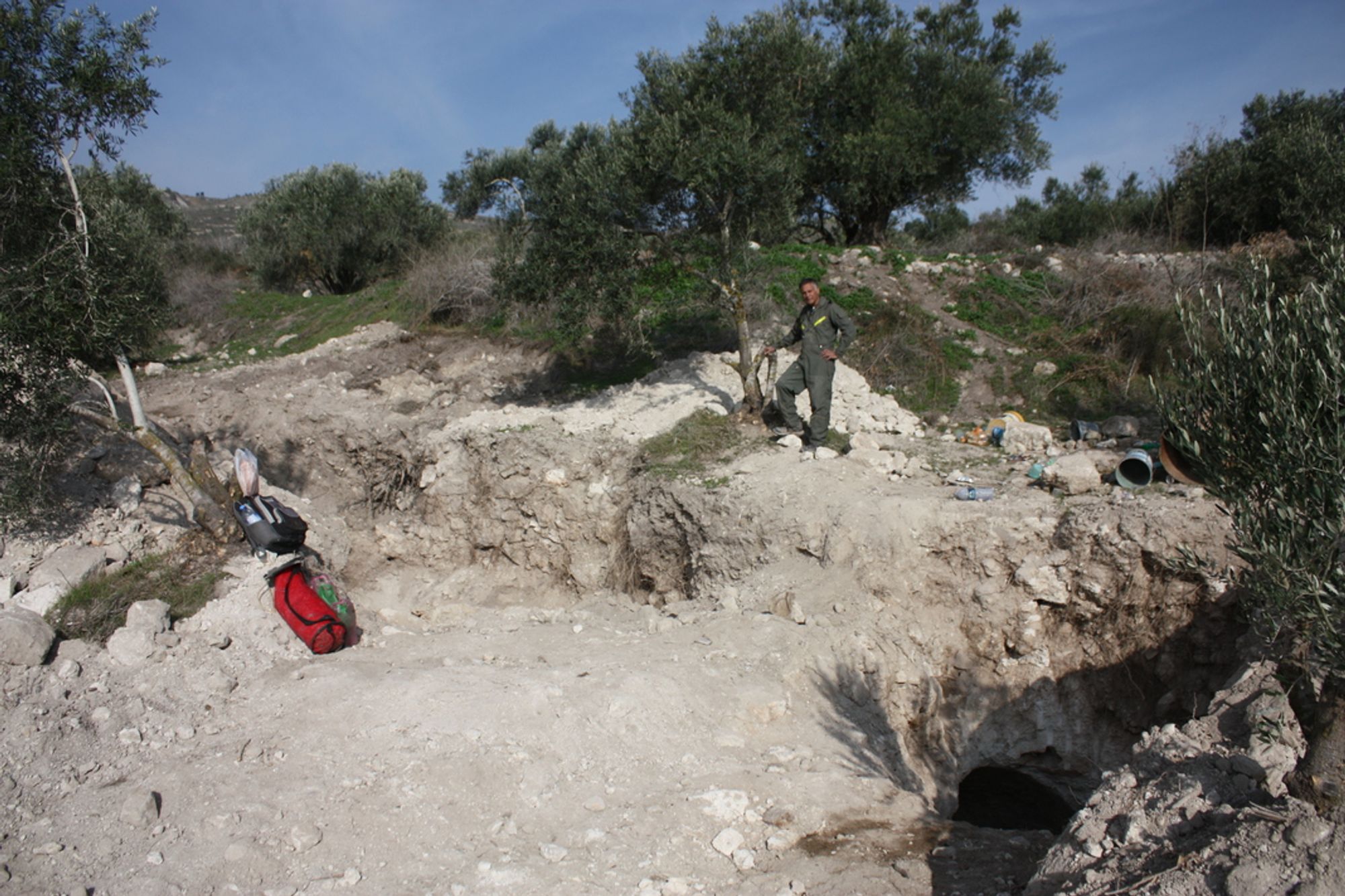
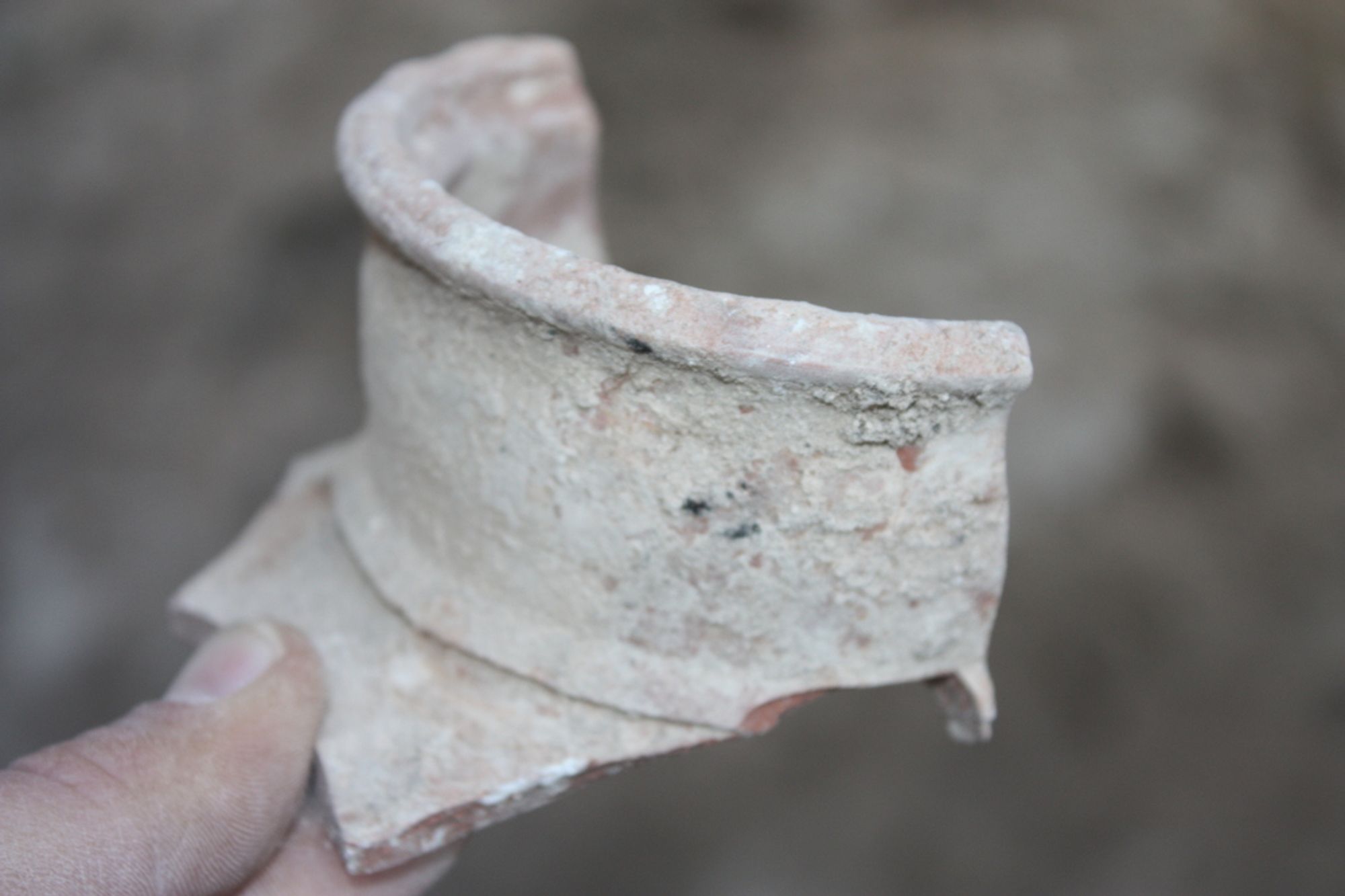
The Ein Mahal hiding complex is defined as a medium-sized cave (total length 91 m) consisting of a series of rooms and passages that were hewn by humans in the second or third century CE. The hiding complex was exposed in the middle of an olive grove, near the village of Ein Mahal in the Nazareth Hills. The entrance to the complex was located and broken open in early 2014 by antiquities robbers, who dug it out with heavy mechanical equipment. The looting work was discovered by Nir Distelfeld, an inspector of the Israel Antiquities Authority's Unit for the Prevention of Antiquities Theft. Following the exposure, an archaeological survey and excavation of the complex were carried out under the direction of Dr. Uzi Leibner. Before the excavation the site was mapped by Boaz Langford and Yinon Shivtiel.
Description of the space:
The entrance to the hiding complex now looks like a pair of open pits, which were created artificially by the antiquities robbers who operated at the site. From the bottom of the pits two passages branch off, heading in different directions, one to the north and the other to the west. It is reasonable to assume that before the damage at the site the two passages were connected, but today they actually continue as two separate passages.
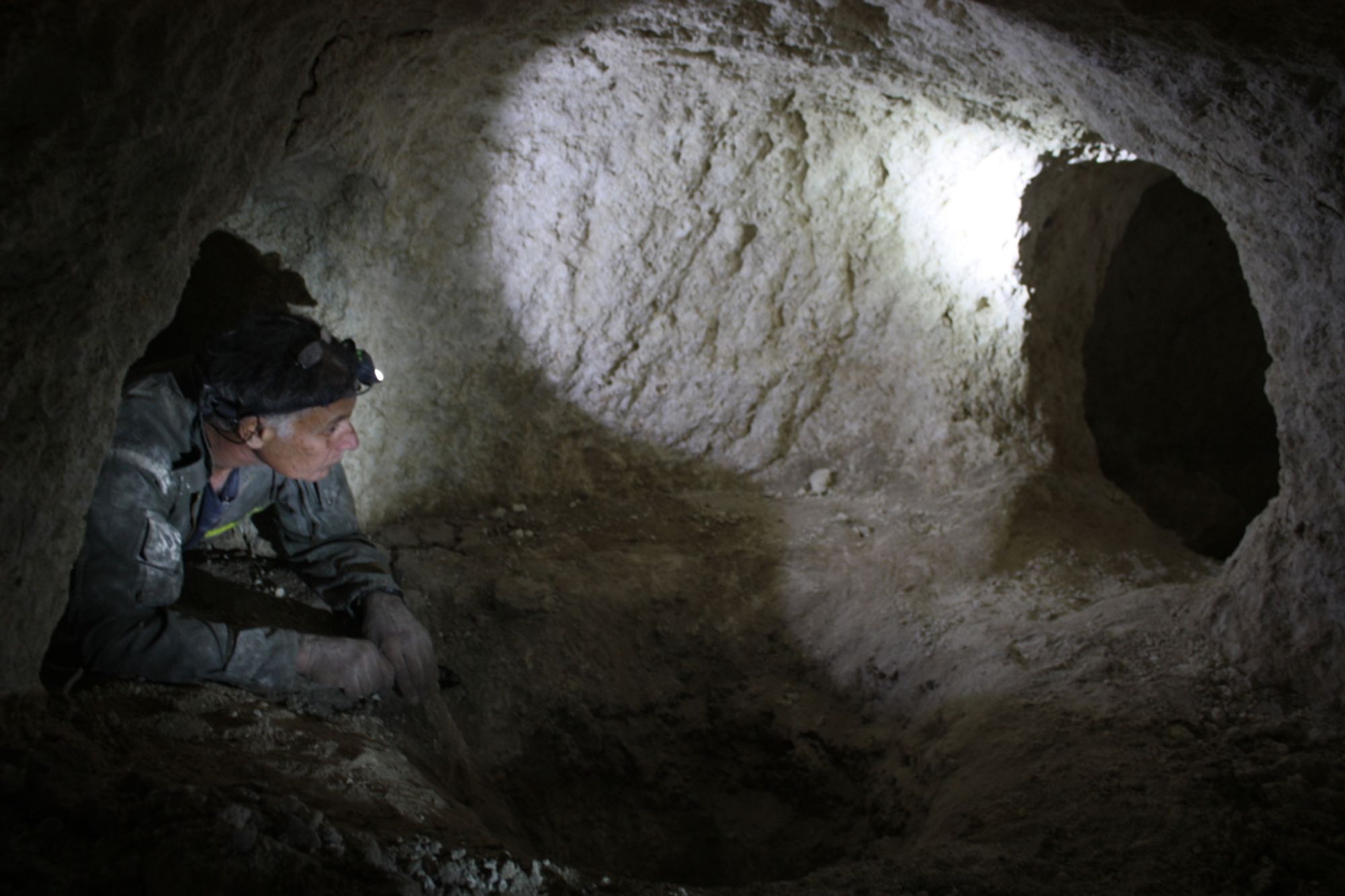
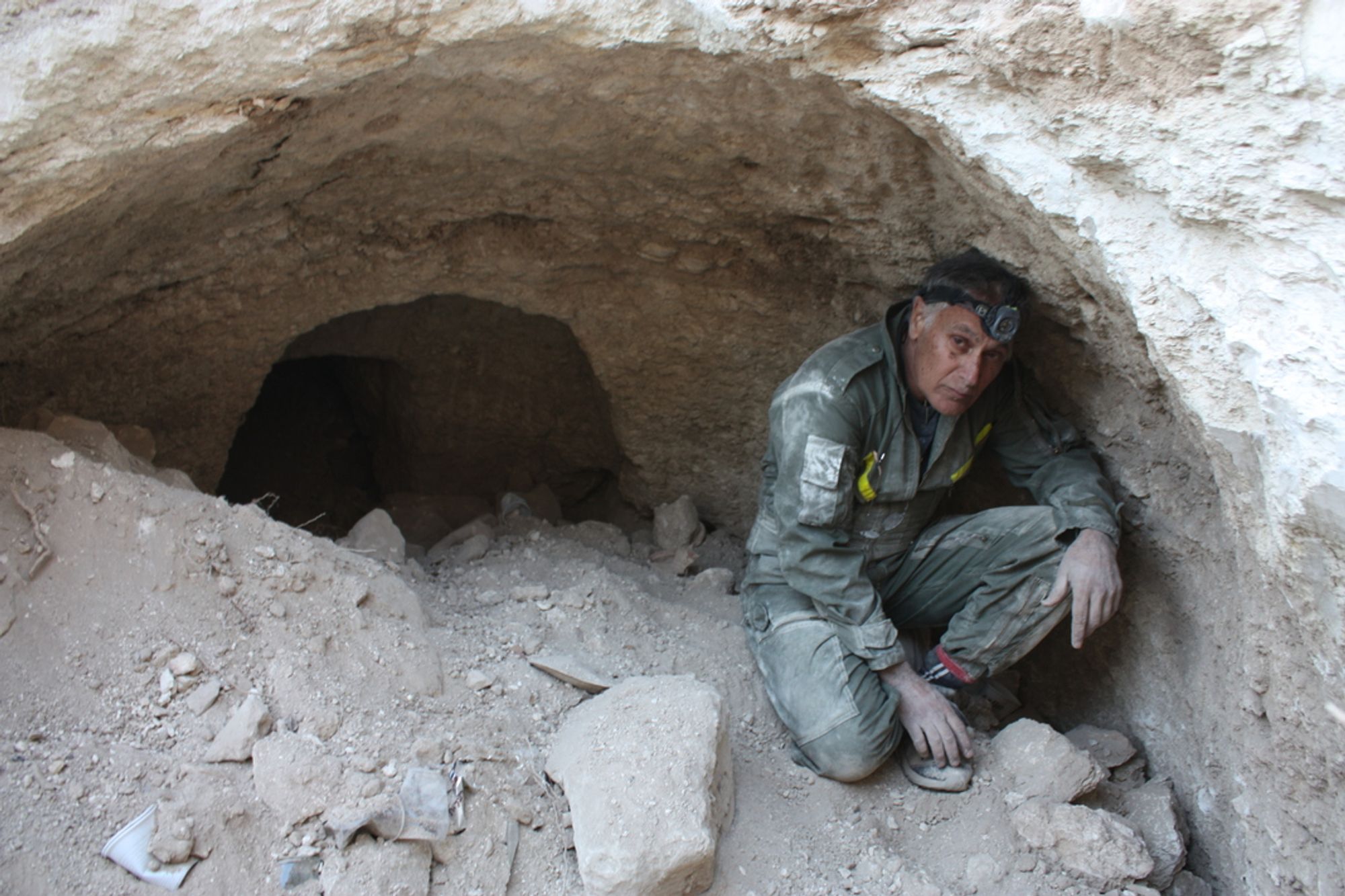
The opening leading to the northern system now looks like the remnant of a room whose center was destroyed and whose margins were preserved. The ceiling of the room is rounded and elongated quarrying marks can be seen in it. From the northern end of the ruined room a narrow, low passage (0.6X0.7 m) with an arched profile leads north. 1.5 m after it begins, the passage turns west and then north again. The floor of the passage is horizontal and covered with gray, compacted sediment. The passage ends in an oval room in whose walls there are recesses for placing lamps. A pair of recesses was also cut in the left wall of a short passage connecting the eastern part of the room with another room of square outline that was cut to its east. A narrow passage in the northern part of the room leads to an intermediate space, from which a pair of passages branch off: to the east and to the west. The eastern passage is mostly blocked by sediment and stones, so that today one can advance in it by a steep ascent close to its ceiling. The western passage runs in a full circle, crossing two wide rooms, and at its end it too is blocked with sediment and stones. According to what is shown in the cave map, it can be assumed that the pair of passages were originally connected as a circular passage that was blocked at a certain point. At the beginning of the course of the western passage a shallow niche was cut, in whose floor there is an unplastered pear-shaped pit.
The opening leading to the western system also looks like a ruined room, at whose eastern end there is a low passage leading to a wide, unshaped space. The southern and southwestern sides of the space look like deep, worn niches. By contrast, its northern and northwestern sides are less worn and original quarrying marks have been preserved in their walls. From the north of the central part of the space a narrow, low passage leads out, running for a few meters to the north and leading to a shallow elliptical room. Another, shorter passage leaves from the northwestern side of the worn entrance space and leads to a square space. In the ceiling of the space there is a shallow depression, from which a short passage continues to the east. It is possible that in the past the passage was connected as a direct continuation of the passage leading to the room and that the cutting of the room cancelled part of the original passage. At the northeastern end of the room there is a small opening from which a narrow, low passage continues east and north, changing direction in several sharp turns.
Notes:
- The hiding complex can be reached by driving on a dirt road (passable for any vehicle) leaving from the edge of the village toward Einot Shuaim.
Written by: Boaz Langford
For further reading - A Hiding Complex from the Early Roman Period at Einot Shuaim, near Ein Mahil. By Uzi Leibner, Yinon Shivtiel and Nir Distelfeld
Region: Lower Galilee