Akiva Pit
- Grid ref.
- 156479/151827
- Location
- Nahal Netuf
- Elevation
- +301
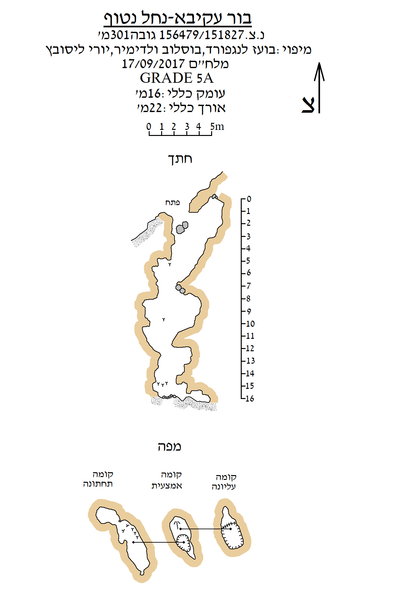 Cave mapView the map (PDF)
General:
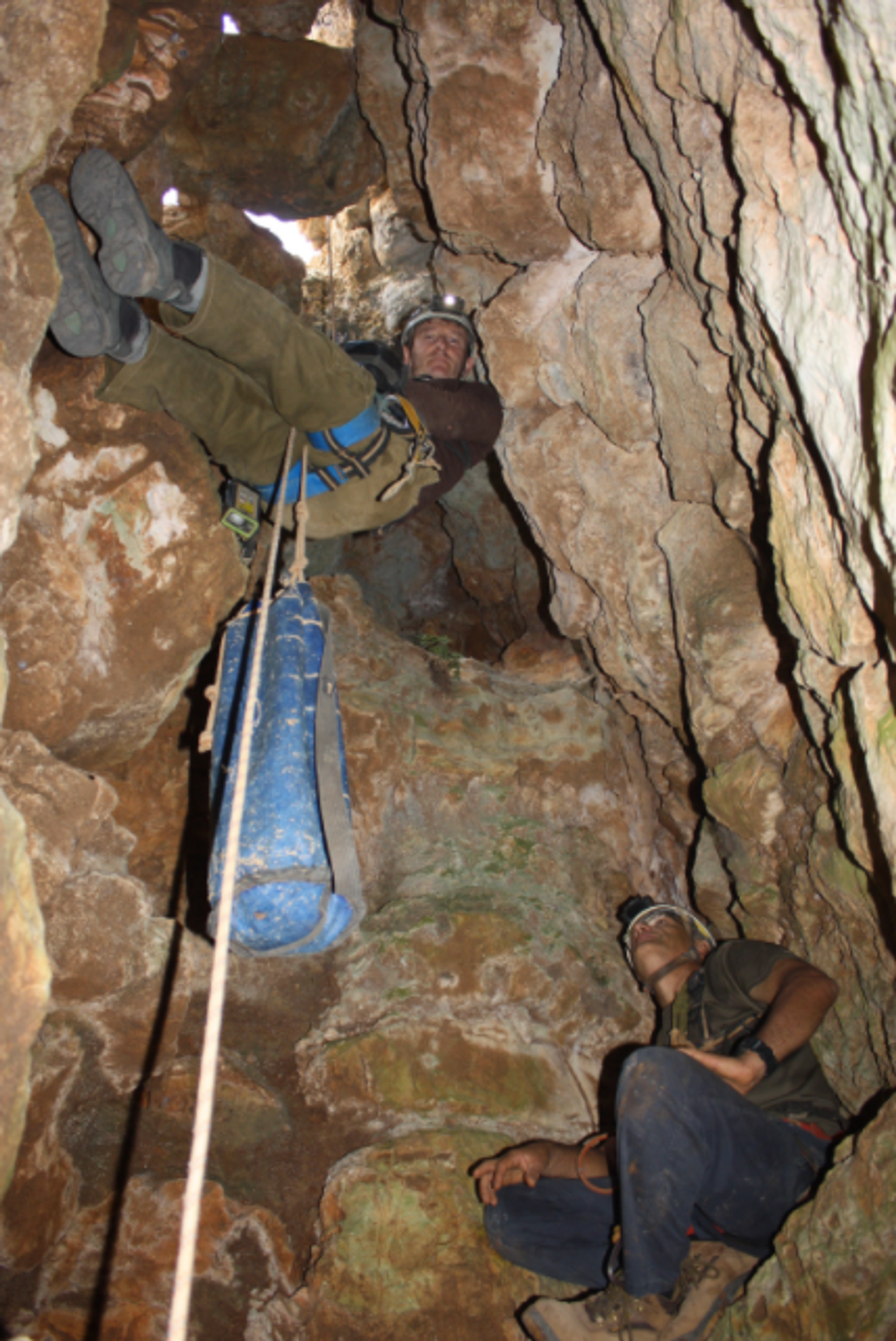
Akiva Pit is a karstic vertical pit consisting of a single vertical space. The space reaches a maximum depth of 16 m and a total length of 22 m. The location of the pit was given to the ICRC by Aharon Tabgar during the summer of 2017. In September of that year the site was surveyed and mapped by the ICRC team (Vladimir Boslov, Yuri Lisovitz and Boaz Langford).
The pit space was formed in dolomite and limestone rocks belonging to the Amminadav Formation of Cenomanian age. The rock section contains alternating hard and soft beds of thickness varying between 5 and 50 cm. The beds are emphasized by preferential dissolution at bed boundaries and display a slight to subhorizontal dip. The pit consists of rounded spaces that apparently formed during an ascent of hypogenic water. The rising water created a vertical chimney consisting of several rooms one above the other, but slightly offset relative to the neighboring space. The walls of the space are weathered and partly covered with cave deposits that are also weathered. All the walls are covered with dark mud that apparently was washed in with surface runoff draining into the space during rain events. Box Work appears at several points on the walls of the space, for example on the south wall of the middle of the pit and also on the northern side of the lower space.
The cave deposits in the pit space include a few stalactites as well as elephant ears and flowstone. The latter reach a thickness of about 30 cm, as seen in a broken section on the floor of the pit. All the cave deposits are dry and weathered.
Description of the Space:
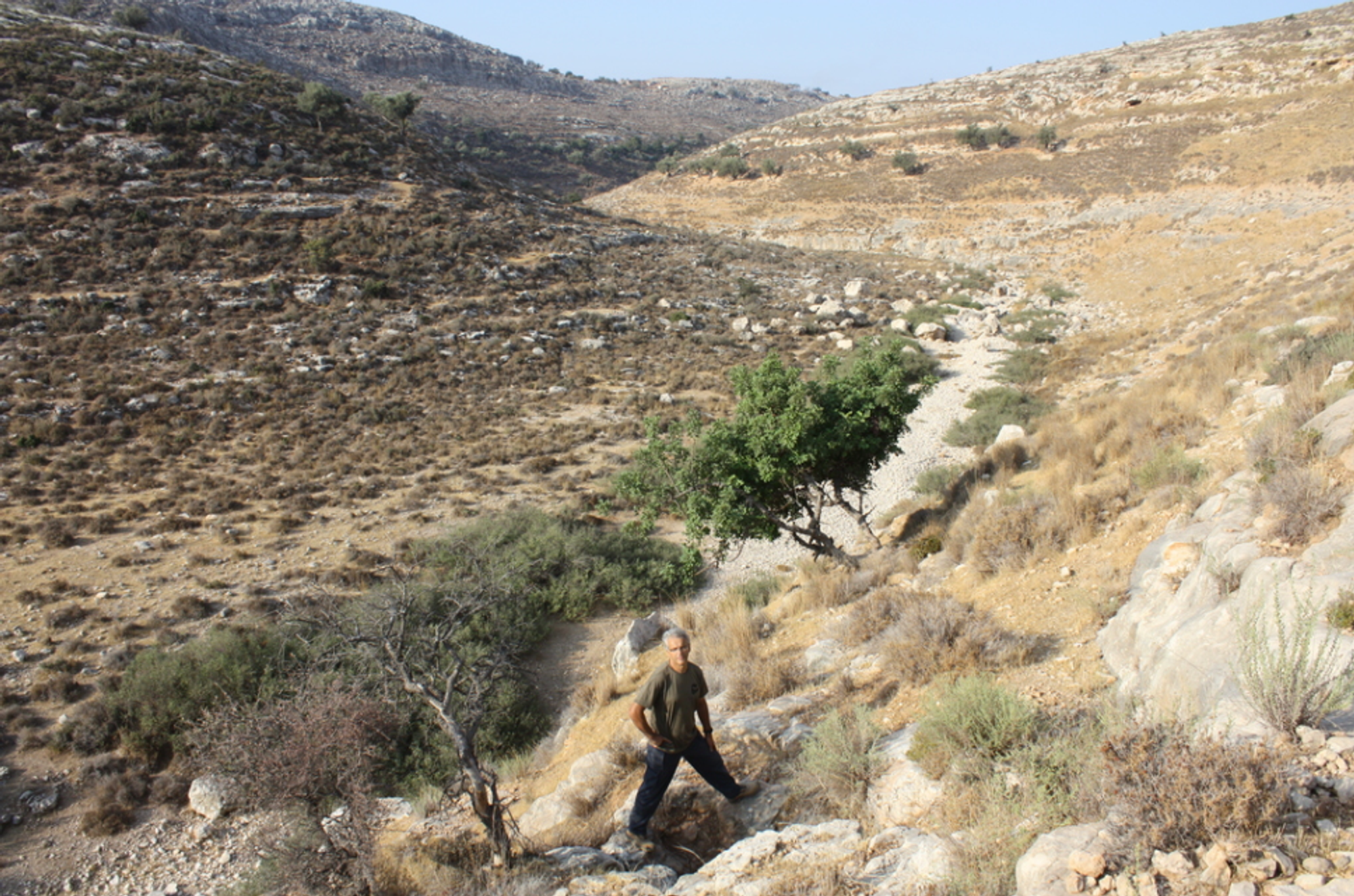
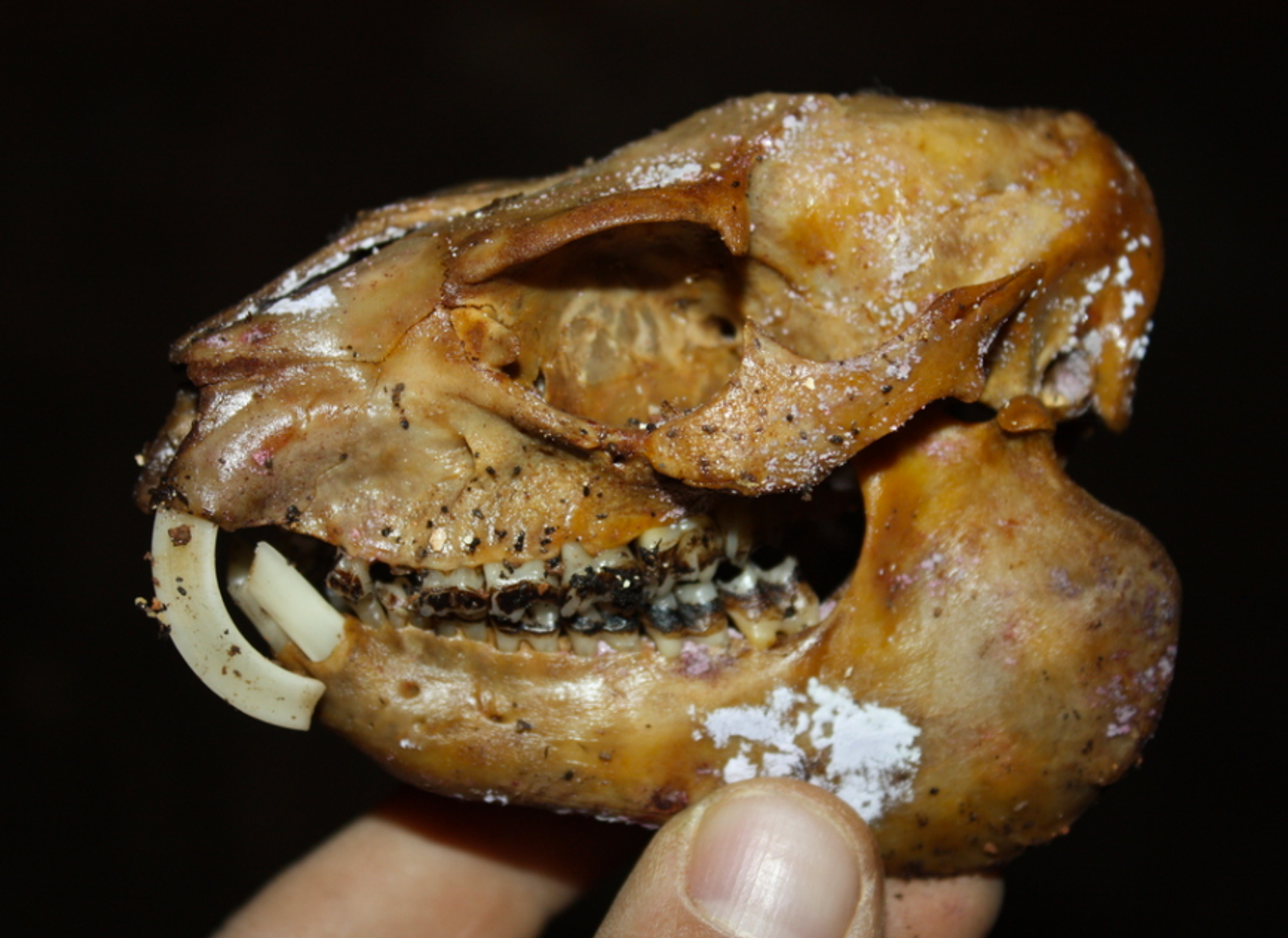
The pit entrance opens on the northern bank of Nahal Netuf, about 200 m south of the entrance to the community of Na'ale and about 10 m above the streambed. A few meters north of the entrance grows a large carob tree, which is a prominent marker for locating the place. The entrance area is blocked by 3 medium-sized collapse boulders, and one can easily squeeze between them and the bedrock wall. Below the rock blockage there is a vertical space with a sloping floor, on whose southern side there is a wide vertical passage leading to another room, similar to the first. A vertical passage connects the additional room with the lower space that forms the floor of the pit. The floor space consists of two horizontal rooms separated by a narrow, low passage. The northern room is horizontal and contains a few cave deposits (mainly stalactites and elephant ears). The central room is also horizontal; its floor is partly covered with gravel that fell from the entrance, and partly with clay carried by runoff draining into the place. Bones and a skull of a rock hyrax were found there, which apparently met its death by falling to the floor.
Other animals include masses of individual black millipedes. These were found dead on the floor of the middle room. A small number of individuals of a brown sheshen spider were also seen (near the entrance), as well as rock hyrax droppings.
Written by: Boaz Langford