Abud Cave
- Grid ref.
- 155893/157720
- Location
- Near the settlement of Ofarim
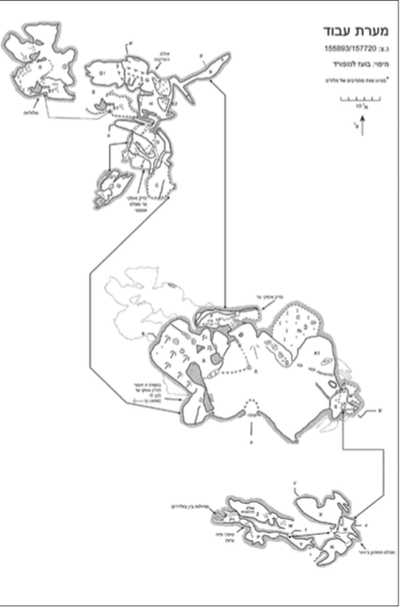 Cave mapView the map (PDF)
Description of the cave:
Abud Cave is a large karst cave on a rocky slope on the northern bank of Nahal Beit Arif (Wadi el-Harub), about 800 m southwest of the village of Abud in the western Beit El Hills. The cave developed in dolomitic limestone of Upper Cenomanian age (Weradim Formation). In most parts of the cave, a rich archaeological find from the time of the Bar Kokhba Revolt was discovered.
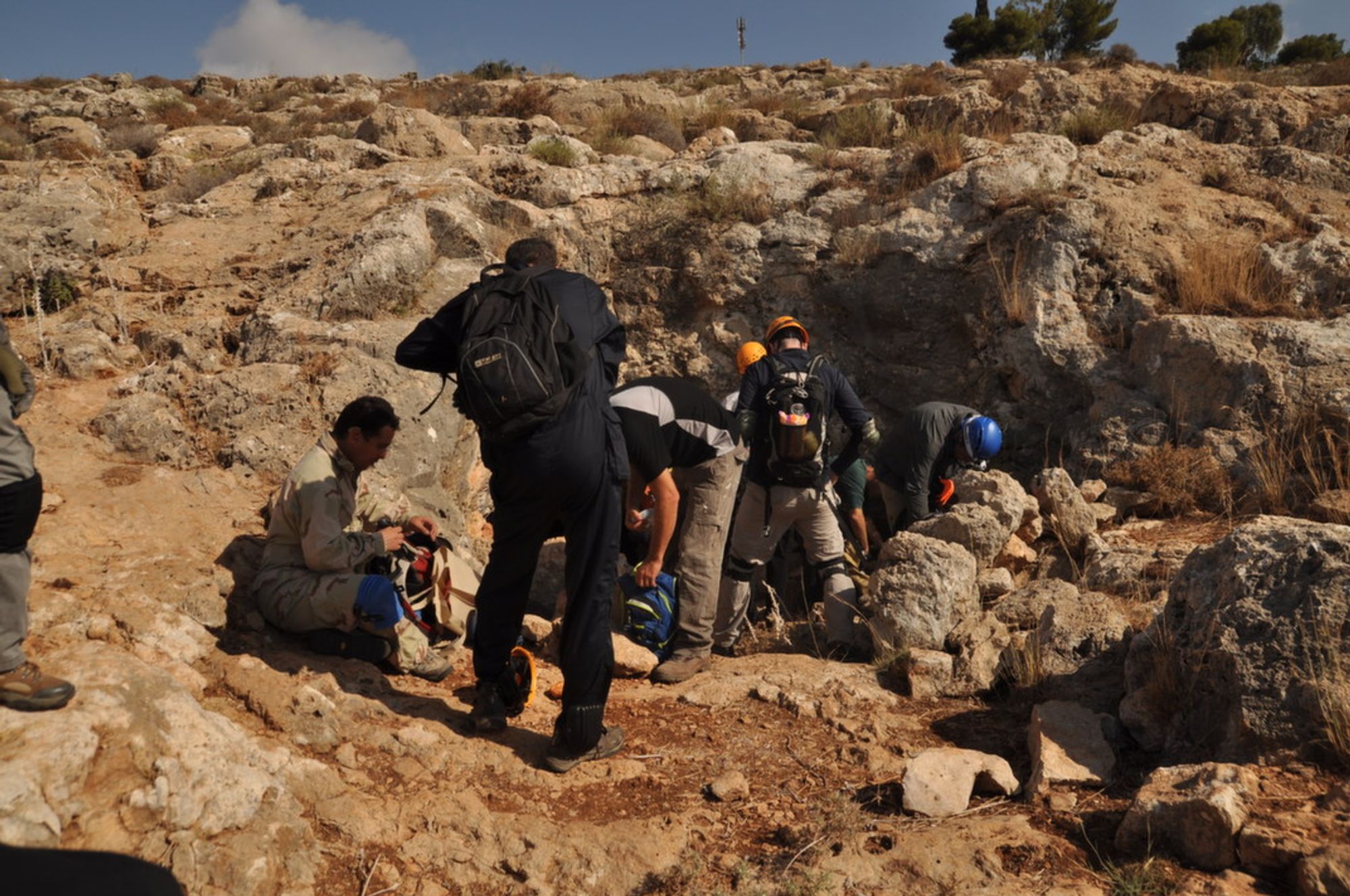
The cave entrance is at the bottom of a low step on a rocky slope on the northern bank of Nahal Beit Arif. The entrance lies in a topographic depression between rocks and is hidden from view. The entrance is 4 m wide and 1.5 m high. From the entrance a chamber develops, about 35 m wide east-west and 25 m north-south.
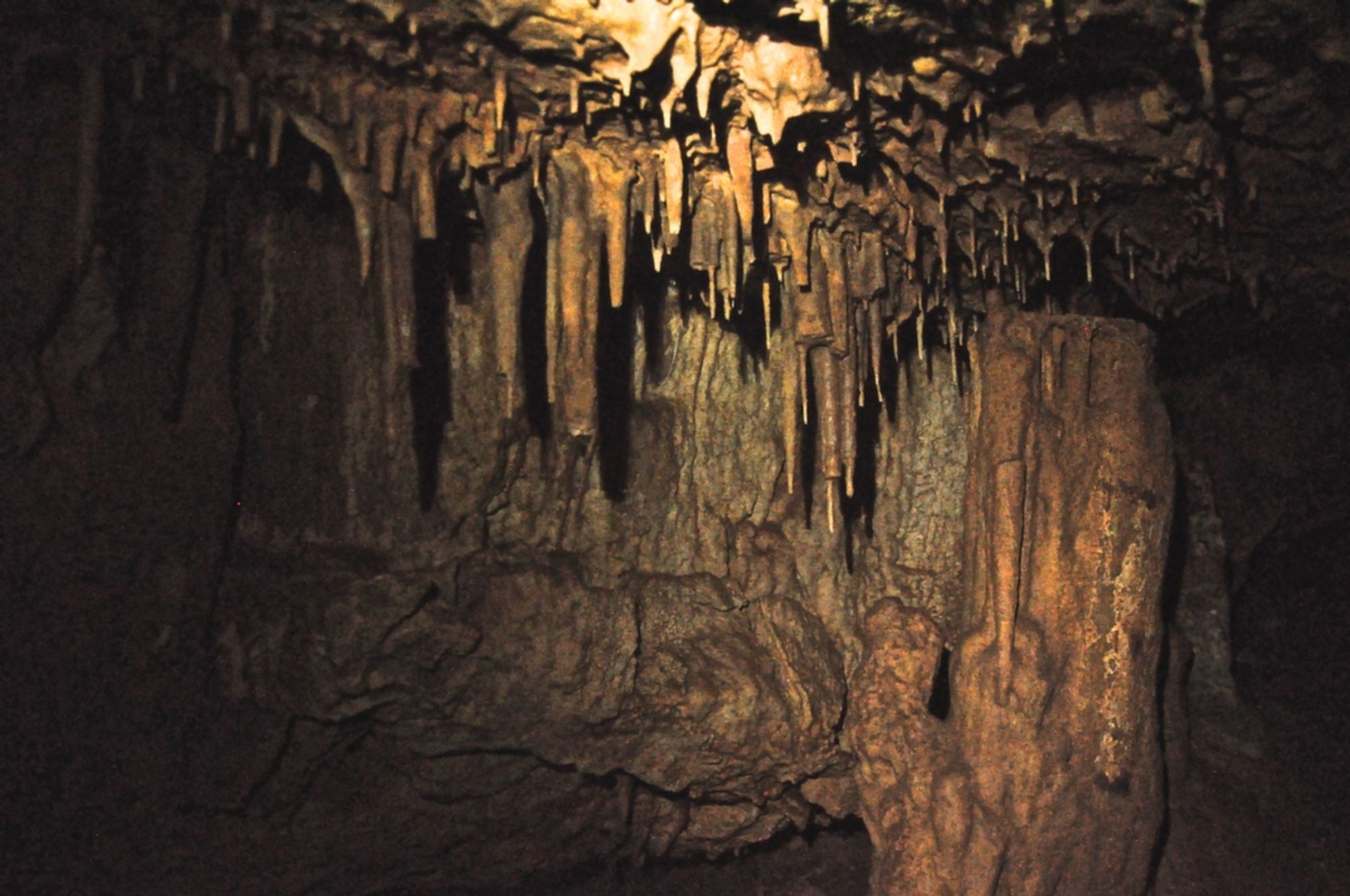
The cave has the structure of an isolated chamber that formed below the water table, similar to other caves in the region. The original dimensions of the chamber, before the collapse, were about 60 by 40 m. As the region rose and the water table dropped, the cave drained of water and processes began in the aerated zone, the most prominent of which is the deposition of speleothems such as stalagmites and stalactites. Some of them were deposited on top of the archaeological finds, and the deposition continues to this day.
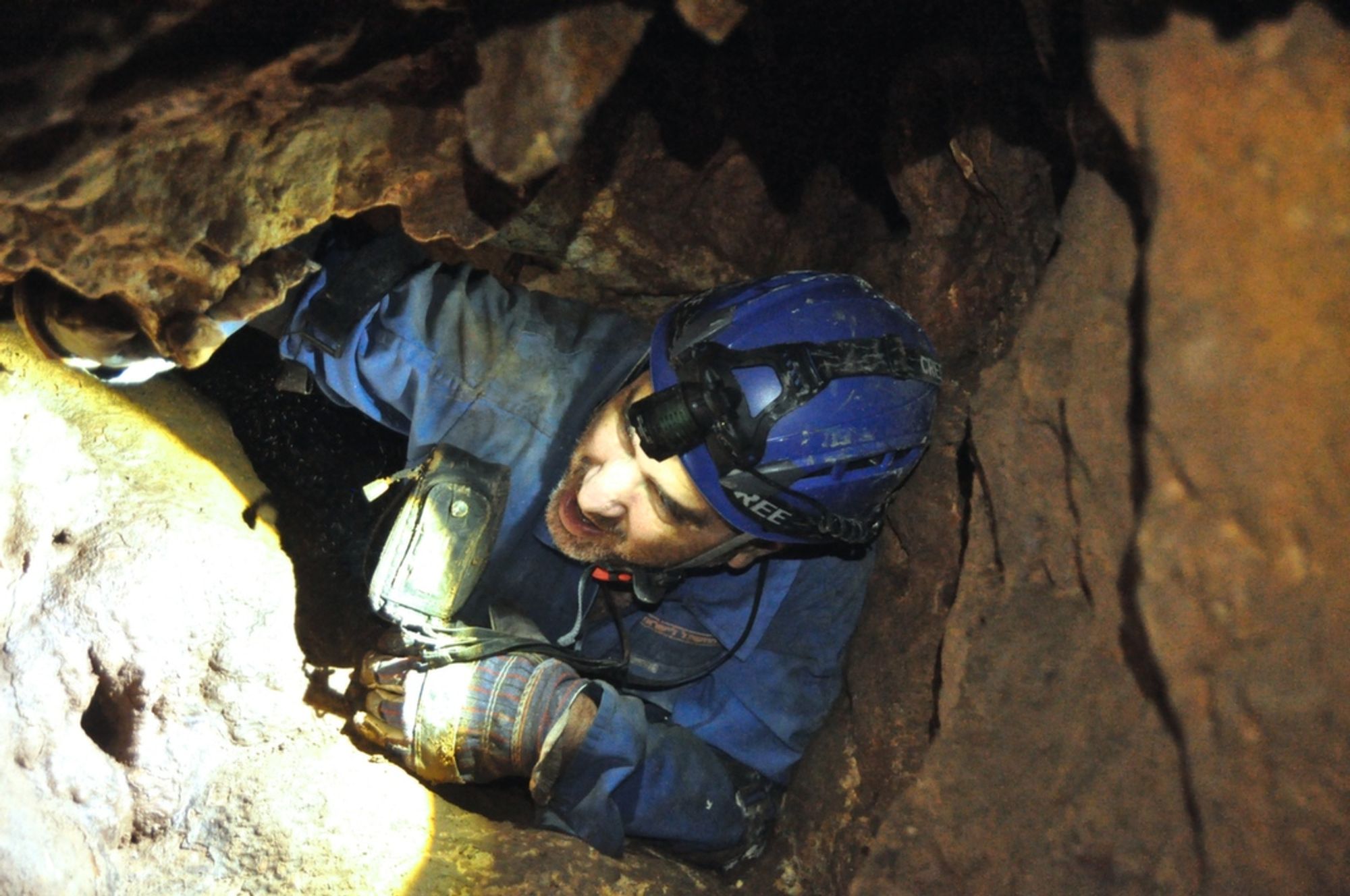
The low margins of the dome-like structure are today a branching system of elongated rooms and passages, on lower levels that are lower than the large central chamber. One descends to these levels from the central chamber toward the west, north and east through narrow openings and steep passages, which give an advantage to anyone hiding in them. From the cave entrance only the large chamber can be seen, and even from it the hidden lower levels are hard to see, or cannot be seen at all. It is reasonable to assume that there are additional spaces on the lower levels around the chamber, which we have not yet managed to enter. The cave entrance was created when the southern part of the large chamber was cut by erosive surface processes, which caused the cave ceiling to collapse in the area of the entrance. In light of the finds from this period inside the cave, it can be assumed that this event took place before the Chalcolithic period.
Archaeological finds:
A rich assemblage of finds from the time of the Bar Kokhba Revolt was discovered in the cave.
Pottery:
Large quantities of jar fragments were discovered in all parts of the cave. The vast majority of the jars discovered were of types characteristic of the period between the two revolts against the Romans and the time of the Bar Kokhba Revolt. An exception is a 'cylindrical jar' that may perhaps be dated to the 1st century CE, although it cannot be ruled out that vessels of this kind were still made or used in the period preceding the Bar Kokhba Revolt. In all parts of the cave, fragments of pots and cooking pots were discovered, represented by types characteristic of the period between the two revolts against the Romans and the time of the Bar Kokhba Revolt. Juglets were also found, including cooking juglets, also of types
characteristic of the period.
Stone vessels:
The survey located three fragments of stone vessels of the 'measuring vessel' type, made of chalk. These finds are characteristic of the Jewish material culture in Jerusalem and in Jewish settlements that existed from the end of the Second Temple period until the Bar Kokhba Revolt. Their distinction is that they do not become ritually impure.
Lamps:
A rich assemblage of lamp fragments was found in the cave. Prominent in this assemblage are the 'Judean' lamps, which are mold-made and decorated with a variety of patterns characteristic of the period between the two revolts against the Romans and the time of the Bar Kokhba Revolt. Fragments of Roman lamps with a decorated discus were also found, which were also common in the period between the two revolts. A single fragment of an imported 'Roman Imperial' lamp, characteristic of the 1st century CE, was found. The discovery of this lamp may indicate some activity at the site during the Great Revolt (the revolt of the destruction). On the other hand, it is possible that, because of its distinctiveness, this 'old' lamp was preserved and brought to the cave during the Bar Kokhba Revolt.
Glass vessels:
The glass assemblage includes characteristic types of bowls, cups, bottles and small bottles, similar to those found in settlement layers, hiding complexes and refuge caves from the time of the Bar Kokhba Revolt.
Metal vessels:
A rich assemblage of metal vessels was discovered in the cave. We chose to present iron keys (a common find in assemblages from refuge caves and hiding places, indicating that people locked their houses before fleeing to the cave) and additional objects made of bronze and iron.
Coins:
All the coins discovered in the cave are made of bronze, and are of types that were common in the 1st-2nd centuries CE. The early coins (the procurator coins, nos. 1, 2, and the Antioch coin, no. 3) may indicate a stay in the cave in the 1st century CE, perhaps during the Great Revolt. However, coins of this kind could also have reached the cave during the Bar Kokhba Revolt. Coin no. 4 was minted in Ashkelon, no. 5 in Tyre, and no. 6 in Caesarea; they represent types that were common in the coin circulation of the Land of Israel between the two revolts against the Romans, and there is no doubt that they were brought to the cave during the Bar Kokhba Revolt. Coins nos. 7-12 were restruck by the Bar Kokhba administration. Coins nos. 7-12 are dated to the second year of the war, and they are the latest coins from the Roman period discovered in the cave. The absence of coins from the third year of the revolt suggests that this region, located near the northwestern edge of the area held by the Bar Kokhba administration, was conquered by the Romans already in the second year
of the revolt.
Notes:
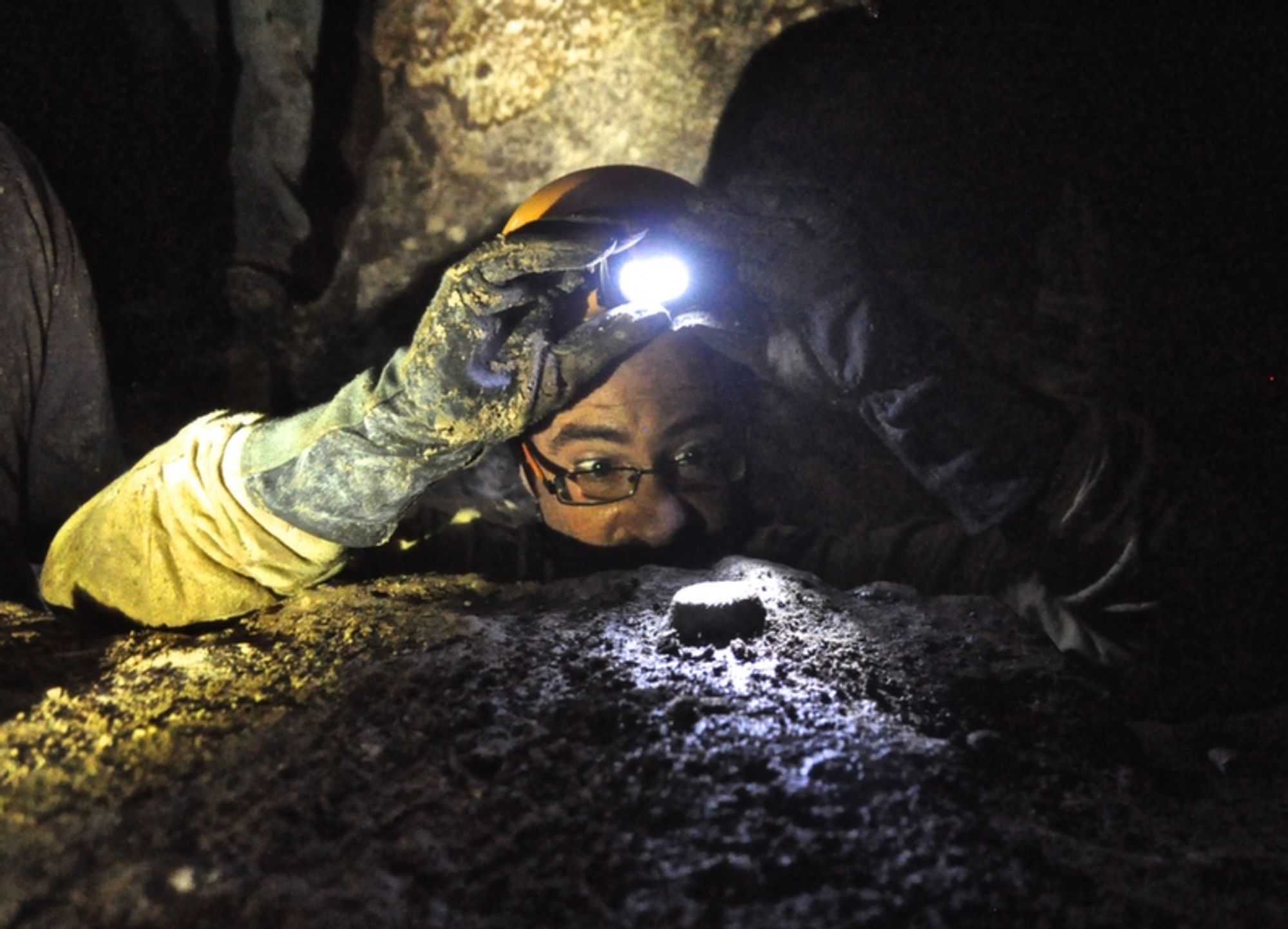
- Progress through the cave includes crawling (also in mud) and overcoming low steps (descending and ascending) with the help of ropes (arm strength), with no need for rappelling equipment.
- Abud Cave was found to be of great importance for insectivorous bats in the region. It serves as a breeding colony of at least three species (greater horseshoe bat, slender-eared myotis and notch-eared myotis) and possibly of other species as well. Reports indicate that it is also inhabited in winter, and this cave may also be important as a hibernaculum (hibernation cave).
Edited by Yoav Negev. Information from:
[1] Boaz Zissu, Boaz Langford, Roi Porat, Uri Davidovich and Amos Frumkin. 2009. Finds from the time of the Bar Kokhba Revolt from Abud Cave in the western Beit El Hills. In: Hanan Eshel and Roi Porat (eds.). Refuge Caves of the Bar Kokhba Revolt Period, Volume 2. Pages: 478-509.
[2] Eran Amichai. 2013. Bat survey in Abud Cave. Mammal Center, Society for the Protection of Nature in Israel.