Nabi Hazuri Cave
- Grid ref.
- 218316/294971
- Elevation
- 792 m above sea level
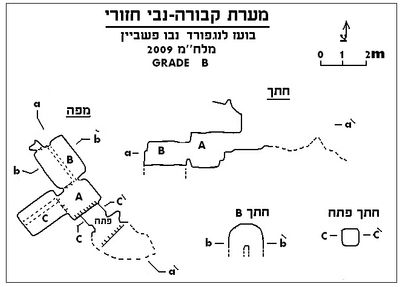 Cave mapView the map (PDF)
Description of the cave:
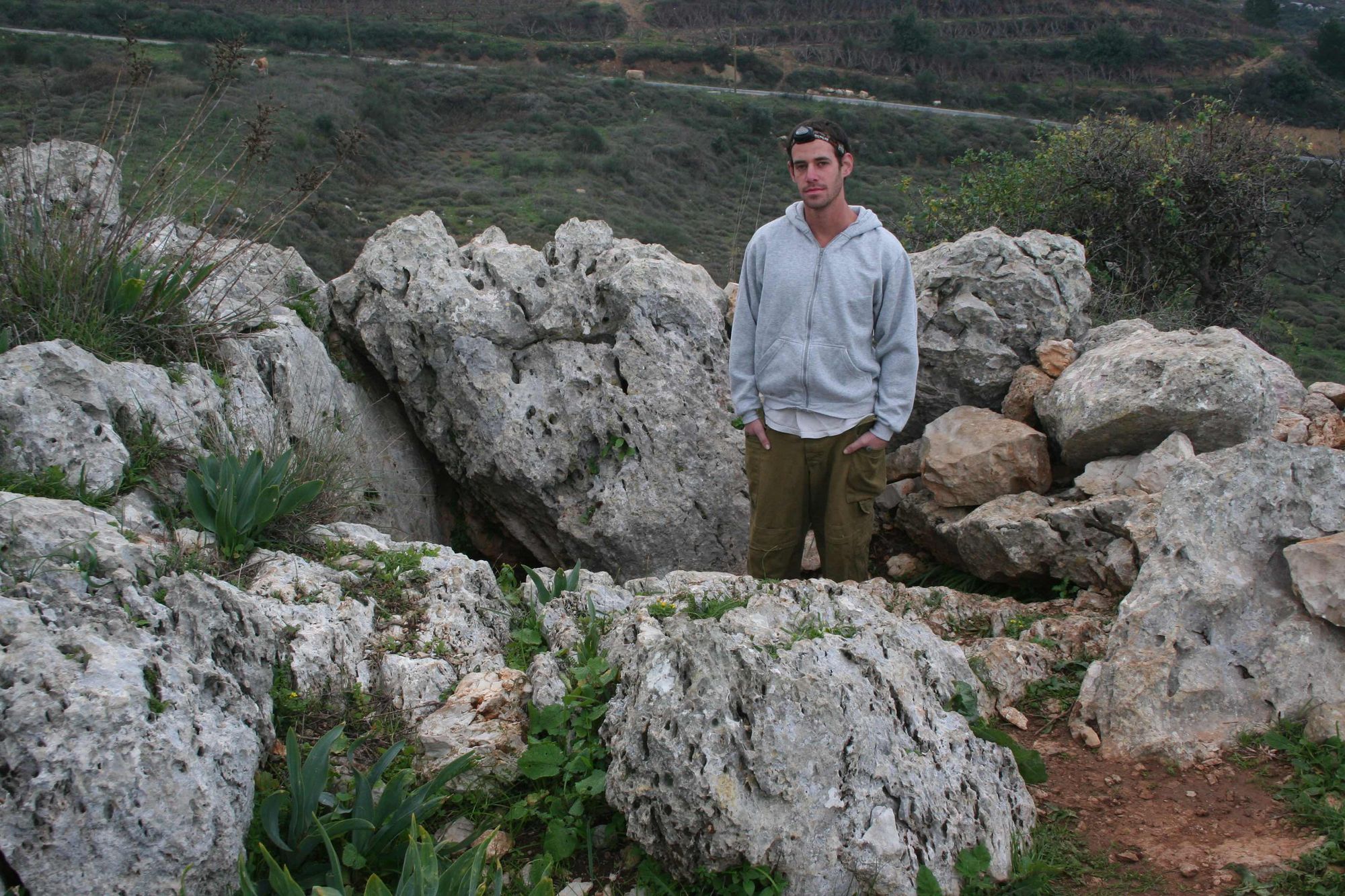
Nabi Hazuri Cave is a small burial cave that appears to have been cut on the basis of a natural space that developed at the top of a slope within the watershed of Wadi a-Naqib (a short channel that ultimately drains into Nahal Banias).
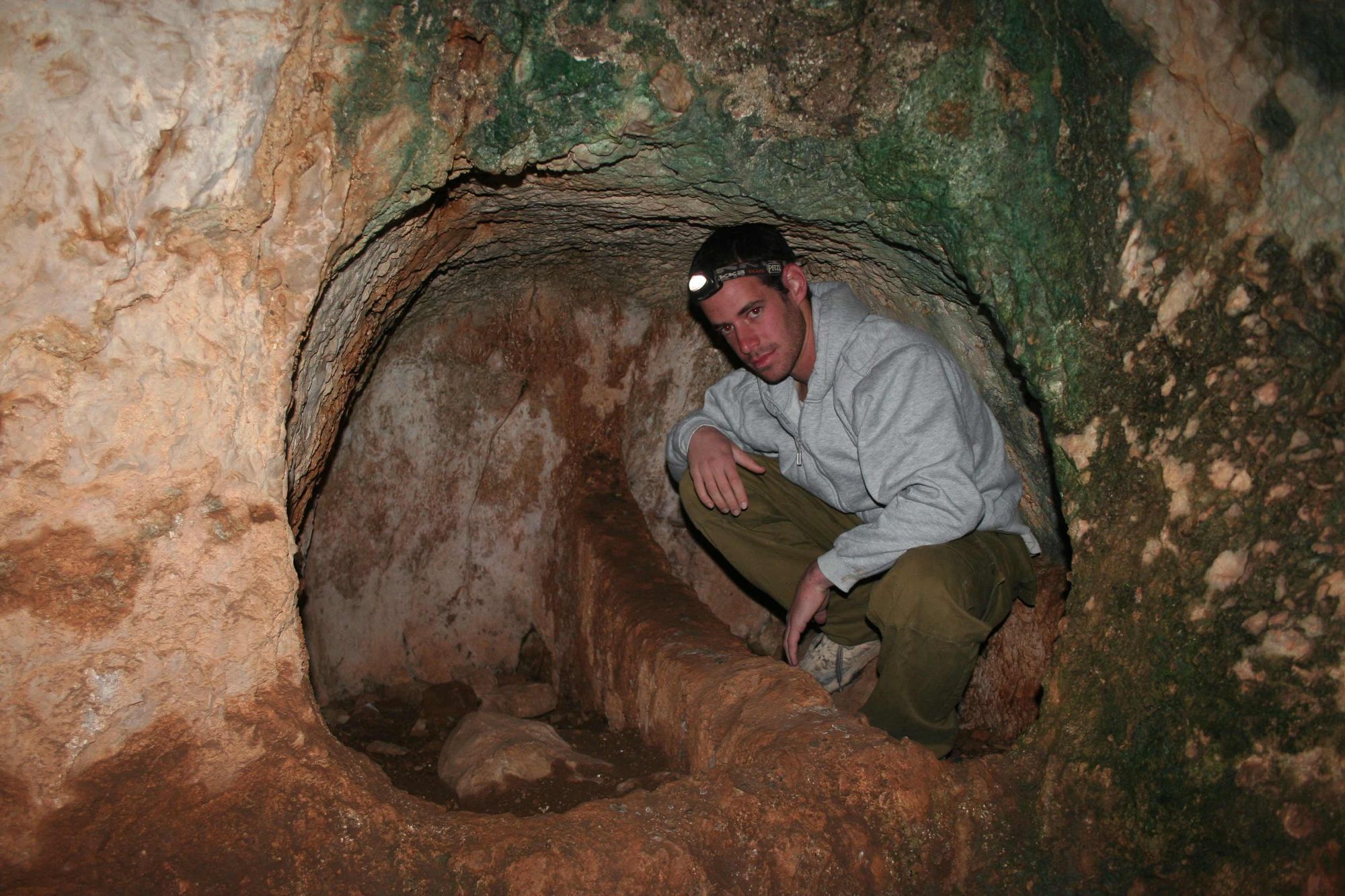
The cave opening is small and concealed; it is square and measures 1X0.9 m. The opening gapes at the bottom of a small natural depression measuring about 2X1.3 m. In the middle of the depression a low step was cut, and north of it, at the northern end of the depression, the cave opening gapes. The opening leads to a cave of three rooms: an entrance room, north and west of which there are two burial rooms, each divided into two separate cells. In each cell one person could be buried, as no installations were found indicating the use of secondary burial and clearing of the burial cells.
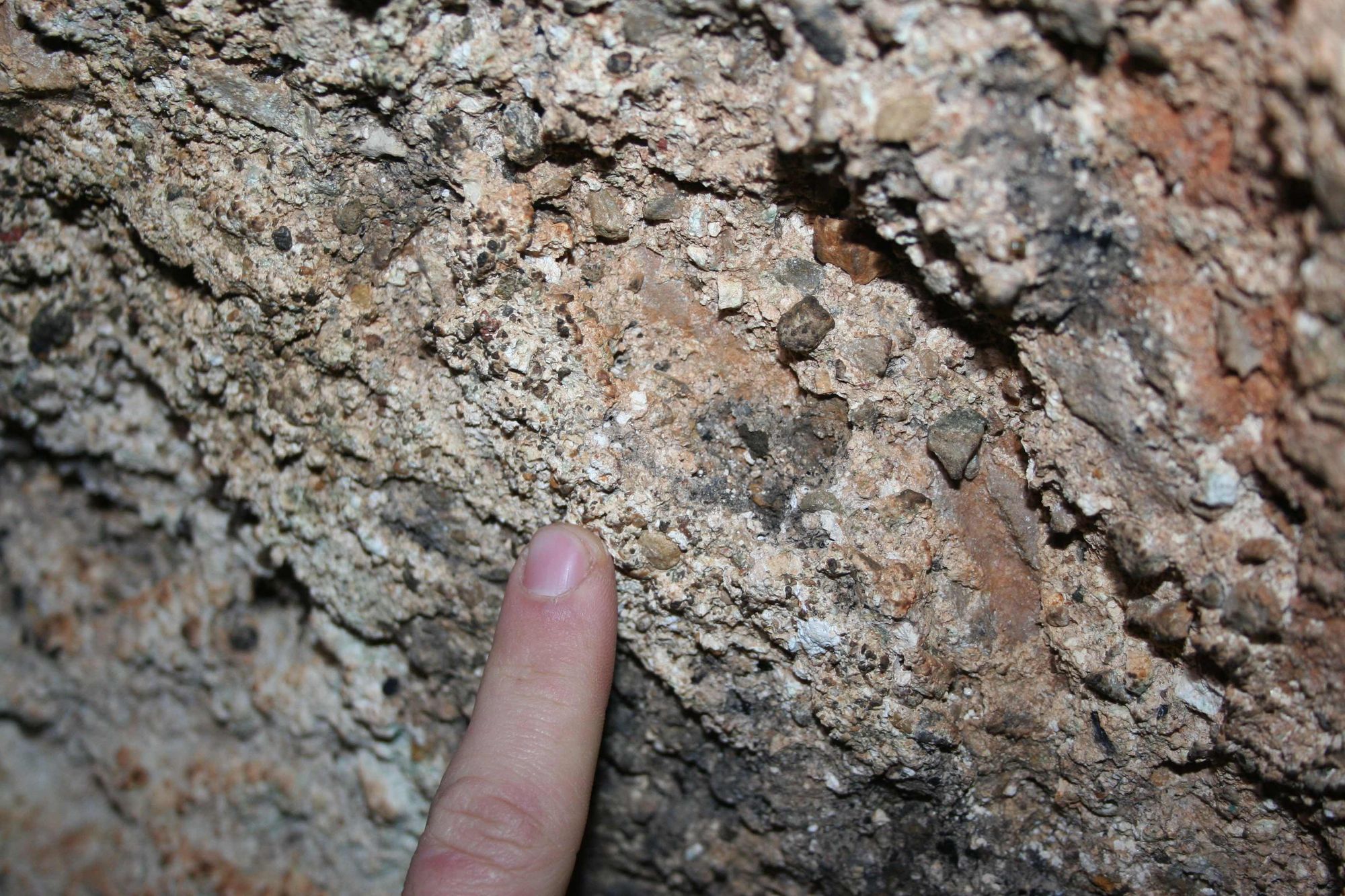
The entrance room is small and square, measuring 1.5X1.1 m and 1.4 m high. Its floor is covered by a thin layer of mud, on which many potsherds are scattered. At various points in the entrance room there are remains of a thick, coarse plaster layer. Between the entrance room and the burial rooms there is a thin rock partition that also serves as the wall of the burial cells. The burial cells have more or less uniform dimensions: their width is 0.7 m and their length 2 m. The depth of the cells is not sufficiently clear, since they are filled with a thick layer of mud.
The possibility that the burial cave was cut on the basis of a natural space arises from several facts:
- In the cave there are signs of ancient karst dissolution (phreatic dissolution activity) in the form of a prominent dissolution dome located on the eastern side of the opening, smoothed walls at certain points, and a karst niche located on the northern side of the northern burial room. The possibility that this niche was exposed as a result of the cutting activity (that is, that the cave's cutters were the ones who exposed it) is possible, but this is not the case for the first two karst phenomena.
- The cave opening is located at the bottom of a natural depression that may be a local doline that developed around the cave opening. During rain events, water flows down from the depression into the entrance space. The water does not penetrate the burial cells because they are higher than the level of the entrance room and are separated from it by a thin rock partition.
- Cutting a burial cave in massive limestone is not a simple task, and therefore the use of existing spaces is reasonable.
- The plastering of the entrance space indicates that the cutters of the place were aware of karst phenomena and therefore sealed the cave as much as possible against water penetration.
Written by: Boaz Langford