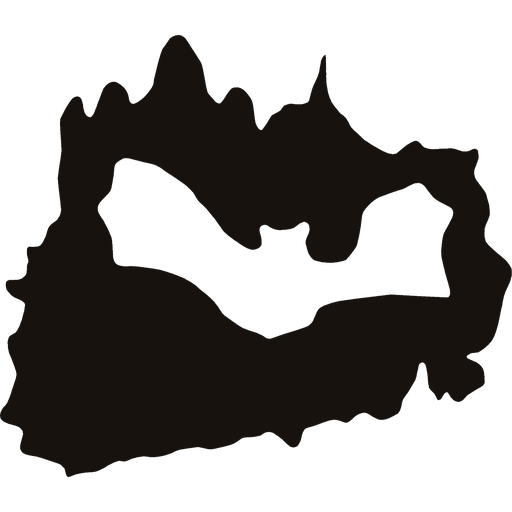
Cave 36 at Mount Nitai
- Grid ref.
- 19581/24760
- Elevation
- c. 62 m below sea level.
Cave description:
Cave 36 is a medium-sized cave consisting of several passages and chambers that developed by phreatic dissolution processes (according to: well-developed dissolution domes, passages with an elliptical or rounded profile) in a northwest direction.
The cave was surveyed in the summer of 2010 by Boaz Langford, Mika Ullman and Yoav Farhi, as part of a cave survey at Mount Nitai. The survey was carried out as a side project of the excavation of the Mount Nitai wall and Horbat Hamam, led by Uzi Livner.
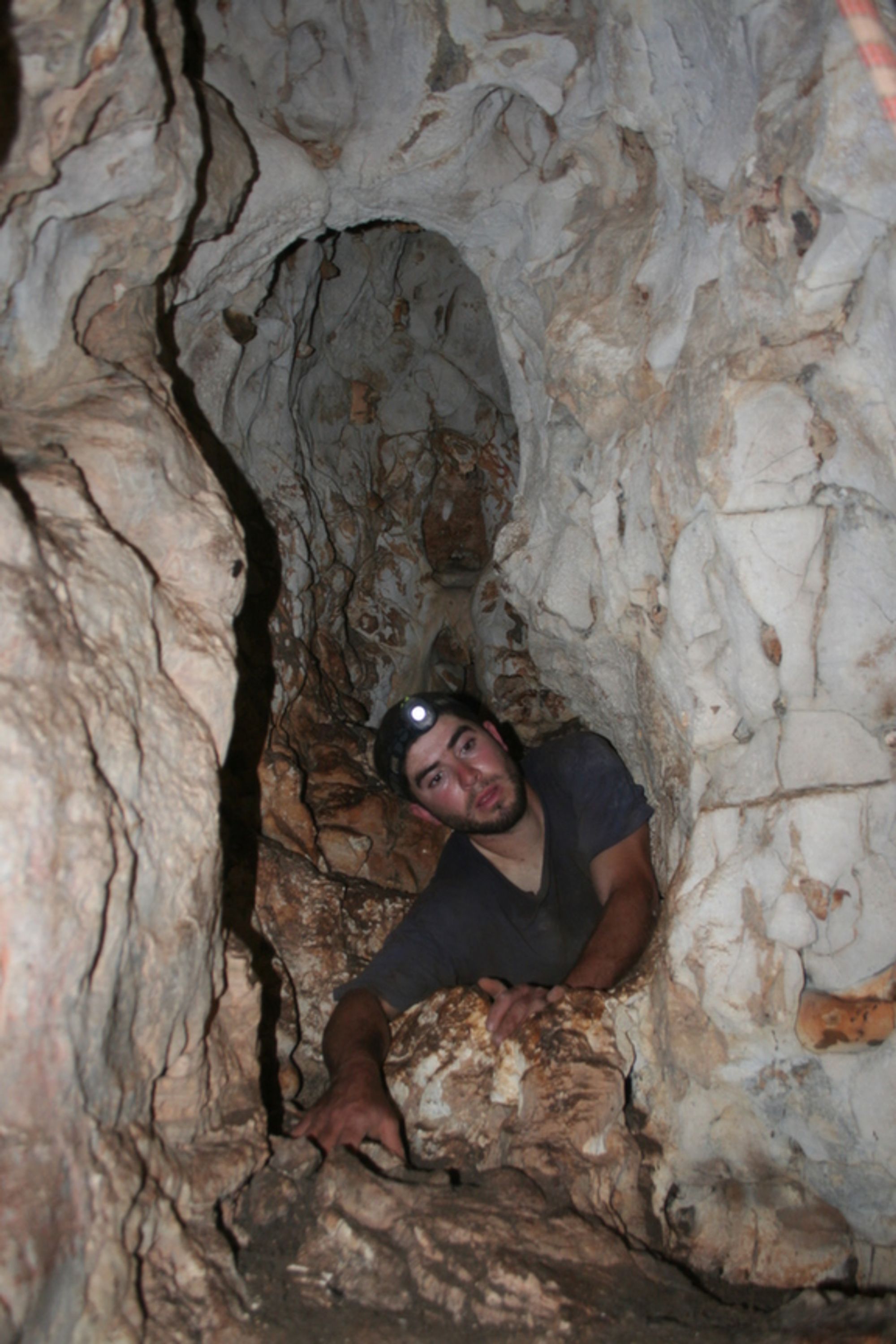
The cave entrance opens about 1 m above the base of a high rock step, in the upper part of the Mount Nitai cliff; its dimensions are 2X1.2 m and its shape is elliptical. From the cave entrance a short passage (A) extends to the northwest until its end, where it turns to the southwest. The width of the passage, before the turn, is the same as the width of the entrance, its floor is horizontal and covered with an accumulation of dark, compacted soil, its ceiling gets higher from the cave entrance inward and many dissolution domes open in it. After the turn the passage widens into the dimensions of an oval, high chamber (B), measuring 3X2.5 m, with a more humid climate than the entrance passage. In this chamber there are a few active stalactites.
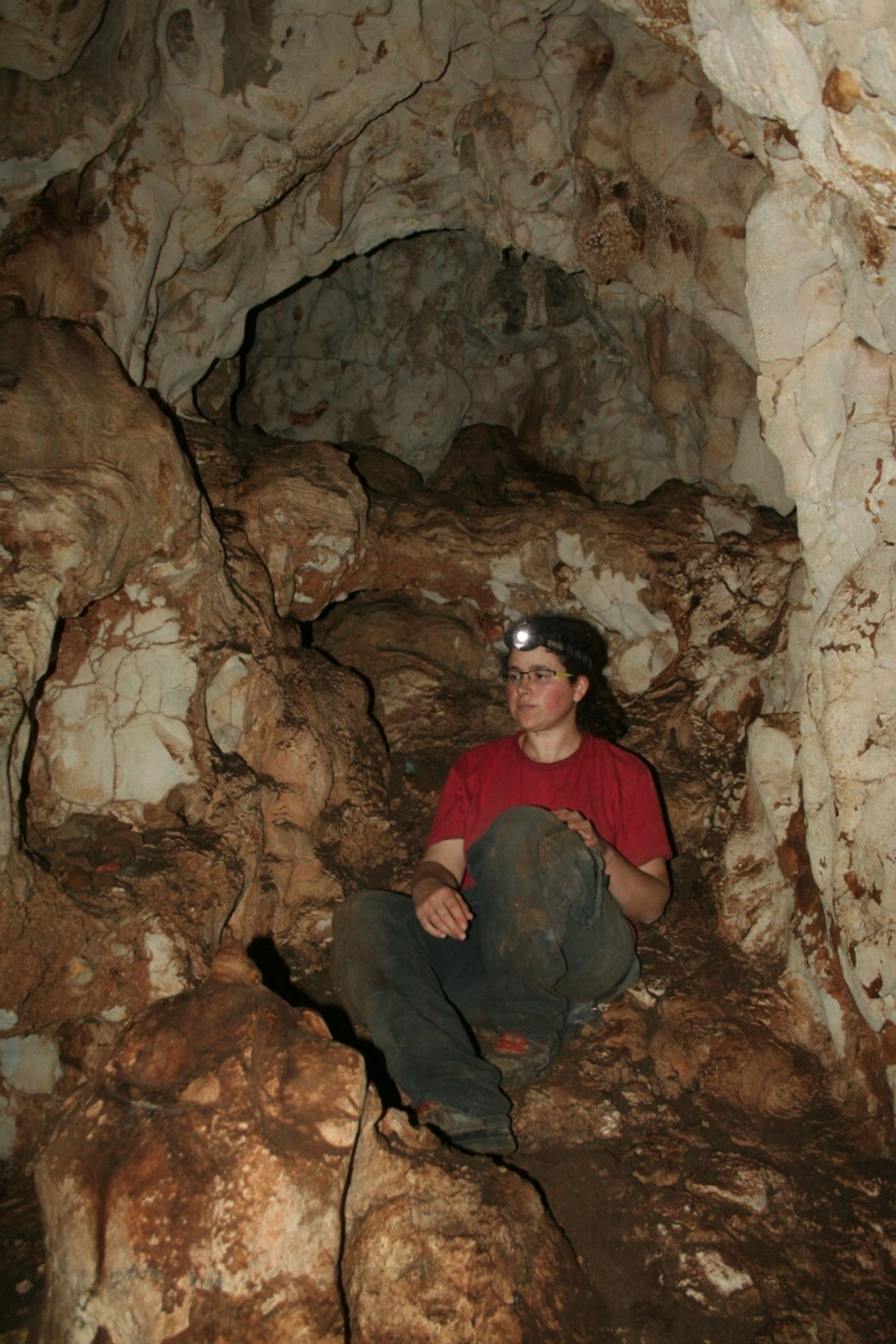
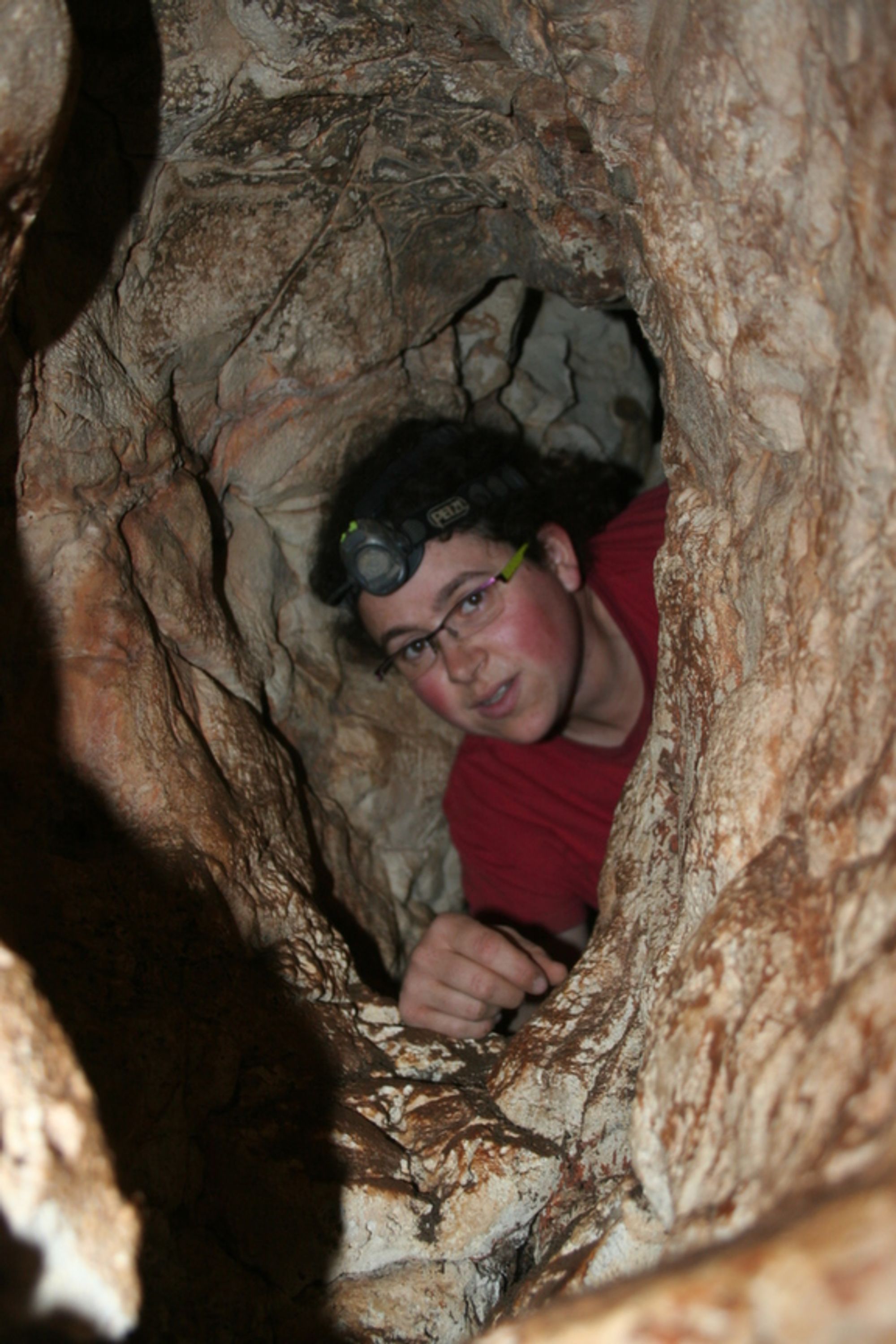
In the ceiling at the end of the passage, before it turns to the southwest, there is a narrow elliptical opening leading to the inner part of the cave. This part consists mainly of a large, high chamber (C) (measuring 5X2 m and 10 m high), southeast of which, about 2.5 m above its floor, extends a small horizontal area on which low stalagmites stand and above which a wide dissolution dome rises. The floor of the chamber is covered with a thick layer of guano, its ceiling is high and developed dissolution domes open in it, around which speleothems developed in the form of thin stalactites and a developed stalagmite. On the floor of the chamber, at the bottom of the step separating it from the area southeast of it, there is a low opening leading east to a narrow shaft 2 m high, at the bottom of which there is a small space (D). A light wind blows in this shaft, coming through a minute crack connecting passage A with the bottom of the shaft.
Notes:
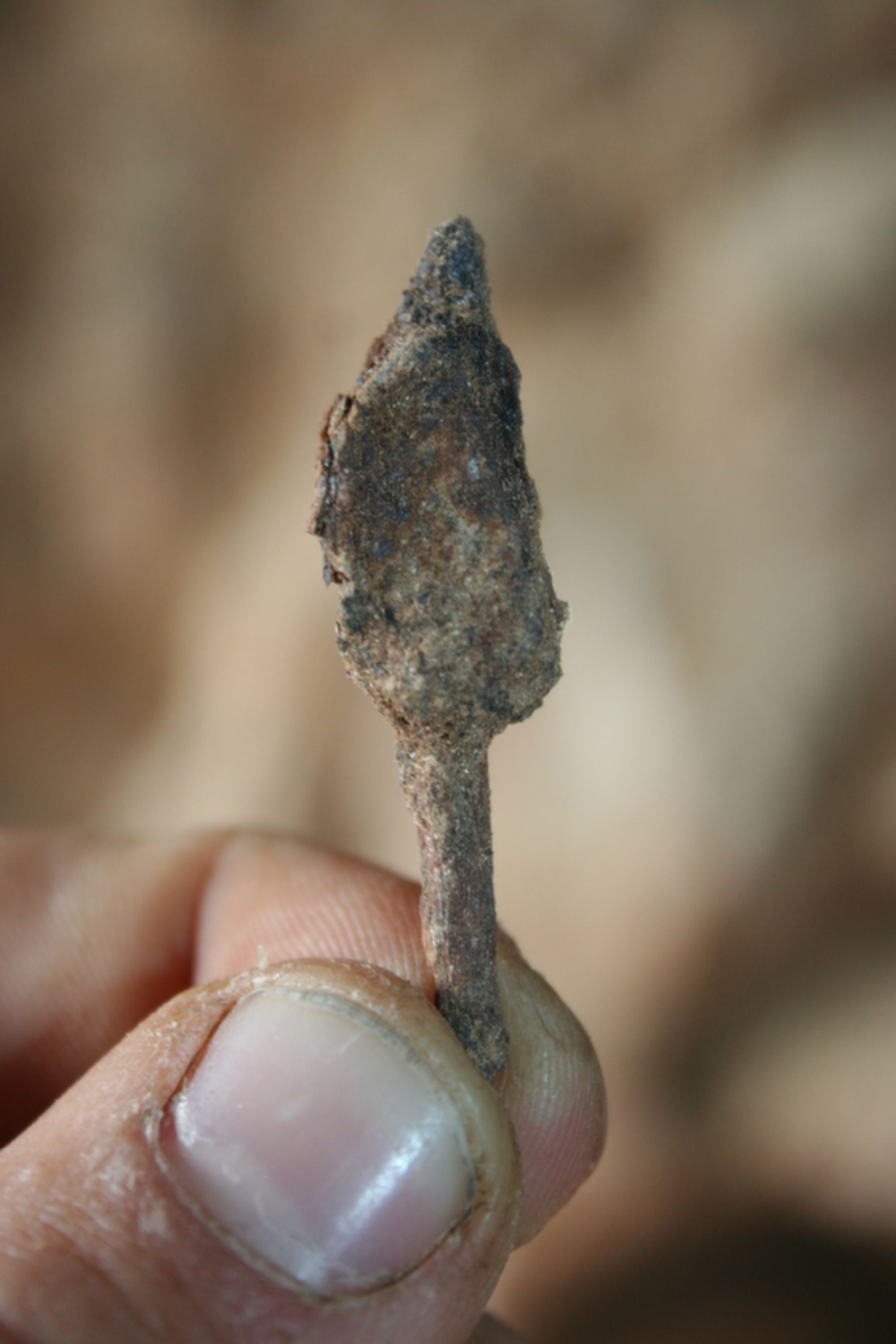
- 27 potsherds, 2 flint items, 2 iron nails and an iron arrowhead were collected in the cave. In addition, at the top of shaft D and at the point of connection between it and chamber C a broken fenestrated stand was found, dated to the Chalcolithic period.
- About 40 individual bats of the mouse-eared bat genus were observed in the cave (about half of the individuals were in the ceiling of chamber C) and a snake of the species coin snake. In the outer part of the cave there is a presence of the cave tick (visitors were bitten).
Written by: Boaz Langford
Site name: Cave 36